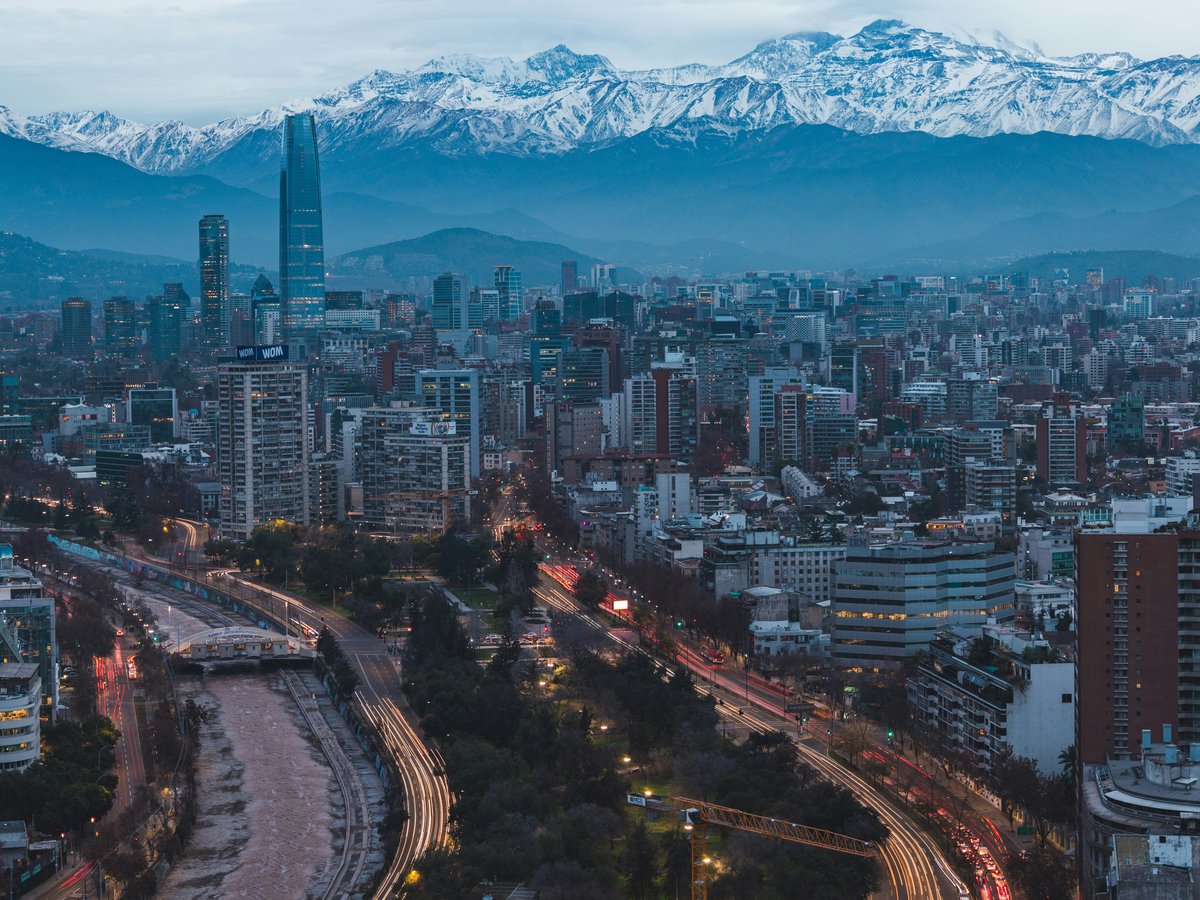
Santiago With Kids: What Works
Santiago's family-friendliness is real but conditional. The 7.2 reflects a city where Cerro San Cristóbal before 11 AM delivers one of the best family mornings in South America and Mercado Central at noon is a guaranteed meltdown, while MIM in La Granja quietly wins the day for the under-7 set.
Published
1 A 7.2 Out of 10 Means Santiago Works for Families, With Conditions
The smell of sopaipillas frying on Paseo Ahumada hits before you clear the Metro turnstile at Universidad de Chile station. Your 4-year-old reaches for one. The vendor hands it over on wax paper, warm and faintly oily. Santiago, in that moment, feels frictionless.
It is not frictionless. The city scores a 7.2 out of 10 for family friendliness, and that number captures something specific. Santiago has clean, reliable transit, with a Metro system running 7 lines across the metropolitan area. It has enormous green space, including the 722-hectare Parque Metropolitano on Cerro San Cristóbal, one of South America's largest urban parks. And Chilean culture genuinely likes children. Restaurants in neighborhoods like Providencia and Las Condes tend to accommodate strollers without the strained politeness you might encounter in Buenos Aires or Lima.
Santiago loses its points on infrastructure. Sidewalk surfaces in the Centro Histórico are rough, with cracked pavement and missing curb ramps between Plaza de Armas and the Mapocho riverfront that turn a double stroller into an obstacle course. Air quality on winter days in June and July sometimes drops to advisory levels, a consequence of Santiago's basin geography trapping particulate matter against the cordillera. The city's marquee cultural attractions, places like the Museo Nacional de Bellas Artes and the Palacio de La Moneda, reward adult patience more than toddler curiosity.
The 7.2 is an honest number. It reflects a city where the infrastructure for a good family trip exists but where the itinerary matters more than it does in a place like Osaka or Copenhagen, cities that tend to score closer to 8 or 9. Choose the wrong sequence of sights on the wrong day, and Santiago grinds. Choose the right ones and it hums. The critical variable is not which attractions you visit, but what time you arrive at them. Santiago's family-friendliness runs on the clock more than the map, and everything that follows is organized around that principle.
The 7.2 is an honest number. Santiago's family-friendliness runs on the clock, not the map.
2 Cerro San Cristóbal Earns the Marquee Billing, but Only Before 11 AM
The funicular car creaks upward through eucalyptus shade, and your toddler presses both palms against the glass. Below, Santiago unfolds east toward the snowline on the Andes. The ride takes about 6 minutes. This car has been making the same climb since 1925, and the slow pace is part of why it works for small children.
Cerro San Cristóbal, the 880-meter hill at the heart of Parque Metropolitano, is Santiago's best family attraction. Not for the view, though the panorama across to the Andes is worth the trip alone. For the space. Parque Metropolitano spans 722 hectares, roughly 4 times the size of London's Hyde Park. There is always another path, another clearing, another stretch of grass where a melting-down 3-year-old can run until the mood passes. The Zoológico Nacional occupies the western slope, spread across enough terrain that you can cover the highlights in about 90 minutes without pushing a reluctant toddler past the point of no return.
The teleférico connects the zoo area to the summit. For families, the smart routing is to ride the funicular up from the Pío Nono entrance in Bellavista, cross to the teleférico, and descend to the Pedro de Valdivia Norte exit on the eastern side. You avoid backtracking, you get two different ride experiences, and the final stretch is downhill. Mind you, the teleférico does close for maintenance periodically, so check current status before committing.
The timing condition matters. By 11 AM on weekends, the Pío Nono funicular queue stretches to 30 or 40 minutes. School groups arrive in buses. The paths near the summit fill with vendors and joggers. Arrive at 9 AM on a weekday and the park is yours. Weekend families should aim for 8:30.
The runner-up for best family morning is Parque Bicentenario in Vitacura, a flat, modern park with flamingos in its lagoon and wide paved paths built for strollers. If your children are under 2 and the funicular feels logistically ambitious, Parque Bicentenario is the safer choice. For ages 3 and up, Cerro San Cristóbal wins because the funicular itself is half the draw.
Arrive at 9 AM on a weekday and the park is yours.
3 Mercado Central Is the Marquee Meltdown Trap, and La Vega Central Is the Fix
The iron-and-glass vaulting of Mercado Central is beautiful. You will notice it for about 4 seconds before a hawker takes your elbow and steers you toward a table. Your 3-year-old, who needed lunch 20 minutes ago, starts to scream. This is Santiago's most-recommended family lunch spot, and it is a trap.
Mercado Central, the wrought-iron market hall that opened in 1872, appears on virtually every Santiago family itinerary and on every hotel concierge's shortlist. For children under 5, it is a meltdown waiting to happen. The interior is loud. The aisles between restaurant tables are narrow. The hawkers outside restaurants like Donde Augusto are persistent and physical, guiding visitors by the arm toward empty seats. And the signature dish, a whole congrio served head-intact, tends to horrify toddlers who were expecting rice and chicken.
Santiago families go to La Vega Central instead. This working market sits one block north of Mercado Central, across the Mapocho River on Avenida La Paz. La Vega is larger, cheaper, and the noise is market-stall noise, not someone selling you a table. The produce section alone occupies more floor space than all of Mercado Central. You can sit at a cocina in the Sector La Vega Chica for a plate of cazuela or pastel de choclo, and your child can eat without someone standing over the table.
To be fair, Mercado Central's architecture is striking. The prefabricated iron structure arrived from England in the 1860s, assembled on-site for the 1872 opening and later declared a national monument. If you want your children to see the building, enter from the San Pablo street side, look up at the ironwork for 3 minutes, and walk out the far exit. Then cross to La Vega for the meal.
Children over 8 who can handle sensory chaos may find Mercado Central exciting rather than distressing. The meltdown risk concentrates in the under-5 set, and the hawking is heaviest between 12:00 and 14:00. An early 11:30 arrival dodges the worst of it.
Mercado Central's architecture is worth 3 minutes of looking up. La Vega Central is worth the meal.
4 MIM Wins the Day and Nobody in the Hotel Lobby Will Mention It
The first hall you walk into at MIM is dark, humid, and full of low rumbling bass. Your child stands in front of a floor-to-ceiling earthquake simulation and watches projected fault lines split the ground. The floor vibrates under your feet. The look on a 5-year-old's face at that moment is worth the Metro ride from downtown.
Museo Interactivo Mirador, known in Santiago as MIM, opened in 2000 in the La Granja commune, about 12 kilometers south of the Centro Histórico. It has roughly 14 interactive exhibition halls covering earthquakes, optics, sound, electricity, and mechanics. Almost nothing sits behind glass. Children are supposed to touch, pull, spin, and press every exhibit. This is by design, and it is the reason MIM works for the under-7 set in a way that the Museo Nacional de Historia Natural in Quinta Normal does not.
MIM rarely appears on tourist shortlists for Santiago, likely because La Granja is not adjacent to anything else a visitor would seek out. That distance is a feature. MIM draws local school groups and Santiago families, not tour buses from Bellavista or the Centro Histórico. On a Tuesday morning you might share a hall with 6 other visitors. The quiet transforms the experience from a museum visit into something closer to a private playground.
The runner-up for indoor rainy-day salvation is the Museo Nacional de Historia Natural in Quinta Normal park. Its whale skeleton in the central hall is impressive, and entry is free on Sundays. But the Natural History Museum is largely display-behind-glass, which means look-don't-touch for 90 minutes. For a child under 6, MIM's hands-on model wins. For children over 10 who read exhibit labels, the Natural History Museum might hold their attention longer. Under 10, go to MIM.
Pack snacks for the MIM trip. The cafe options inside are limited, and La Granja is not a neighborhood with family restaurants on every corner. Budget about 3 hours for the full visit including transit from central Santiago.
MIM draws local families, not tour buses. On a Tuesday you might share a hall with 6 other visitors.
5 Quinta Normal Gives You Three Museums and a Free Bail-Out Park
Quinta Normal smells like cut grass and empanada grease from the carts clustered at the Avenida Matucana entrance. It is a park in the Quinta Normal commune, open since 1842, one of the oldest public green spaces in Chile. The paths are flat, wide, and stroller-friendly, which is not something you can say about Cerro Santa Lucía a few kilometers east.
The family value here is flexibility. Three museums sit inside or adjacent to the park grounds. The Museo Nacional de Historia Natural has a blue whale skeleton in the entry hall and free admission on Sundays. The Museo Artequín uses reproductions of works by Monet, Dalí, and others displayed at child height to teach painting techniques. And the Museo Ferroviario is an open-air collection of steam and diesel locomotives from the 19th and early 20th century, the kind of place where a 4-year-old can climb into a locomotive cab and stay there for 20 minutes.
The bail-out is the park itself. When your child hits museum fatigue, which might come after 40 minutes or 90 depending on the day, you walk outside and you are in a park with a boating lagoon, open lawns, and no roads to worry about. No re-entry logistics, no Metro ride to the next destination. The park absorbs the meltdown.
Quinta Normal is the structural opposite of Cerro San Cristóbal. Cerro San Cristóbal demands commitment. The funicular up, the time on the hill, the descent. Quinta Normal lets you quit at any point. For families with children under 3, that escape hatch matters more than any single exhibit.
Metro access is simple. Quinta Normal station on Line 5 puts you 2 blocks from the Matucana gate. The whole museum cluster is compact enough to walk between buildings in under 5 minutes. If you only have time for one museum and your children are between 2 and 8, the Museo Ferroviario tends to captivate more reliably than the Natural History collection. Trains at child scale work.
When your child hits museum fatigue, you walk outside and you are in a park. That is the Quinta Normal advantage.
6 The Itinerary Shape That Survives Naptime Runs on the Clock, Not the Map
The fundamental mistake families make in Santiago is scheduling two big attractions on the same morning. Santiago is not compact. The Metro ride from Cerro San Cristóbal in Bellavista to MIM in La Granja takes about 45 minutes on a good connection. Quinta Normal to Barrio Lastarria is 20 minutes on Line 5 plus a transfer at Baquedano. Every transit segment with a stroller and a tired child is a potential flashpoint.
The itinerary shape that works is simple. One attraction per morning, done by 12:30. Return to your accommodation for lunch and a nap. Re-emerge at 16:00 for a park or a neighborhood walk. Dinner at 19:00, which is early by Chilean standards (Santiago locals tend to eat at 21:00 or later) but available in family-friendly neighborhoods like Providencia, where restaurants along Avenida Suecia open their kitchens by 18:30.
A 3-day rotation that holds up well. Day 1, Cerro San Cristóbal, arriving at the Pío Nono funicular by 9 AM and descending by 12:00. Day 2, MIM, arriving when it opens and allowing 2 to 3 hours. Day 3, Quinta Normal, starting at the Museo Ferroviario and bailing to the park whenever the mood turns. Afternoons at Parque Bicentenario in Vitacura on Day 1, Parque Forestal along the Mapocho on Day 2, and the Sky Costanera observation deck in the 300-meter Gran Torre Santiago on Day 3, if your children are old enough to appreciate the height.
Two timing traps worth knowing. Barrio Bellavista before noon on a weekend is a setup zone of delivery trucks and restaurant prep; it comes alive after 18:00. And Sky Costanera tends to draw 20 to 30-minute queues on Saturday afternoons. Go on a weekday or right at opening.
The accommodation sweet spot for families is Providencia or Las Condes, not the Centro Histórico. Both sit on Metro Line 1, close to supermarkets like Jumbo or Líder. Both are quieter after 21:00 than Bellavista or the Centro. Proximity to a supermarket seems like a small thing until you need milk at 22:00 with a sleeping child in the next room.
One attraction per morning, done by 12:30. That is the shape that survives small children.
7 Barrio Lastarria Is the Family Dinner Neighborhood, Not Bellavista
The fairy lights strung across José Victorino Lastarria street switch on around 18:30, and the cobblestones catch the warm glow. A child crouches to examine a chalk drawing left by one of the afternoon art vendors. The restaurants along this block have started setting tables on the sidewalk.
Barrio Lastarria sits between Cerro Santa Lucía and Parque Forestal, a 4-block pocket of cafes, bookshops, and small restaurants anchored to the Universidad Católica Metro station. Bellavista, across the Mapocho, gets the nightlife reputation and deserves it. But Bellavista after 20:00 fills with bar crowds, amplified music, and sidewalk congestion around the Patio Bellavista complex. For families with small children, the atmosphere tilts from lively to overstimulating fast.
The Lastarria restaurants are smaller and calmer. The foot traffic stays manageable partly because the street dead-ends at the Cerro Santa Lucía entrance. The Museo de Artes Visuales sits halfway down the block, typically open until 18:30. After the museum, dinner is a 2-minute walk, not a Metro transfer.
For the meal itself, Chipe Libre on José Victorino Lastarria serves Chilean and Peruvian pisco cocktails alongside simple plates of empanadas and grilled fish that a 6-year-old can navigate. Bocanáriz, a few doors down, is wine-focused and better suited to families with children over 10 who can sit through a longer meal. If both are full, Emporio La Rosa on Merced street, one block south, does ice cream that works as both dessert and behavioral incentive.
A note on Cerro Santa Lucía, which sits right next to Lastarria and looks tempting at sunset. The hilltop park is gorgeous but the staircases are steep, uneven, and not stroller-accessible. With children under 4, skip it entirely and stay on the Lastarria streets. With children over 7, the climb to the Neptune Fountain terrace takes about 15 minutes and the view over the Centro Histórico is worth the effort.
Lastarria is the family dinner move. Bellavista is for after bedtime.
Last verified by automated review (v1.7.2_onboard-santiago-flagship-2026-08-28) on . What is automated review?