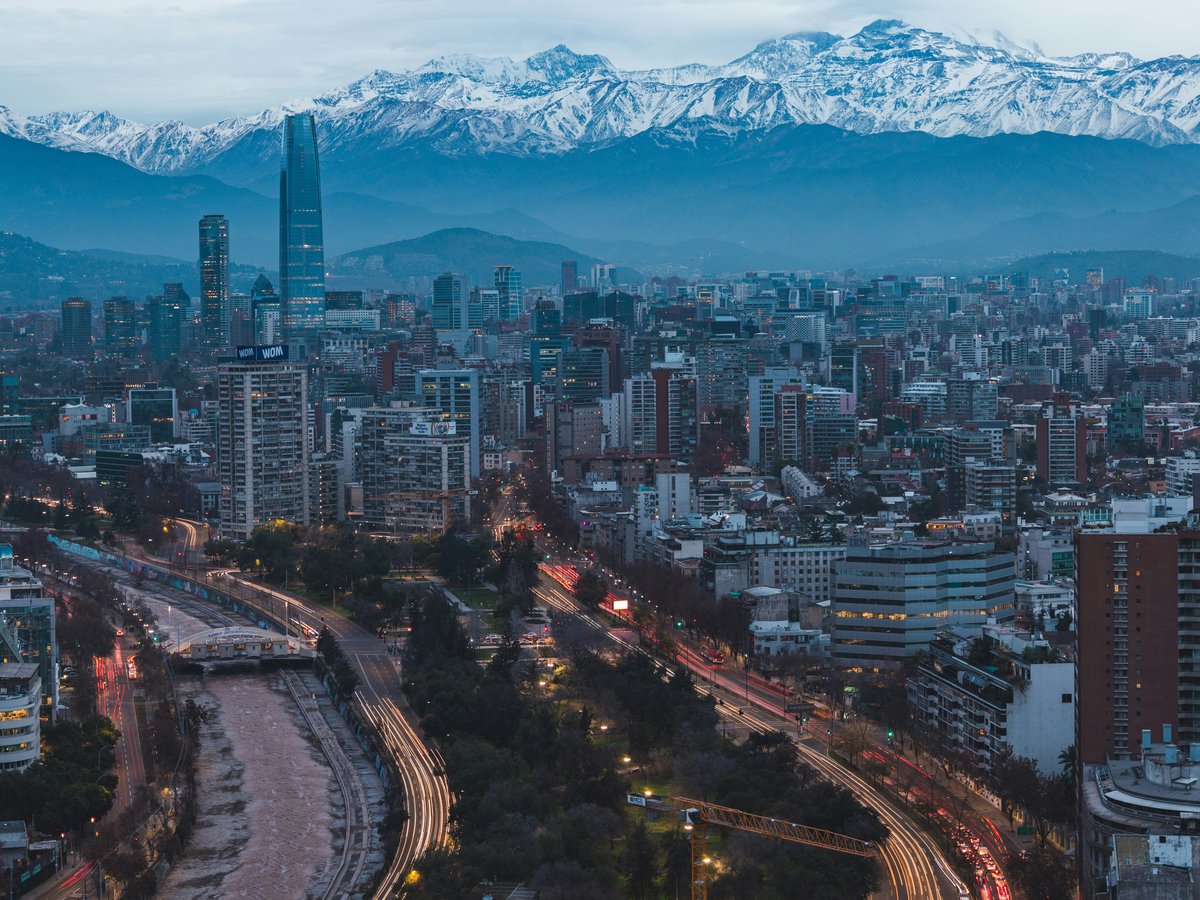
Best Time to Visit Santiago, by Season
Santiago's climate swings over 23 degrees between its 6.8°C July lows and 30.0°C January highs. That range creates different cities depending on your month. This guide breaks down each season's trade-off and names the single best window for every kind of traveller.
Published
1 January and February Peak at 30.0°C While Half of Santiago Leaves Town
The pavement on the Plaza de Armas throws heat back at your ankles by mid-morning in January. Santiago averages a high of 30.0°C that month, with nights settling to 15.1°C. February matches the same 30.0°C ceiling and lifts the overnight floor slightly to 15.5°C. The roughly 15°C gap between day and night feels wider than it reads, because the Santiago basin traps warmth through late afternoon, then releases it fast once the sun drops behind the Andes.
January is Chile's primary vacation month. Families with school-age children scatter toward Viña del Mar, the Lake District, or any coast they can reach. Santiago's summer is not like summer in Paris or Tokyo, where the tourist population replaces the local one. In Santiago, both populations thin out. Restaurants in Providencia trim hours. Weekend foot traffic in Barrio Lastarria drifts down.
The practical upside in January is space. Santiago's Metro runs cooler outside rush hour, and the queues at Cerro San Cristóbal's funicular shorten noticeably. If 30.0°C and dry heat don't bother you, January and February offer a quieter city than the shoulder months that bookend them. March's average high falls to 28.3°C, which means you gain nearly 2 degrees of comfort but walk back into a fuller Santiago.
To be fair, Santiago's summer heat is dry. The city sits in a semi-arid basin, and that 30.0°C in January feels milder on skin than the same reading in a humid coastal city. The real discomfort tends to be air quality over the Santiago basin, which worsens when the thermal inversion layer settles during windless stretches.
Who should come in January or February? Anyone who tolerates heat by choice. If you want to hike Cerro Manquehue without layers, swim in Parque O'Higgins, or eat dinner outside past 21:00, this is your window. February's low of 15.5°C means evenings stay warm enough for a light jacket at most.
2 March Drops to 28.3°C and Becomes Santiago's Best-Kept Shoulder Month
You feel March in Santiago before you see it. The air at 08:00 on Cerro Santa Lucía carries a crispness that January never manages, with overnight lows falling to 14.3°C from February's 15.5°C. By midday the average high still reaches 28.3°C, warm enough for shirtsleeves but 1.7 degrees below the January and February peak of 30.0°C. That 1.7-degree gap sounds trivial on paper. On foot, in Santiago's concrete downtown, you notice it.
March is harvest season in Chile's central valleys. The Maipo and Casablanca wine regions, both within day-trip range of Santiago, run their vendimia through the month. If you want to combine a city stay with vineyard visits, March is the only month where pleasant urban weather at 28.3°C overlaps with active winemaking.
Santiago's crowd calculus shifts in March too. Chilean schools resume, which pulls families back to the capital and empties the beach resorts. International visitors still trickle in from the Southern Hemisphere summer circuit, but the volume is notably lower than December or January. Accommodation rates in Providencia and Las Condes typically soften by the second week of March.
Mind you, March nights cool faster than you might expect. The 14.3°C low means an outdoor dinner in Barrio Italia will want a jacket by 22:00, something January's 15.1°C low rarely demanded. Santiago's signature thermal swing widens as you move into April, where the average high drops to 23.5°C and lows reach 11.8°C.
For the price-conscious traveller who still wants warm days, March is the single strongest month in Santiago's calendar. You get 28.3°C highs, thinner crowds than any summer month, and the grape harvest as a bonus. April's 23.5°C starts to feel like a different season altogether. March is still summer in Santiago at 28.3°C, with a lower crowd density than January or February ever offer.
March is still summer by Chilean standards. By most visitors' standards, it is the better version of it.
3 April and May Drop From 23.5°C to 18.3°C as Santiago Turns Indoors
The first cold front of autumn in Santiago announces itself with the smell of woodsmoke. You catch it walking through Ñuñoa or La Reina by late April, when the average high has fallen to 23.5°C and evenings at 11.8°C send residents reaching for their estufas a parafina, the paraffin heaters stacked outside hardware stores across the city.
April still holds enough warmth in Santiago for comfortable daytime walking. Its 23.5°C average high sits close to what many Northern European visitors would call ideal summer weather. The gap from March is significant, though. The average high drops 4.8 degrees in a single month, from 28.3°C to 23.5°C.
May accelerates the descent. The average high drops another 5.2 degrees to 18.3°C, and overnight lows reach 8.9°C. Santiago at 18.3°C feels cooler than the number suggests because the basin traps cold air at night and releases it slowly through the morning. A walk along the Mapocho River at 09:00 in May starts from the 8.9°C overnight low and takes hours to climb toward the 18.3°C daily peak.
Worth noting, the air quality picture complicates April and May in Santiago. The thermal inversions that define Santiago's winter begin forming in April and persist through August. The Andes and the coastal range box in the basin, and when wind drops, particulate matter from vehicles and heating fuel accumulates. May mornings can carry a visible haze that blocks the Andes from view, something the January visitor never experiences.
If you come in April, target the first half. The month begins near 23.5°C with lows around 11.8°C, and exits toward winter staging. By May, when lows hit 8.9°C and highs level off at 18.3°C, Santiago belongs to a different trip plan entirely. May is layering weather. You leave the hotel at the 8.9°C morning low in a jacket and wish you had brought a second one by 18:00.
4 June and July Bottom Out Below 16°C, but the Andes Make the Cold Worth It
Step out of the Santiago Metro at Baquedano on a July morning and the cold finds you immediately. The air at 6.8°C bites at exposed skin, and the Andes to the east carry visible snow well below the peaks. July is Santiago's coldest month with an average high of 15.5°C, barely edging out June at 15.6°C. The difference between the two months is negligible. They form a temperature floor, and Santiago sits on it for roughly 60 days.
The case for visiting Santiago in winter is narrow but real. Portillo, Valle Nevado, and La Parva are the closest Andean ski areas to the city. A visitor staying in Providencia can reach the slopes in the morning and return for dinner in Bellavista the same evening. Few capital cities offer that kind of proximity to alpine skiing. The overnight lows complicate things, though. June drops to 7.4°C and July to 6.8°C. Santiago buildings generally lack central heating, relying on space heaters and thick blankets. A budget hotel in Barrio Brasil in July may feel colder indoors than outdoors at noon.
Rain falls in Santiago's winter, though not heavily by global standards. The city's annual rainfall concentrates between May and August. Santiago can go weeks without a drop even in July, then receive most of its monthly total in a few days. When the rain does arrive, it clears the air. Post-rain mornings in June and July reveal the full Andes panorama from the Plaza de Armas, a view that smog hides for much of the year.
That said, the budget argument is strong. Winter in Santiago means lower accommodation rates and shorter queues at the Museo Nacional de Bellas Artes and the Museo de la Memoria. The Barrio Yungay walking circuit is a compact outdoor experience suited to 15.5°C highs and 6.8°C lows.
August begins the crawl upward with a daily high of 16.1°C, only 0.6 degrees above July's floor. August's overnight low of 7.2°C splits the difference between July's 6.8°C and June's 7.4°C.
5 September and October Climb From 18.4°C to 23.0°C With Few Tourists Watching
The jacarandas along Parque Forestal begin showing purple by late September, and their canopy is the most reliable visual signal that Santiago has turned a corner. September averages a high of 18.4°C, still jacket weather in the morning when lows sit at 8.4°C. But the afternoons stretch longer and warmer, and by October the average high reaches 23.0°C with overnight lows around 10.3°C.
September and October represent Santiago's most undervalued travel window. September feels like late winter at breakfast and mild spring by 14:00. The roughly 10-degree intraday swing from the 8.4°C low to the 18.4°C high means you dress in layers and shed them through the afternoon. October smooths that swing. Its 23.0°C high approaches April's 23.5°C from the other direction, but with a key difference. In April, temperatures are falling and Santiago contracts. In October, they are rising and the city opens back up.
Spring in Santiago does carry its own discomfort, though. Pollen from the plane trees that line most major avenues tends to peak in September and October. If you have allergies, this window might trade one form of discomfort for another. The air quality does improve over the Santiago basin as thermal inversions weaken, and the Andes reappear with increasing regularity behind clearer skies.
The crowd picture in Santiago during September and October is sparse by any measure. Chilean domestic tourism does not pick up until December. International visitors are still weeks away from the Southern Hemisphere summer season. Accommodation in Providencia and Barrio Lastarria sits underutilized.
For a visitor who wants 23.0°C days without 30.0°C intensity, October is the answer. It offers nearly the same daytime profile as November at 25.8°C, minus 2.8 degrees and minus most of the pre-summer price creep. September's 18.4°C is better suited to museum-heavy itineraries and Andes day hikes where cooler air is a feature. September's overnight low of 8.4°C still demands a proper jacket in the evening. October's overnight low of 10.3°C keeps evenings comfortable without heavy layers.
September feels like late winter at breakfast and mild spring by 14:00.
6 November at 25.8°C and December at 29.0°C Are Summer Without the Summer Price
By mid-November, you can smell sunscreen on the paths through Parque Bicentenario in Vitacura. That scent is the honest signal that summer has arrived in Santiago, even if the calendar still says spring. November averages 25.8°C for its daily high, with lows of 11.8°C. December pushes further to 29.0°C and 14.1°C. Together, they form a 6-week ramp from late spring into full summer.
November's 25.8°C is a sweet spot that deserves more attention than it gets in Santiago's travel calendar. It sits 4.2 degrees below January's 30.0°C peak, which means outdoor comfort through the full afternoon without the retreat-to-shade pattern that summer enforces. November evenings at 11.8°C still carry a chill, noticeably below December's 14.1°C. You will want a layer for dinner outdoors in Bellavista or Barrio Italia during November.
December is the month where the temperature curve steepens in Santiago. The gap between November's 25.8°C and December's 29.0°C is 3.2 degrees. That shift pulls the city into full summer mode while accommodation pricing often still reflects the shoulder season. Early December in Santiago, especially the first 2 weeks, tends to hold rates closer to November than to the January peak.
December in Santiago does have one catch. The smog season typically ends by October, but occasional thermal inversions can return during calm, hot spells. The Pudahuel and Cerrillos monitoring stations sometimes register moderate particulate levels during December's warmer stretches.
For travellers weighing November against December in Santiago, the choice comes down to heat tolerance. November's 25.8°C is the warmer side of pleasant. December's 29.0°C is the cooler side of hot. Both fall below the 30.0°C ceiling that January and February hold. November's 11.8°C overnight low matches April's figure exactly, meaning spring and autumn mirror each other after dark even though November's daytime high exceeds April's 23.5°C by 2.3 degrees. December's 14.1°C keeps evenings comfortable, something January's 15.1°C barely improves upon.
7 The Single Best Window for Every Kind of Santiago Traveller
Sit at an outdoor table in Barrio Lastarria in October, and the 23.0°C afternoon feels like the temperature Santiago was designed for. Not the 30.0°C press of January. Not the 6.8°C bite of July. Santiago's full temperature range spans over 23 degrees between those extremes, and it creates genuinely different cities depending on when you arrive.
For the budget traveller, June and July win on price alone. The 15.5°C and 15.6°C average highs keep Santiago's tourist economy at its lowest gear. July's cold is real. Overnight lows of 6.8°C in July and 7.4°C in June mean layering is not optional. But the museums, markets, and Metro in Santiago work the same as in January.
For the outdoor and hiking traveller, October is the pick. The 23.0°C average high provides comfortable trail weather around Santiago, and the 10.3°C overnight low keeps early-morning starts from becoming punishing. March at 28.3°C is the runner-up, offering warmer valley hikes but more sun exposure on exposed ridgelines. November's 25.8°C splits the difference.
For the food and culture traveller, March through April covers the most ground in Santiago. March's 28.3°C is warm enough for outdoor dining in Barrio Italia, and April's 23.5°C invites long walks through Barrio Yungay without overheating. The vendimia in the Maipo Valley overlaps with March. April's 11.8°C evenings are the first where outdoor dining in Santiago feels uncomfortable after dark.
For the ski traveller, July's 15.5°C city high and 6.8°C overnight low correspond to peak Andean snowpack at Portillo and Valle Nevado. June at 15.6°C offers similar conditions with slightly warmer lows of 7.4°C. August's 16.1°C extends the season but snowpack has typically peaked.
For the general visitor who wants the best overall balance, October at 23.0°C is the single strongest month in Santiago. It carries pleasant daytime warmth, cool but manageable nights at 10.3°C, fewer tourists than any month from November through March, and prices below the summer window. If October is unavailable, March at 28.3°C is next. November's 25.8°C rounds out a strong top three. January and February share a 30.0°C high with lows of 15.1°C and 15.5°C. October's 23.0°C and 10.3°C deliver better balance at lower cost.
For the general visitor who wants the best overall balance, October at 23.0°C is the single strongest month in Santiago.
Last verified by automated review (v1.7.2_onboard-santiago-flagship-2026-08-28) on . What is automated review?