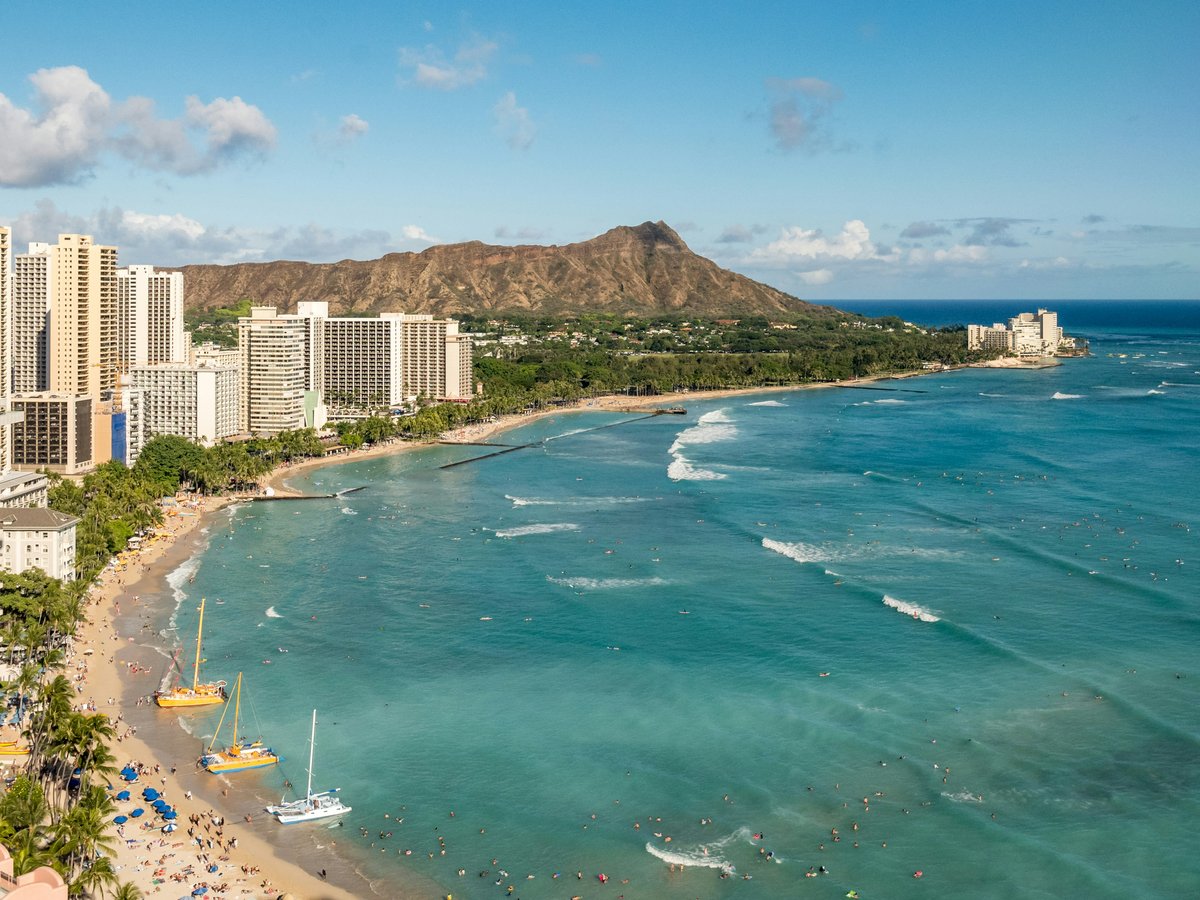
Honolulu sits on an island, which tends to make everything feel more expensive. That reputation is earned, to be fair. A plate lunch at Rainbow Drive-In on Kapahulu Avenue currently runs about $12, and parking in Waikiki can hit $45 a day. But the city's most memorable experiences have always been the ones that cost nothing. The 3 miles of public shoreline from Ala Moana Beach Park to the Kapahulu Groin in Waikiki are free to anyone with a towel. The Royal Hawaiian Band has been giving free concerts since 1836. The trade winds that cool the Ko'olau ridgeline every afternoon don't charge admission. Honolulu's geography does most of the work here. Volcanic craters, coral reefs, banyan-shaded parks, and 270-degree panoramas all sit within a few miles of downtown on public land. You can fill 3 or 4 full days without paying admission anywhere, and those days might end up being the ones you remember best.
Free attractions
-
Hawaii State Art Museum (HiSAM)
HiSAM occupies the No. 1 Capitol District Building on Hotel Street and is always free. The permanent collection spans Hawaiian art from the 1950s through contemporary work, spread across two floors of a 1928 Spanish Mission-style building. The sculpture garden on the second floor feels like a quiet pocket away from the Chinatown foot traffic below. Worth noting, the rotating exhibitions change every few months, so repeat visits tend to feel different.
Downtown HonoluluMuseum -
National Memorial Cemetery of the Pacific (Punchbowl)
This cemetery sits inside Puowaina Crater and holds the remains of over 53,000 service members. The drive up from Lusitana Street takes about 5 minutes, and the lookout at the top offers a 270-degree view from Diamond Head to Pearl Harbor. The air up here is noticeably cooler than street level, and the grounds are carefully tended. Open daily from 8 a.m. to 5:30 p.m., with extended hours to 6:30 p.m. from March through September. No entry fee.
PunchbowlMemorial and Viewpoint -
Iolani Palace Grounds
The palace itself requires a paid tour, currently about $25 for adults. But the grounds are open and free daily. The Coronation Pavilion, the old barracks building, and the enormous banyan trees on the makai side are all accessible without a ticket. You can walk the perimeter, read the historical markers, and catch the Royal Hawaiian Band on most Fridays at noon. The grounds sit between King Street and the State Capitol, which makes them a natural stop on any downtown walk.
Downtown HonoluluHistoric Landmark -
Kapi'olani Park
Honolulu's oldest public park covers 300 acres at the Diamond Head end of Waikiki. Queen Kapi'olani dedicated it in 1877. The park holds the Waikiki Shell amphitheater, the Honolulu Zoo perimeter path, and enough open grass for a dozen pickup soccer games on any given Saturday. The ironwood trees along the Monsarrat Avenue edge drop long needles that soften the ground underfoot. Joggers circle the park on a 2-mile loop that starts near the bandstand.
WaikikiPark -
Ala Moana Beach Park
This 100-acre park stretches along the south shore between Waikiki and downtown. The reef-protected lagoon stays calm enough for toddlers most days, and the water temperature hovers around 78 to 82 degrees year-round. Locals come before work for laps. The park has free parking, restrooms, outdoor showers, and a paved walking path that runs the full half-mile length. On weekends, the picnic pavilions fill by 9 a.m., so arrive early if you want a table.
Ala MoanaBeach and Park -
USS Arizona Memorial at Pearl Harbor
The memorial sits above the sunken hull of the USS Arizona in Pearl Harbor. Timed entry tickets are free but required, and they go fast. The National Park Service releases same-day tickets online at 7 a.m. HST, and they're typically gone within minutes. Walk-in standby tickets are sometimes available at the Pearl Harbor Visitor Center starting at 7:30 a.m. The experience includes a short documentary film and a boat ride to the memorial. No bags larger than a small clutch are permitted on-site.
Pearl HarborMemorial -
King Kamehameha I Statue
The statue stands in front of Ali'iolani Hale on King Street, across from Iolani Palace. The bronze figure is covered in gold leaf and depicts Kamehameha the Great with his left hand extended. On June 11 each year, for King Kamehameha Day, the statue is draped in 25-foot lei garlands of plumeria, pikake, and pakalana. The fragrance on that morning reaches across the street. Accessible 24 hours a day, no fee.
Downtown HonoluluLandmark -
Pu'u 'Ualaka'a State Wayside (Tantalus Lookout)
The drive up Tantalus Drive through Round Top Forest Reserve takes about 15 minutes from downtown. The road winds through Norfolk pines and Cook Island pines that block the midday heat. The lookout sits at 1,048 feet and offers what might be the most complete view of Honolulu. Manoa Valley, Diamond Head, the downtown skyline, and Pearl Harbor all fit in a single panorama. The parking lot holds about 20 cars. Arrive before 10 a.m. on weekends or you'll be circling. Free and open during daylight hours.
TantalusViewpoint
Free activities
-
Kaka'ako Street Art Walk
The blocks between Cooke Street and Coral Street in Kaka'ako hold one of the largest outdoor mural collections in the Pacific. Over 100 murals cover warehouse walls, parking structures, and shop facades. Many were painted during the annual POW! WOW! Hawaii festival. The concentration is highest along Lana Lane and Pohukaina Street. The smell of roasting coffee drifts over from Morning Glass and Curb nearby. Allow about 90 minutes to cover the main route on foot.
Kaka'akoStreet Art and Walking -
Chinatown Historic District Walk
Honolulu's Chinatown runs roughly from River Street to Nu'uanu Avenue between Beretania and Nimitz Highway. The Oahu Market on North King Street has been selling fresh fish and produce since 1904. You'll hear Cantonese, Vietnamese, and Tagalog between the stalls. The lei stands on Maunakea Street sell pikake strands starting around $5, but walking the scent corridor costs nothing. The neighborhood has been changing fast in recent years, with new galleries and restaurants appearing on Smith Street and Hotel Street.
ChinatownWalking and Culture -
Waikiki Beach and Duke Kahanamoku Statue
The 2-mile stretch of public beach from the Hilton Hawaiian Village lagoon to the Waikiki Aquarium remains Honolulu's most famous free attraction. The Duke Kahanamoku statue near Kuhio Beach draws a steady crowd of photo-takers throughout the day. The bronze figure stands 9 feet tall with arms outstretched. Sand texture varies along the shoreline, from coarse near the seawall to fine at Queen's Beach. Sunset from the Kuhio Beach area typically hits around 7 p.m. in summer and 6 p.m. in winter.
WaikikiBeach and Landmark -
Manoa Falls Trail
This 1.6-mile round-trip trail in Manoa Valley ends at a 150-foot waterfall. The trailhead sits at the end of Manoa Road, about 10 minutes by car from Waikiki. The path stays muddy year-round, so proper shoes matter more than the weather forecast. The air temperature drops several degrees under the canopy of mountain apple and kukui trees. Mosquitoes tend to be thick near the falls. No entry fee, though the small private parking lot at the trailhead currently charges about $7.
ManoaHiking -
KCC Farmers Market Browsing
The Saturday morning farmers market at Kapi'olani Community College on Diamond Head Road runs from 7:30 a.m. to 11 a.m. Browsing is free, and vendors often hand out samples of Kahuku corn, North Shore honey, and locally roasted coffee. The market draws around 5,000 to 10,000 visitors on a typical Saturday. Parking fills by 8 a.m., so the walk from Waikiki along the Monsarrat Avenue sidewalk takes about 20 minutes and avoids the lot entirely.
Diamond HeadMarket -
Lyon Arboretum
Lyon Arboretum sits at the back of Manoa Valley and covers 194 acres with over 5,000 tropical plant species. Admission is free, though donations are suggested. The Beatrice Krauss Hawaiian Ethnobotanical Garden section highlights plants that Polynesian voyagers carried across the Pacific. The upper trails get quiet enough to hear Manoa Stream and the native 'apapane birds in the 'ohi'a trees. Open Monday through Friday 8 a.m. to 4 p.m., and Saturdays 9 a.m. to 3 p.m.
ManoaGarden and Nature
Free events
-
Kuhio Beach Hula Show
Tuesday, Thursday, and Saturday evenings, typically 6:00-7:00 p.m. (November through January) or 6:30-7:30 p.m. (February through October)Free hula and live Hawaiian music performances on a small stage near the Duke Kahanamoku statue. The show has been running since the 1990s and draws both tourists and locals who set up beach chairs in the sand. A torch-lighting ceremony opens each performance as the sun drops toward the horizon. Performers rotate among local halau hula groups.
Kuhio Beach, Waikiki -
Royal Hawaiian Band Friday Concert
Most Fridays at 12:00 p.m.The Royal Hawaiian Band was founded in 1836 by King Kamehameha III and still performs free concerts on the grounds of Iolani Palace. The band plays a mix of Hawaiian standards, marches, and contemporary arrangements. The sound carries across the palace lawn and into the adjacent government district. Bring a mat or towel to sit on the grass.
Iolani Palace Bandstand, Downtown Honolulu -
First Friday Honolulu Art Walk
First Friday of each month, roughly 5:00-9:00 p.m.On the first Friday of each month, galleries and studios in Chinatown and Kaka'ako open their doors for free evening viewings. The stretch along Nu'uanu Avenue and Bethel Street in Chinatown has the densest concentration, with 10 to 15 galleries participating on a typical night. Street musicians set up along Hotel Street, and food trucks park near the intersection of Smith and Hotel.
Chinatown and Kaka'ako -
Sunset on the Beach
Periodic, typically a few times per year (check City and County of Honolulu events calendar)The City and County of Honolulu has periodically staged free outdoor movie screenings on a large screen set up on Waikiki Beach near Queen's Beach. The schedule has been irregular in recent years, so checking the City's events page before planning around it is worth the effort. When it runs, the screen goes up at dusk and the crowd sprawls across the sand with blankets and takeout.
Queen's Beach, Waikiki -
Honolulu Museum of Art Free Admission Day
Select days, typically the first Sunday of the month through Bank of Hawaii sponsorship (verify current schedule on the museum's website)The Honolulu Museum of Art on Beretania Street normally charges around $20 for adult admission but has offered free admission days through bank sponsorship. The museum holds over 50,000 works spanning 5,000 years, with a notable Asian art collection and a courtyard garden with water features. Free days tend to draw larger crowds, so arriving when the doors open at 10 a.m. helps.
900 S. Beretania Street, Honolulu
Free Beaches Beyond Waikiki
Waikiki gets the attention, but Honolulu has quieter public beaches that see a fraction of the foot traffic. Ala Moana Beach Park's Magic Island lagoon, on the Ewa end of the park, offers a calm swimming area with a view of the harbor and a wide grassy lawn that rarely fills up. Sans Souci Beach, at the Diamond Head end of Waikiki near the New Otani Kaimana Beach Hotel, is a 250-yard strip of sand that locals call Kaimana Beach. The water there is shallow and warm, and the crowds thin out compared to the stretch in front of the Royal Hawaiian. Queen's Beach sits between the Waikiki Aquarium and the War Memorial Natatorium. The rocky shoreline attracts fewer swimmers, but the tide pools hold small crabs and sea urchins. All of these beaches have free access, public showers, and restrooms.
What Used to Be Free but Now Costs Money
Diamond Head State Monument, the extinct volcanic crater visible from nearly everywhere in Waikiki, introduced a $5 per person entry fee for non-residents in 2022. Advance reservations through the state's online system are now required as well. Hanauma Bay Nature Preserve, about 10 miles east of Waikiki, charges $25 for non-resident adults and also requires online reservations. The Honolulu Zoo in Kapi'olani Park charges $19 for adults. And while Pearl Harbor's USS Arizona Memorial remains free, the adjacent Battleship Missouri Memorial and USS Bowfin Submarine Museum each charge separate admission fees. Knowing which spots have shifted to paid entry helps you avoid planning a free day that turns out to cost $50 or more.
Practical Tips for a Zero-Budget Day in Honolulu
TheBus, Honolulu's public transit system, currently charges $3 per ride or $7.50 for a day pass on the HOLO card. That's not free, but a single day pass opens up access to Manoa Falls, the Tantalus Lookout, and Pearl Harbor without paying for parking or rentals. If you're staying in Waikiki, the walk to Ala Moana Beach Park takes about 25 minutes along Ala Moana Boulevard. Drinking water fountains are available at most public parks and beaches. Sunscreen and shade matter more than most visitors expect. The UV index in Honolulu regularly hits 11 or 12 between 10 a.m. and 2 p.m., which falls in the extreme category. Free doesn't help much if you spend the next 3 days recovering from sunburn indoors. The public restrooms at Kapi'olani Park, Ala Moana Beach Park, and Kuhio Beach are maintained and generally clean.
FAQ
Is Waikiki Beach actually free to use?
Yes. All beaches in Hawaii are public by state law under Hawaii Revised Statutes Chapter 115, and access cannot be restricted by hotels or private property owners. The sand, the water, and the shoreline path are free. You might need to pay for parking if you drive, but beach access itself costs nothing. Several public access points along Kalakaua Avenue are marked with signs.
Is the Pearl Harbor USS Arizona Memorial still free?
The USS Arizona Memorial is free, but you need a timed entry ticket. The National Park Service releases tickets online at recreation.gov at 7 a.m. HST, and they tend to go within minutes. Walk-in standby tickets are sometimes available at the Pearl Harbor Visitor Center starting at 7:30 a.m. The visitor center, museum exhibits, and bookstore are also free. The separate Battleship Missouri Memorial and USS Bowfin Submarine Museum charge their own admission.
Are there any free museums in Honolulu?
The Hawaii State Art Museum (HiSAM) on Hotel Street in downtown Honolulu is always free. The Honolulu Museum of Art has offered free admission on select days, typically the first Sunday of each month through Bank of Hawaii sponsorship. Check their website for the current schedule before you go. The Pearl Harbor Visitor Center museum exhibits are also free with your memorial ticket.
Can you hike Diamond Head for free?
Not currently. Diamond Head State Monument introduced a $5 per person entry fee for non-residents and requires advance online reservations. Hawaii residents with valid ID still enter free. The reservation system was added to manage the roughly 3,000 daily visitors the crater trail was seeing. If you want a free hike with a view, Manoa Falls Trail has no entry fee.
What is the best free thing to do in Honolulu at sunset?
The Kuhio Beach Hula Show runs on Tuesday, Thursday, and Saturday evenings near the Duke Kahanamoku statue in Waikiki. A torch-lighting ceremony starts as the sun sets, and the hula performances run for about an hour. If the show isn't scheduled that evening, the seawall at Kaimana Beach or Magic Island at Ala Moana Beach Park both give you an unobstructed western horizon. Sunset times range from about 5:50 p.m. in December to 7:15 p.m. in June.
Is it worth visiting Honolulu on a tight budget?
Honolulu's free offerings are strong enough to fill several full days. Between the beaches, Kapi'olani Park, Manoa Falls Trail, the Kaka'ako murals, downtown historic sites, and the rotating free events, you can stay busy without paying admission anywhere. The main budget pressure in Honolulu tends to be food and lodging, not activities. Grocery stores like Don Quijote on Kaheka Street sell poke bowls for around $10 to $12, which helps keep meal costs down.
Last verified by automated review (v1.7.2) on June 6, 2026. What is automated review?