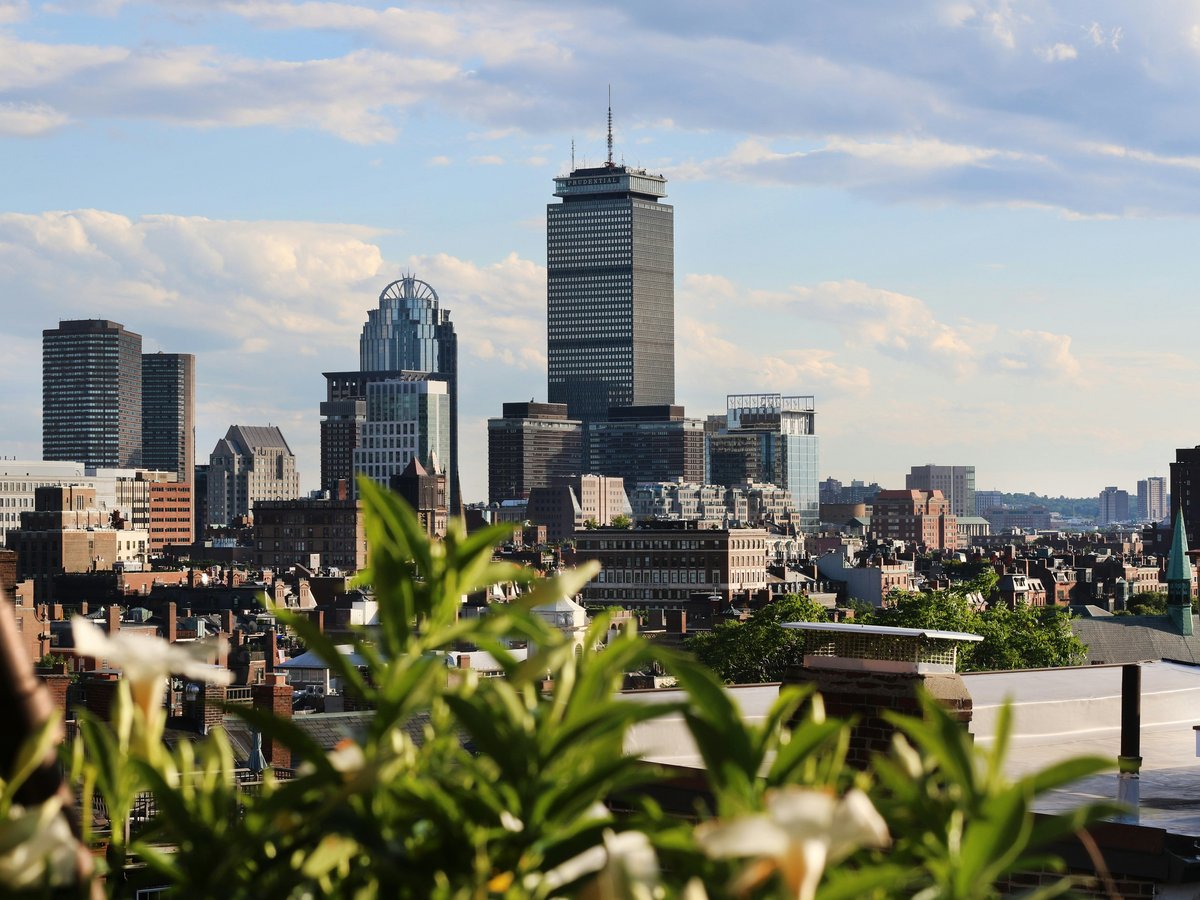
What should I pack for Boston?
Broken-in walking shoes are non-negotiable. The Freedom Trail covers 2.5 miles of uneven brick, and Beacon Hill's sidewalks are actual cobblestone. Pack layers year-round because Boston can swing 15°C in a single day. Summer visitors need a packable rain shell for sudden thunderstorms. Sunscreen matters more than you'd expect at 42°N latitude.
Shop the packing list (18 items)Boston's sidewalks will test whatever you put on your feet. The brick along the Freedom Trail has settled unevenly over two centuries, with lips and dips every few steps between the Old South Meeting House and Paul Revere's house in the North End. Beacon Hill is worse. Acorn Street, the most photographed lane in the neighborhood, is round cobblestone that turns slippery in morning dew. Flat-soled sneakers and fashion boots lose grip fast on wet stone. You want hiking-style tread or thick rubber lug soles. The Harborwalk from the Seaport to the North End adds another 2.5 miles of mixed boardwalk and granite, with steel grating sections near the ICA that catch thin heels. Most visitors log 8-12 miles on a full sightseeing day. The T covers major stops, but transfers at Park Street and Downtown Crossing still mean stairs and long underground corridors. Your feet take the brunt of Boston.
Boston's weather earned its reputation. In June, you might start the morning at 18°C near the harbor with a damp chill off the water and hit 32°C by 2 PM walking through Back Bay. The city's average July high reaches 28°C, but humidity frequently pushes the apparent temperature past 34°C in direct sun along the waterfront. Afternoon thunderstorms roll in fast from late May through September, sometimes with ten minutes of warning. You'll smell the ozone before you see the sky darken over the Charles River. A packable rain jacket beats an umbrella because you'll want both hands free on the T's steep escalators and in the tight pedestrian flow along Newbury Street. Winter is another matter. December through February regularly drops to -7°C, with wind off Boston Harbor pushing the feels-like temperature to -15°C. Thermal base layers and a windproof coat are not optional between November and March.
Boston runs on 120V power with US Type A/B plugs. European, UK, and Australian visitors need an adapter. A 10,000 mAh portable battery will save you by mid-afternoon. Google Maps is the best way to navigate the T system, and a full day of transit apps, photographing the Isabella Stewart Gardner Museum's courtyard, and texting drains most phones by 3 PM. Sunscreen tends to get overlooked for a northeastern city, but Boston sits at 42°N latitude and June daylight runs past 8:30 PM. You'll be in direct sun for hours walking Boston Common, which covers 50 acres with minimal shade on the central paths. One slightly dressier outfit handles dinner in the South End or the Seaport, where a few restaurants still lean business-casual. That said, Boston is a jeans-and-sneakers city. Nobody will look twice at you in a t-shirt at Legal Sea Foods or the bar at the Langham Hotel.
You can buy umbrellas, sunscreen, and over-the-counter medications for less in Boston than at any airport shop. CVS has a location roughly every 4 blocks in central Boston. The one in Downtown Crossing on Washington Street stays open until midnight. An umbrella costs $8-12, sunscreen $7-10. If you forget a phone charger, the Target at Boylston and Washington carries every cable type for under $15. Boston's tap water comes from the Quabbin Reservoir system about 65 miles west and tastes clean without filtering. Bring a reusable bottle, since the Museum of Fine Arts (founded 1870), the Boston Public Library on Boylston Street, and most T stations have refill stations. Worth noting, hand sanitizer is a practical add for riding the T and eating at Faneuil Hall's food court, where the hand-wash options aren't always convenient.
Essentials
- Broken-in walking shoes with real tread for 2.5 miles of brick on the Freedom Trail and Beacon Hill cobblestone Shop
- Packable rain jacket (afternoon thunderstorms hit fast May-September, and umbrellas are $8-12 at any CVS) Shop
- Layers for 15°C daily temperature swings, any season Shop
- 10,000 mAh portable battery for a full day of Google Maps and T navigation Shop
- Sunscreen SPF 30+ (42°N latitude, June daylight past 8:30 PM) Shop
- Plug adapter for non-US visitors (Boston is 120V, Type A/B outlets) Shop
- Reusable water bottle (clean Quabbin Reservoir tap water, refill stations at MFA and most T stops) Shop
- One business-casual outfit for South End or Seaport dinner spots Shop
- Light long-sleeve layer for aggressively air-conditioned restaurants and T cars in summer Shop
- Hand sanitizer for the T and Faneuil Hall food court Shop
Seasonal extras
- June-September: 2-3 quick-dry shirts for 30°C+ days with 60%+ humidity Shop
- June-September: hat or cap for sun at Fenway Park, which has no roof over most seats Shop
- June-September: swimwear if staying near Carson Beach in South Boston or the hotel pool circuit Shop
- November-March: thermal base layers and a windproof insulated coat rated to -15°C Shop
- November-March: wool hat and lined gloves for harbor wind chill Shop
- November-March: insulated waterproof boots for snow and slush on unshoveled side streets Shop
- December-February: hand and toe warmers for outdoor events at Faneuil Hall or First Night Shop
- April-May and October: medium-weight jacket and a scarf for the 8-18°C range Shop
Buy on arrival
- Umbrellas at CVS, $8-12 (locations roughly every 4 blocks downtown)
- Sunscreen at CVS or Walgreens, $7-10
- Phone chargers and cables at Target (Boylston and Washington), under $15
- OTC medications at CVS in Downtown Crossing on Washington Street, open until midnight
- CharlieCard for the T, available at subway station vending machines, $2.40 per ride
- Reusable shopping bags if you forget yours, since Boston's bag ban means $0.05-0.10 per paper bag at most stores
Last verified by automated review (v1.7.2) on . What is automated review?