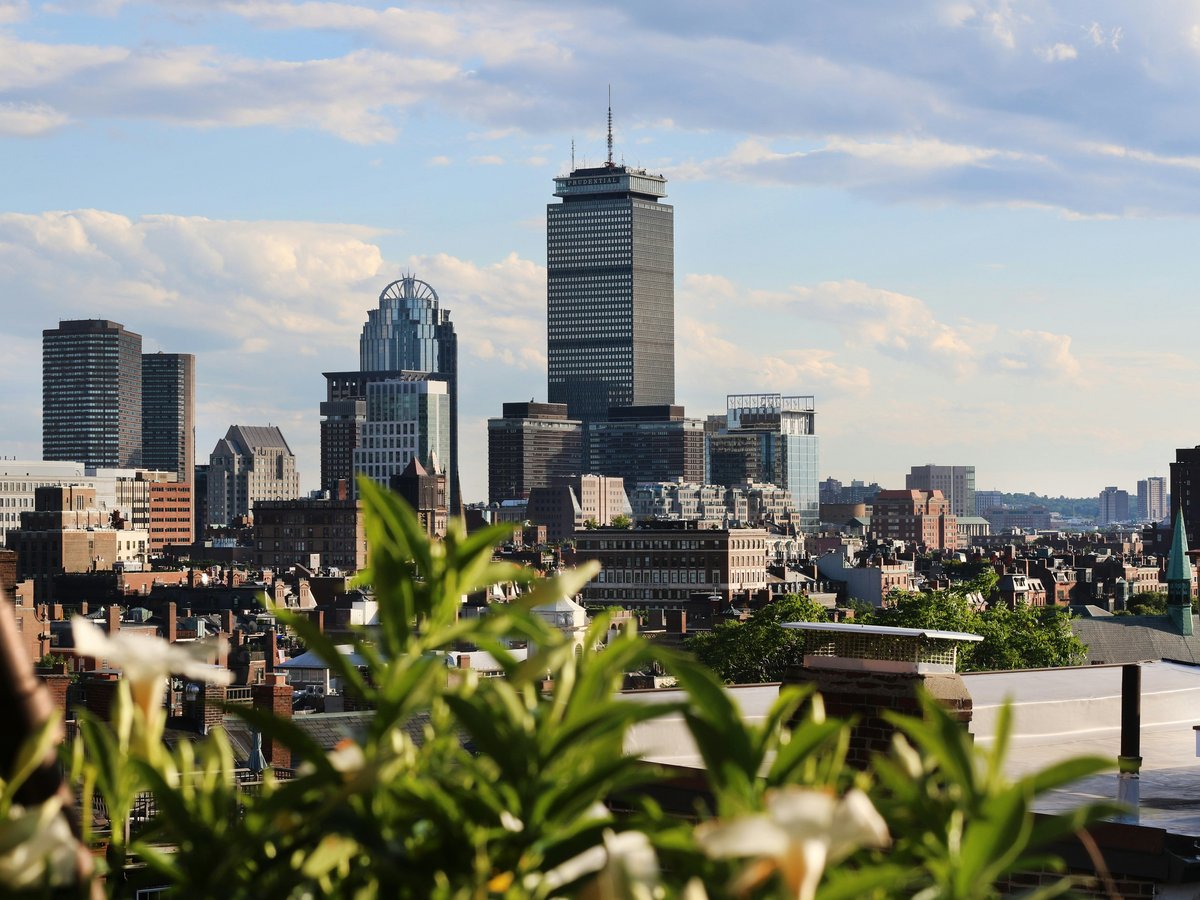
Boston is a compact city, maybe 50 square miles total, and it still follows the logic of a walking town from the 1600s. The neighborhoods fan out from Boston Common in roughly concentric rings. To the north sits the old waterfront and the North End. To the west, Back Bay fills in the old tidal flats on a perfect street grid. South of downtown, the South End and then Dorchester stretch toward the Neponset River. Cambridge and Somerville sit across the Charles River but feel like extensions of the city, connected by the Red Line and a 10-minute walk over the Longfellow Bridge. The T subway system has four color-coded lines that converge downtown, and most neighborhoods worth visiting sit within a few stops of Park Street station. You might notice that distances here are short but the streets are confusing. Boston was laid out before grid planning existed, so roads curve along old cowpaths and colonial property lines. A 15-minute walk covers most neighborhood transitions. That said, each district has a genuinely different feel, different building stock, different food, different noise level. The difference between the North End and the Seaport is about 0.8 miles and roughly 300 years of architectural history.
Neighborhoods
-
Beacon Hill
Federal-era brick rowhouses line narrow streets lit by gas lamps. The pace is slow, almost eerily quiet for a neighborhood 2 blocks from the State House. Acorn Street, probably the most photographed block in the city, is paved in original cobblestones from the 1820s. The architecture tends toward 3-4 story brick with black shutters and wrought iron railings. You'll hear your own footsteps here.
- Best for
- Couples and history-focused travelers who want a walkable base near the Common and the Charles River Esplanade without downtown noise.
- Key streets
- Charles Street is the commercial spine, with about 40 independent shops and restaurants running from the Public Garden to Cambridge Street. Mount Vernon Street and Louisburg Square hold the most intact 19th-century residential architecture. Pinckney Street is the quieter parallel route locals use.
-
North End
Boston's oldest residential neighborhood, settled in the 1630s, now the Italian-American center of the city. The streets are narrow, some only 10 feet wide, and the buildings press close together. The smell of espresso and baking bread from the bakeries on Hanover Street is constant. It's loud on weekends, with tourists packing the restaurants, but early mornings have a different quality. Old men sit outside the cafes on Salem Street. The Paul Revere House from 1680 sits on North Square between a pasta shop and a gelato place.
- Best for
- Food-focused travelers and anyone who wants to eat very well within a 4-block radius. Families with older kids tend to enjoy it. Not ideal if you need quiet at night, since Hanover Street stays busy until midnight.
- Key streets
- Hanover Street runs the full length of the neighborhood and holds most of the restaurants. Salem Street is the local shopping street with butchers and produce markets. North Square is the historic anchor. Cross Street marks the border with downtown.
-
Back Bay
Built on filled tidal flats starting in 1857, Back Bay has the only proper street grid in central Boston. The blocks run alphabetically from Arlington to Hereford, which helps with navigation. Victorian brownstones line Commonwealth Avenue, a 100-foot-wide boulevard with a tree-lined pedestrian mall down the center. The architecture is consistently 4-5 story brownstone with bay windows. Newbury Street runs parallel and holds the retail and restaurant concentration. The noise level depends on which block you're on. Newbury between Arlington and Exeter is busy with foot traffic. The residential streets between Comm Ave and Beacon Street are quiet enough to hear birds.
- Best for
- First-time visitors who want a central location with good restaurants within walking distance. Shoppers. People who appreciate 19th-century architecture and want to be near the Public Garden and the Charles River.
- Key streets
- Newbury Street for shopping and dining across 8 blocks. Commonwealth Avenue for the brownstone promenade. Boylston Street for Copley Square, the Boston Public Library (1895, McKim building), and Trinity Church. Exeter and Dartmouth are the best cross streets for restaurants.
-
South End
The largest intact Victorian row house district in the country, with about 3,000 bow-front brick buildings from the 1850s-1870s. The South End sits south of Back Bay and has a noticeably different feel. More residential, more diverse, with a strong LGBTQ+ community that's been here since the 1970s. The restaurant density is high. Tremont Street and Washington Street hold most of the dining. The neighborhood has community garden plots in the center of many blocks, a feature original to the 1850s plan. You'll smell whatever's grilling at the SoWa Open Market on Sundays in summer.
- Best for
- Foodies who want Boston's best restaurant concentration outside the North End. Couples looking for a quieter residential feel with serious dining within a 5-minute walk. The art gallery scene along Harrison Avenue and the SoWa district draws that crowd too.
- Key streets
- Tremont Street between Berkeley and Massachusetts Avenue holds about 30 restaurants. Washington Street is the other main commercial corridor. Union Park and Rutland Square are the prettiest residential squares. Harrison Avenue anchors the SoWa Art and Design District.
-
Cambridge
Technically a separate city across the Charles River, but connected to Boston by the Red Line and several bridges. Cambridge holds Harvard University (founded 1636) and MIT (founded 1861), and the neighborhoods around each campus have completely different personalities. Harvard Square is bookstores, street performers, and old brick buildings. Kendall Square near MIT has become the biotech capital of the country, with Moderna, Novartis, and about 30 other pharma companies headquartered in a few blocks. Central Square, between the two, is grittier and has the better live music venues and cheaper restaurants. The temperature feels 2-3 degrees cooler here in summer because of the river proximity.
- Best for
- Academic travelers, anyone visiting Harvard or MIT, tech workers, people who want good bookstores and international food at lower prices than downtown Boston. Families with college-age kids scouting schools.
- Key streets
- Massachusetts Avenue runs through all three squares and is the main commercial corridor. Brattle Street off Harvard Square has the old Cambridge money houses. Broadway in Kendall Square is the biotech walk. Hampshire Street in Inman Square (one neighborhood over) has some of the best restaurants in the metro area.
-
Seaport District
Boston's newest neighborhood, built almost entirely after 2010 on former parking lots and shipping terminals along the waterfront. Glass and steel towers, wide sidewalks, chain restaurants mixed with a few good independent spots. The Institute of Contemporary Art sits at the water's edge in a cantilevered glass box designed by Diller Scofidio + Renfro (2006). The area feels corporate on weekdays and empty on weekend mornings. The architecture is uniform in that new-construction way. In winter, the wind off the harbor cuts through the wide streets at 15-20 mph. Harpoon Brewery's beer hall on Northern Avenue draws weekend crowds.
- Best for
- Business travelers and convention attendees (the Boston Convention and Exhibition Center is here). People who prefer newer hotels with modern amenities over historic character. Families with young children who want the Children's Museum (Congress Street Bridge) and waterfront walking paths.
- Key streets
- Seaport Boulevard is the main east-west route. Northern Avenue connects to the Financial District. Congress Street leads to the Children's Museum and Fort Point Channel. Fan Pier and Liberty Wharf have the waterfront restaurant clusters.
-
Fenway-Kenmore
Dominated by Fenway Park (1912, the oldest MLB stadium still in use, capacity 37,755) and the cluster of colleges nearby. Boston University, Northeastern, Berklee College of Music, and the Museum of Fine Arts all sit within a 15-minute walk. The neighborhood is loud on Red Sox game days, about 81 home games per season from April through September. Lansdowne Street behind the Green Monster has bars that fill up 2 hours before first pitch. The non-game-day personality is more student-oriented, with cheap eats and late-night spots. The Isabella Stewart Gardner Museum on Evans Way holds a collection worth an estimated $500 million in a Venetian-style palazzo from 1903.
- Best for
- Baseball fans, college visitors, museum-goers, and budget travelers who don't mind student-neighborhood energy. The hotels here tend to run $30-50 cheaper per night than Back Bay or downtown.
- Key streets
- Brookline Avenue from Kenmore Square to Longwood Medical Area. Lansdowne Street for pre-game bars. Boylston Street (the Fenway stretch, not the Back Bay stretch) for restaurants. Huntington Avenue for the MFA and Symphony Hall.
-
Charlestown
Across the harbor from the North End, connected by a 10-minute walk over the Charlestown Bridge. The Bunker Hill Monument (221 feet, 294 steps to the top, no elevator) anchors the hilltop. The USS Constitution, launched in 1797, sits at the Navy Yard and is still a commissioned warship. The residential streets are mostly 3-story wooden triple-deckers and brick rowhouses. The neighborhood has changed a lot since the 1990s. Longtime Irish-American families and newer professionals coexist, and the housing prices reflect it. A 2-bedroom condo here runs $650,000-800,000 currently. The views of the Boston skyline from the Navy Yard waterfront are some of the best in the metro area.
- Best for
- History-focused travelers who want the Freedom Trail's northern terminus without staying in touristy downtown. Runners and walkers who want waterfront paths. People who prefer a residential neighborhood feel over hotel-district energy.
- Key streets
- Main Street is the commercial center with restaurants and bars. Monument Avenue leads up to Bunker Hill. Chelsea Street connects to the Navy Yard. The Harborwalk along the waterfront runs about 1.5 miles.
-
Jamaica Plain
About 4 miles southwest of downtown on the Orange Line, Jamaica Plain feels like a small town embedded in the city. Centre Street has independent shops, a food co-op (Harvest Co-op, operating since 1971), breweries (Brendan Behan Pub has no TV and no food but excellent pints), and Dominican, Mexican, and Indian restaurants within a few blocks of each other. Jamaica Pond, a 68-acre kettle pond left by glacial retreat, has a 1.5-mile walking loop. The Arnold Arboretum, 281 acres managed by Harvard since 1872, is free and open sunrise to sunset. The housing stock is mostly wooden Victorians and triple-deckers.
- Best for
- Longer-stay visitors who want a local neighborhood experience away from tourist areas. Families who want green space and a slower pace. Budget-conscious travelers, as Airbnb and short-term rental prices run 30-40% lower than downtown.
- Key streets
- Centre Street from Jackson Square to the Monument is the main strip, about a mile long. South Street borders the pond. The Arborway leads to the Arnold Arboretum entrance at the Hunnewell Building.
FAQ
What is the best neighborhood in Boston for first-time visitors?
Back Bay tends to work best for first visits. It's central, walkable to the Public Garden and Boston Common, has the Newbury Street restaurant and shopping corridor, and sits on the Green Line for easy T access. Hotels cluster along Boylston and Huntington, with rates typically $250-400 per night. The alphabetical street grid (Arlington, Berkeley, Clarendon, Dartmouth, Exeter, Fairfield, Gloucester, Hereford) makes navigation easier than Boston's usual tangle of colonial-era streets.
Is it worth staying in Cambridge instead of Boston proper?
Cambridge makes sense if you're visiting Harvard or MIT, or if you prefer independent restaurants and bookstores over the downtown hotel scene. The Red Line connects Harvard Square to Park Street in downtown Boston in about 22 minutes. Hotel rates in Cambridge run $20-40 lower than equivalent Back Bay properties. The main trade-off is that you'll add 15-25 minutes of transit time to reach the North End, the Seaport, or Fenway. For stays over 3 nights, the savings and the neighborhood character might be worth it.
Which Boston neighborhoods are safe for walking at night?
Back Bay, Beacon Hill, the North End, and the Seaport all feel safe for walking at night. These areas have steady foot traffic until 11pm or later, well-lit streets, and low property-crime rates. The South End's main corridors (Tremont and Washington) are fine, though the residential side streets get quiet after 10pm. Cambridge's Harvard Square stays busy until midnight most nights. Common sense applies everywhere, as it does in any city of 675,000 people. The T stops running around 12:30am, so plan your return route accordingly.
How do I get around between Boston's neighborhoods?
The T (MBTA subway) has four lines that converge at Park Street and Downtown Crossing stations. A single ride costs $2.40 with a Charlie Card. Most central neighborhoods are within a 20-minute walk of each other. Back Bay to the North End is about 1.3 miles on foot. The Silver Line bus connects South Station to the Seaport in 5 minutes. Ride-shares typically cost $8-15 within the city. Driving is not recommended. Parking runs $35-50 per day in garages, the streets are confusing, and the one-way system in the North End and Beacon Hill will test your patience.
When is the best time to visit Boston for good weather and fewer crowds?
September and early October tend to hit the sweet spot. Daytime temperatures average 65-75°F, the summer tourist peak drops off after Labor Day, and the fall foliage in the Public Garden and along the Charles River Esplanade starts turning by mid-October. Hotel rates drop 15-25% from summer peaks. May and June are also good, though June can be rainy (Boston averages 3.8 inches of rain that month). Winter runs December through March with average highs of 33-45°F and occasional nor'easters. July and August are warm (80-90°F) but crowded, with hotel rates at their yearly peak.
Last verified by automated review (v1.7.2) on . What is automated review?