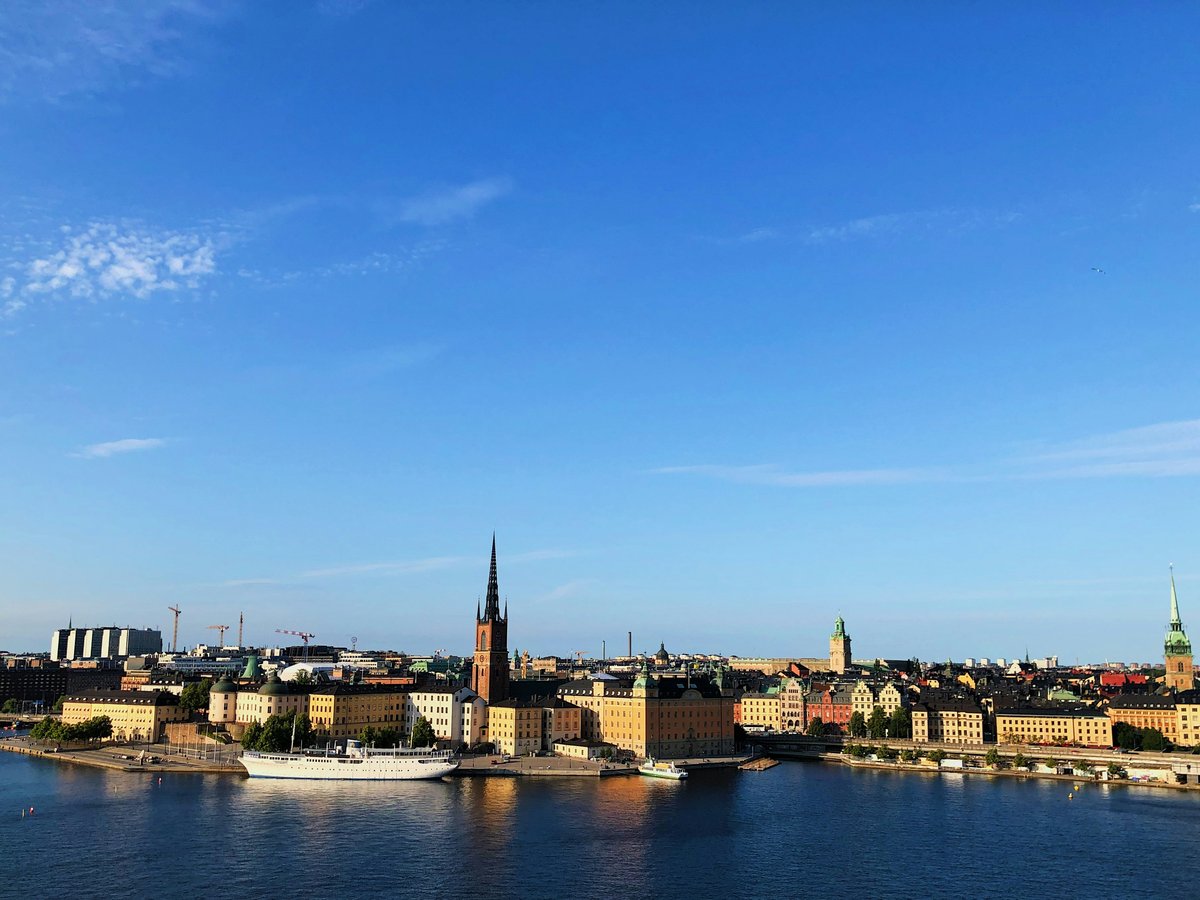
Stay in Stockholm in March
72 hotels in the Trip.com pool for Stockholm, from US$23 a night.
Opens Trip.com on Fri 5 Mar to Sun 7 Mar 2027; change the dates there.
March in Stockholm is all about one thing. The light is coming back. After months of genuine Nordic darkness, where December offered barely 6 hours of daylight and the sun slipped below the horizon before 3 PM, March delivers a dramatic reversal. Daylight stretches from roughly 10 hours at the start of the month to nearly 13 by the 31st. You can feel the shift walking through Södermalm or along the waterfront at Strandvägen. Faces emerge from scarves, the pace picks up on Drottninggatan. That said, don't mistake returning light for warmth. Average highs sit around 6°C (43°F), and nights still drop below freezing at -1.5°C (29°F). Snow is still possible, though it tends to be wet slush rather than the dry powder of January.
This is honestly a between-seasons month. Kungsträdgården's famous cherry trees are still bare. The outdoor terraces along Strandvägen remain shuttered. Gröna Lund amusement park on Djurgården won't reopen until late April. Most of what makes Stockholm worth visiting in March happens indoors. Fotografiska, Nationalmuseum, the Vasa Museum, Moderna Museet on Skeppsholmen. The fika culture peaks when cold weather pushes everyone inside, and a 55 SEK kanelbulle at a window seat in Gamla Stan while watching sleet blow sideways across Stortorget is its own kind of experience.
The trade-off is cost and space. Hotels in March typically run 25-35% below July rates. A room in Östermalm that goes for 3,500 SEK per night in summer might drop to 2,300 SEK. Flights from European hubs are similarly discounted. You'll share the Vasa Museum with a fraction of the August crowds, and you'll rarely need reservations at restaurants in Norrmalm that are fully booked during Midsommar week.
Why visit in March
- Daylight increases by nearly 3 hours across the month, from 10 to 13 hours, a psychological lift after the long Swedish winter that changes the feel of the entire city
- Hotel rates across Norrmalm and Östermalm typically run 25-35% below July peak, and flights from London, Amsterdam, and Berlin are similarly discounted
- Major museums like the Vasa Museum and Nationalmuseum have minimal queues compared to summer, when Stockholm draws over 4 million visitors between June and August
- March is Stockholm's driest month at only 27mm of rainfall across about 6 rainy days, making it comfortable to walk the city despite the cold
Worth knowing
- Nights still drop to -1.5°C (29°F), and wind off the Baltic funneling through the channels between Gamla Stan, Södermalm, and Norrmalm makes it feel colder than the thermometer reads
- Outdoor attractions run reduced schedules or remain closed entirely. Gröna Lund stays shut until late April, and archipelago ferry routes operate skeleton winter timetables
- Parks and gardens across Djurgården and Kungsholmen are still brown and bare, with no blooms until late April at the earliest. The Kungsträdgården cherry blossoms are a full month away
Best for
Think twice if
March in Stockholm feels like winter losing its grip, though it hasn't let go yet. Daytime temperatures reach a chilly 6.2°C (43°F), and mornings often start below freezing at -1.5°C (29°F). Precipitation is light at 27mm across roughly 6 rainy days, making it the driest month of the year. That rain might arrive as wet snow early in the month. Humidity sits around 76%, and the wind off Saltsjön and Mälaren adds a raw edge that makes the air feel several degrees colder than it measures. By late March the sun has real warmth when it catches you in a sheltered spot, but step into shade or cross an exposed bridge and the cold reminds you this is still Scandinavia.
Seasonal caution
- Nighttime temperatures regularly drop below 0°C (32°F), and wind chill on exposed bridges between Stockholm's islands can push the perceived temperature several degrees lower. Ice patches form on cobblestones in Gamla Stan and on pedestrian bridges, particularly in early mornings before they're salted.
Year-round climate
Averages from the last 5 years.
| Month | Avg high (°C) | Avg low (°C) | Rainfall (mm) |
|---|---|---|---|
| Jan | 1 | -4 | 61 |
| Feb | 2 | -4 | 34 |
| Mar | 6 | -1 | 27 |
| Apr | 10 | 1 | 32 |
| May | 16 | 6 | 56 |
| Jun | 21 | 12 | 66 |
| Jul | 22 | 14 | 87 |
| Aug | 21 | 13 | 90 |
| Sep | 17 | 10 | 49 |
| Oct | 11 | 6 | 63 |
| Nov | 5 | 1 | 42 |
| Dec | 1 | -3 | 41 |
Holidays and festivals in March
Public holidays
- Good Friday(Långfredagen)26 March 2027
- Easter Sunday(Påskdagen)28 March 2027
- Easter Monday(Annandag påsk)29 March 2027
Best things to do in March
Vasa Museum and Djurgården museum circuit
cultureThe Vasa Museum houses the only nearly fully intact 17th-century warship ever salvaged, a 69-meter oak vessel that sank in Stockholm harbor in 1628. In summer, the queue stretches 45 minutes or longer. In March, you can often walk straight in. Combine it with the nearby Nordiska Museet and ABBA The Museum, all on Djurgården within a 15-minute walk of each other.
Summer crowds at the Vasa Museum regularly exceed 5,000 visitors per day. March sees a fraction of that, with wait times under 10 minutes on most weekdays.Booking tipBuy tickets online for Vasa and ABBA The Museum regardless. ABBA still sells out on weekends even in off-season.
Fotografiska evening visit
cultureStockholm's photography museum on the Södermalm waterfront stays open until 11 PM on weekends and 9 PM on weekdays. The top-floor restaurant and bar have floor-to-ceiling windows looking out over the harbor and the lights of Gamla Stan. In March, the early sunset means you get the transition from blue hour to full dark while still at a reasonable dinner time.
Sunset in early March falls around 5:45 PM, dropping the harbor into blue-hour light during the 6 PM dinner slot at the rooftop restaurant. By late March, sunset pushes past 6:30 PM.Booking tipReserve the restaurant table at least a week ahead for weekend evenings. Museum admission is separate from the restaurant.
Sauna and cold plunge at Hellasgården
wellnessHellasgården is a public recreation area about 10 km southeast of central Stockholm, reachable by bus 401 from Slussen. The wood-fired sauna sits on the shore of Källtorpssjön, and the tradition is to alternate between the 80°C sauna and a plunge into the lake. In March, the lake water hovers near 1-2°C. The thermal shock is startling. The feeling afterward is something close to euphoria.
The contrast between sauna heat and near-freezing lake water is most extreme in late winter. By May the lake warms enough that the plunge loses its edge. March offers the full experience.Booking tipNo booking needed. Bring your own towel and swimsuit. The sauna costs around 80 SEK. Go on a weekday morning to avoid crowds.
Södermalm fika crawl
food and drinkSödermalm's SoFo district (south of Folkungagatan) has the highest density of independent cafes in Stockholm. A fika crawl through 3-4 of them, each with its own atmosphere, is the quintessential cold-weather Stockholm experience. Nytorgsgatan and the streets around Nytorget square are the center of gravity. Each stop means a coffee and something sweet, a kanelbulle or a semla, in a warm room that smells like cardamom and roasted beans.
Swedish fika culture is at its most authentic when the weather pushes people indoors. The cafes in SoFo are full of locals in March, not tourists. The atmosphere is quieter, warmer, less performative than in summer when tables spill onto sidewalks.Booking tipNo booking needed for cafes. Arrive before 10 AM on weekends to get a window seat at the popular spots along Nytorgsgatan.
Guided tour of Stockholms Stadshus
cultureStockholm's City Hall, where the Nobel Prize banquet is held each December, sits on the northern tip of Kungsholmen. The interior features the Golden Hall, covered in 18 million gold mosaic tiles, and the Blue Hall (which is red brick) where 1,300 guests sit for the Nobel dinner. Guided tours run daily and last about 45 minutes.
Fewer visitors in March means smaller tour groups and more room to appreciate the mosaics in the Golden Hall. Summer tours often run at full capacity with 30+ people per group.Booking tipCheck the Stadshus website for tour times, which vary by season. March typically has 2-3 tours per day in English. Arrive 15 minutes early.
Nationalmuseum and Moderna Museet double bill
cultureNationalmuseum on Blasieholmen reopened in 2018 after a 5-year renovation and holds Sweden's largest collection of art and design, from Rembrandt to Carl Larsson. A 10-minute walk across the bridge to Skeppsholmen brings you to Moderna Museet, which houses works by Dalí, Picasso, and Rauschenberg alongside a strong Scandinavian contemporary collection. The two complement each other well.
Both museums are free for visitors under 20. In March, the combined visit is unhurried. Summer visitors often rush through one to fit in the other before closing time.Booking tipNationalmuseum has free general admission. Moderna Museet charges for special exhibitions. Both are closed on Mondays.
Walking tour of Gamla Stan
sightseeingStockholm's old town dates to the 13th century. The narrow cobblestone alleys around Stortorget, Prästgatan, and Mårten Trotzigs Gränd (Stockholm's narrowest street, at 90 cm wide) are atmospheric in the low March light. The medieval street grid, the faded ochre and rust facades, the smell of coffee from doorways. Without summer crowds, you can stop and look up at the architecture.
Summer foot traffic on Västerlånggatan can feel like a slow-moving queue. In March, Gamla Stan belongs more to the people who live and work there. The pace is different, slower, and the streets feel like a neighborhood rather than a theme park.Booking tipFree to walk on your own. Guided walking tours run less frequently in March. Stockholm Free Tour operates year-round, tips-based, starting from Stortorget at 11 AM on most days.
What to eat in March
On menus now
Semlor
Cardamom-spiced wheat buns filled with almond paste and whipped cream. Sweden's defining late-winter pastry. The season runs from Fettisdagen (Shrove Tuesday, mid-February) through Easter, making March peak semla month. Every bakery in Stockholm sells them, and locals have strong opinions about who makes the best. Vete-Katten on Kungsgatan and Fabrique's locations across Södermalm are consistently mentioned.
Ärtsoppa och punsch
Yellow pea soup served with Swedish arrack punch, a Thursday lunch tradition that dates back to the Middle Ages and peaks during cold months. Restaurants across Norrmalm and Gamla Stan serve it as a Thursday lunch special (dagens rätt) from October through March. The soup is thick, smoky from ham hock, and warming on a raw Stockholm afternoon.
Raggmunk med fläsk
Crispy potato pancakes fried in butter, served with salt-cured pork belly and lingonberry jam. A cold-weather staple that shows up on lunch menus across Stockholm from November through March. The contrast between the greasy, golden pancake and the tart lingonberries is the whole point.
Street food peaks
Varmkorv
Hot dogs from street-side korvkioskar (sausage stands), topped with räksallad (shrimp salad), roasted onions, and mustard. Street food that Stockholmers eat year-round but that hits differently when you're cold and walking along Sveavägen at dusk. Günter's Korvar near Medborgarplatsen on Södermalm is a local favorite.
Festival food
Våfflor
Heart-shaped waffles served with jam and whipped cream, eaten across Sweden on Våffeldagen (March 25). The tradition stems from a folk mishearing of Vårfrudagen (Our Lady's Day). Cafes and homes alike break out the waffle irons. In Stockholm, you'll find them at most konditori throughout the last week of March.
Regular events in March
Våffeldagen (Waffle Day)
A nationwide Swedish tradition on March 25, when homes and cafes across Stockholm serve heart-shaped waffles with jam and cream. Cafes in Södermalm and Vasastan typically offer special waffle menus for the day.
March 25Internationella Kvinnodagen eventsFree
International Women's Day on March 8 brings a large demonstration march through central Stockholm, typically starting at Sergels Torg in Norrmalm. Cultural institutions including Fotografiska and Moderna Museet often run related programming throughout the week.
March 8Pre-Easter markets at Skansen
Skansen, the open-air museum on Djurgården, opens its Påskmarknad (Easter market) in late March when Easter falls in April. Traditional crafts, decorated birch twigs (påskris), hand-painted eggs, and Swedish Easter candy. The market draws families from across the city.
Late March (varies with Easter date)Best places this March
Fotografiska
museumStockholm's photography museum, housed in a 1906 Art Nouveau former customs building on the Södermalm waterfront. Three to four rotating exhibitions at any time. The top-floor restaurant has some of the best harbor views in the city, and the bar stays open late on weekends. Worth visiting after dark in March for the harbor lights.
SödermalmKungsträdgården
parkStockholm's central park between Norrmalm and Blasieholmen. In March, the 63 cherry trees lining the park are still bare, but the park's cafes reopen on warmer days and the outdoor ice rink sometimes extends into early March depending on temperatures. Worth a walk through to gauge the city's seasonal pulse.
NorrmalmStortorget and Gamla Stan
historic districtThe medieval square at the heart of the old town, surrounded by 17th and 18th century merchant houses painted in ochre, rust, and mustard. The Nobel Prize Museum sits on the north side. In March, the square is quiet enough to sit on the benches and take in the facades without being jostled by tour groups. The narrowest street in Stockholm, Mårten Trotzigs Gränd, is a 2-minute walk south.
Gamla StanMonteliusvägen
viewpointA 500-meter cliffside walking path on the north edge of Södermalm with panoramic views across Riddarfjärden to Stadshuset, Gamla Stan, and Kungsholmen. Free and open 24 hours. In March, the low sun angle in late afternoon throws long shadows across the water and turns the Stadshuset tower copper-gold. Considerably less crowded than in summer.
SödermalmNationalmuseum
museumSweden's largest art museum, reopened in 2018 after a 5-year renovation. The collection spans from medieval religious art through to Swedish design. Free general admission. The building itself, on the Blasieholmen peninsula, is worth the visit for the restored interiors alone. In March, you can linger in the Scandinavian design galleries without the summer shuffle.
BlasieholmenÖstermalms Saluhall
marketStockholm's premier indoor food hall in the Östermalm district, dating to 1888. Rebuilt and reopened in 2020. The hall has vendors selling reindeer, elk, cloudberry preserves, pickled herring, and fresh-baked bread. In March, the warm interior and the smell of smoked fish and fresh pastry make it a good lunch stop between museum visits. Lisa Elmqvist's counter has been serving seafood here since 1926.
ÖstermalmSkeppsholmen island
islandA small island connected by bridge to Blasieholmen, home to Moderna Museet and ArkDes (Sweden's national centre for architecture and design). The island is compact enough to walk in 30 minutes. In March, the waterfront path around the island is exposed to Baltic wind but offers views of Djurgården, Gamla Stan, and the harbor. Fewer visitors than the mainland museums.
Skeppsholmen
Your packing checklist
Tick items off as you pack. Your progress saves in this browser.
All packed — have a great trip.
Insider tips
Södermalm's SoFo district (south of Folkungagatan) has better coffee and lower prices than Gamla Stan's tourist-oriented cafes. The stretch of Nytorgsgatan between Nytorget square and Skånegatan is where locals go for fika, and you'll rarely hear English spoken at the tables around you.
Sweden is effectively cashless. Even market stalls, public toilets, and small bakeries take card only. Bring a Visa or Mastercard without foreign transaction fees. Many places don't accept American Express. Swish, Sweden's mobile payment app, requires a Swedish bank account, so cards are your only option.
Thursday lunch is ärtsoppa (pea soup) day across Stockholm. Restaurants from Pelikan on Södermalm to the cafeteria at Stockholms Stadshus serve it as the dagens rätt (daily special) for 120-150 SEK, with a small glass of Swedish punsch on the side. The tradition runs from October through March, so you're catching the end of the season.
The tunnelbana (metro) stations are worth visiting as art installations. Stations like T-Centralen (blue line platform), Kungsträdgården, and Solna Centrum have cave-like walls painted with murals. Over 90 of Stockholm's 100 stations have commissioned artwork. A 72-hour SL pass (330 SEK) covers unlimited rides.
Avoid these mistakes
- Packing for spring based on the calendar date. March in Stockholm still drops below freezing most nights. Visitors from southern Europe or North America often arrive in light jackets and spend their first afternoon buying warmer clothes at H&M on Drottninggatan.
- Assuming the Stockholm archipelago is accessible for day trips. The 30,000-island archipelago is Stockholm's great summer draw, but in March most ferry routes run skeleton winter schedules. Vaxholm is reachable year-round (about 50 minutes from Strandvägen by Waxholmsbolaget ferry), but the smaller islands like Sandhamn and Grinda have no regular service until May.
- Spending all their time in Gamla Stan. The old town is photogenic but small. You can walk its entirety in 2 hours. Visitors who stay in Gamla Stan miss the neighborhoods where Stockholmers live and eat. Södermalm, Vasastan, and Kungsholmen have better restaurants and cafes at lower prices.
Practical tips for March
Buy a 72-hour SL Access card (330 SEK) at the T-Centralen tunnelbana station for unlimited travel on buses, metro, trams, and some ferries. March museum hours are typically 10 AM to 5 PM, shorter than summer schedules, so check before heading out. Most restaurants in Norrmalm and Södermalm offer a weekday lunch deal called dagens rätt (daily special) for 120-160 SEK, which includes a main course, bread, salad, and coffee. This is the most cost-effective way to eat well. Book dinner reservations at least 3-4 days ahead for popular spots in Östermalm and Södermalm, even in the off-season. Stockholm's dress code leans smart-casual at nicer restaurants. Tipping is not expected but rounding up 5-10% at sit-down restaurants is appreciated. The sun sets around 5:45 PM in early March and 6:40 PM by month's end, so plan outdoor activities for the brighter midday hours.
FAQ
Is March a good time to visit Stockholm?
March is a fair-to-decent time for a Stockholm visit, depending on what you're after. It's not the city at its best. That's June through August, when the archipelago opens up and daylight stretches past 10 PM. But March has genuine appeal for museum-focused, budget-conscious travelers. Hotel rates drop 25-35% from summer peak, the Vasa Museum and Nationalmuseum have minimal crowds, and the rapidly increasing daylight (10 to 13 hours across the month) gives the city an optimistic energy after the long winter darkness. You'll need to be comfortable with cold. Highs hover around 6°C (43°F) and nights drop below freezing.
What is the weather like in Stockholm in March?
Expect average highs of 6.2°C (43°F) and lows of -1.5°C (29°F). Rainfall is light at 27mm across about 6 rainy days, making March Stockholm's driest month. Humidity runs around 76%. Snow is still possible in early March, usually wet and slushy rather than heavy accumulation. The real weather factor is wind. Cold air funneling through the water channels between Stockholm's islands makes the perceived temperature several degrees lower than what the thermometer shows, especially on bridges and waterfront paths.
Is Stockholm crowded in March?
No. March is one of Stockholm's quietest months for tourism. The summer peak (June through August) draws over 4 million visitors, and even December's Christmas market season brings significant crowds. March falls in the low season between those two peaks. You'll encounter short or no queues at major museums like the Vasa Museum, Fotografiska, and Nationalmuseum. Restaurant reservations are easier to get. The tunnelbana and buses are used primarily by commuters, not tourists. The only exception might be the last week of March during some years when Easter holiday travel begins early.
Can you see the Northern Lights from Stockholm in March?
Unlikely. Stockholm sits at 59.3°N latitude, which is south of the reliable aurora zone. You'd need to travel north to Kiruna (67.8°N) or Abisko for consistent sightings, about 1,200 km north of Stockholm. That said, during periods of strong geomagnetic activity, faint auroras are occasionally visible from the darker outskirts of Stockholm. March is one of the better months for solar activity due to the equinox effect. If you're determined, check aurora forecast apps and head to Hellasgården or another spot away from the city's light pollution, but don't plan a trip around it.
Things to Do in Stockholm in March
 Free cancellation
 The Original Stockholm Ghost Walk and Historical Tour - Gamla Stan
City tour: 1.5 hours, free cancellation.
via Viator Free cancellation
 Stockholm Private Golf Cart Tours
City tour: 2 hours, free cancellation.
via Viator Free cancellation
 Stockholm at a Glance Bike Tour
City tour: 3 hours, free cancellation.
via Viator Free cancellation
 Walking Tour of Stockholm's Old Town, Gamla Stan
Day trip: 2 hours, free cancellation.
via Viator Free cancellation
 Viking History, Runes & Countryside 9h Tour to Sigtuna & Uppsala
Day trip: 9 hours, free cancellation.
via Viator Free cancellation
 Stockholm Pizza Cruise - Explore Stockholm's Waterways
Cruise: free cancellation.
via ViatorFind a flight to Stockholm
Live fares to Stockholm appear here once cookies are accepted.
Last verified by automated review (v1.7.2) on . What is automated review?