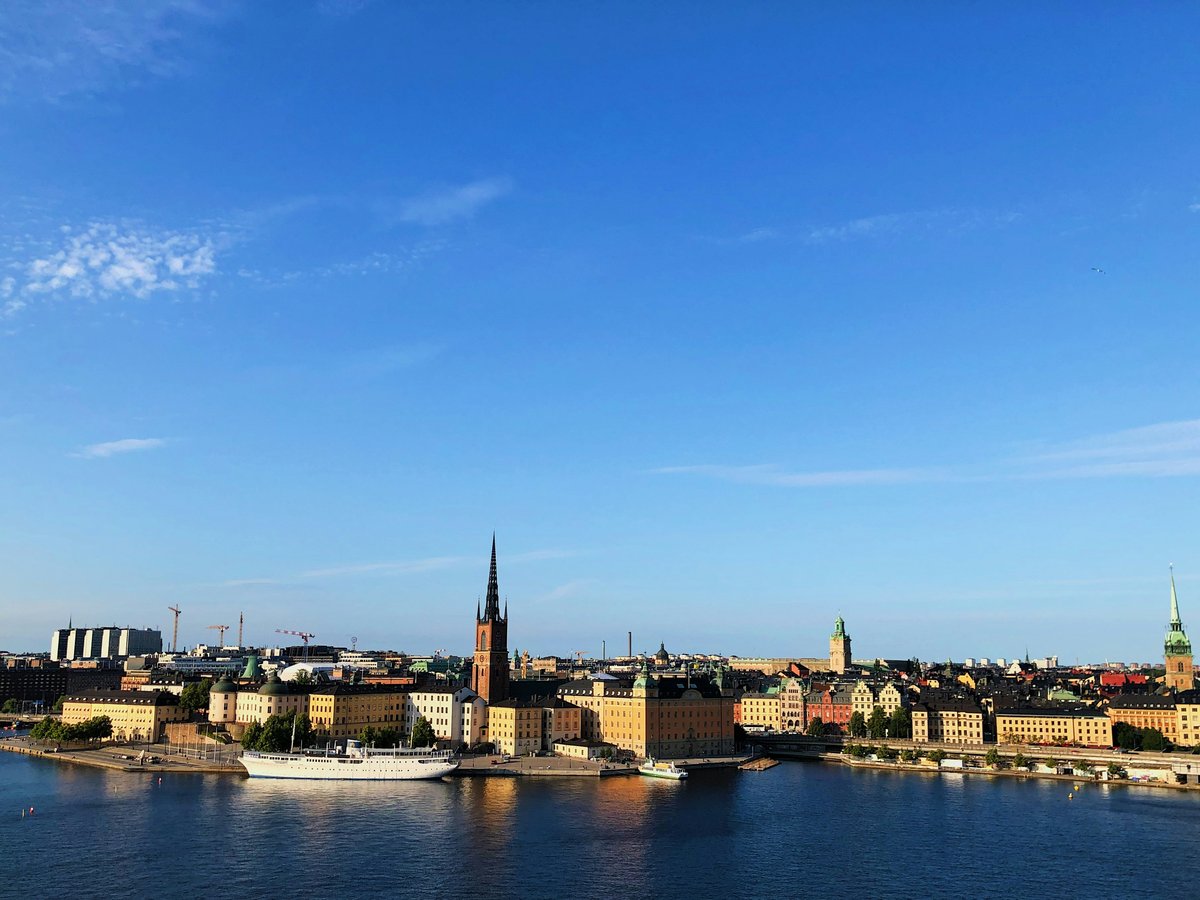
Stockholm spreads across 14 islands connected by 57 bridges, and the water is never more than a 10-minute walk away in any direction. That geography shapes everything about how the city feels. Gamla Stan sits on the central island, Stadsholmen, with Södermalm rising to the south and Norrmalm stretching north toward the commercial center around T-Centralen. Östermalm fills the northeast with its wide boulevards, while Kungsholmen occupies its own island to the west. The T-bana metro has 100 stations across 3 lines, and most neighborhoods worth staying in sit within a 15-minute ride of each other. Worth noting, though, is that Stockholm is a walking city in summer. From late May through August, daylight lingers past 10 pm, and the distances between neighborhoods feel shorter when you can cut through waterfront paths along Strandvägen or across the Västerbron bridge. The city tends to organize itself by altitude and attitude. Higher ground, like the cliffs of Södermalm along Fjällgatan, draws a younger and more creative crowd. The flat, manicured blocks of Östermalm attract old money and diplomats. Norrmalm handles commerce. Gamla Stan handles history. And Kungsholmen, to be fair, handles everyone who got priced out of Södermalm around 2015.
Neighborhoods
-
Gamla Stan
Medieval streets so narrow that two people with umbrellas can't pass each other. The buildings along Prästgatan date to the 1400s, and the plaster facades run in faded ochre, rust, and cream. Cobblestones underfoot are uneven enough to ruin heels. In winter, the smell of glögg and roasted almonds drifts from the stalls in Stortorget, the main square where the 1520 Stockholm Bloodbath took place. The noise level drops sharply once you step off Västerlånggatan, the main tourist drag, and onto the parallel Österlånggatan. It gets quiet enough to hear church bells from Storkyrkan.
- Best for
- First-time visitors who want to be within walking distance of the Royal Palace and Riksdag, and anyone who sleeps better in buildings older than most countries
- Key streets
- Västerlånggatan is the main commercial street, packed shoulder to shoulder in July. Österlånggatan runs parallel one block east and has better restaurants at lower prices. Prästgatan is the oldest, quietest lane. Stortorget is the central square with the Nobel Prize Museum at its north end.
-
Södermalm
Södermalm sits on a cliff south of Gamla Stan, connected by the Slussen interchange that Stockholm has been rebuilding since 2016. The neighborhood splits into distinct pockets. The SoFo area, south of Folkungagatan, fills its storefronts with vintage clothing shops, record stores, and coffee roasters. The northern cliffs along Fjällgatan offer a panoramic view of Gamla Stan and the harbor. The architecture is a mix of 1880s apartment blocks and functionalist 1930s housing. You'll hear Swedish rap from open windows in Medborgarplatsen during summer, and the smell of roasting coffee from Johan & Nyström on Swedenborgsgatan tends to drift across 3 blocks. The pace is slower than Norrmalm but noisier than Kungsholmen, especially on Friday evenings around Mariatorget.
- Best for
- Travelers in their 20s to 40s who want walkable nightlife, independent restaurants, and the feeling of a neighborhood that still has texture. Couples tend to like the Mariatorget area for its relative quiet.
- Key streets
- Götgatan is the main artery running south from Slussen, lined with shops and cinemas. Bondegatan and Skånegatan form the heart of SoFo. Hornsgatan stretches west and gets grittier past Zinkensdamm. Nytorgsgatan anchors the cafe scene around Nytorget square.
-
Östermalm
Wide boulevards, cream-colored stone facades, and a hush that feels expensive. Östermalm is where Stockholm keeps its embassy row along Strandvägen, its most traditional food hall at Östermalms Saluhall (rebuilt in 2020 after 4 years of renovation), and its quietest residential streets. The architecture is overwhelmingly late 19th century, built during Stockholm's expansion boom between 1880 and 1910. Sidewalks are broad enough for prams and dogs, both of which appear in quantity. The air smells like nothing in particular, which in Stockholm means clean Baltic breeze and occasionally someone's perfume. You might notice that conversations here tend to be quieter than in Södermalm, even in restaurants.
- Best for
- Travelers who prefer a calm, polished neighborhood with proximity to the Djurgården museums. Families with strollers will find Östermalm's wide sidewalks and parks easier to navigate than Gamla Stan's cobblestones.
- Key streets
- Strandvägen runs along the waterfront and is arguably Stockholm's most recognizable avenue, lined with 1890s apartment buildings and moored wooden boats. Karlavägen parallels it one block north and has better lunch spots. Sturegatan leads to Stureplan, the nightlife and restaurant hub that gets loud after 11 pm on weekends. Humlegårdsgatan connects to the park of the same name.
-
Norrmalm
Norrmalm is Stockholm's commercial center, and it feels like it. The area around T-Centralen and Sergels Torg pulses with commuters, department stores, and the constant low rumble of the T-bana below. Drottninggatan, the main pedestrian street, runs north for about a kilometer lined with H&M, Åhléns, and chain restaurants. The architecture around Sergels Torg is brutalist 1960s concrete, a legacy of Stockholm's aggressive postwar demolition program that locals still argue about. Move a few blocks east toward Biblioteksgatan and Norrmalmstorg and the tone shifts. The streets narrow, the shops get more expensive, and the restaurants improve. The noise drops noticeably past Kungsträdgården park, especially in the mornings before the office workers arrive.
- Best for
- Business travelers, anyone who needs to be near Stockholm Central Station for early trains to Arlanda, and shoppers who want department stores and Swedish brands within walking distance
- Key streets
- Drottninggatan is pedestrianized and heavily trafficked. Biblioteksgatan offers higher-end boutiques in a calmer setting. Kungsträdgården park hosts seasonal events and free concerts in summer. Hamngatan connects the NK department store (opened 1902) to Sergels Torg.
-
Kungsholmen
Kungsholmen is the island most visitors see only from the windows of the Stadshuset (City Hall, built 1923, home of the Nobel Prize banquet). That is a mistake. The neighborhood behind the City Hall is residential, quiet, and increasingly popular with young families priced out of Södermalm. The waterfront promenade along Norr Mälarstrand stretches about 2 kilometers and is one of the best running and walking paths in the city. Architecture runs toward 1920s-1940s apartment blocks in pale yellow and grey. The food scene along Fleminggatan has grown noticeably since 2018, with several good Thai and Middle Eastern places alongside traditional Swedish lunch spots. The water of Riddarfjärden laps against the stone quays, and on summer evenings the smell of grilled food drifts from the houseboats moored along the southern shore.
- Best for
- Travelers who want a residential feel, quieter evenings, good waterfront walks, and lower hotel prices than Östermalm or Södermalm. Runners will particularly like the Norr Mälarstrand loop.
- Key streets
- Hantverkargatan leads from the City Hall east into the neighborhood's commercial center. Fleminggatan runs parallel and has the best restaurant concentration. Norr Mälarstrand is the waterfront path. Scheelegatan connects north toward Fridhemsplan, the main T-bana hub for the island.
-
Vasastan
Vasastan sits north of Norrmalm, between Odenplan and the leafy campus of Stockholm University. It is a neighborhood of 5-story apartment buildings from the 1890s-1910s, wide streets, and a distinctly academic, slightly bookish atmosphere. The Stockholm Public Library, designed by Gunnar Asplund and completed in 1928, anchors the neighborhood at Sveavägen 73 with its famous cylindrical reading room. The food scene leans traditional Swedish with some newer additions. Odengatan and its cross-streets have a good density of bakeries and lunch restaurants. The pace is calm without being sleepy. You'll hear trams (restored since 2010 on line 7) ringing their bells along Birger Jarlsgatan at the eastern edge.
- Best for
- Readers, architecture enthusiasts, and travelers who want a genuinely residential Stockholm experience without the tourist density of Gamla Stan or the price of Östermalm
- Key streets
- Odengatan is the main commercial street, running east-west through the neighborhood. Upplandsgatan has a concentration of restaurants and cafes. Sveavägen is the major north-south avenue, louder and busier than the side streets. Karlbergsvägen runs along the northern edge toward the Karlberg Palace grounds.
-
Djurgården
Djurgården is technically an island, though the bridge from Strandvägen makes it feel like an extension of Östermalm. It holds most of Stockholm's heavyweight museums. The Vasa Museum (3.5 million visitors before the pandemic) houses a 17th-century warship that sank in 1628 on its maiden voyage, 1,300 meters from the dock. ABBA The Museum opened in 2013. Skansen, the world's first open-air museum, dates to 1891 and covers 30 hectares. Between the museums, the island is mostly oak forest and waterfront paths. The air smells like pine and seawater. In summer, the sounds are ferry horns, birdsong, and children. Hardly anyone lives on Djurgården year-round.
- Best for
- Families with children who need a full day of museums, history enthusiasts drawn to the Vasa or Nordiska Museet, and anyone who wants a long walk in old-growth forest 10 minutes from the city center
- Key streets
- Djurgårdsvägen runs the length of the island and connects all major museums. Rosendalsvägen leads to Rosendals Trädgård, a garden cafe. The waterfront path along Djurgårdsbrunnsvägen continues east past the old naval dockyards.
-
Långholmen
Långholmen is a small island tucked between Södermalm and Kungsholmen, and its main landmark is a former prison that closed in 1975 and now operates as a hostel and hotel. That detail tells you something about the island's personality. It is quiet, forested for its size, and feels removed from the city despite being a 15-minute walk from Hornstull. The swimming spots along the southern shore are popular with locals from June through August, when the Baltic water temperature reaches about 18-20°C. The paths through the island's interior are shaded by old oaks and birches. You can smell pine resin on warm afternoons.
- Best for
- Budget travelers willing to stay in a converted prison (the Långholmen Hotel has doubles from about 1,200 SEK per night), swimmers, and anyone who wants to sleep somewhere genuinely unusual
- Key streets
- The island is small enough that named streets matter less than paths. The main entry is across the Långholmsbron bridge from Södermalm's Hornstull area. The waterfront loop takes about 40 minutes at a walking pace.
FAQ
Which Stockholm neighborhood is best for first-time visitors?
Gamla Stan puts you within walking distance of the Royal Palace, Riksdag, and the Nobel Prize Museum, all on the small island of Stadsholmen. The downside is tourist density from June through August, when Västerlånggatan becomes shoulder-to-shoulder by noon. Södermalm is a strong alternative if you want a more residential feel with better restaurants and still be only a 10-minute T-bana ride from the main sights. Hotels in Gamla Stan tend to run 1,800-3,500 SEK per night, while Södermalm offers slightly more range.
Is Stockholm walkable between neighborhoods?
The core is very walkable. Gamla Stan to Södermalm is a 10-minute walk across Slussen. Norrmalm to Östermalm takes about 12 minutes along Strandvägen. Kungsholmen to Norrmalm is 15 minutes over the Stadshusbron. Djurgården is a 20-minute walk from Östermalm across the Djurgårdsbron bridge, or a 10-minute ferry from Slussen. The T-bana fills gaps efficiently, with trains every 5-10 minutes on most lines during the day. A 24-hour SL travel card costs 165 SEK and covers all metro, bus, tram, and ferry routes.
Where should I stay in Stockholm on a budget?
Kungsholmen and Vasastan offer lower hotel and Airbnb rates than Gamla Stan or Östermalm, with good T-bana connections from Fridhemsplan and Odenplan stations. Långholmen's converted prison hotel has doubles from about 1,200 SEK. Södermalm hostels around Zinkensdamm run from about 350 SEK per dorm bed. Norrmalm's budget options cluster around Stockholm Central Station, which is convenient for Arlanda Express (280 SEK one way, 20-minute ride) but the immediate area around T-Centralen can feel impersonal after dark.
Which neighborhoods have the best food scenes?
Södermalm currently has the most interesting restaurant concentration, particularly around Nytorget and along Bondegatan, where you'll find places like Nytorget 6 and several newer spots that have opened since 2022. Östermalm's Saluhall is the best traditional food hall, with Lisa Elmqvist's fish soup a baseline visit. Kungsholmen's Fleminggatan corridor has grown noticeably and tends to be 15-20% cheaper than equivalent restaurants in Östermalm. For street food and quick lunches, Hötorgshallen in Norrmalm (below Hötorget square) has been operating since 1958 and its basement food stalls still serve some of the city's best falafel and Thai.
How does Stockholm's weather affect neighborhood choice?
Between November and March, daylight drops to about 6 hours in December, and temperatures hover around -1°C to 3°C. Neighborhoods with indoor attractions matter more in winter. Norrmalm puts you near Kulturhuset and the major shopping streets. Östermalm is close to the museums on Djurgården. In summer, from June through August, temperatures average 20-22°C and daylight stretches past 10 pm, which makes waterfront neighborhoods like Kungsholmen and Södermalm significantly more appealing. The outdoor seating at Mälarpaviljongen or along Norr Mälarstrand doesn't exist in winter.
Is Gamla Stan worth staying in or is it too touristy?
Gamla Stan gets genuinely crowded from about 10 am to 6 pm between June and August, particularly on Västerlånggatan. But the crowd disperses after dinner, and by 9 pm the cobblestone streets are mostly empty. Hotels here tend to be in converted 17th- and 18th-century buildings with thick stone walls and uneven floors, which some travelers find atmospheric and others find inconvenient (no elevators in many, narrow staircases with luggage). If you stay, book on a side street like Prästgatan or Köpmangatan rather than on Västerlånggatan itself. The morning quiet before 9 am, when the tour groups arrive from the cruise ships at Stadsgården, is a different city entirely.
Last verified by automated review (v1.7.2) on . What is automated review?