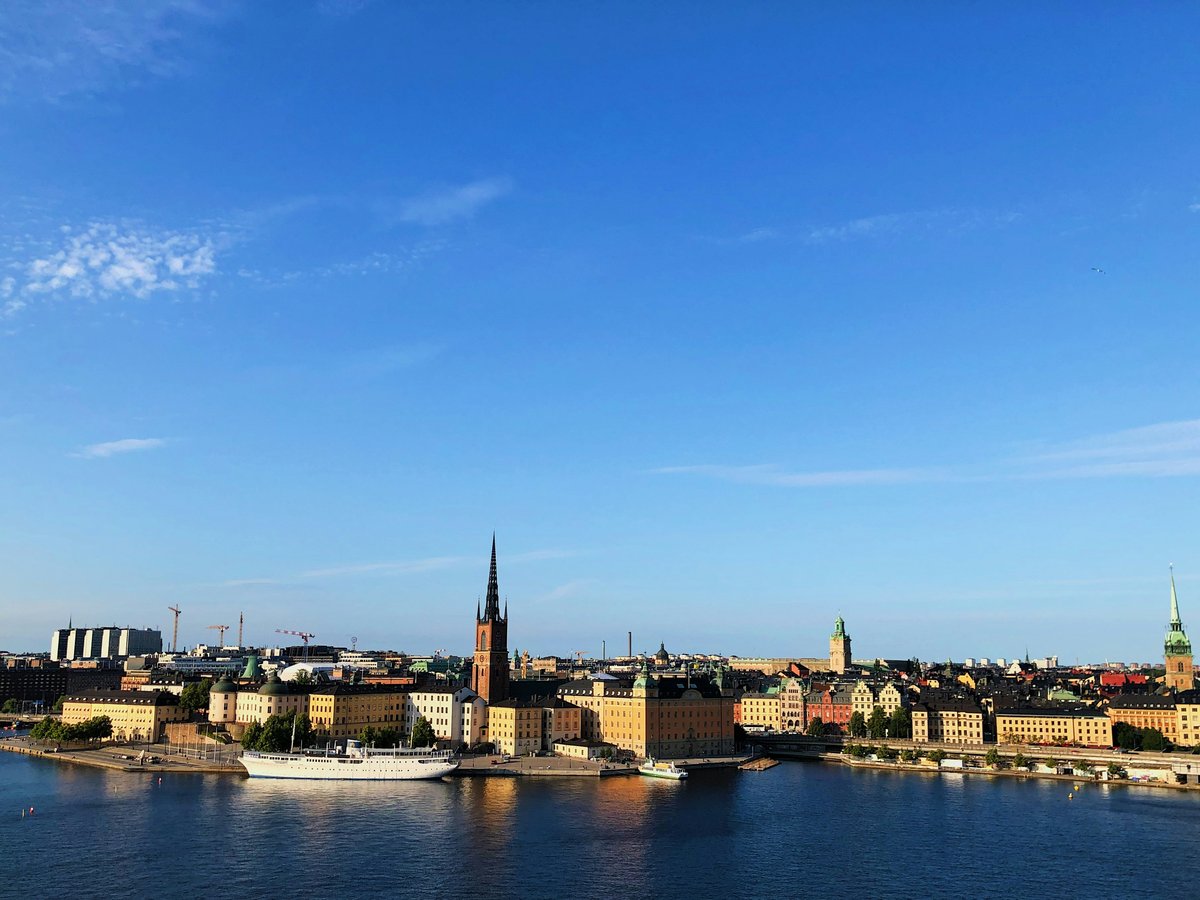
Where do locals actually go in Stockholm?
Stockholmers scatter across Södermalm's Nytorget square, Vasastan's Rörstrandsgatan, and the Hornstull waterfront. Skip Gamla Stan entirely. The real social calendar runs on Thursday AW (after-work) drinks at neighborhood pubs like Kvarnen on Tjärhovsgatan and summer evenings at Tantolunden park, where locals grill until 10pm in the midnight-sun weeks of late June.
Södermalm is where most remote workers land, and for the first week that's fine. But the neighborhood splits between tourist Söder and local Söder. The tourist half runs along Götgatan from Slussen south to Medborgarplatsen, with 85 SEK lattes and chain stores. Local Söder starts east of Götgatan around Nytorget square. Weekday mornings bring parents with strollers and freelancers at Café String on Nytorgsgatan, where the cinnamon buns carry strong cardamom and a filter coffee with free refill costs 45 SEK ($4.80). Mellqvist Kaffebar on Hornsgatan still draws neighborhood regulars who've been coming since the early 2000s, not the literary tourists chasing the Stieg Larsson connection. You can read any Södermalm cafe by its queue. No line before 9am and a 20-minute wait at 11 means it's tourist-driven. Local spots peak between 7:30 and 8:45am.
Vasastan, north of Odenplan, is the neighborhood Stockholmers recommend when you ask where they live. Rörstrandsgatan packs 14 restaurants into about 400 metres. Tranan at Karlbergsvägen 14 has been a locals' dinner anchor since 1929. Downstairs, the basement bar fills with 30-somethings on Thursday AW nights from 5pm. Expect to pay 95-125 SEK for a beer. Lilla Ego on Västmannagatan takes no reservations and the wait on a Friday can hit 90 minutes, but the pork belly with fermented cabbage is worth standing in the cold for. Hornstull, on western Södermalm's waterfront, hosts Hornstulls Marknad on Saturdays and Sundays from April through September, 10am to 5pm, along the Hornstull Strand quay. The waterfront restaurants fill with locals after 6pm on summer evenings when the sun sits low over Liljeholmen and the concrete stays warm from the day's heat.
South of Södermalm, Telefonplan and Midsommarkransen are where Stockholm's younger creative crowd moved when Söder rents rose past 12,000 SEK per month for a one-bedroom. The old Ericsson factory complex at Telefonplan now holds studios, coworking spaces, and Konstfack, Sweden's largest art university. Coffee at the cafes around Telefonplan square runs 35-40 SEK, about 30% below Södermalm prices. The area feels quiet, but a 3-minute walk to Midsommarkransens tunnelbana puts you at T-Centralen in 12 minutes. Aspudden, one stop south, has a Saturday morning flea market and a supermarket open until 11pm. Telefonplan, Midsommarkransen, and Aspudden don't appear in guidebooks. Rents run 8,500-10,000 SEK for a studio, compared to 13,000-16,000 SEK in central Södermalm. Restaurants along Telefonvägen close by 9pm, and the nearest late-night food is a 15-minute walk toward Liljeholmen.
Stockholm's social rhythm splits sharply by season. From late May through August, the city empties into parks. Tantolunden in Södermalm fills with groups grilling on the hillside from 5pm, the smell of charcoal and marinated chicken carrying across the grass. Långholmen, a 10-minute walk from Hornstull, has a free public beach where the water reaches 20°C by late June. Skinnarviksberget, the highest natural point on Södermalm at 53 metres, draws 200-odd people on clear summer evenings to watch the sun drop behind Riddarfjärden around 10pm. From October through March, AW drinking moves from terraces to pubs. Kvarnen on Tjärhovsgatan, a working-class beer hall since 1907, still pours Norrlands Guld for 79 SEK. Pelikan at Blekingegatan 40 serves husmanskost, the heavy cream-and-lingonberry Swedish home cooking that belongs in winter. Tuesday and Wednesday evenings at either place are when locals outnumber visitors by a comfortable margin.
Where they actually go
Nytorget square
SoFo, Södermalm: Freelancers and parents claim park benches by 10am. Surrounding cafes serve 45 SEK filter coffee with free refills. Quiet enough to read outdoors, busy enough to feel like a neighborhood living room on warm mornings.
Tranan
Vasastan: Upstairs, white tablecloths and SOS sill (herring plate, 135 SEK) in a room unchanged since 1929. The basement bar fills Thursday and Friday AW with Vasastan 30-somethings drinking Mariestads on tap.
Kvarnen
Södermalm: A 1907 beer hall with worn wooden benches and 79 SEK Norrlands Guld. Tuesday and Wednesday evenings are the real locals' window. Loud, warm, smells like spilled lager and fried food.
Pelikan
Södermalm: A beer hall since 1733 with high ceilings and heavy husmanskost. The meatballs with lingonberry cream sauce cost 195 SEK. Wooden booths absorb the noise of large Swedish family dinners and clinking glasses.
Hornstulls Marknad
Hornstull, Södermalm: Weekend flea market along the waterfront, April through September, 10am-5pm. Vintage furniture, secondhand clothes, and 40 SEK grilled korv from stalls that smell like mustard and charcoal.
Tantolunden park
Södermalm: Summer hillside grilling from 5pm onward. Charcoal smoke mixes with cut grass. The allotment garden plots along the south side date to the 1920s and still produce vegetables and flowers in July.
Skinnarviksberget
Södermalm: Stockholm's highest natural point at 53 metres. On clear summer evenings, 200-plus people bring wine and blankets to watch the sunset over Riddarfjärden past 10pm in late June.
Rörstrandsgatan
Vasastan: A 400-metre street with 14 restaurants and almost no tourists. Locals eat Thai, Ethiopian, Italian, and Swedish within two blocks. The sidewalk tables fill by 6:30pm on summer Fridays.
Best times to visit
Thursday AW (after-work) drinks from 5pm at neighborhood pubs. Summer park grilling daily from 5pm, peaking June through August. Winter locals' nights are Tuesday and Wednesday at old beer halls like Kvarnen and Pelikan.
Last verified by automated review (v1.7.2) on . What is automated review?