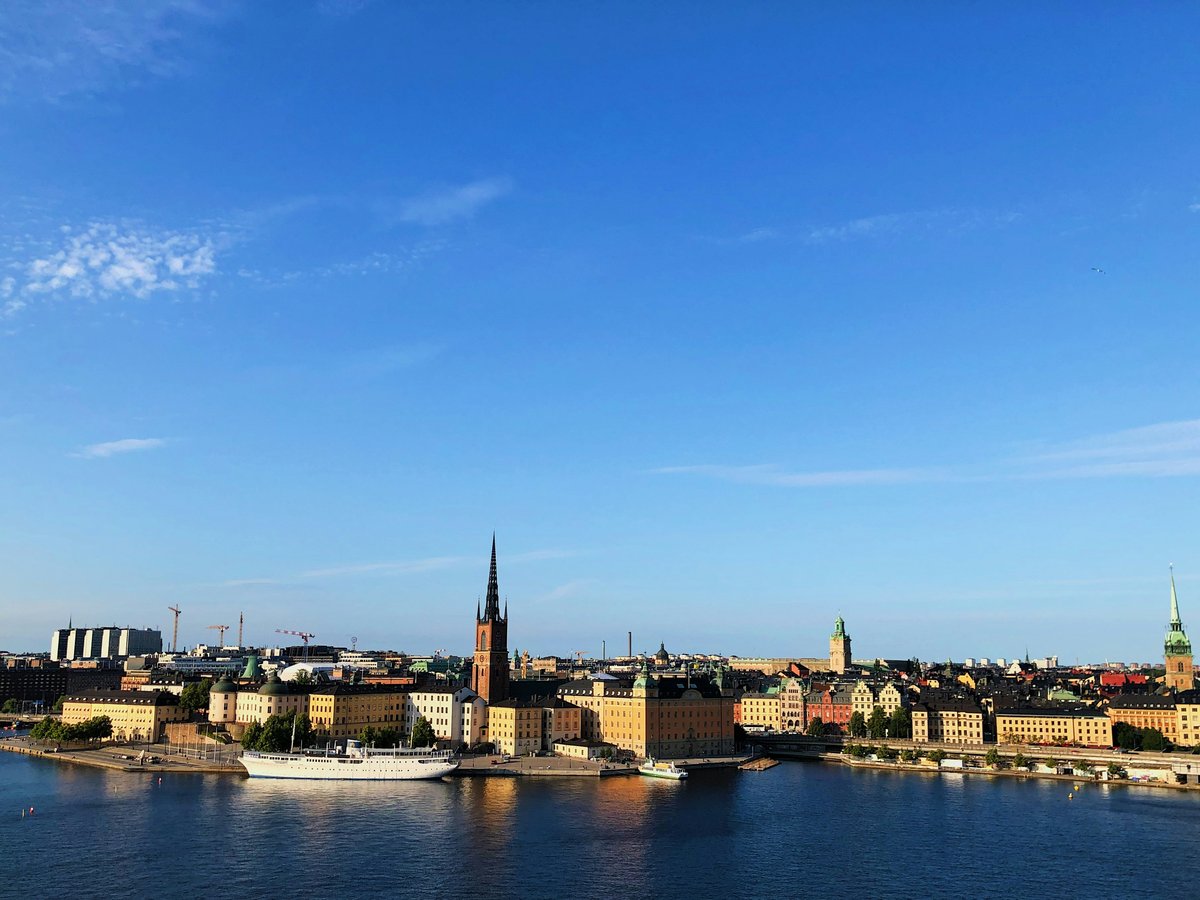
Stockholm sits across 14 islands where Lake Mälaren empties into the Baltic Sea, and that geography shapes everything about the city's outdoor life. About 40% of the municipality is green space or water. The result is a capital where you can paddle a kayak past 18th-century buildings on Skeppsholmen, swim off granite rocks at Långholmen, and reach genuine boreal forest inside 30 minutes on the commuter rail. The city's latitude, roughly 59.3°N, means summer days stretch past 10 pm in June and July, while December offers about 6 hours of pale daylight. Allemansrätten, Sweden's right of public access, still applies across most of the surrounding countryside, which means you can hike, camp, and forage on private land with some common-sense restrictions. The water temperature in the inner archipelago typically reaches 18 to 20°C by mid-July. Worth noting, the city's transit system, SL, runs ferries, buses, and commuter trains that drop you at trailheads and swimming spots on the same travel card you use for the tunnelbana.
Outdoor activities
-
Road cycling on Djurgården and the Mälaren loop
Djurgården's flat, car-limited roads make for a gentle warm-up ride of about 8 km around the island. For something more ambitious, the Mälaren route west toward Drottningholm Palace covers roughly 25 km one way on a mix of bike lanes and quiet lakeside roads. You'll ride past Kungsholmen's waterfront, through Bromma, and along Mälaren's northern shore. The surface is paved the entire way. Stockholm's city bike scheme, currently run by the municipality, has stations across Södermalm and Norrmalm, though you might prefer your own geared bike for the Drottningholm stretch.
- Difficulty
- Easy to moderate
- Duration
- 1 to 4 hours depending on route
- Best season
- May through September
-
Trail running at Nackareservatet
Nacka Nature Reserve sits about 6 km southeast of Södermalm, reachable by bus 401 from Slussen. The reserve covers roughly 1,800 hectares of pine and spruce forest with rocky ridges, small lakes, and single-track paths that feel a long way from the city. A good loop starts at Hellasgården, follows the marked trails south past Källtorpssjön, and circles back through the forest. Elevation gain is modest, maybe 150 meters over a 10 km loop, but the rocky terrain and root-covered trails make it feel harder. The outdoor gym at Hellasgården is free to use.
- Difficulty
- Moderate
- Duration
- 1 to 2 hours for a 10 km loop
- Best season
- April through October, though locals run year-round with studded shoes in winter
-
Cross-country skiing at Hellasgården
When Lake Källtorpssjön and the surrounding trails freeze over, Hellasgården becomes Stockholm's most accessible cross-country skiing spot. The facility grooms several loops of varying length, from 2.5 km to roughly 10 km, through the Nacka forest. Ski rental is available on-site for around 200 SEK per day. The season is unpredictable, sometimes starting in December, sometimes not until late January. Snow conditions are tracked on Hellasgården's own website. Bus 401 from Slussen takes about 15 minutes.
- Difficulty
- Easy to moderate depending on loop
- Duration
- 1 to 3 hours
- Best season
- January through March, snow permitting
-
Rock climbing at Stora Vika
Stora Vika, about 50 km south of central Stockholm near Nynäshamn, is likely the most popular sport climbing crag in the region. The old limestone quarry offers routes from 5a to 7c on walls up to about 30 meters high. The rock is generally solid limestone with good friction when dry. You'll need your own gear or a partner with a rack. Access is by car, roughly 45 minutes from the city center. Mind you, some routes can seep water after rain, so check conditions before driving out. The Swedish Climbing Association publishes route information through its 27crags listings.
- Difficulty
- 5a to 7c (French grade), beginner to advanced
- Duration
- Half day to full day
- Best season
- May through September
-
Ice skating on Lake Mälaren and natural ice
Stockholm has a strong long-distance ice skating tradition on natural ice, locally called långfärdsskridsko. When conditions allow, typically from late December through February, prepared tracks appear on the bays around the city. Årstaviken, the bay between Södermalm and Årsta, is one of the first to freeze reliably. For longer tours, Lake Mälaren's inner bays and the sheltered waters of the archipelago open up. The Stockholm Ice Skating Club, Stockholms Skridskoklub, publishes daily ice reports. You'll need Nordic touring skates, ice picks worn around your neck, and ideally a group. The ice thickness needs to reach at least 7 cm for safe skating, and conditions can change within hours.
- Difficulty
- Moderate to advanced, requires ice safety knowledge
- Duration
- 2 to 6 hours depending on route
- Best season
- Late December through February, ice-dependent
Day hikes
-
Tyresta National Park loop from Tyresta village
Tyresta is likely the best day hike you can do from Stockholm. The national park protects about 2,000 hectares of old-growth coniferous forest, some of it 300 to 400 years old, with barely any logging history. The most popular loop starts at Tyresta village, follows marked trails south past Stensjön lake, and circles back through the forest. The terrain is rocky with boardwalks over boggy sections. You'll hear woodpeckers and possibly spot moose tracks on the muddy stretches. Bus 807 from Gullmarsplan metro station runs to Tyresta village in about 35 minutes. Pack lunch, because the village café has limited hours outside summer.
- Difficulty
- Easy to moderate, some rocky sections and elevation changes
- Duration
- 3 to 5 hours for the Stensjön loop, roughly 8 to 12 km depending on the route variant
- Best season
- May through October, though the forest is striking in autumn color around late September
-
Sörmlandsleden Stage 1, Björkhagen to Haninge
Sörmlandsleden is a long-distance trail stretching over 1,000 km through Södermanland. Stage 1 starts at Björkhagen metro station on the green line and heads south through Nackareservatet and on toward Haninge. This first section crosses pine forest, passes small lakes, and offers an accessible taste of the full trail. The path is well-marked with orange blazes. The terrain is rolling, with rocky bits and some boggy stretches where boardwalks help. You can bail out at several points along the way by catching a bus back to the metro.
- Difficulty
- Moderate, uneven terrain with rocks and roots
- Duration
- 5 to 7 hours for the full stage, roughly 19 km
- Best season
- May through September
-
Upplands Trail (Upplandsleden) from Märsta
North of Stockholm, the Upplandsleden passes through a gentler landscape of farmland, birch groves, and small lakes. A manageable day section starts near Märsta, reachable by commuter train in about 35 minutes from T-Centralen. The terrain is flatter than the southern trails and the paths tend to be less rocky. It is quieter too. You might have 15 km of trail mostly to yourself on a weekday. The area around Sigtuna, where the trail passes nearby, adds a historical dimension, since Sigtuna was founded around 980 AD.
- Difficulty
- Easy to moderate, mostly flat with some gentle hills
- Duration
- 4 to 6 hours for a 12 to 18 km section
- Best season
- May through October
-
Björnö Nature Reserve near Värmdö
Björnö sits on the Värmdö peninsula east of Stockholm, about 30 minutes by car or bus from Slussen. The reserve covers roughly 250 hectares of mixed forest and shoreline along the inner archipelago. Trails loop through oak and pine forest, past meadows, and down to rocky Baltic shore. The marked circuit is about 5 km, with options to extend along the coast. The granite shore sections can be slippery when wet, but otherwise the paths are well-maintained. It tends to get crowded on sunny Sundays in June and July.
- Difficulty
- Easy, mostly flat with short rocky sections along the shore
- Duration
- 2 to 3 hours for the main loop
- Best season
- April through October
-
Paradiset Nature Reserve
Paradiset sits in Huddinge municipality, about 20 km south of central Stockholm. The name might sound grand, but the reserve is a solid stretch of boreal forest with a marked trail network totaling roughly 15 km. A good loop of about 8 km starts from the parking area off Gladö Kvarnsväg and winds through moss-covered spruce forest, past small ponds, and over gentle ridges. The ground is soft underfoot, thick with pine needles. It is less well-known than Tyresta and notably quieter. Accessible by bus from Flemingsberg commuter rail station, though the bus connection takes some patience.
- Difficulty
- Easy to moderate
- Duration
- 2 to 4 hours for an 8 km loop
- Best season
- May through October
Water activities
-
Kayaking in the Stockholm archipelago
The Stockholm archipelago spreads across roughly 30,000 islands east of the city. For kayaking, the inner archipelago, the islands within about 20 km of the city center, offers sheltered paddling between wooded islands with granite shores. Several outfitters on Djurgården and near Vaxholm rent single and double kayaks, typically from around 500 to 800 SEK per day. A popular introductory route paddles from Djurgården east through Blockhusudden and toward Fjäderholmarna, about 3 km each way. The water is brackish and relatively calm in the inner channels, but weather can shift fast. Mind you, the outer archipelago is exposed Baltic Sea and demands solid open-water experience. Water temperature sits around 16 to 20°C in July and August.
- Difficulty
- Easy in inner channels, advanced in outer archipelago
- Duration
- Half day to multi-day, depending on route
- Best season
- June through August
-
Swimming at Långholmen beach
Långholmen is a small island between Södermalm and Kungsholmen. Its south-facing beach, Långholmsbadet, has sandy sections and smooth rock for sunbathing, plus a kiosk that sells ice cream and coffee. The water is Lake Mälaren, which tends to be cleaner and warmer than the Baltic side. On a hot July day the water reaches about 20 to 22°C. The beach gets packed on weekends. Stockholm municipality tests the water quality weekly during summer and posts results online. You can walk there from Hornstull metro in about 10 minutes across the bridge.
- Difficulty
- Easy, suitable for families
- Duration
- As long as you like
- Best season
- Mid-June through August
-
Open-water swimming at Hellasgården
Hellasgården's lake, Källtorpssjön, has a traditional Swedish bathing spot with wooden docks and a wood-fired sauna that has been operating since the 1930s. The sauna costs around 80 to 100 SEK and is open year-round, which means you can do the classic Nordic routine of sauna followed by a dip in the lake even in January, when the water temperature hovers near 1 to 2°C. In summer the lake reaches about 20°C. The dock area smells of birch and lake water. It is popular with open-water swimmers who do regular laps across the lake, roughly 400 meters wide at the swimming point. Bus 401 from Slussen.
- Difficulty
- Easy to moderate, cold-water swimming requires acclimatization in winter
- Duration
- 1 to 2 hours including sauna time
- Best season
- Year-round, though summer is most comfortable for swimming
-
Stand-up paddleboarding on Riddarfjärden
Riddarfjärden, the bay between Södermalm and Kungsholmen, is currently one of Stockholm's most popular SUP spots. Several rental operators along the Söder Mälarstrand waterfront offer boards from about 300 to 400 SEK for 2 hours during summer. The water is generally calm in the mornings, though boat traffic picks up around midday and creates chop. Paddling west from Söder Mälarstrand toward Stadshuset gives you the classic City Hall view from the water. The bay is relatively shallow near shore, which is reassuring if you fall in. Water temperature in the bay follows Lake Mälaren's pattern, peaking around 20 to 22°C in late July.
- Difficulty
- Easy in calm conditions, some fitness required
- Duration
- 1 to 3 hours
- Best season
- May through September
-
Sailing on Lake Mälaren
Lake Mälaren is Sweden's third-largest lake, stretching about 120 km west from Stockholm. The sailing is sheltered compared to Baltic archipelago waters, with gentler winds and no significant swell. Several sailing schools near Kungsholmen and on Stora Essingen offer beginner courses from roughly 3,000 to 5,000 SEK for a weekend. Experienced sailors can charter small keelboats. The lake has numerous islands and bays to explore, and Drottningholm Palace sits on the northern shore about 10 km from the city center. Racing regattas run most Wednesday evenings through the summer season. Wind tends to be more consistent in the afternoon.
- Difficulty
- Beginner courses available, open sailing requires certification or experience
- Duration
- Half day to full day
- Best season
- May through September
Parks & gardens
-
Djurgården
FreeDjurgården is a 279-hectare island that functions as Stockholm's green lung. The western half holds the Vasa Museum and Skansen, but the eastern end, Ladugårdsgärdet, opens into wide meadows and oak woodland that most tourists never reach. Old oaks, some over 400 years old, dot the landscape. The island's shoreline path runs about 8 km and passes the Thielska Galleriet at the eastern tip. You might spot woodpeckers and the occasional roe deer in the quieter stretches. The air smells like pine resin and damp grass after rain.
Highlights: Rosendals Trädgård biodynamic garden and café, the oak-lined Djurgårdsvägen, Blockhusudden viewpoint over the inner archipelago, and the free-range meadows at Ladugårdsgärdet
-
Hagaparken
FreeHaga Park spreads across about 145 hectares on the north side of Brunnsviken bay, a 10-minute bus ride from T-Centralen. Gustav III commissioned the English-style landscape in the 1780s, and the park still has that open, rolling quality. Copper Tents, built as royal guard quarters in the late 18th century, now house a café. The Fjärilshuset butterfly house sits at the park's southern edge. Locals picnic on the lawns in summer, and the paths along Brunnsviken freeze into skating lanes in cold winters. The grounds are open 24 hours.
Highlights: The Gustav III Pavilion, the Echo Temple folly, Brunnsviken waterfront path, and the Copper Tents café with views across the bay
-
Tantolunden
FreeTantolunden occupies the southwest slope of Södermalm, running down to a small beach on Årstaviken. It has maybe 100 allotment garden plots, painted in reds, yellows, and greens, with tiny porches and hand-tended flower beds. The hillside park is where Södermalm residents come to grill on summer evenings. The smell of charcoal and wildflowers mixes together on warm nights. There is a small swimming spot at the bottom, though the water quality varies. The park connects to the Södermalm waterfront promenade that runs east toward Hammarby Sjöstad.
Highlights: The colorful Tanto allotment gardens, the hillside views over Årstaviken, the small beach and swimming spot, and the outdoor exercise area
-
Rosendals Trädgård
FreeRosendals Trädgård is a biodynamic market garden on Djurgården that grows vegetables, herbs, and flowers for its café and farm shop. The greenhouse café serves lunch and pastries made from the garden's own produce, and tables sit among apple trees and flower beds. Admission to the grounds is free. Salads tend to cost around 150 to 180 SEK. The garden runs workshops on composting and flower arranging. It gets busy on weekend afternoons from May through September, so weekday mornings are calmer. The scent of lavender and fresh bread from the bakery drifts across the gravel paths.
Highlights: The greenhouse café with garden-to-table pastries, the cut-flower fields in July and August, seasonal apple harvest in September, and the biodynamic demonstration beds
-
Skinnarviksberget
FreeSkinnarviksberget is technically a park, though it feels more like a granite outcrop someone forgot to build on. It sits at the highest natural point on Södermalm, about 53 meters above sea level. The flat rock faces look north over Riddarfjärden, Kungsholmen, and Stadshuset. On midsummer evenings, hundreds of people gather here with wine and blankets. There are no fences, no formal paths, no facilities. The exposed rock radiates stored warmth on summer evenings and can be slippery when wet. It is a 5-minute walk from Zinkensdamm metro station.
Highlights: The unobstructed 180-degree view north over Riddarfjärden, the sunset vantage point on summer evenings, and the raw granite landscape that feels remote despite being in the city center
-
Kungsträdgården
FreeKungsträdgården is a compact rectangle in the city center, maybe 200 meters long, wedged between the NK department store and the waterfront. In April, the park's roughly 60 Japanese cherry trees bloom pink for about two weeks, drawing enormous crowds. Locals call it Kungsan. The rest of the year it hosts seasonal markets and an ice rink in winter. The café kiosks serve decent coffee, and the fountains run from May through September. It is not wild nature, but it sits at the junction of Norrmalm's commercial energy and the harbor air from Strömmen.
Highlights: The late April cherry blossom season, the winter ice rink (typically November through March), the central fountain area, and the Saturday markets
Practical tips
- Layered clothing
- Stockholm's weather can shift from 22°C sunshine to 13°C wind and drizzle within a single afternoon, especially in May and September. A lightweight windproof shell that packs small is worth carrying even on clear days. In winter, temperatures drop to minus 5 to minus 15°C, and exposed skin on the archipelago feels colder with the wind off the Baltic.
- Sun protection in midsummer
- At 59°N, the sun stays low on the horizon even at its peak, but the extended daylight, up to 18.5 hours in late June, means cumulative UV exposure adds up. Sunscreen and a cap matter for full-day hikes and paddling trips in June and July. The reflection off water intensifies it when you are kayaking.
- Water and hydration
- Tap water in Stockholm is clean and drinkable straight from the faucet. Carry a refillable bottle and top up at any public restroom or fountain. On longer hikes in Tyresta or along Sörmlandsleden, plan to carry 1.5 to 2 liters. Lake and stream water in the reserves is not treated and should be filtered or purified before drinking, despite looking clear.
- Trail markings and navigation
- Swedish trails use color-coded blazes on trees and rocks. Orange marks Sörmlandsleden, blue is common for local nature reserve loops. The Naturkartan app shows most marked trails in Stockholm County with GPS positioning and works offline if you download the map tiles in advance. That said, some smaller reserve trails have sparse markings, so a downloaded map is a sensible backup.
- Tick awareness
- Ticks carrying Borrelia (Lyme disease) and TBE (tick-borne encephalitis) are present in the Stockholm region from roughly April through November. Wear long trousers tucked into socks when hiking through tall grass, and check yourself thoroughly after outdoor activity. TBE vaccination is recommended for people spending time outdoors in Sweden and is available at vårdcentralen (health centers) for around 350 SEK per dose.
- Allemansrätten (right of public access)
- Sweden's right of public access lets you walk, cycle, ski, and camp on most private land. The key rules are to not disturb, not destroy. Stay at least 70 meters from houses when camping wild. Do not light fires except in designated fire pits, especially during summer fire bans (eldningsförbud), which are announced by county and can shift week to week. Pick berries and mushrooms freely. Do not cross cultivated fields. Leave no trace.
FAQ
Can you swim in Stockholm's city waterways safely?
Yes, Stockholm maintains several official bathing spots that are tested weekly for water quality during summer. Långholmsbadet, Tantolunden, and Smedsuddsbadet on Kungsholmen are among the most popular. The municipality publishes results on its website. Lake Mälaren side beaches tend to have warmer and cleaner water than the Baltic-facing spots. Water temperature typically reaches 18 to 22°C in July and early August.
How do you get to Tyresta National Park without a car?
Bus 807 runs from Gullmarsplan metro station (green line) to Tyresta village, the main trailhead. The ride takes about 35 minutes and runs roughly every 30 to 60 minutes depending on the day. A standard SL travel card covers the fare. On weekends in summer the bus can fill up, so arriving at Gullmarsplan by 9 am helps.
Is it safe to hike alone around Stockholm?
Stockholm's nature reserves and national parks are generally very safe. Mobile phone coverage extends through most of the reserves within 30 km of the city, though Tyresta has spotty reception in the southern sections. Let someone know your route. The biggest practical risks are twisted ankles on rocky terrain and tick bites, not personal safety. In winter, short daylight hours mean you should plan to finish before dark, which can be as early as 3 pm in December.
Do you need a permit to kayak in the Stockholm archipelago?
No permit is needed for recreational kayaking in the archipelago. You can launch from public shores and paddle freely. Some nature reserves restrict landing during bird-nesting season, typically April through mid-August, and these are marked with signs. Rental outfitters on Djurgården and near Vaxholm provide life jackets and basic navigation charts. If you are heading into the outer archipelago, a VHF radio and weather awareness become important.
What is the best time of year for outdoor activities in Stockholm?
Late May through early September offers the widest range of activities, with June and July being peak season for swimming, kayaking, and long-daylight hiking. September and October bring autumn color and fewer crowds. Winter activities like cross-country skiing and ice skating depend heavily on snow and ice conditions, which are increasingly variable. April can still be cold and wet, but the trails dry out and the light returns noticeably after the long winter.
Are there outdoor gear rental shops in central Stockholm?
Naturkompaniet on Kungsgatan and Friluftsfrämjandet's local chapters rent hiking and camping gear. For kayaks, several operators on Djurgården and in Vaxholm rent by the hour or day. Hellasgården rents cross-country skis in winter. Prices vary, but expect to pay around 200 to 300 SEK per day for skis and 500 to 800 SEK per day for a kayak. Booking in advance is a good idea for weekend kayak rentals in July.
Outdoor experiences in Stockholm
 Free cancellation
 1-Day Small-Group Stockholm Archipelago Kayak Tour
Outdoor experience: 8 hours, free cancellation.
via Viator Free cancellation
 Stockholm City Kayak Tour
Outdoor experience: free cancellation.
via Viator Free cancellation
 Stockholm Speed Boat 2 Hour Archipelago Tour
Outdoor experience: 2 hours, free cancellation.
via Viator Free cancellation
 Stockholm: Winter Kayaking, Swedish Fika and hot Sauna Experience
Outdoor experience: 3 hours, free cancellation.
via Viator Free cancellation
 Stockholm City Segway Tour
Outdoor experience: 2 hours, free cancellation.
via Viator Free cancellation
 Stockholm: Kayaking tour around Vaxholm Archipelago with Fika
Outdoor experience: free cancellation.
via Viator Free cancellation
 Stockholm Archipelago Tour by Kayak
Outdoor experience: 8 hours, free cancellation.
via ViatorLast verified by automated review (v1.7.2) on . What is automated review?