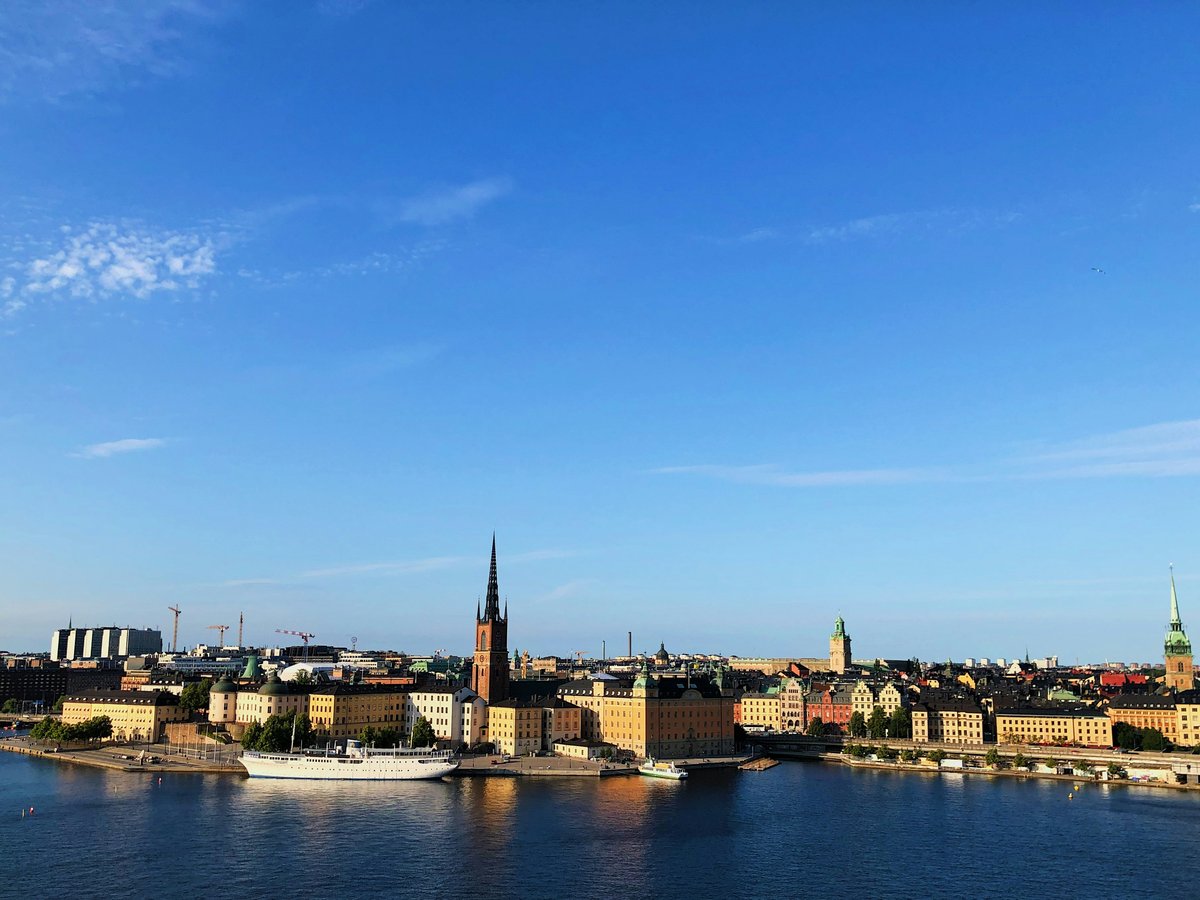
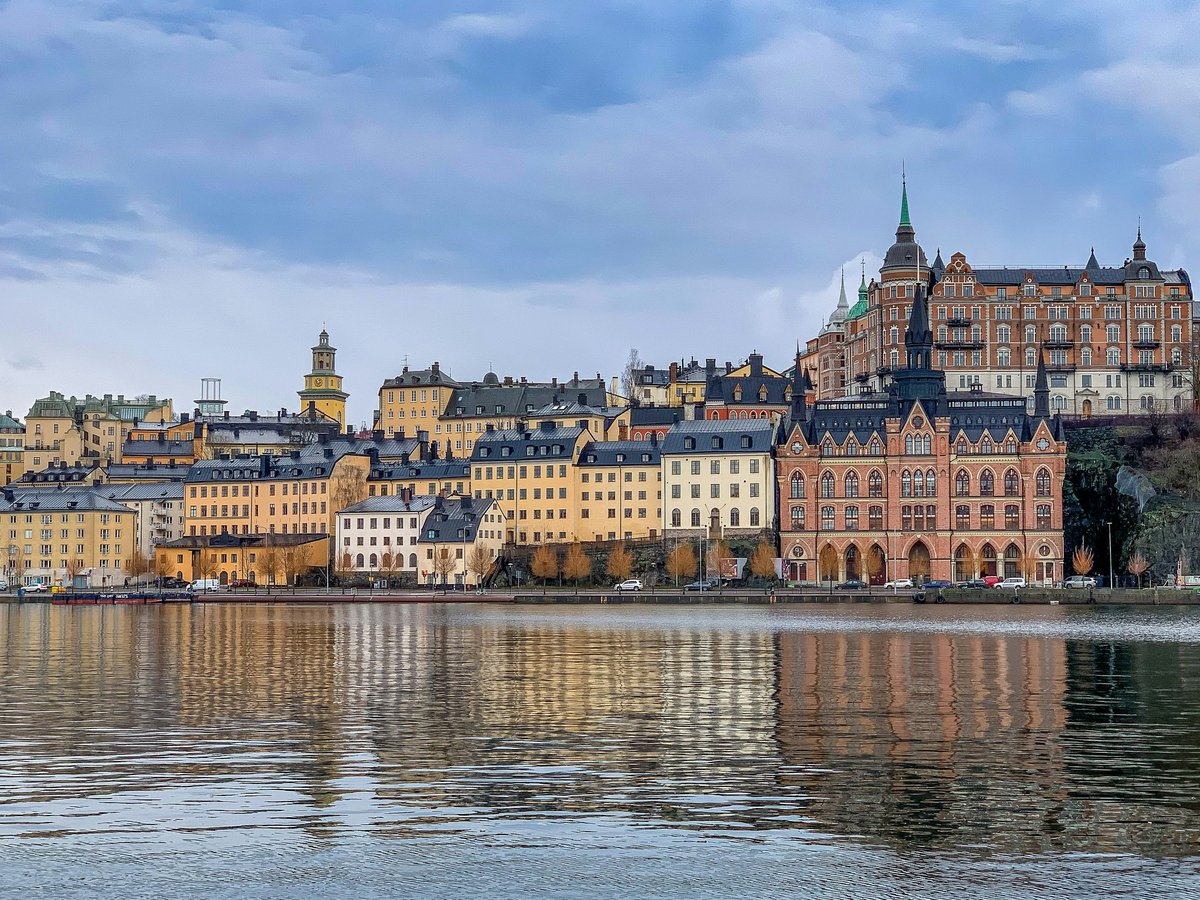
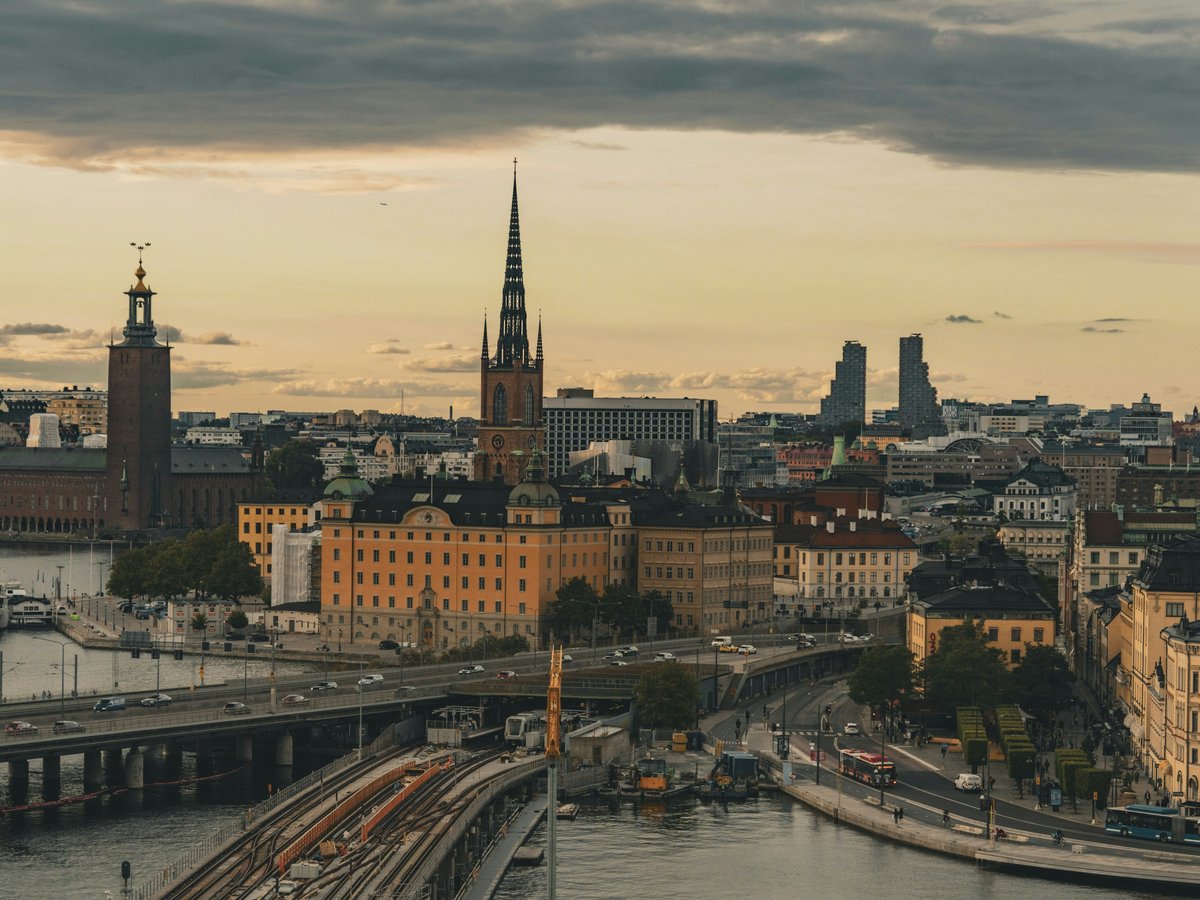
Stockholm is built across fourteen islands where Lake Mälaren meets the Baltic Sea, and that fact shapes everything about the city: the light off the water at seven in the morning, the ferries that function as public transit, the way a fifteen-minute walk in any direction tends to dead-end at a quay. The old town, Gamla Stan, sits on one of those islands with its medieval street grid largely intact, cobblestone alleys so narrow you can touch both walls with outstretched arms, and the Royal Palace anchoring its northern edge. But first-time visitors who spend all their time there miss the point. Södermalm, the island south of the center, is where most of the city's creative energy concentrates now: independent coffee roasters, secondhand shops along Götgatan, and the cliffside views from Monteliusvägen that every local recommends but that still feel earned when you find them. Östermalm to the northeast runs formal and expensive, its food hall Saluhallen worth an hour for the cured reindeer and the pickled herring counters alone. Kungsholmen, where City Hall stands with its tower visible from half the waterfront, stays quieter and more residential, a good neighbourhood for an unplanned afternoon. Stockholm runs on fika, the coffee-and-pastry ritual that is less a meal than a social contract: you will be offered it constantly, and accepting is the correct move. The city is compact enough that walking between most central islands takes under twenty minutes, and the T-bana metro stations, several of them carved from raw bedrock and painted by commissioned artists, are worth riding even when you do not need the transportation. Summer daylight stretches past ten at night in June; winter compresses it to six hours. The Swedes accommodate both extremes with a matter-of-factness that a visitor absorbs quickly, adjusting without quite noticing the shift.
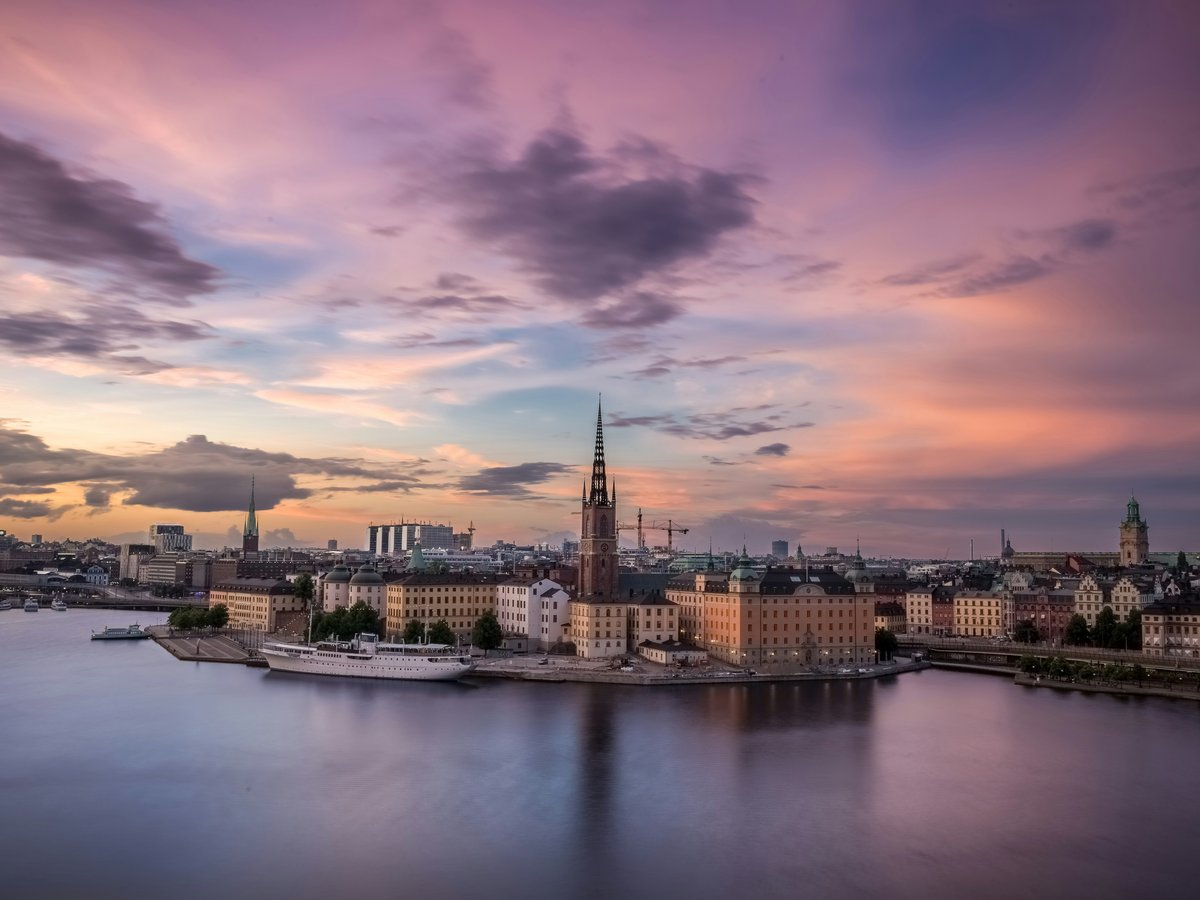
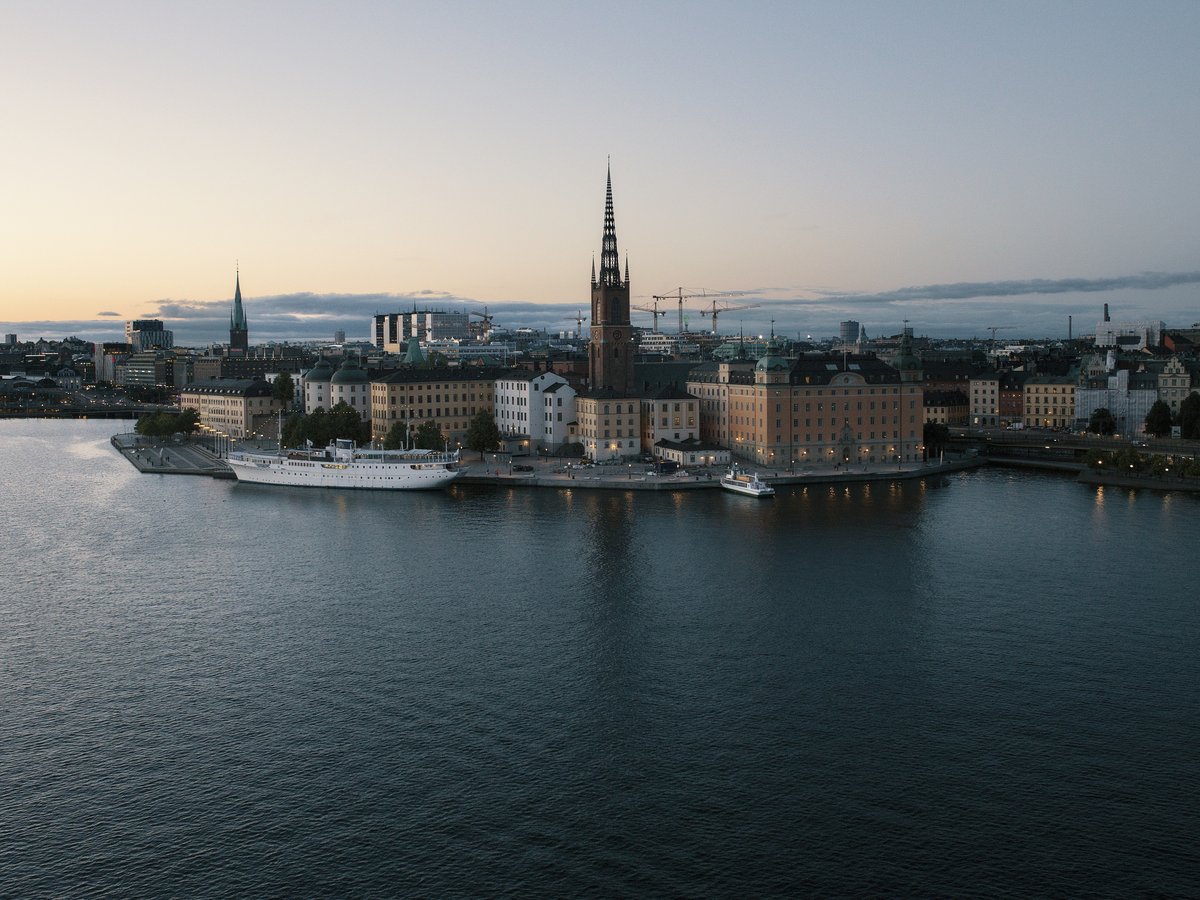
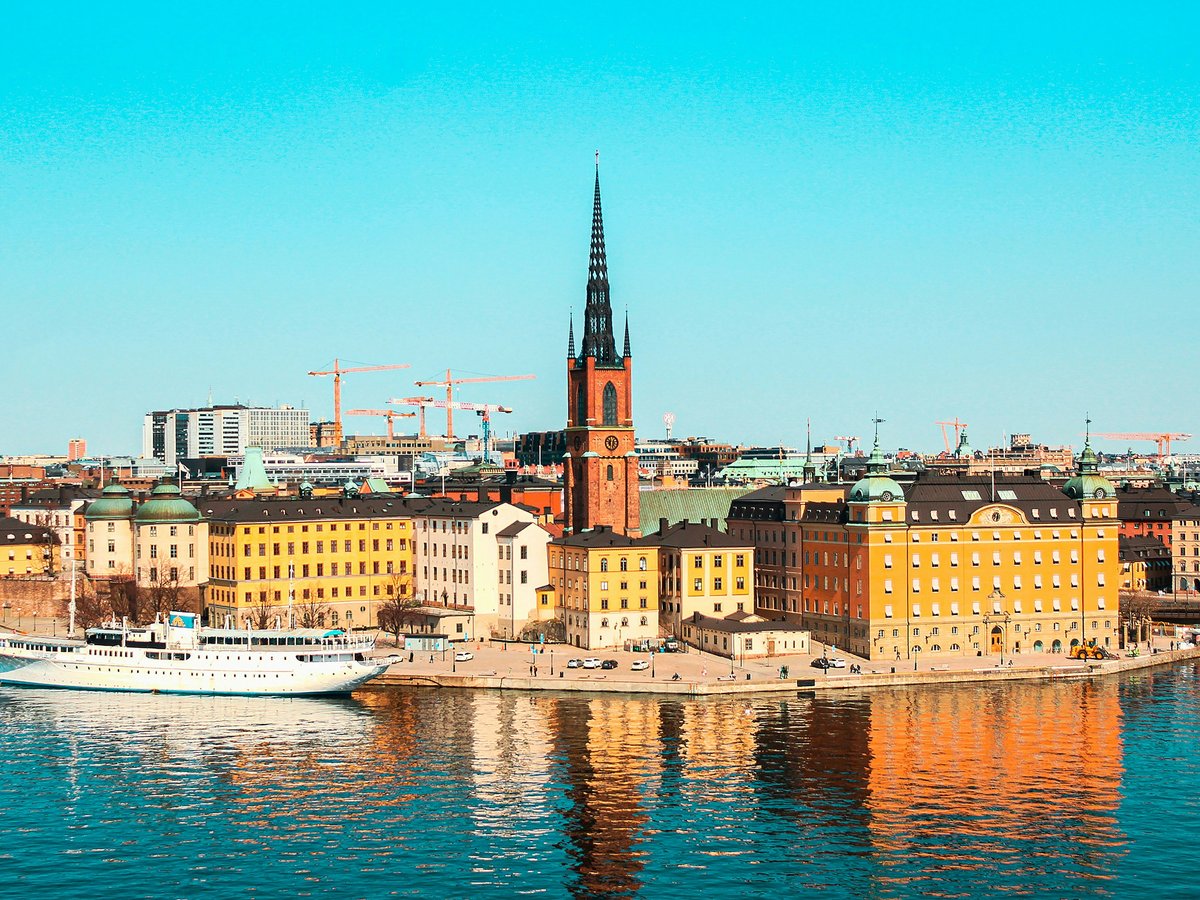
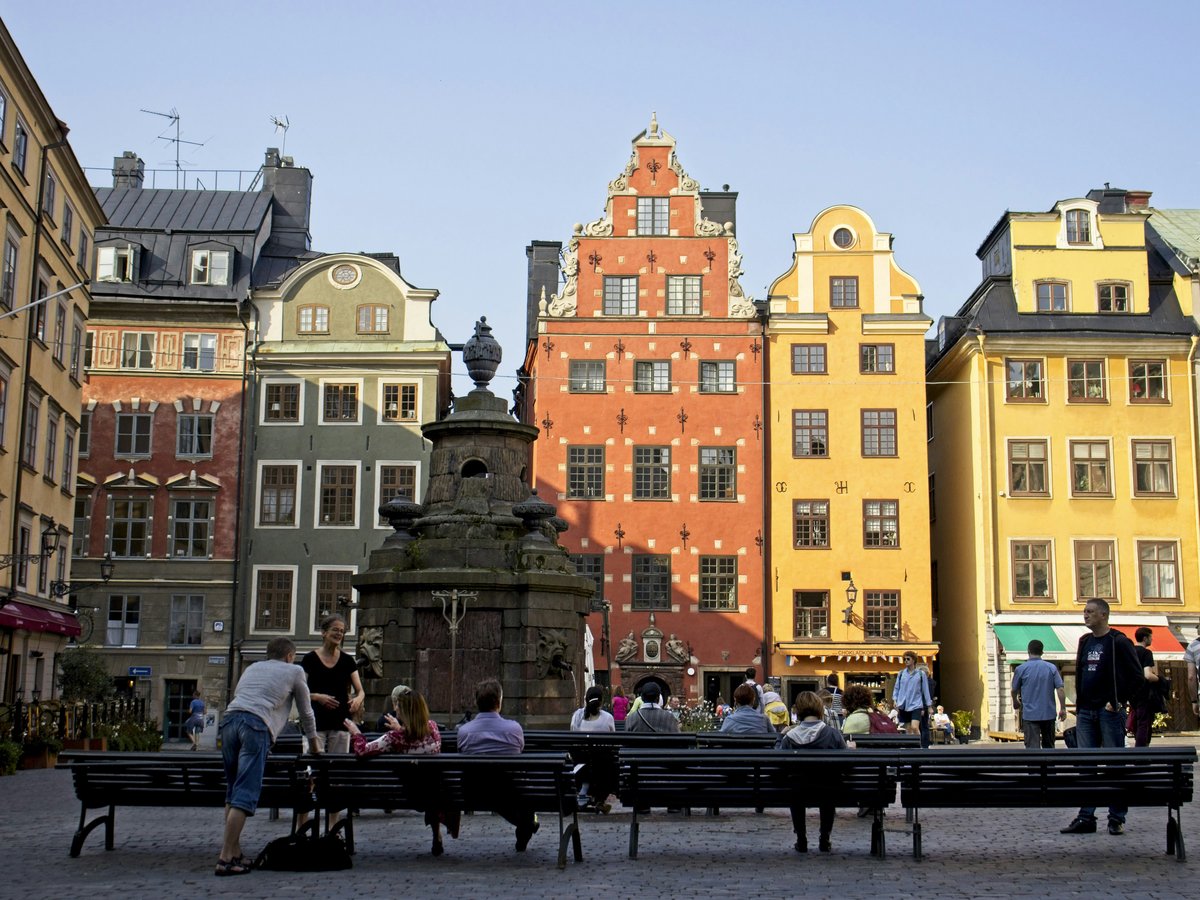
Stockholm in photos
Stockholm right now
Answers about Stockholm
-
Airport to city
Take the Arlanda Express from Stockholm Arlanda (ARN) to Centralstationen. It runs every 10-15 minutes, takes 20 minutes, and costs 299 SEK ($32). Budget alternative: Flygbussarna coach, 119 SEK ($13) booked online, about 40 minutes. Taxis charge a fixed 500-600 SEK ($54-64) to central Stockholm addresses.
Read the full answer → -
Best time to visit
Book late May to mid-June, or the last two weeks of August: Stockholm stays light until about 10pm in June, highs sit around 20°C, and the archipelago boats run full timetables. July is busier, and many small restaurants close for the summer holiday. Skip November through February unless the Christmas markets are the reason for your trip.
Read the full answer → -
Cost per day
Budget 670 SEK ($70), midrange 1,900 SEK ($200), luxury 4,800+ SEK ($500+). Stockholm is pricey but the budget tier works if you commit to hostel dorms, weekday lunch deals, and walking between islands. Museum-admission stacking and foreign-transaction fees on card taps are the two traps that blow budgets.
Read the full answer → -
Cultural etiquette
Stockholmers value personal space, punctuality, and quiet public behavior above most things. Remove shoes when entering any Swedish home. Take a queue ticket (nummerlapp) at pharmacies, delis, and Systembolaget. Tipping is not expected; service is included, though rounding up by 20-50 SEK at restaurants is appreciated. Sweden is nearly cashless, so carry a card.
Read the full answer → -
Best day trips
Uppsala is the strongest single-day trip from Stockholm. The SJ regional train takes 38 minutes from Stockholm Centralstation for around 100 SEK one way. For couples, the S/S Mariefred steamboat to Gripsholm Castle is hard to beat on a warm June day. Vaxholm works when you want archipelago without committing to an overnight.
Read the full answer → -
Digital nomads
Stockholm scores 6.2/10 for digital nomads (sourced from TTDI's editorial rubric). Fibre speeds of 250-1000 Mbps are standard in apartments, and English fluency is near-universal, but monthly costs run $3,400+ and the Schengen 90/180 rule limits non-EU stays without a residence permit. The dark winters (6 hours daylight in December) drive seasonal nomads away by November.
Read the full answer → -
Family-friendly
Stockholm is exceptionally family-friendly, with cost as the main caveat. Djurgården island packs Skansen, the Vasa Museum, Junibacken, and Gröna Lund within 15 minutes of each other on foot. The T-bana has elevators at most stations, strollers ride free on buses and ferries, and Swedish meatballs solve picky-eater emergencies at nearly every restaurant.
Read the full answer → -
Food culture
Stockholm's food culture orbits fika, the twice-daily coffee-and-pastry ritual at 10am and 3pm, and a lunch system where nearly every restaurant offers a dagens rätt (daily special) for 130-170 SEK ($14-18). Dinner skews late and expensive. Östermalms Saluhall and Södermalm's Nytorgsgatan are the two food corridors worth knowing first.
Read the full answer → -
Getting around
Stockholm's T-bana metro and your own feet. The 3-line metro covers most destinations, and the central islands, Norrmalm, Gamla Stan, and Södermalm, connect by short walks across bridges. Tap a contactless bank card at any gate for 39 SEK per ride (~$4), or grab a 24-hour SL pass for 165 SEK (~$18). It covers metro, bus, tram, and ferry.
Read the full answer → -
How to get there
Stockholm Arlanda (ARN), 42 km north of the city center, handles nearly all international flights. SAS and Norwegian are the dominant carriers at Terminal 5. From the US East Coast, expect $600-1,100 round-trip via Copenhagen. From London, BA and SAS fly direct in 2.5 hours at £90-280. Budget carrier Ryanair serves Skavsta (NYO), 100 km southwest.
Read the full answer → -
Is it safe?
Stockholm is safe for solo travelers, with near-zero violent crime against visitors. Pickpocketing around T-Centralen and Gamla Stan during summer months is the primary street-level concern. Sweden's cashless economy means a chip-enabled card matters more than carrying kronor. Central neighborhoods feel secure past midnight, and the transit system runs late on weekends.
Read the full answer → -
Language basics
Swedish is the language, but Stockholm's English is about as strong as it gets outside English-speaking countries, and staff at Arlanda, on the tunnelbana and in Södermalm cafés will switch as soon as you hesitate. Reading Swedish matters more than speaking it. Learn the signs (Utgång means exit, Drag means pull), pick up a few menu words, and say 'tack' as often as you can.
Read the full answer → -
Layover guide
Yes, with 6 hours or more. The Arlanda Express reaches Stockholm Central in 20 minutes, and Schengen passport holders skip immigration entirely. That leaves time for Gamla Stan's medieval island and the Vasa Museum on Djurgården. Under 6 hours, stay in the SkyCity terminal between T4 and T5 rather than risk a rushed city sprint.
Read the full answer → -
LGBTQ-friendly
Stockholm scores 9.8/10 for LGBTQ+ friendliness (sourced from TTDI's editorial rubric). Sweden was one of the first countries to legalize same-sex marriage, and the queer scene runs year-round in Södermalm's SoFo district. Same-sex couples hold hands across Gamla Stan without drawing a second look. The scene is compact compared to Berlin's, but social acceptance in Stockholm runs deeper than almost anywhere in Europe.
Read the full answer → -
Where locals go
The neighbourhoods Stockholmers call their own are Södermalm, Vasastan and Hornstull, not Gamla stan. Laptop workers settle in at Café String on Nytorgsgatan on weekday mornings, and Pelikan and Kvarnen fill up from 19:00 midweek, with Thursday after-work starting around 17:00. In October, Stockholmers trade terraces for saunas, and on Sunday mornings Hellasgården's lakeside sauna in Nacka draws people for a cold swim.
Read the full answer → -
Must-see
The Vasa Museum on Djurgården island. A 69-metre warship sank in Stockholm harbour on 10 August 1628, raised 333 years later with 98% of its original timber intact. No other museum on earth displays a complete 17th-century vessel. Open daily, no reservation needed. Start here, then walk to Gamla stan.
Read the full answer → -
Solo travel
Stockholm ranks among the easiest Nordic capitals for a first solo trip. The T-bana metro runs until 3am on weekends, nearly everyone speaks English, and bar-counter dining culture means eating alone carries no stigma. Safety is high by European standards. The main drawback is hotel pricing, where single-occupancy rates rarely drop below double.
Read the full answer → -
This week
Stockholm settles into peak summer rhythm this week. Sunsets run past 9pm and the evenings stay mild. Tuesday's Allsång på Skansen fills Sollidenscenen for communal singing. Östermalmshallen draws weekday lunch crowds, Södermalm's bars pick up from Thursday onward, and weekend mornings bring locals to Djurgården before the tourist wave arrives.
Read the full answer → -
3-day itinerary
Day 1 covers Gamla Stan and Södermalm on foot. Start at Stockholm Palace by 9 AM, end at Fotografiska. Day 2 belongs to Djurgården, with the Vasa Museum at 10 AM and Skansen in the afternoon. Day 3 moves to Kungsholmen and Norrmalm, anchored by the City Hall tower tour. About 27 kilometres of walking total.
Read the full answer → -
What to avoid
In Stockholm, skip the Arlanda Express unless speed beats price, skip any taxi outside the three big firms, and skip dinner on Stortorget or Västerlånggatan in Gamla Stan. Don't change cash at Forex, don't buy a hop-on hop-off pass, and don't stack Vasa, Skansen, and Drottningholm into one jet-lagged first day. SL transit and a weekday dagens lunch cover most of it.
Read the full answer → -
What to pack
Layers for 10-22°C summer days that can drop to 8°C after sunset, a packable rain shell (Stockholm averages 13 rainy days in June), broken-in walking shoes for Gamla Stan's cobblestones, a Type C/F plug adapter for 230V outlets, and swimwear if visiting June through August. Skip the umbrella. Buy one at any Pressbyrån kiosk for 80-100 SEK.
Read the full answer → -
Where to stay
Norrmalm or northern Södermalm for a first visit. Norrmalm puts you within 5 minutes of T-Centralen, Stockholm's single transit hub, and walking distance to Gamla Stan without paying Gamla Stan hotel prices. Budget $150 to $250 for a mid-range double in Norrmalm, $120 to $200 in Södermalm. Book near a T-bana station and you can reach any major sight in under 20 minutes.
Read the full answer →
Deep guides for Stockholm
Curated lists for Stockholm
accommodation
-
Best boutique hotels
Stockholm splits across fourteen islands, and the hotel stock clusters unevenly: the densest bookings stack in Norrmalm and Gamla stan, where prices run highest, while outer neighborhoods like Alvik and Bromma offer the same Tunnelbana commute at half the nightly rate. Most visitors default to the old town or the central station area without checking what the transit map makes possible. An $83 room in Solberga or Bromma connects to the green line on a single ride, while a comparable tier in Gamla stan asks $180 for the privilege of sleeping on cobblestones. The ten neighborhoods below run from the densest hotel cluster at Norrmalm through quieter islands and suburban pockets where the inventory thins but the value rises. Each area entry tells you what sits within walking distance and which kind of traveler the neighborhood suits. Match the neighborhood to the trip before picking the room: a concert at the Avicii Arena calls for Globenmotet, a walking tour of the medieval core calls for Gamla stan, and a budget week calls for the western suburbs. Stockholm rewards the traveler who books by transit line, not by postcard.
See the picks → -
Where to stay
Stockholm's islands divide the city into distinct neighborhoods, and the water between them enforces the separation in a way few European capitals can match. Norrmalm holds the transit core around T-Centralen, where every Tunnelbana line converges; Gamla stan's medieval grid sits one bridge south. Vasastaden climbs the hill behind the central station into residential quiet. Östermalm lines the eastern waterfront with embassy facades and the city's highest room rates. Kungsholmen, one island west, keeps a local pace along its waterfront paths. South of the center, Södermalm's edges give way to arena districts like Globenmotet and suburban stops like Solberga on the red line. Franska Bukten bridges the Slussen interchange between the old town and the southern island. The western suburbs, Alvik and Bromma, trade walking-distance sights for lower prices and direct metro connections. Nightly rates run from $24 for a Kungsholmen hostel bunk to $696 for a converted residence in Östermalm, with the mid-range filling the central core between $83 and $180. The question is not whether Stockholm has a bed at your price; it is which island matches the way you travel.
See the picks →
attractions
-
Best free attractions
Stockholm does not charge you to stand in its best rooms, and most of those rooms have no roof. This list is mostly squares and parks: in Gamla stan, Stortorget and Järntorget; in the centre, Hötorget, Norrmalmstorg and Gustav Adolfs torg; and on Södermalm, Mariatorget. Past the pavements you will find a botanic garden whose buildings carry a governmental heritage listing, the Royal National City Park and Tyresta, a full national park of Sweden. The list is for walkers, for people who would rather spend an afternoon reading a city's public spaces than queueing at its ticket desks, and for anyone whose budget went on the hotel. These places ask for time and decent shoes, and a willingness to sit on a bench and watch how Stockholm uses its open ground. Buy a coffee somewhere and carry it with you; the squares do the rest. Treat the list as a route, not a checklist: each stop earns its place by what you can do there for nothing, not by how famous it is.
See the picks → -
Best museums
Stockholm's museums are an unusual mix. Royal houses still in use sit alongside folk culture, art, and very recent pop history, and a list here can span all of it: from a royal palace in Ekerö Municipality with UNESCO World Heritage Site status, through an open-air museum and zoo dating from 1891, to a museum on Djurgården that dates from 2013. Between those sits a state historical museum of Swedish military history dating from 1628, which means the city's record of itself goes back a long way. This is a list for travellers who would rather spend two careful hours in one place than ten minutes in six. It is ranked, but the order is not a schedule: group what sits near your hotel, check the hours in each entry before setting out, and leave the biggest days for the places that deserve them. Skip the pass-everything sprint that turns these collections into a blur of ticket desks; this city rewards a slower pace.
See the picks → -
Must-see attractions
Stockholm's essential sights are shaped by crown and church, and this list follows that logic. Some palaces are still working residences: Stockholm Palace is the official residence of the Swedish monarch, while others are pleasure houses and country seats in Ekerö and Solna. The churches fill in the picture: a burial church of the Swedish kings, a Lutheran cathedral and a Roman Catholic one, along with a civic building that hosts the Nobel Prize banquet. Two entries carry UNESCO World Heritage status, one a palace and the other a cemetery, which is the stop most first-time visitors would never think to add. This list is for travellers who want the places that explain how the city was governed, buried and prayed for, not a tour of the latest photo backdrops. Expect stone, ceremony and long histories, and plan more time for the sites outside the centre than the map suggests.
See the picks →
food
-
Best cafes
Stockholm treats coffee as infrastructure rather than ceremony. Fika is a habit, worked into the day at 10:00 and again at 15:00, and the city's cafes are shaped by that rhythm. Some are patisseries chasing a French counter with a straight face. Some are neighbourhood coffee-bars where the pastry case is the whole point. A few are the big chains that Stockholmers use when the weather turns and you need a seat and a socket. This list is twelve of them, addressed and hour-verified against OpenStreetMap so you can plan a morning without guessing. It runs from quiet residential streets to workaday lunch counters and back into the centre, where the coffee bars sit within a few streets of each other. Skip the ranked-by-Instagram lists that only look good in photographs; the cafes below are the ones a local would open the door of on a Tuesday morning without thinking about it, plus the honest chains that a working city needs when it is minus five outside and your friend is running late.
See the picks → -
Best restaurants
Stockholm eats across three registers at once: the fine-dining rooms that put Swedish technique on the world map, the immigrant kitchens that give the city its weeknight character, and the neighbourhood pizzerias and grills that keep everyone else fed after 22:00. The twelve rooms below are picked to move a visitor across those registers without wasting a meal on the tourist drag. Gamla Stan gets two entries because the old town still hides real cooking behind its postcard facades, Norrmalm and Östermalm get the fine-dining and the counter classics, and Södermalm gets the barbecue and the Italian rooms that Stockholmers book on a Friday. Every address, every service window, every cuisine tag here is verified against OpenStreetMap and, where the room warrants it, Wikidata, so you can plan a week of dinners without a single dead reservation. Read for the stance as much as the address: the point of a curated twelve is that someone has already sat through the mediocre ninety, and is telling you where to put your hours.
See the picks →
Browse by traveler type
Book experiences in Stockholm
 Free cancellation
 The Original Stockholm Ghost Walk and Historical Tour - Gamla Stan
City tour: 1.5 hours, free cancellation.
via Viator Free cancellation
 Electric Boat Ride in Stockholm with Live-Guide
Cruise: 1 hour, free cancellation.
via Viator Free cancellation
 Stockholm Private Golf Cart Tours
City tour: 2 hours, free cancellation.
via Viator Free cancellation
 Walking Tour of Stockholm's Old Town, Gamla Stan
Day trip: 2 hours, free cancellation.
via Viator Free cancellation
 Stockholm at a Glance Bike Tour
City tour: free cancellation.
via Viator Free cancellation
 Ocean Bus - Sightseeing with a Splash
City tour: 1 hour, free cancellation.
via Viator Free cancellation
 Stockholm Archipelago Tour by Classic Wooden Boat with Guide
Cruise: 1.8 hours, free cancellation.
via Viator Free cancellation
 Stockholm Pizza Cruise - Explore Stockholm's Waterways
Cruise: free cancellation.
via Viator Free cancellation
 1-Day Small-Group Stockholm Archipelago Kayak Tour
Outdoor experience: 8 hours, free cancellation.
via Viator Free cancellation
 Stockholm Top attractions all-inclusive Grand Tour
Day trip: 7 hours, free cancellation.
via Viator Free cancellation
 Stockholm City Kayak Tour
Outdoor experience: free cancellation.
via Viator Free cancellation
 Stockholm Speed Boat 2 Hour Archipelago Tour
Outdoor experience: 2 hours, free cancellation.
via ViatorBrowse by interest
Compare Stockholm with
Find a flight to Stockholm
Live fares to Stockholm appear here once cookies are accepted.
Last verified by automated review (v1.7.2) on . What is automated review?