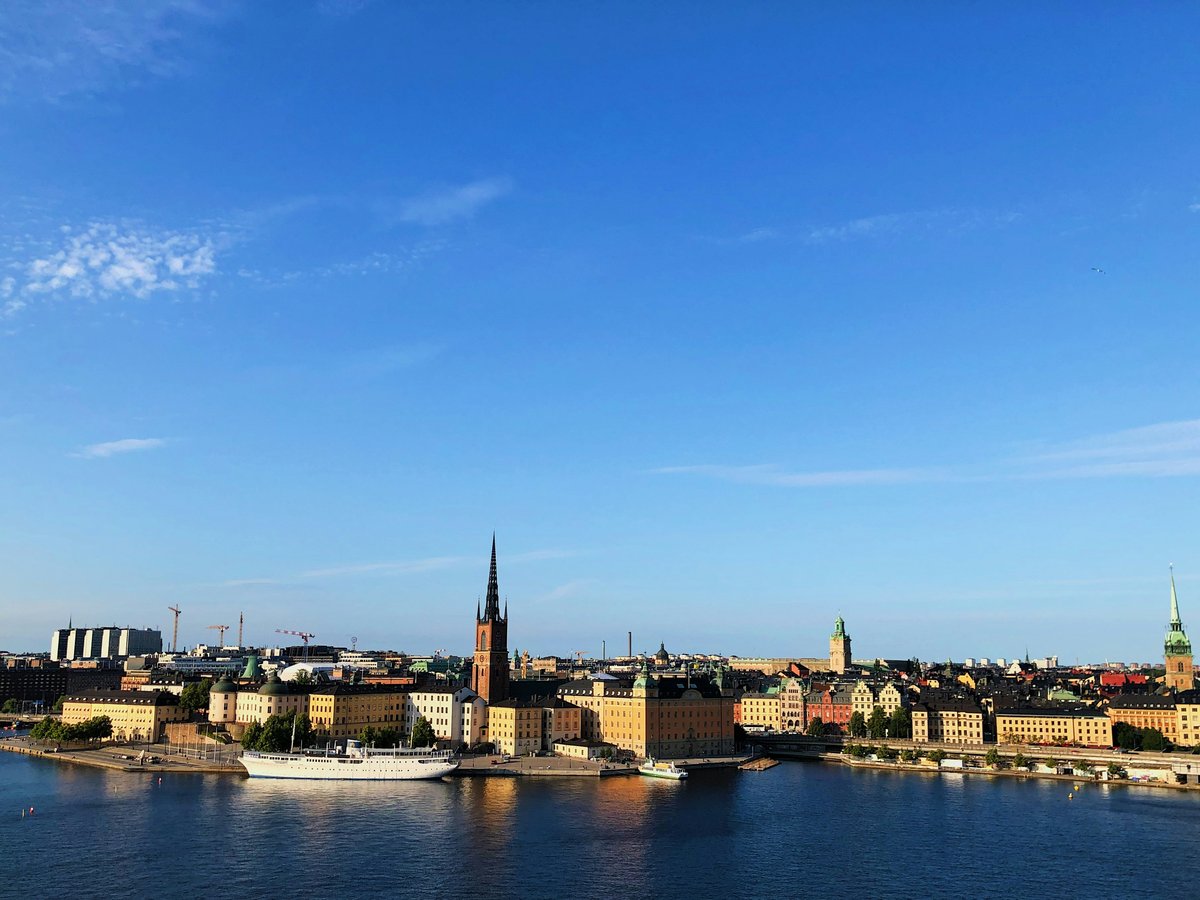
What's the must-see thing in Stockholm?
The Vasa Museum on Djurgården island. A 69-metre warship sank in Stockholm harbour on 10 August 1628, raised 333 years later with 98% of its original timber intact. No other museum on earth displays a complete 17th-century vessel. Open daily, no reservation needed. Start here, then walk to Gamla stan.
The Vasa Museum sits on Djurgården, a 10-minute ferry ride from Slussen or a 15-minute walk across Djurgårdsbron bridge. The ship fills a purpose-built hall that smells like old oak and tar. Over 700 carved wooden sculptures still cling to the hull. It went down barely outside the harbour on its maiden voyage, top-heavy and under-ballasted, and the cold, low-salinity Baltic water did the rest. Six levels of galleries wrap around the vessel. You look down at the deck from above, then stand beside the rudder at water level. The scale hits differently in person. Allow 90 minutes, and aim to arrive before 10am when tour groups start filling the lower decks. Adult entry is currently about 200 SEK (roughly $21).
Gamla stan is where most first-time visitors end up, and it earns the stop. The medieval street grid dates to the 1200s, and Stortorget, the main square, was the site of the 1520 Stockholm Bloodbath, when Danish King Christian II executed roughly 80 Swedish nobles over three days. Stockholm Palace sits at the island's northern edge. Completed in 1760, it still functions as the official royal residence. The changing of the guard happens at 12:15pm on weekdays and 1:15pm on weekends. You can hear the brass band echoing off the stone walls from two blocks away. The Royal Apartments cost about 180 SEK ($19) to enter, and the corridors smell like floor wax and cold stone. Mind you, the lanes between Stortorget and Västerlångatan get shoulder-to-shoulder between 11am and 3pm in July. Arrive before 9am or after 6pm, when the light on the ochre facades goes warm and the cobblestones are quiet underfoot.
Stockholm City Hall, completed in 1923, is where the Nobel Prize banquet takes place each December in the Blue Hall, which is, confusingly, red brick rather than blue. Ragnar Östberg spent 12 years on the design. The tower climb is 365 steps to a terrace 106 metres above Riddarfjärden bay, and on a clear day you might spot the outer reaches of the archipelago. Tower access runs June through September and costs about 60 SEK beyond the 140 SEK guided tour. You can only enter the interior with a guide, and the English-language slots fill by midday in peak season. Book the 10am tour. Inside, the Golden Hall is covered in roughly 18 million glass and gold mosaic tiles, cool to the touch if you lean close. The Stadshuskällaren restaurant on the ground floor still serves a version of the Nobel dinner menu, currently about 595 SEK ($61) at lunch.
For a first morning, take the Vasa early, then walk south through Djurgården past Skansen. The open-air museum dates to 1891 and still hosts live events, including Allsång singalong rehearsals on summer Tuesdays. Ferry to Gamla stan for lunch and the Palace, and save City Hall for the next day. The SL transit pass runs about 165 SEK for 24 hours and covers the Djurgården ferry, buses, T-bana metro, and commuter rail. You won't need a car. Stockholm is currently around 22°C in late July with overcast skies, and daylight lasts until nearly 10pm. The long evenings are the real surprise. A beer at Södra Teatern's terrace on Mosebacke in Södermalm runs 85-95 SEK, and the view north across the water to Gamla stan from there is the best free panorama in the city. Bring a layer. The breeze off the bay drops the felt temperature a few degrees once the sun dips.
The top three
Vasa Museum
The only complete 17th-century warship on earth. It went down minutes after launch and sat on the harbour floor for over three centuries before being raised with nearly all its original timber. Nothing else like it exists.
Gamla stan and Stockholm Palace
Stockholm's medieval island core. The Royal Palace still functions as the monarch's working residence. Best experienced before the midday crowds arrive or in the warm light after 6pm.
Stockholm City Hall
Site of the Nobel Prize banquet each December. The only way inside is a guided English tour that fills fast in summer. The tower panorama stretches across the entire archipelago approach.
Reservations required for at least one of these.
Verified attractions
Sourced from Wikidata and OpenStreetMap: each entry links to its authoritative page.
-
Drottningholm Palace
museumroyal palace in Ekerö Municipality, Sweden
View on Wikidata -
Skogskyrkogården
cemeterycemetery in Stockholm, Sweden
View on Wikidata -
Stockholm Palace
museumofficial residence of the Swedish monarch
View on Wikidata -
Stockholm Olympic Stadium
stadiumstadium at Stockholm, Sweden
View on Wikidata -
Strawberry Arena
stadiumassociation football stadium in Solna, Stockholm, Sweden
View on Wikidata -
Vasa Museum
museummuseum in Stockholm, Sweden
View on Wikidata -
Skansen
museumopen-air museum and zoo, showing Swedish folk culture and way of life in the pre-industrial era
View on Wikidata -
Nationalmuseum
museumart museum in Stockholm, Sweden
View on Wikidata -
Stockholm City Hall
attractionbuilding of the Municipal Council for the City of Stockholm with the luxury restaurant Stadshuskällaren inside, wherein is the venue of the Nobel Prize banquet
View on Wikidata -
Nobel Prize Museum
museummuseum about Alfred Nobel and the Nobel Prize
View on Wikidata -
Storkyrkan
churchLutheran cathedral in Stockholm
View on Wikidata -
Nordic Museum
museumcultural history and ethnography museum in Sweden
View on Wikidata -
Swedish Museum of Natural History
museummuseum in Stockholm, Sweden
View on Wikidata -
Riddarholm Church
churchburial church of the Swedish kings and was opened approximately in 1300
View on Wikidata -
3Arena
stadiummulti-purpose stadium in Stockholm, Sweden
View on Wikidata -
Moderna Museet
museummodern and contemporary art museum in Stockholm, Sweden
View on Wikidata -
Swedish History Museum
museummuseum with collections of objects from Sweden's antiquity, medieval times and ecclesiastical art
View on Wikidata -
Haga Palace
palaceroyal palace in Solna Municipality, Sweden
View on Wikidata -
ABBA: The Museum
museummuseum on Djurgården in Stockholm, Sweden
View on Wikidata -
Klara Church
churchchurch in central Stockholm, Sweden
View on Wikidata -
Royal Armoury
museumSwedish state historical museum with exhibits of Swedish military history
View on Wikidata -
Sergels torg
plazasquare in central Stockholm
View on Wikidata -
German Church
churchchurch building in Stockholm, Sweden
View on Wikidata -
Kungsträdgården
gardenpark in central Stockholm, Sweden
View on Wikidata -
Museum of Far Eastern Antiquities
museummuseum in Stockholm, Sweden
View on Wikidata -
Stortorget
plazasquare in Gamla stan, Stockholm, Sweden
View on Wikidata -
Tre Kronor Castle
castlestronghold in Stockholm, later rebuilt into a castle and royal residence
View on Wikidata -
Tyresta National Park
parknational park of Sweden
View on Wikidata -
Gröna Lund
parkamusement park in Stockholm, Sweden
View on Wikidata -
Millesgården
museumart museum and sculpture park on Lidingö (Big Stockholm), originally the residence of the artist and sculptor Carl Milles and his wife until 1931
View on Wikidata -
St. Eric's Cathedral, Stockholm
churchRoman Catholic cathedral in Stockholm, Sweden
View on Wikidata -
Ulriksdal Palace
palaceroyal palace in Solna Municipality, Sweden
View on Wikidata -
Rosendal Palace
museumwas built as pleasure palace in the 1820s for the King Charles XIV John of Sweden
View on Wikidata -
Stockholm Observatory
museumastronomical observatory
View on Wikidata -
Swedish Army Museum
museummilitary history of Sweden in Stockholm
View on Wikidata -
Swedish Film Institute
museumSwedish foundation
View on Wikidata -
Vaxholm Fortress
attractionSwedish fortress
View on Wikidata -
Kaknästornet
towerTV- and radio-tower in Stockholm, Sweden
View on Wikidata -
National Museum of Science and Technology
museummuseum of technology with Science center, in Stockholm, Sweden
View on Wikidata -
Swedish House of Nobility
palacepalace built in 1641–1674, which is owned and managed by Sweden's knights and nobility.
View on Wikidata
Last verified by automated review (v1.7.2) on . What is automated review?