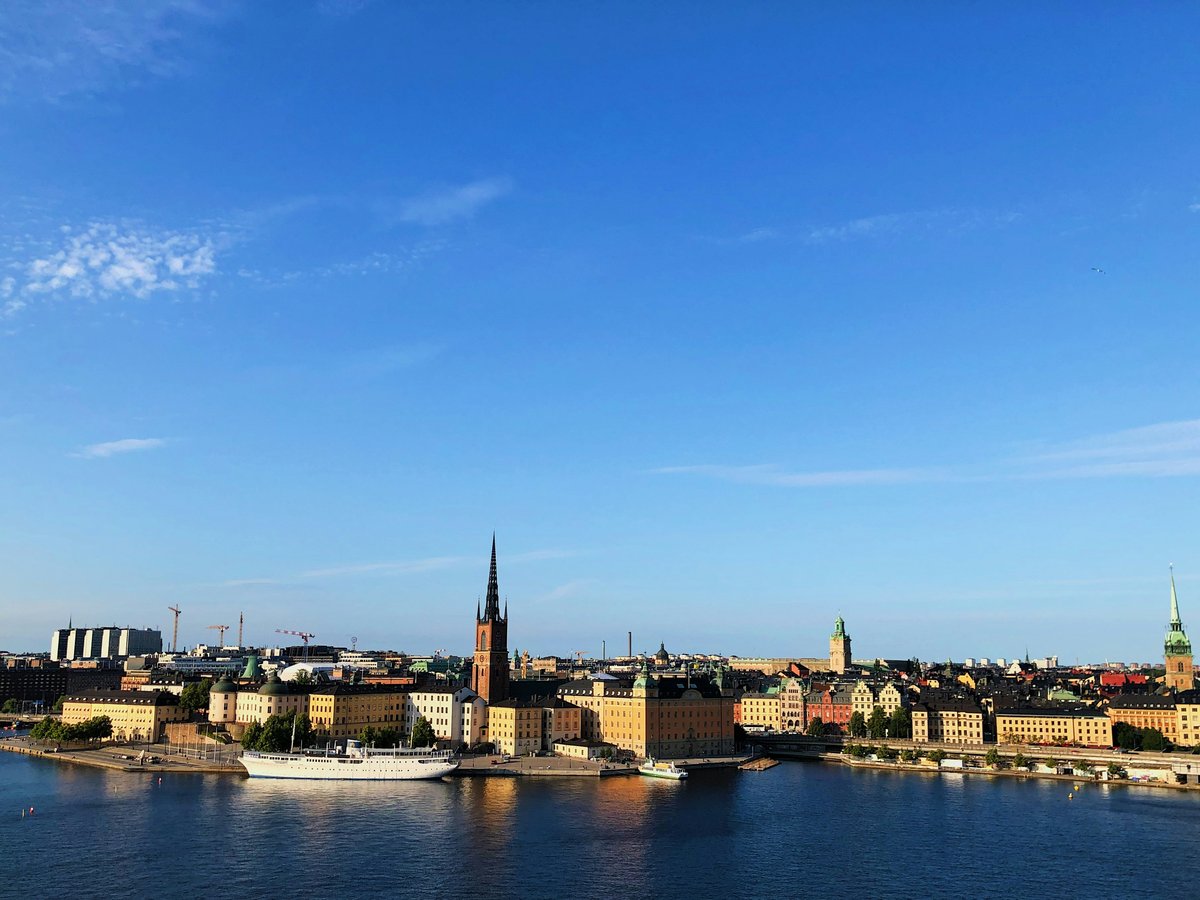
Stockholm's nightlife tends to start late and run quiet by most European standards. The city sits across 14 islands, and you'll find the drinking culture shaped by two things above all else. First, Systembolaget, the state alcohol monopoly, closes at 7 PM on weekdays and 3 PM on Saturdays. That single fact drives an entire ritual the Swedes call the förfest, the pre-party at someone's apartment, where supermarket wine and store-bought beer do the heavy lifting before anyone heads out around 10 or 11 PM. Second, bar prices hover around 85 to 95 SEK for a standard lager and 160 to 210 SEK for a cocktail, which means most Stockholmers pace themselves carefully. The result is a scene that feels slower to ignite than Berlin or Copenhagen but still has real depth once you know where to look. Friday and Saturday are the main nights. Weekday drinking happens, mostly among the after-work crowd from about 5 to 8 PM, but clubs on a Tuesday are largely empty. The legal closing time sits at 3 AM for most venues with a late license, though plenty of neighborhood bars shut at 1 AM. Mind you, the city has been loosening up over the past decade, with more natural wine spots, late-night food options, and venues that feel less buttoned-up than Stockholm's old reputation might suggest.
Bars in Stockholm, from Cocktail Dens to Neighborhood Dives
Stockholm's cocktail bar scene has grown steadily since the mid-2010s, and Södermalm currently holds the highest concentration of them within a few blocks. The SoFo area south of Folkungagatan is where you'll find most of the smaller, more inventive spots. Cocktail menus in this part of town tend to run 180 to 220 SEK per drink, and the bartenders often lean toward Scandinavian ingredients like sea buckthorn, lingonberry, and aquavit. You might wait 20 minutes for a seat on a Friday around 9 PM, but the pace picks up after 10. The smell of juniper and citrus peel tends to hang in these rooms, and many keep their lighting low enough that you're reading the menu by candlelight. Over in Östermalm near Stureplan, the bars skew dressier and more expensive. This is where Stockholm's finance crowd drinks after work, and you'll notice the shift in dress code the moment you step off the T-bana at Östermalmstorg. Champagne by the glass, premium spirits, marble surfaces, and tabs that climb fast. A glass of wine here runs 140 to 180 SEK depending on the spot. For something rougher around the edges, Södermalm also has a solid handful of dive bars and beer halls, particularly along Götgatan and the streets branching off it. These tend to pour cheaper pilsners for 65 to 80 SEK and stay loud with conversation rather than DJ sets. The old working-class character of Söder still lingers in a few of these spots, with worn wooden floors and bartenders who've been pouring for 15 years. Rooftop drinking is a summer phenomenon, roughly late May through August. A few hotel rooftops in Norrmalm and Södermalm open seasonal bars that pull big crowds when the weather cooperates. Expect to queue for 30 to 45 minutes on a warm Friday evening. The light at 10 PM in June, still golden and low across the water, is the main draw. Worth noting, the wind off Riddarfjärden can drop the temperature 5 to 8 degrees once the sun dips behind the buildings, so layers help. Natural wine bars have been multiplying across the city since around 2019, with clusters in Vasastan and Södermalm. Glasses typically start at 130 SEK. The format is usually small plates and low-intervention bottles in a space that seats 25 to 40 people. These fill up early, often by 7 PM on Fridays.
Clubbing in Stockholm, What to Expect on the Floor
Stockholm's club scene is smaller than you might expect for a capital of about 1 million people. The city has maybe 8 to 12 venues that regularly host proper club nights on weekends, depending on how you count. That said, the quality of sound systems and bookings has been rising, and the techno and house scenes in particular have grown a loyal following since the mid-2010s. Most clubs in Stockholm don't fill up until midnight or later. Arriving at 10 PM means an empty room and bored-looking staff. The real energy appears between 12:30 and 2 AM, and things wind down around 3 AM when the lights come up. Cover charges vary widely, from free entry on a quiet Wednesday to 200 to 350 SEK on a Saturday headliner night. Pre-sale tickets through the venue's website or through Shotgun and RA tend to be 50 to 100 SEK cheaper. Dress codes depend heavily on the area. Around Stureplan in Östermalm, door policies are strict, sometimes absurdly so. Bouncers there might turn you away for trainers, or for looking too young, or for no reason they feel obligated to explain. The minimum age at Stureplan clubs is often 23, sometimes 25 on weekends. South of the water on Södermalm, the dress code relaxes considerably. All-black still works everywhere, but the Söder crowd is more likely to show up in vintage denim and Nikes. Genre-wise, Stockholm leans toward house and techno on the main floor, with hip-hop and R&B rooms in some of the larger venues. Swedish house has deep roots here for obvious reasons, and you'll hear local DJs playing melodic techno and deep house at most weekend events. Smaller warehouse-style parties in Slakthusområdet and the industrial areas south of Södermalm tend to book harder techno. These pop-up events circulate on Instagram and Resident Advisor, often announced 3 to 5 days before the date. One thing that catches visitors off guard is the queue culture. Lines form early, and cutting is taken seriously. Swedes queue with a patience that borders on performance art. At busier spots, you'll stand in the cold for 30 to 60 minutes on a Saturday. The bouncers control flow tightly, letting in 5 to 10 people at a time even when the venue isn't full.
Live Music Venues and the Local Sound
Stockholm has a strong live music infrastructure relative to its size, which makes sense for a city that's produced Abba, Robyn, The Hives, and a disproportionate share of the world's pop songwriters. The mid-size venue circuit is where most of the interesting bookings happen, with rooms holding 300 to 1,500 people scattered across Södermalm, Kungsholmen, and Norrmalm. For touring indie and rock acts, Debaser has been a Stockholm institution for years, though the specific location has moved more than once. Fållan and Strand are two iterations that locals still reference. Jazz has a dedicated following here too. Fasching on Kungsgatan in Norrmalm has been running jazz, soul, and world music nights since 1977. Sets there typically start at 8 or 9 PM, with the room holding around 450 people. Cover for a mid-week jazz night runs about 150 to 250 SEK. Stockholm's indie and post-punk scenes have been cycling through waves since the early 2000s. The current crop of Swedish acts tends toward synth-heavy, melancholic pop, which you'll hear at smaller venues holding 100 to 200 people, mostly in Södermalm. Look for flyers in record shops along Skånegatan and Bondegatan. Larger concerts happen at venues like Annexet and the Avicii Arena (formerly Globen) in Johanneshov, south of the city center. These handle 3,000 to 16,000 capacity respectively. Gröna Lund, the amusement park on Djurgården, hosts outdoor concerts during summer, roughly June through August, with free entry to the shows included in the park admission of about 140 SEK. The best nights for live music are Thursday through Saturday. Monday and Tuesday are dead across the board. Wednesday sometimes sees a decent show at a smaller venue, but don't count on it. For classical music, Konserthuset on Hötorget hosts the Royal Stockholm Philharmonic, with tickets starting around 200 SEK for balcony seats.
Nightlife neighborhoods
-
Södermalm
The island south of Gamla Stan has the densest concentration of bars, clubs, and late-night food in Stockholm. Götgatan serves as the main artery, with side streets like Bondegatan and Skånegatan holding smaller spots. The crowd skews 25 to 35 and leans creative. On a Friday night, the smell of pizza from late-night windows mixes with cigarette smoke on the sidewalks outside bars. The noise level on Medborgarplatsen can get rowdy after midnight.
- Best for
- The broadest range of options on one island, from cocktail bars to dives to club nights, mostly for the 25 to 35 crowd
- Standouts
- SoFo area around Nytorget for cocktails and wine bars, Medborgarplatsen for louder nights, Hornstull for a slightly more residential and relaxed scene
-
Stureplan and Östermalm
Stockholm's most polished nightlife district sits around Stureplan square. The crowd here is well-dressed, often moneyed, and the door policies reflect it. Expect champagne, premium spirits, and a sense of occasion. The energy feels performative in a way Södermalm does not. The marble and glass interiors give everything a colder, sharper feel. Prices run 20 to 30 percent higher than the city average.
- Best for
- Upscale nights out, dressy occasions, and the 25-plus crowd with high budgets
- Standouts
- The cluster of clubs and bars directly around Stureplan square, plus hotel bars along Birger Jarlsgatan
-
Gamla Stan
The old town draws tourists heavily, and locals tend to avoid it after dark for that reason. The streets are narrow, cobblestoned, and picturesque, but most of the bars here charge tourist-adjusted prices and play it safe with their offerings. That said, a few basement bars tucked into medieval buildings have genuine character, with low stone ceilings and candlelight. The crowd is almost entirely visitors on weekend nights.
- Best for
- A drink in a medieval setting if you don't mind tourist prices and crowds
- Standouts
- A handful of cellar bars along Västerlånggatan and Österlånggatan
-
Kungsholmen
The island west of Norrmalm has a quieter, more residential nightlife that appeals to locals in their 30s and 40s. Bars along Fleminggatan and near Fridhemsplan close earlier, often by 1 AM, and the tone is more conversational than anything. In summer, the waterfront paths along Norr Mälarstrand fill with people drinking takeaway wine and watching the sunset hit Södermalm across the water.
- Best for
- Low-key evenings with a neighborhood feel, particularly the over-30 crowd
- Standouts
- Bars and restaurants clustered near Fridhemsplan and along Scheelegatan
-
Vasastan
North of Norrmalm, Vasastan has become a hub for natural wine bars and small-plate restaurants over the past 5 years or so. Odengatan is the main street for this, with a few spots that consistently draw the food-and-wine crowd from about 6 PM onward. The vibe is quiet, intellectual, and heavy on candlelight. You'll hear more muted conversation than music in most of these rooms.
- Best for
- Wine-focused evenings, the foodie crowd, and midweek after-work drinks
- Standouts
- Clusters of wine bars and bistros along Odengatan and the surrounding streets
-
Slakthusområdet
Stockholm's old meatpacking district south of Södermalm has been in transition for several years, with warehouses and industrial spaces hosting pop-up club nights and food markets. The area still feels raw, with graffiti-covered loading docks and the faint industrial smell that clings to former production buildings. Events here tend toward harder techno and experimental electronic music, announced on short notice through social media.
- Best for
- Underground club nights, warehouse parties, and the techno-focused crowd
- Standouts
- Rotating pop-up venues in converted warehouse spaces, check Resident Advisor for current listings
Safety after dark
Stockholm is a generally safe city after dark, and violent crime targeting visitors remains uncommon in the central nightlife areas. That said, a few things are worth keeping in mind. Pickpocketing happens around Stureplan and Gamla Stan on busy nights, particularly between 11 PM and 2 AM when crowds are dense and distracted. Keep your phone in a front pocket. Drink spiking, while rare, has been reported at busier clubs. Don't leave your glass unattended, and if a drink tastes off, stop drinking it. The T-bana runs until about 1 AM on weekday nights, with extended service until roughly 3 to 4 AM on Fridays and Saturdays. Night buses cover the gap, and they run frequently on main routes. Taxis are expensive, typically 250 to 400 SEK from Södermalm to outer neighborhoods, but Bolt and Uber both operate in Stockholm and tend to run 20 to 30 percent cheaper. Stick with licensed taxis or app-based rides. Unlicensed cabs at Stureplan have historically overcharged tourists. If you're walking home along the waterfront, be mindful of the unguarded quaysides, particularly after a few drinks and particularly in winter when the stone edges get icy. One more thing. Swedish police take drug offenses seriously, and bouncers at most venues will deny entry to anyone who appears intoxicated beyond a certain point. The threshold is lower than in many other European cities.
Practical tips
- Paying for drinks
- Sweden is essentially cashless. Every bar and club takes cards, and most prefer it. Swish, the mobile payment app, is popular among Swedes but requires a Swedish bank account and phone number, so visitors are unlikely to use it. Visa and Mastercard work everywhere. Amex acceptance is less reliable.
- Tipping
- Tipping is not expected in Stockholm bars or clubs. Service charges are included in the price. Some people round up the bill, adding 10 to 20 SEK on a card payment, but nobody will look at you sideways for paying the listed amount. At cocktail bars with table service, a 5 to 10 percent tip is appreciated but still optional.
- Cover charges and entry
- Many bars have no cover charge at all. Clubs typically charge between 100 and 350 SEK depending on the night and the act. Pre-sale tickets bought online through platforms like Shotgun or Resident Advisor tend to be cheaper by 50 to 100 SEK. Guest lists circulate on social media for some Stureplan venues. Always carry a valid photo ID, as checks are strict even for people who are clearly over 30.
- What locals drink
- Beer is the default at most bars. Swedish craft brewing has expanded rapidly, and you'll find local lagers and IPAs from producers like Omnipollo, Stigbergets, and Nynäshamns Ångbryggeri on tap across Södermalm and Vasastan. For spirits, aquavit remains the cultural touchstone, though gin and tonic has taken over as the casual go-to order. Wine consumption has risen steadily, particularly natural and low-intervention wines in the 130 to 170 SEK per glass range.
- Age limits
- The legal drinking age in Sweden is 18 for bars and restaurants. However, most popular clubs enforce a minimum age of 20, and Stureplan venues commonly require 23 or even 25 on peak nights. Bouncers check ID routinely, and foreign passports or national ID cards are accepted. Photocopies or photos of your ID on your phone are not.
- Getting home
- The T-bana is the fastest way back to most neighborhoods, with extended service until 3 to 4 AM on Fridays and Saturdays. Night buses pick up where the metro leaves off, running every 15 to 30 minutes on main routes. Uber and Bolt are both widely used, with typical late-night fares of 150 to 300 SEK within the central islands. Surge pricing applies on weekend nights after 2 AM.
FAQ
What time should I go out in Stockholm on a Friday or Saturday night?
Most Stockholmers don't arrive at bars until 9 or 10 PM, and clubs stay quiet until midnight. The peak window for clubs runs from about 12:30 to 2:30 AM, with last entry at most venues around 2 AM. If you show up at a club at 10 PM, you'll likely find an almost empty room. Bars are more forgiving, with decent crowds from 8 PM onward.
How expensive is a night out in Stockholm compared to other European cities?
Stockholm is among the more expensive nightlife cities in Europe, comparable to Oslo and Copenhagen. A pint of lager at a bar runs 80 to 95 SEK (roughly 7 to 9 EUR), cocktails sit between 160 and 220 SEK (15 to 20 EUR), and a glass of wine costs 120 to 170 SEK. Club cover charges add 100 to 350 SEK on top of that. Most locals manage costs by pre-drinking at home before heading out.
Is Stockholm nightlife safe for solo travelers?
The central nightlife areas of Södermalm, Norrmalm, and Östermalm are generally safe for solo travelers of any gender. The streets remain populated until well after 2 AM on weekends, and public transport runs late. Standard precautions apply: watch your drink, keep valuables secure in crowds around Stureplan and Gamla Stan, and use app-based taxis rather than flagging unmarked cars. Swedes tend toward reserved politeness, and aggressive behavior in bars is uncommon.
Do I need to speak Swedish to get into bars and clubs in Stockholm?
Not at all. English is spoken fluently by the vast majority of Stockholmers under 50, and bar staff and bouncers switch to English without hesitation. Menus are frequently bilingual or English-only at places that see international visitors. Attempting a few Swedish words like tack (thanks) or en öl, tack (a beer, please) tends to be appreciated but is never required.
What should I wear to go out in Stockholm?
It depends entirely on the neighborhood. Around Stureplan, the dress code is smart and polished. Think dark jeans or trousers, a decent shirt or blouse, and clean shoes. Trainers and hoodies will get you turned away at the door. On Södermalm, the code relaxes considerably. All black works almost everywhere, and the crowd mixes vintage, streetwear, and Scandinavian minimalism. In winter, expect coat check lines, with fees typically running 20 to 40 SEK.
Are there any nights of the week to avoid going out in Stockholm?
Monday and Tuesday are essentially dead across the city. Very few venues open their doors, and those that do see thin crowds. Sunday is quiet too, with most bars closing by 11 PM or midnight. Wednesday can work for a casual drink, and some venues run mid-week events, but the real nightlife energy concentrates on Thursday, Friday, and Saturday. Thursday tends to draw the student and after-work crowd, with Friday and Saturday being the peak nights for both bars and clubs.
Last verified by automated review (v1.7.2) on . What is automated review?