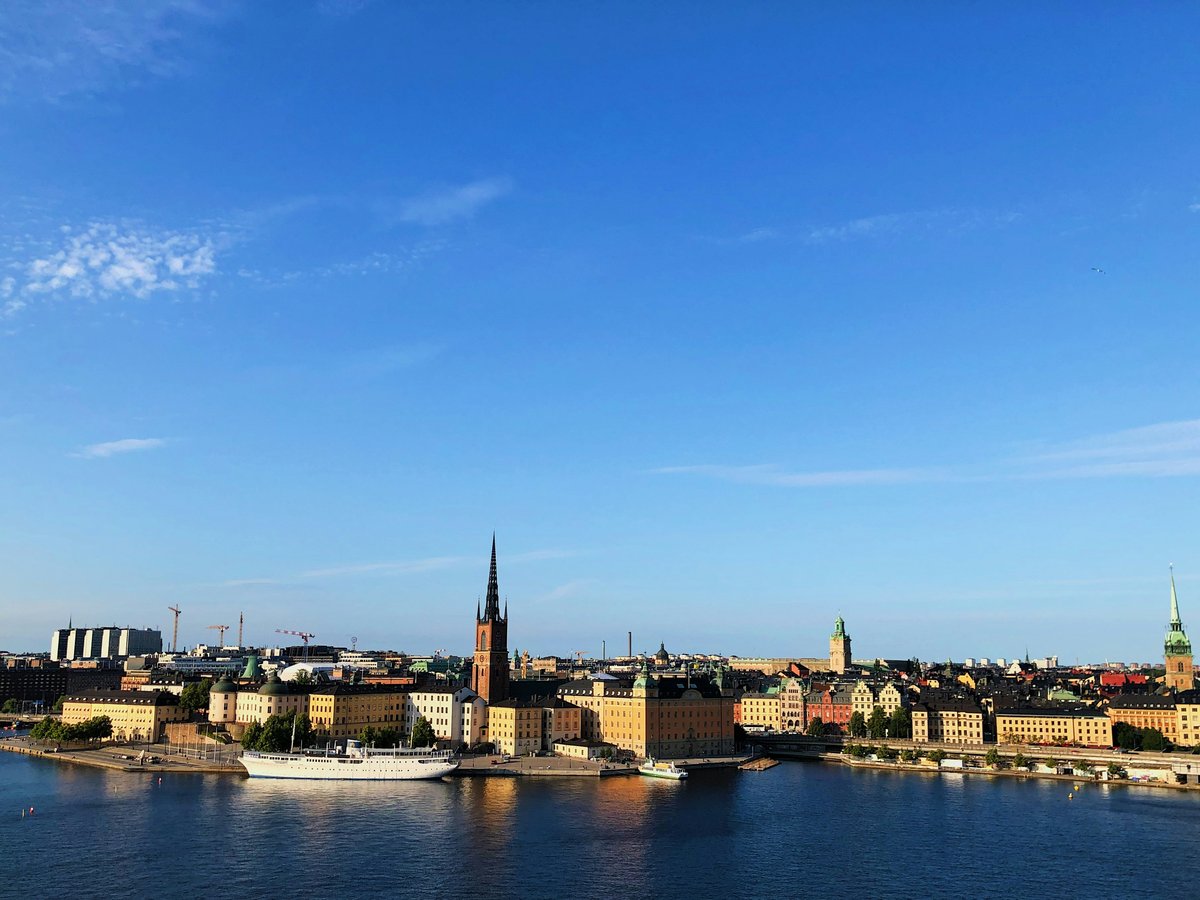
Stay in Stockholm in February
72 hotels in the Trip.com pool for Stockholm, from US$23 a night.
Opens Trip.com on Fri 5 Feb to Sun 7 Feb 2027; change the dates there.
February might be Stockholm's toughest sell, and there is no point pretending otherwise. Average highs hover around 1.7°C (35°F), lows drop to -3.8°C (25°F), and the sun shows itself for fewer than 9 hours on most days. Snow settles across Djurgården and Gamla Stan. The Baltic freezes in patches along the Strandvägen waterfront. Grey skies sit over Norrmalm and Södermalm for days at a stretch. This is deep winter at 59°N latitude.
That said, February carries a few genuine draws that January lacks. Semla season reaches its peak across the city, with bakeries in Vasastan, Södermalm, and Östermalm producing thousands of cardamom-scented cream buns daily ahead of Fettisdagen on February 17. Stockholm Furniture & Light Fair brings roughly 40,000 design professionals to Stockholmsmässan in the first week of the month. Hotel rates tend to run 30-40% below July prices. The outdoor ice rink at Kungsträdgården stays open through the month. And by the last days of February, sunset pushes past 5pm, a shift that Stockholmers notice after the deep darkness of December and January.
Be honest with yourself about cold tolerance before booking. If you need outdoor terraces, long evenings, and 18 hours of daylight, come in June. If a quieter, more affordable Stockholm built around museum days, sauna sessions, and semla crawls sounds right, February delivers. The Arlanda Express still runs every 15 minutes, the metro stays heated, and the typical queue at Vasamuseet drops from 45 minutes in July to almost nothing.
Why visit in February
- Hotel rates across central Stockholm run 30-40% below summer peaks, and restaurants in Östermalm and Norrmalm that need reservations weeks ahead in July have open tables on weeknights.
- Semla season brings one of Sweden's most beloved food traditions to every bakery and konditori in the city, peaking around Fettisdagen on February 17.
- Major museums like Vasamuseet, Fotografiska, and Nordiska museet on Djurgården have minimal queues compared to the 45-minute waits common in June and July.
- Stockholm Furniture & Light Fair at Stockholmsmässan draws roughly 40,000 visitors in the first week, making February the month for design-focused travel.
- Daylight hours increase noticeably through the month, from about 7.5 hours in early February to nearly 10 by the end, giving the whole city a sense of momentum after January's deep dark.
Worth knowing
- Daylight hours range from about 7.5 at the start of the month to 10 by the end, which limits time for outdoor sightseeing and photography.
- Nighttime temperatures often sit around -4°C (25°F) or lower, and wind chill off the water around Skeppsholmen and Djurgården makes it feel several degrees colder still.
- Most archipelago boat tours and outdoor terraces shut down from November through March, removing a major part of Stockholm's summer appeal.
- Icy sidewalks, especially on the cobblestones of Gamla Stan and the steep streets of Södermalm, are a real hazard without proper winter footwear.
Best for
Think twice if
Stockholm in February is properly cold. Average highs reach 1.7°C (35°F) and lows drop to -3.8°C (25°F), with snow on the ground for most of the month. Rainfall totals around 34mm across roughly 7 days, though much of the precipitation falls as snow at these temperatures. Humidity sits at 84%, which tends to make the cold feel sharper than the thermometer suggests. The wind off Saltsjön and Riddarfjärden cuts through thin jackets without hesitation. Daylight runs from roughly 7.5 hours at the start of February to about 10 hours by month's end, a noticeable improvement over January's 6-hour days. Expect overcast skies on most days, with occasional bright, crisp mornings when the snow reflects low-angle sunlight across the rooftops of Gamla Stan.
Seasonal caution
- Temperatures frequently drop below 0°C (32°F), and nighttime lows of -10°C (14°F) are possible during cold snaps. Exposed skin is at risk of frostbite during extended outdoor time in wind.
- Ice on sidewalks and cobblestone streets is common throughout February. Falls are a genuine hazard, especially on the steep hills of Södermalm and the uneven stones of Gamla Stan. Wear boots with aggressive tread or buy clip-on ice grippers (broddar) when you arrive.
- Limited daylight of roughly 7.5 to 10 hours means outdoor activities need to be planned around the available light window, typically 8:30am to 4pm at the start of the month, extending to about 7am to 5pm by month's end.
Year-round climate
Averages from the last 5 years.
| Month | Avg high (°C) | Avg low (°C) | Rainfall (mm) |
|---|---|---|---|
| Jan | 1 | -4 | 61 |
| Feb | 2 | -4 | 34 |
| Mar | 6 | -1 | 27 |
| Apr | 10 | 1 | 32 |
| May | 16 | 6 | 56 |
| Jun | 21 | 12 | 66 |
| Jul | 22 | 14 | 87 |
| Aug | 21 | 13 | 90 |
| Sep | 17 | 10 | 49 |
| Oct | 11 | 6 | 63 |
| Nov | 5 | 1 | 42 |
| Dec | 1 | -3 | 41 |
Best things to do in February
Ice skating at Kungsträdgården
outdoorThe outdoor rink at Kungsträdgården in central Norrmalm is Stockholm's most popular public skating spot. The rink sits between bare cherry trees that bloom spectacularly in April but look stark and atmospheric under February snow. Skate rental is available on-site, and the rink is floodlit for evening sessions.
February's sub-zero temperatures keep the outdoor ice in peak condition. The rink typically closes in early to mid-March as temperatures rise.Booking tipNo booking needed. Arrive on weekday afternoons to avoid weekend crowds. Skate rental available on-site.
Semla tasting across Stockholm
foodFebruary is semla season, and bakeries across Södermalm, Vasastan, and Östermalm compete to produce the city's best version of this cardamom-and-cream bun. The major Swedish newspapers and food blogs publish annual semla rankings in early February. Following those lists from konditori to konditori makes for a satisfying (and calorie-dense) afternoon.
Fettisdagen on February 17 is the traditional peak of semla season. The weeks leading up to it are when Stockholm's bakeries put their best buns forward.Booking tipNo booking needed. Go early in the morning for the freshest semlor, as popular bakeries sell out by mid-afternoon on Fettisdagen itself.
Sauna and winter swimming at Hellasgården
wellnessHellasgården sits in the Nacka nature reserve about 20 minutes from central Stockholm by bus. The wood-fired sauna overlooks a frozen lake, and the traditional routine involves heating up to about 80°C, then walking out onto the jetty and lowering yourself into a hole cut in the ice. The shock is intense. The feeling afterward is extraordinary.
February's sub-zero temperatures create the most extreme contrast between the 80°C sauna and the icy water. The frozen lake setting is at its most dramatic in deep winter.Booking tipNo advance booking required, but the sauna gets crowded on Saturday afternoons. Weekday mornings are quieter.
Museum day on Djurgården
cultureDjurgården island holds Vasamuseet (the preserved 17th-century warship), Nordiska museet (Swedish cultural history), ABBA The Museum, and Skansen open-air museum, all within walking distance of each other. February's quiet means you can stand in front of the Vasa hull without competing for space and move through exhibits at your own pace.
February crowd levels at Djurgården's museums are at their annual low. Exhibits that draw 45-minute queues in July are walk-in in February. Short daylight also makes indoor activities the practical choice.Booking tipBuy tickets online for Vasamuseet and ABBA The Museum to skip even the short winter queue and avoid standing in the cold.
Stockholm Furniture & Light Fair at Stockholmsmässan
designOne of the world's largest design events, drawing roughly 40,000 visitors from across the globe. The fair fills the Stockholmsmässan convention center in Älvsjö with Scandinavian and international furniture, lighting, and product design. Industry days are trade-only, but several days are open to the public.
The fair runs only in early February and does not repeat at any other time of year. It is the anchor event of Stockholm Design Week.Booking tipTickets for public days and popular seminars sell out. Book 2-3 weeks ahead through the official website.
Cross-country skiing at Hellasgården
outdoorThe Nacka nature reserve around Hellasgården maintains groomed cross-country ski trails through the winter. The terrain is gentle enough for beginners, with loops of 3km to 10km through pine and birch forest. Ski rental is available on-site at reasonable rates.
February typically has the most reliable snow cover of any month, and the groomed trails are in their best condition. January can be too dark for comfortable afternoon skiing, but February's improving daylight extends the usable window.Booking tipNo booking needed. Ski rental available on-site. Weekday mornings offer the quietest trails.
Evening performance at Kungliga Operan
cultureThe Royal Swedish Opera on Gustav Adolfs Torg stages opera and ballet in a gilded 19th-century auditorium overlooking the water. February falls in the heart of the season, with a mix of Swedish-language and international productions. The building itself, with its ornate foyer and grand staircase, is worth the visit even if opera is not normally your thing.
February is mid-season for opera and ballet, with a strong program and easier ticket availability than the autumn premieres in September and October.Booking tipBook 1-2 weeks ahead for weekend performances. Weeknight shows often have good seats available on shorter notice.
Photography walk through snow-covered Gamla Stan
outdoorStockholm's old town looks different under February snow. The narrow medieval streets between Stortorget and Prästgatan, the colorful 17th-century facades on Österlånggatan, and the frozen waterfront along Skeppsbrokajen all photograph well in the low winter light. The golden hour in February starts around 2pm and lasts well over an hour.
February's combination of snow cover, low-angle sunlight, and empty streets creates conditions that summer photography cannot replicate. The light at 59°N in winter has a golden quality that lasts much of the short day.Booking tipNo booking needed. The best light window is between 2pm and 3:30pm. Bring a spare camera battery, as cold drains lithium-ion quickly.
What to eat in February
On menus now
Semla
The cardamom-scented wheat bun split and filled with almond paste and fresh whipped cream. This is THE food of February in Sweden, with bakeries across Stockholm competing fiercely ahead of Fettisdagen on February 17. Swedes consume roughly 40 million semlor per year, and the majority sell between late January and early March. The bun should be fresh and slightly warm, the almond paste homemade, and the cream whipped that morning.
Ärtsoppa med pannkakor
Yellow split pea soup served with thin pancakes, a Thursday lunch tradition across Sweden since medieval times. In February it becomes the go-to warming lunch at restaurants across Norrmalm and Gamla Stan, particularly satisfying after a morning in below-zero temperatures. Traditionally followed by punsch.
Viltgryta
Wild game stew made with moose, deer, or wild boar, slow-cooked with root vegetables and lingonberries. February falls at the tail end of the hunting season, so game meat appears on menus across Stockholm's traditional restaurants, especially in Östermalm and Gamla Stan.
Raggmunk med fläsk
Crispy potato pancakes served with pan-fried pork belly and tart lingonberry jam. A classic Swedish winter comfort dish that appears on weekday lunch menus across Södermalm and Vasastan from October through March. The contrast of crispy potato, salty pork, and cold lingonberry is pure cold-weather fuel.
What to drink
Punsch
A traditional Swedish liqueur made from arrack, sugar, and citrus, served warm in winter months. February is peak punsch season, often paired with ärtsoppa on Thursdays at traditional restaurants. Served in small, stemmed glasses at roughly 40°C.
Regular events in February
Stockholm Furniture & Light Fair
One of the world's largest design fairs, held at Stockholmsmässan in Älvsjö. Features Scandinavian and international furniture, lighting, textiles, and product design. Several days open to the public alongside trade-only sessions.
First week of February (typically Tuesday through Saturday)Fettisdagen (Fat Tuesday / Semla Day)Free
Sweden's traditional Shrove Tuesday, when semlor consumption reaches its peak. Not an official holiday, but bakeries and restaurants across Stockholm mark the day with special semla offerings, and many workplaces bring in trays of buns. A genuine cultural moment rather than a tourist event.
February 17 (2026)Stockholm Design Week
A city-wide series of design exhibitions, talks, studio open days, and pop-up installations that coincides with the Furniture Fair. Events spread across galleries, showrooms, and studios in Södermalm, Norrmalm, and Östermalm, with some free and open to the public.
Early February, running concurrently with the Furniture FairSHL Hockey at Hovet
Djurgårdens IF, one of Stockholm's Swedish Hockey League teams, plays home games at Hovet arena in Johanneshov throughout February. The atmosphere is loud, the beer is cold (and expensive, this being Stockholm), and it is a good window into how Stockholmers spend winter evenings.
Multiple home games throughout February, typically Wednesday and Saturday eveningsBest places this February
Kungsträdgården
parkStockholm's central park in Norrmalm transforms into an outdoor ice skating rink each winter. The rink sits between rows of cherry trees that are bare in February but will bloom pink in April. After skating, warm up at one of the cafes lining the park's edges. The rink is floodlit in the evenings, which adds atmosphere during the long dark hours.
NorrmalmFotografiska
museumA photography museum housed in a converted Art Nouveau customs building on the Södermalm waterfront. The rotating exhibitions tend toward large-scale, immersive shows that reward a slow visit. The top-floor restaurant and bar have panoramic views across the water toward Djurgården, and the building stays open until late evening.
SödermalmGamla Stan
neighborhoodStockholm's medieval old town, spread across Stadsholmen island, is atmospheric under February snow. The narrow alleys between Stortorget and Västerlånggatan are quieter than at any other time of year, and the 17th-century facades photograph well against grey skies and white ground. The Nobel Prize Museum on Stortorget is a good indoor stop when the cold gets to you.
Gamla StanHellasgården
outdoor recreationA recreation area in the Nacka nature reserve, about 20 minutes by bus from Slussen. The wood-fired sauna overlooking the frozen lake is the main draw in February, along with groomed cross-country ski trails and walking paths through snow-covered forest. Bring a towel and a change of clothes.
NackaVasamuseet
museumThe Vasa Museum on Djurgården houses the almost-completely-intact 17th-century warship that sank in Stockholm harbor in 1628. The ship is 69 meters long and displayed in a purpose-built hall with multiple viewing levels. February's low crowds mean you can take your time with the exhibits and stand close to the hull without jostling.
DjurgårdenStadsbiblioteket
architectureGunnar Asplund's 1928 Stockholm Public Library in Vasastan. The main reading room is a stunning rotunda lined floor-to-ceiling with books, and the building is free to enter. On a cold February day, the quiet warmth of the reading room and the soft light filtering through the high windows make it one of the most peaceful spots in the city.
VasastanÖstermalms Saluhall
food hallStockholm's premier indoor food hall in Östermalm, originally built in 1888 and renovated in recent years. The stalls sell Swedish cheeses, cured meats, fresh fish, game, and baked goods. In February, look for reindeer meat, smoked Arctic char, and root vegetables. A good place to warm up, browse, and eat a lunch of herring or meatballs.
Östermalm
Your packing checklist
Tick items off as you pack. Your progress saves in this browser.
All packed — have a great trip.
Insider tips
Stockholmers take the annual semla debate seriously. The major newspapers and food blogs publish rankings in early February, and following the current year's list from konditori to konditori makes for a better crawl than picking at random. The cardamom bun should be fresh, the almond paste homemade, and the cream whipped that morning. Avoid semlor from convenience stores.
Buy clip-on ice grippers (broddar) from any Clas Ohlson or hardware store when you arrive. Locals wear them from December through March. A pair runs around 100-150 SEK and will save you from a fall on Södermalm's icy hills or Gamla Stan's cobblestones. They clip over any boot.
An SL transit pass covers metro, bus, tram, and the Djurgården ferry. The 72-hour pass is the best value for most visitors. Buy it on the SL app before you arrive rather than trying to find a physical sales point. The Stockholm metro (Tunnelbana) doubles as an art gallery, with installations in over 90 of its 100 stations.
February sunsets produce some of Stockholm's best light. The sun sits low on the horizon even at midday, creating golden tones across Riddarholmen and the Gamla Stan waterfront. The Monteliusvägen path along the northern cliff of Södermalm has panoramic views toward Stadshuset and the best angle for late-afternoon photography, typically between 2pm and 3:30pm.
Some Stockholm museums, including Moderna Museet's permanent collection, currently offer free entry. Check individual museum websites for the latest pricing before buying a multi-attraction pass. In February, with fewer sites to visit per day due to limited daylight, a pass may not pay for itself unless you plan 3-4 paid museums.
Avoid these mistakes
- Packing fashion boots instead of proper winter footwear. The cobblestones in Gamla Stan and the steep streets of Södermalm ice over regularly, and smooth-soled boots will put you on the ground. Waterproof boots with deep tread or detachable ice grippers (broddar) are non-negotiable.
- Planning a full day of outdoor sightseeing. With daylight ending around 4pm in early February and temperatures well below freezing, extended outdoor time is uncomfortable and potentially risky. Plan 2-3 hours outside, then warm up at a museum, sauna, or konditori before heading out again.
- Assuming the archipelago is accessible. Most ferry routes to the outer archipelago islands are suspended or running on minimal winter schedules from November through March. If island-hopping was a priority, reschedule for June through August.
- Skipping the sauna. Visitors from cultures without a strong sauna tradition sometimes dismiss it, but a winter sauna session at Hellasgården, with the contrast of 80°C heat and stepping out into -4°C air beside a frozen lake, is arguably the most memorable February experience in the city.
Practical tips for February
Stockholm in February requires more planning than a summer visit. Book museum tickets for Vasamuseet and Fotografiska online in advance, not because they sell out (they rarely do in February), but because it saves queuing in the cold. The Stockholm metro runs frequently and is heated, making it the most practical way to move between Södermalm, Norrmalm, and Östermalm. Most restaurants in Gamla Stan and Södermalm do not require reservations on weeknights in February, though Friday and Saturday dinners at popular spots should be booked 2-3 days ahead. Shops in the city center typically open at 10am and close at 6pm on weekdays, with shorter Saturday hours and limited Sunday openings. The Arlanda Express runs every 15 minutes between Arlanda airport and Stockholm Central Station, with a journey time of about 20 minutes. Tipping is not expected in Sweden, but rounding up by 5-10% at sit-down restaurants is appreciated. Credit cards and mobile payments are accepted almost everywhere in Stockholm. Many places no longer accept cash at all, so do not bother exchanging currency before your trip.
FAQ
Is February a good time to visit Stockholm?
February is a fair time to visit Stockholm, not the best and not the worst. It is cold, with average highs of 1.7°C (35°F) and lows of -3.8°C (25°F), and daylight runs roughly 8 to 10 hours depending on the week. The trade-offs are real, though. Hotels cost 30-40% less than summer, major museums on Djurgården have almost no queues, and semla season gives the city a distinct food culture moment around Fettisdagen on February 17. It works well for travelers who prioritize indoor culture, affordability, and winter atmosphere over outdoor activities and long days.
What is the weather like in Stockholm in February?
Cold and often grey. Average highs are around 1.7°C (35°F) and lows around -3.8°C (25°F), with about 34mm of precipitation across 7 days, mostly falling as snow. Humidity sits at 84%. Wind off the Baltic makes the cold feel sharper than the numbers suggest. Snow covers the ground for most of the month, and ice on sidewalks and cobblestones is common, especially in Gamla Stan and Södermalm. Pack thermal layers, a windproof coat, and boots with good tread.
Does it snow in Stockholm in February?
Usually, yes. February is one of Stockholm's snowiest months, and snow tends to stay on the ground for most of the month. With average temperatures staying around or below freezing, precipitation that falls as rain in autumn comes as snow in February. The city looks particularly atmospheric under snow cover, especially Gamla Stan and Djurgården, though it does make walking on steep streets and cobblestones more difficult. Ice grippers for your boots are a worthwhile investment.
Is Stockholm crowded in February?
No. February is one of Stockholm's quietest months for tourism. You will find short or nonexistent queues at normally busy attractions like Vasamuseet, ABBA The Museum, and Fotografiska. Hotels have wide availability at lower rates. Restaurants that need bookings weeks ahead in summer often have open tables on weeknights. The one exception is the first week of February during Stockholm Furniture & Light Fair, when design professionals fill some hotels and restaurants, particularly around central Norrmalm.
How many hours of daylight does Stockholm get in February?
Daylight increases noticeably through the month. Early February has roughly 7.5 hours of light, from about 8am to 3:30pm. By the end of February, the sun rises before 7am and sets after 5pm, giving close to 10 hours. This improving trajectory is something locals genuinely appreciate after the deep dark of December and January. Plan outdoor activities for the middle of the day and save museums, restaurants, and saunas for the morning and evening dark hours.
Things to Do in Stockholm in February
 Free cancellation
 The Original Stockholm Ghost Walk and Historical Tour - Gamla Stan
City tour: 1.5 hours, free cancellation.
via Viator Free cancellation
 Stockholm Private Golf Cart Tours
City tour: 2 hours, free cancellation.
via Viator Free cancellation
 Walking Tour of Stockholm's Old Town, Gamla Stan
Day trip: 2 hours, free cancellation.
via Viator Free cancellation
 Viking History, Runes & Countryside 9h Tour to Sigtuna & Uppsala
Day trip: 9 hours, free cancellation.
via Viator Free cancellation
 Stockholm Pizza Cruise - Explore Stockholm's Waterways
Cruise: free cancellation.
via Viator Free cancellation
 1-Day Small-Group Stockholm Archipelago Kayak Tour
Outdoor experience: 8 hours, free cancellation.
via ViatorFind a flight to Stockholm
Live fares to Stockholm appear here once cookies are accepted.
Last verified by automated review (v1.7.2) on . What is automated review?