Stay in Cebu in September
73 hotels in the Trip.com pool for Cebu, from US$6 a night.
Opens Trip.com on Fri 25 Sep to Sun 27 Sep 2026; change the dates there.
September in Cebu means rain. Not the apocalyptic flooding that sometimes hits Manila, but a steady, predictable rhythm of afternoon downpours on roughly 27 of the month's 30 days. Temperatures hover around 30°C (86°F) during the day and dip to about 25°C (77°F) at night, which sounds manageable on paper. The 85% humidity changes that calculation. It is the kind of sticky, clinging heat that soaks your shirt during a 10-minute walk from the Basilica del Santo Niño to Fort San Pedro in downtown Cebu City. This is also the heart of the Philippine typhoon season. Cebu's central position in the Visayas offers more shelter than the Pacific-facing coast of Samar or Leyte, but tropical storms still cancel ferry services and occasionally ground flights at Mactan-Cebu International Airport for 12 to 24 hours.
The upside is real, though. September is low season. The international tour groups that crowd Magellan's Cross plaza in February and March are largely absent. Resort rates along the Mactan beachfront and hotel rooms near Mango Avenue drop well below the annual average. Restaurant reservations in Lahug or IT Park are rarely necessary. If you can build weather flexibility into your plans, you will find a city that feels more local, less performed.
September 1 also marks the unofficial start of the Filipino Christmas season. It sounds absurd, but it is completely genuine. Radio stations across Cebu switch to holiday playlists on the first of the month. Malls in Ayala Center begin mounting decorations. Expect to hear Jose Mari Chan's "Christmas in Our Hearts" in every taxi, coffee shop, and department store from that day onward.
Why visit in September
- Resort and hotel rates along Mactan and in Cebu City drop to some of the year's lowest levels, often 30-40% below the December-to-March peak.
- Major heritage sites like Museo Sugbo and the colonial downtown circuit have noticeably shorter queues than the January-to-April high season.
- Waterfalls across Cebu province run at peak volume from the monsoon rains. Kawasan Falls in Badian is at its most dramatic for canyoneering.
- The hills around Sirao and the Transcentral Highway are at peak green, with flower farms in full bloom and striking highland scenery that the dry months cannot match.
Worth knowing
- Rain falls on nearly every day of the month, typically in afternoon bursts, which forces early starts and flexible scheduling for anything outdoors.
- Typhoon risk is genuine. A tropical storm can suspend ferries to Bohol, Leyte, and the Camotes Islands for 1 to 3 days with little advance notice.
- Humidity rarely dips below 85%, which makes walking tours through downtown Cebu City feel exhausting by late morning.
- Some dive operators around Moalboal and Mactan report reduced underwater visibility during heavy rain periods compared to the March-to-May window.
Best for
Think twice if
September mornings typically start warm and partly cloudy before showers build through the afternoon. Most storms pass within 30 to 45 minutes, and evenings often clear enough for a walk along the waterfront. The humidity is the real challenge, staying locked near 85% around the clock. Clothes dry slowly and any exertion in the midday heat feels twice as hard. Sea temperatures around Mactan hover near 29°C (84°F), warm enough for comfortable diving and snorkeling despite overcast skies. October brings the year's heaviest downpours at nearly 350mm, so September is moderate by wet-season standards. Moderate still means wet, though.
Seasonal caution
- Typhoon season peaks across the Philippines in September and October. Cebu's central Visayas position provides partial shelter from Pacific storms, but direct hits occur every few years and near-misses still bring heavy rain, rough seas, and transport disruptions. Monitor PAGASA (the Philippine weather bureau) forecasts daily.
- Flash flooding affects low-lying areas of downtown Cebu City, particularly near the Guadalupe River and parts of the Colon district, during sustained heavy rainfall events.
- Dengue transmission tends to rise in the wet season as standing water from rains creates mosquito breeding habitat. The Philippine Department of Health typically issues advisories for the Visayas region during these months.
Year-round climate
Averages from the last 5 years.
| Month | Avg high (°C) | Avg low (°C) | Rainfall (mm) |
|---|---|---|---|
| Jan | 29 | 24 | 254 |
| Feb | 29 | 24 | 165 |
| Mar | 30 | 25 | 153 |
| Apr | 31 | 25 | 175 |
| May | 31 | 26 | 240 |
| Jun | 30 | 25 | 299 |
| Jul | 30 | 25 | 283 |
| Aug | 30 | 25 | 265 |
| Sep | 30 | 25 | 232 |
| Oct | 30 | 25 | 349 |
| Nov | 30 | 25 | 273 |
| Dec | 29 | 25 | 222 |
Best things to do in September
Canyoneering at Kawasan Falls
adventureThe Badian canyoneering route covers roughly 4 kilometers of river canyon south of Cebu City, ending at the turquoise multi-tiered Kawasan Falls. The route includes cliff jumps ranging from 3 to 15 meters and multiple swimming sections through narrow gorges.
September rains push the waterfalls to peak flow. The canyon pools are deeper and the falls more powerful than in the drier months, making the jumps safer and the scenery more dramatic.Booking tipBook with an operator that provides helmets and life vests. Weekday slots in September rarely need advance booking, but Saturday trips fill with local groups.
Sardine run and turtle watching at Moalboal
natureMoalboal's Panagsama Beach sits above one of the densest sardine schools in the Philippines. Millions of sardines form a shifting bait ball within 10 meters of shore. Green and hawksbill sea turtles feed along the same reef wall.
Fewer divers and snorkelers in September mean less disruption to the sardine school. The turtles tend to be less skittish with smaller groups in the water.Booking tipMoalboal is a 3-hour drive from Cebu City. Stay at least 1 night to avoid the rushed day-trip pace.
Downtown Cebu heritage circuit
cultureA walking loop through the colonial core connects Fort San Pedro (the oldest triangular bastion fort in the Philippines, built starting in 1565), Magellan's Cross, the Basilica del Santo Niño (founded 1739), Museo Sugbo, and the National Museum of the Philippines branch nearby. The full circuit covers about 2 kilometers.
Rain drives visitors indoors, making September ideal for the covered historical sites. Museo Sugbo's air-conditioned galleries offer exhibits on Cebuano history from pre-colonial maritime trade through World War II.Booking tipStart by 8:00 AM to reach the Basilica before midday heat. Museo Sugbo closes at 17:00.
Carbon Market food walk
foodCebu's oldest and largest public market sprawls across several covered blocks near the port. The food sections sell everything from dried fish to prepared meals, seasonal fruits, and local sweets. The dried-seafood hall near Pier 1 is a destination in its own right.
The covered stalls are rain-proof, making Carbon one of the few food experiences that genuinely improves in the wet season. September brings lanzones and mangosteen to the fruit vendors.Tops Lookout at sunrise after overnight rain
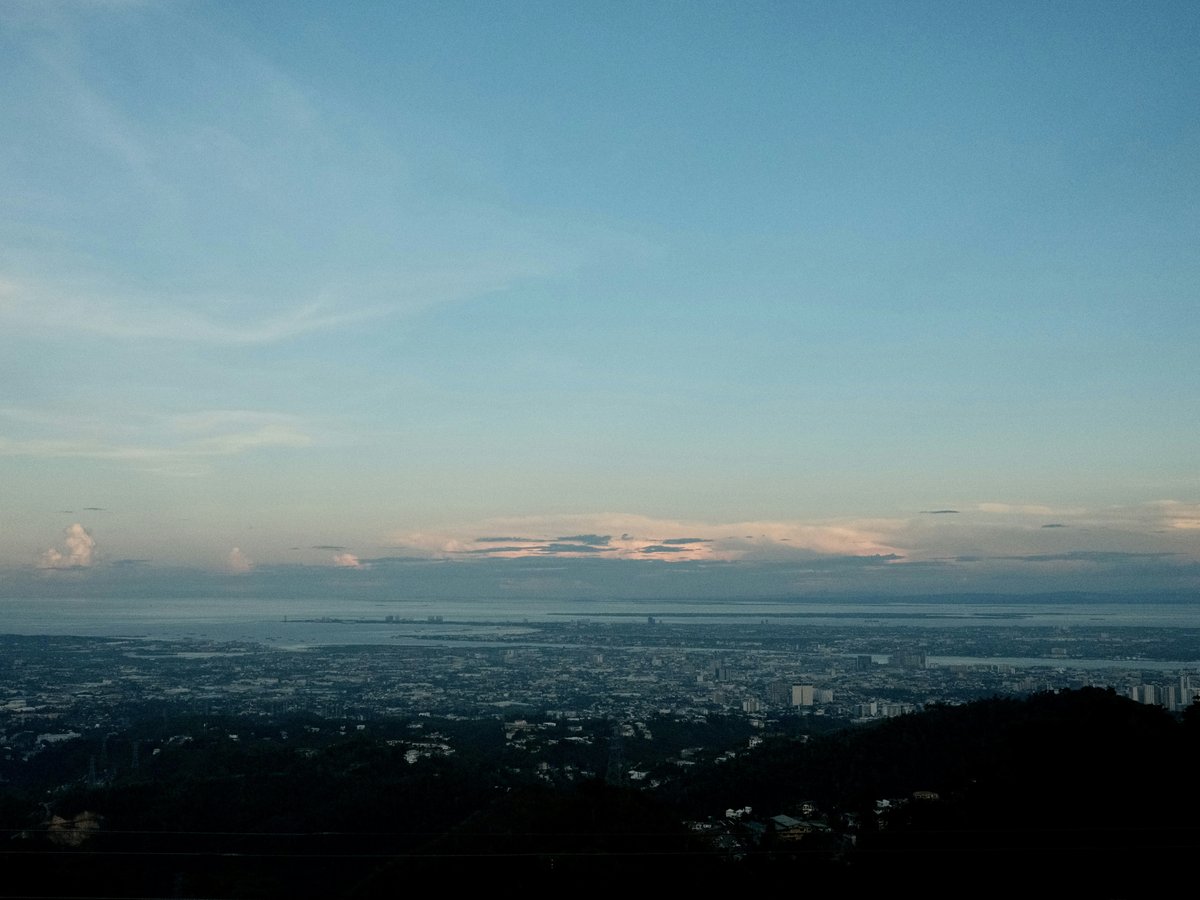
scenicA viewpoint in the Busay hills about 30 minutes uphill from Lahug, at roughly 600 meters above sea level. The panorama spans Cebu City, Mactan Island, and the strait between them.
Overnight rains clear the haze that typically hangs over the city. Early-morning views after a rainy night are among the sharpest of the year.Booking tipArrive by 5:30 AM for the clearest conditions. Take a Grab rather than a rented motorbike. The Busay road gets slippery after rain.
Sirao Peak and Kan-Irag Nature Park
natureA highland area northwest of Cebu City, reachable by a 45-minute drive from Lahug. Trails wind through flower farms and grasslands with views toward the Camotes Sea. Temperatures at this elevation sit around 24-26°C, a welcome break from the lowland heat.
The wet season turns the hillsides vivid green. Flower farms reach peak bloom with celosias and sunflowers thriving in the consistent rain.Booking tipMorning visits before 10:00 AM dodge most afternoon showers. The trails get muddy, so bring shoes with grip.
Island hopping to Hilutungan and Nalusuan
waterBangka (outrigger boat) tours from the Mactan shore visit Hilutungan Marine Sanctuary and the stilted boardwalks of Nalusuan Island. Both are 30 to 45 minutes by boat from the Mactan piers.
Smaller tour groups mean less churned-up water at the Hilutungan snorkeling zones. Boat operators sometimes cut rates to fill seats in the low season.Booking tipCheck weather forecasts the evening before. Operators cancel morning departures when PAGASA issues storm advisories. The window between storms is usually predictable 24 hours out.
What to eat in September
In season: fruit
Lanzones
The Visayan lanzones season begins in September. Bunches of these translucent, grape-sized fruits appear at Carbon Market and street-side stalls across the city. Camiguin lanzones, shipped by ferry from Mindanao, are considered the sweetest in the Philippines.
Mangosteen
Mangosteen from Mindanao hits Cebuano markets in good supply through September. The thick purple rind splits open to reveal white, tangy-sweet segments. Taboan Market near Pier 1 tends to carry them at better prices than supermarkets.
On menus now
Sinigang na baboy
Sour pork soup with tamarind broth. A Filipino comfort-food staple that peaks in appeal during the wet months. Most carenderia (small eateries) in the Carbon and Colon districts serve it daily for a warm, tart lunch.
Street food peaks
Budbud kabog
A Cebuano heritage snack made from millet wrapped in banana leaves. Vendors near the Basilica and at Carbon Market sell it as a traditional pairing with sikwate, the local hot chocolate.
What to drink
Sikwate
Cebu's traditional hot chocolate, made from locally processed tablea (roasted cacao tablets). Rainy September afternoons make this drink feel especially right. Pair it with puto maya, sticky purple rice, for a classic Cebuano merienda.
Regular events in September
Osmeña DayFree
A Cebu provincial holiday honoring President Sergio Osmeña Sr., born in Cebu City on September 9, 1878. Government offices close and some private businesses operate on reduced hours. Minor ceremonies take place near the Osmeña ancestral landmarks in the city center.
September 9Feast of the Nativity of the Blessed Virgin MaryFree
Special masses and processions at Catholic churches across Cebu, including the Metropolitan Cathedral and parish churches in the older neighborhoods. One of the larger September observances in the church calendar.
September 8Feast of San Miguel Arcangel in ArgaoFree
The town of Argao, 68 kilometers south of Cebu City, celebrates its patron saint fiesta with street processions, a novena at the Church of San Miguel Arcangel (a coral-stone structure from the 1730s), food stalls, and evening entertainment. Fiesta week activities begin roughly a week before the feast day.
September 29 (fiesta week begins around September 22)Ber Months kickoffFree
The Philippines treats September 1 as the start of a 4-month Christmas season. Malls across the city put up decorations, radio stations shift to holiday playlists, and the seasonal shift in atmosphere is unmistakable. It is a genuine, nationally observed cultural phenomenon.
September 1 onwardBest places this September
Carbon Market
marketCebu's oldest public market. The covered halls and crowded alleys are at their most navigable in September's low tourist season. The cooked-food section serves hot meals all morning. The dried-fish stalls fill the air with a salt-and-smoke smell that is pure Cebu.
CarbonMuseo Sugbo
museumA provincial museum housed in the old Cebu Provincial Jail, built in the 1870s. Air-conditioned galleries cover pre-colonial maritime trade, the Spanish period, the American era, and the Japanese occupation. September rain makes the indoor exhibits a practical choice and a worthwhile one.
ColonSirao Flower Garden
gardenA hillside flower farm northwest of the city. The rainy season fills the terraced beds with celosias and sunflowers at peak bloom. The cooler air at this elevation and the green hills behind the flowers create photography conditions that the dry months cannot replicate.
BusayFort San Pedro
historical siteThe Spanish colonial fort that anchors Cebu's heritage district. Thick coral-stone walls stay cool even in the humid September air. The interior garden and small museum are partially sheltered from rain, and the fort's compact footprint makes it a manageable visit between downpours.
Pier areaIT Park and Sugbo Mercado
food districtA commercial district in the Lahug area, home to BPO offices, restaurants, and covered food courts. The Sugbo Mercado weekend food market runs under a roof and stays dry regardless of the weather. Food stalls rotate weekly, keeping repeat visits interesting.
LahugTops Lookout
viewpointAn observation point in the Busay highlands with a 360-degree panorama over the city and the Mactan strait. Mind you, the access road demands extra caution after wet nights, but the post-rain clarity makes September mornings here sharper than what most visitors see in the drier months.
BusayMactan Shrine and Lapulapu Monument
historical siteThe Lapulapu Monument (erected in 1981) stands at the site where the chieftain Lapulapu's forces defeated Ferdinand Magellan in 1521. The nearby Magellan Monument, placed in 1866, marks the opposite perspective of the same battle. Both sit in a small park on the eastern shore of Mactan Island, reachable by taxi from the resort strip.
Mactan
Your packing checklist
Tick items off as you pack. Your progress saves in this browser.
All packed — have a great trip.
Insider tips
Sugbo Mercado at IT Park (weekends, starting around 17:00) is a more consistent sampling ground for Cebuano street food than the tourist-oriented Larsian barbecue area near Fuente Osmeña. The covered layout keeps you dry, and the quality varies less between stalls.
When a downpour starts, wait it out. The typical September storm rarely lasts a full hour. Locals duck into the nearest sari-sari store or mall entrance and scroll their phones until it clears. Trying to push through by taxi leads to surge pricing and gridlocked traffic on Osmeña Boulevard.
Taboan Market near Pier 1 sells dried pusit (squid), danggit (rabbitfish), and other dried seafood at prices well below the tourist-packaged versions at the airport departure shops. Vacuum-sealed packs travel well in checked luggage.
The road to Tops Lookout through Busay is a motorbike-accident hotspot in the wet months. The curves get slick from runoff and fallen leaves. Take a four-wheeled Grab or taxi instead of a rented scooter, especially after dark or after rain.
Avoid these mistakes
- Booking a tight ferry-to-flight connection through Mactan airport. September weather cancels the Cebu-to-Bohol OceanJet and Lite Ferries services without much warning. Leave a full-day buffer between your last island hop and your outbound flight.
- Planning every day around outdoor activities with no covered alternative. A flexible approach that swaps a beach day for the Museo Sugbo galleries or a food walk through Carbon Market when the rain persists saves the trip from feeling wasted.
- Skipping sunscreen on overcast mornings. Cloud cover at 10°N latitude blocks less UV than visitors from temperate climates expect. Sunburn through grey skies is one of the most common September complaints at pharmacies near the Mactan resorts.
- Wearing flip-flops on the canyoneering trail south of Cebu City. The rocks are slippery year-round but especially treacherous in the wet months. Operators warn about this, but visitors still arrive in sandals and end up borrowing ill-fitting shoes.
Practical tips for September
September 9 is Osmeña Day, a Cebu provincial holiday. Government offices close and some banks run abbreviated hours, so plan any official errands before or after that date. Ferry bookings to Bohol, Leyte, and the Camotes Islands should include at least a 1-day buffer for weather cancellations. Check the PAGASA forecast and the OceanJet social media channels the evening before any inter-island trip. Grab ride-hailing tends to surge during heavy afternoon rain in Cebu City. If you have a morning commitment, book a Grab in advance or arrange hotel transport the night before. Outdoor tour operators in Oslob and Moalboal issue same-morning cancellation decisions by 5:30 AM and post updates to their Facebook pages. If you are staying in the city and heading south for a day trip, confirm the tour is running before you leave.
FAQ
Is September a good time to visit Cebu?
September is fair, not ideal. Rain falls on most days, humidity stays high, and typhoon season adds unpredictability to ferry and flight schedules. But accommodation rates are among the lowest of the year, crowds are thin at every major site, and all attractions remain open. If you are flexible with your plans and do not require guaranteed beach weather, September offers solid value. For a sun-soaked holiday, February through April is the better window.
What is the weather like in Cebu in September?
Warm and humid with consistent afternoon showers that rarely last more than an hour. Mornings tend to be the driest window for outdoor activity. Most rain arrives in concentrated bursts rather than all-day drizzle. It is not the wettest month of the year, but you will still want rain gear every single day.
Is Cebu crowded in September?
No. September is one of the quietest months for tourism. The monsoon and typhoon risk keep most international visitors away. You will encounter fewer tour groups at the heritage sites, easier seating at restaurants across the city, and competitive rates at beach resorts. The local population carries on as normal, so markets and malls stay lively, but the tourist-heavy zones feel noticeably emptier.
Can you still island-hop from Cebu in September?
Yes, with flexibility. Bangka operators at the Mactan piers run tours on days without storm warnings. PAGASA posts advisories that operators follow closely. Expect 1 to 3 days per month where boat trips get canceled. The water remains warm enough for snorkeling, and reduced tourist numbers sometimes mean clearer conditions at popular marine sanctuaries.
Is Cebu family-friendly for a September trip?
Cebu rates 6.8 out of 10 for family friendliness (see the TTDI Family-Friendliness Index). The wet season complicates outdoor plans with young children, but indoor attractions and covered market halls work well for families. Fewer peak-season crowds mean less jostling at heritage sites. The large malls have play areas and cinemas for rainy-afternoon alternatives.
Things to Do in Cebu in September
 Free cancellation
 Whale Shark & Tumalog Falls & Sumilon Sandbar & Pescador Island with Sardines
Outdoor experience: 16 hours, free cancellation.
via Viator Free cancellation
 Bohol Countryside Tour from Cebu Loboc River Cruise with Lunch
Day trip: 14 hours, free cancellation.
via Viator Free cancellation
 Whale Shark Encounter and Sumilon Sandbar with Kawasan Falls
Outdoor experience: 14 hours, free cancellation.
via Viator Free cancellation
 From Cebu: Oslob Whale Shark Swimming & Moalboal Sardine Run Tour
Outdoor experience: 14 hours, free cancellation.
via Viator Free cancellation
 Cebu: Oslob Whale Shark Swimming and Kawasan Falls Canyoneering
Outdoor experience: 12 hours, free cancellation.
via Viator Free cancellation
 From Cebu: Island Hopping to 3 islands with BBQ lunch
Day trip: free cancellation.
via ViatorLast verified by automated review (v1.7.2) on . What is automated review?