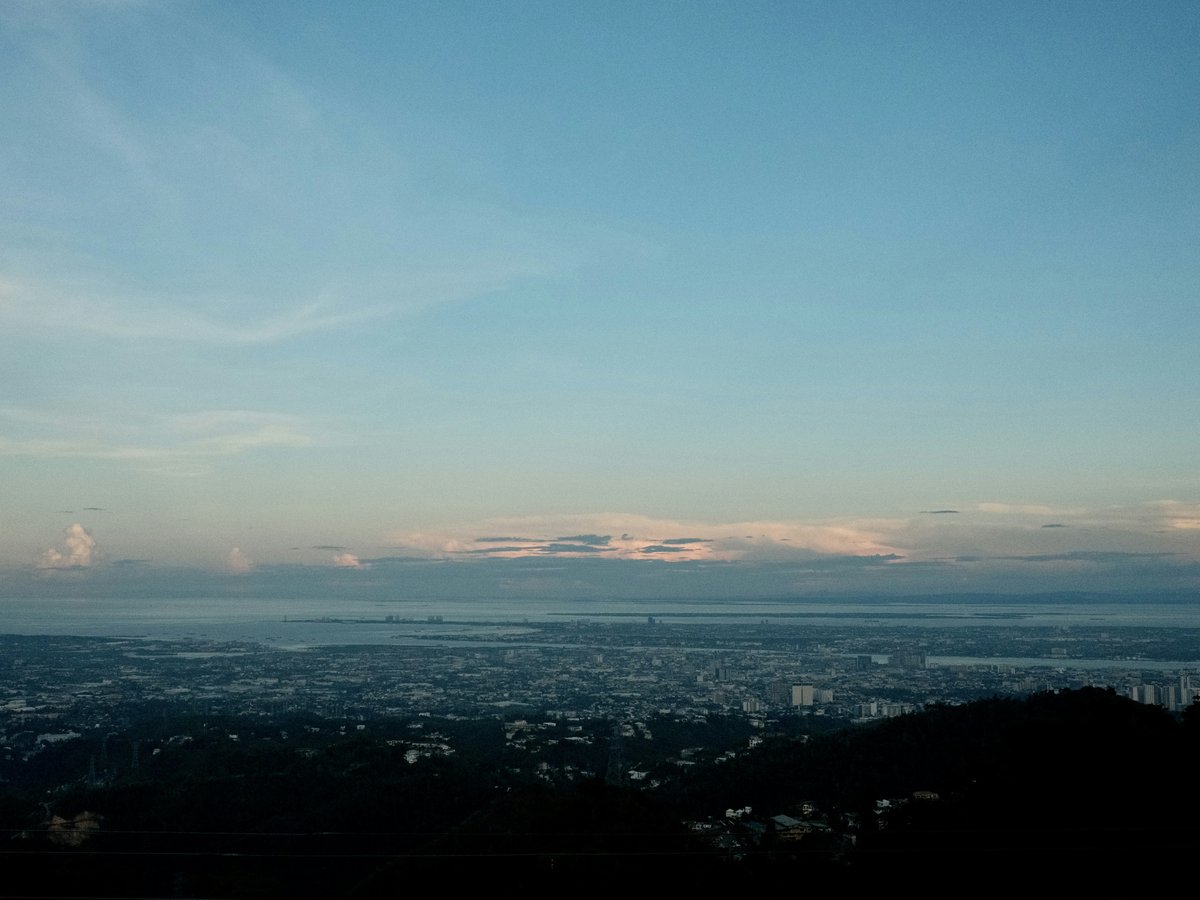
Cebu City sits on a narrow corridor along the eastern coast of Cebu Island, roughly 570 km southeast of Manila by air. The colonial core stretches about 2 km from the waterfront to Fuente Osmeña Circle, and most of the permanently free sites cluster within that strip. More than 300 years of Spanish colonial presence left behind churches that still welcome visitors at no charge, and public plazas, colonial monuments across the Mactan-Mandaue Bridge, and the local branch of the National Museum round out the free-attraction list. Carbon Market fills several blocks near the port with the sharp sweetness of dried mangoes, the smoke of charcoal-grilled corn, and enough visual chaos to fill a morning. Daytime temperatures sit near 30°C for most of the year with heavy humidity, which makes walks from the waterfront through the Parian district more comfortable before 10:00 AM or after 4:00 PM. The downtown core is compact: the walk from the Basilica del Santo Niño to Carbon Market covers roughly 800 meters of flat ground.
Free attractions
-
Magellan's Cross
The pavilion on Magallanes Street houses a wooden cross said to have been planted by Ferdinand Magellan's expedition in 1521, sheltered inside an octagonal kiosk whose painted ceiling murals depict the baptism of Rajah Humabon and Queen Juana. Entry costs nothing. The kiosk sits beside the Basilica del Santo Niño and generally follows daytime hours, from early morning into the evening, so it is not a late-night stop.
Downtown Cebulandmark -
Minor Basilica of the Holy Child (Basilica del Santo Niño)
The Augustinian parish here dates to 1565, and the current stone church was completed around 1739. It houses the Santo Niño de Cebu, a statue of the Child Jesus that draws millions of devotees annually, and the church faces a plaza on Osmeña Boulevard that often carries the waxy scent of devotional candles. Entry is free. The basilica generally opens in the early morning and closes in the evening, with the longest hours and biggest crowds on Fridays and Sundays.
Downtown Cebuchurch -
National Museum of the Philippines, Cebu
Republic Act 11333, the National Museum of the Philippines Act of 2019, makes admission to every National Museum branch in the country permanently free. The Cebu branch rotates exhibits on Visayan art, archaeological finds, and natural history, and the museum is typically open Tuesday through Sunday.
Downtown Cebumuseum -
Cebu Metropolitan Cathedral
The cathedral stands about 200 meters from the Basilica along Osmeña Boulevard, rebuilt after wartime damage in 1945 and lit inside by stained-glass windows depicting events from Cebu's Catholic history. Entry is free, 7 days a week.
Downtown Cebuchurch -
Heritage of Cebu Monument
The outdoor tableau in the Parian district groups life-sized metal sculptures in scenes spanning Cebu's history from pre-colonial contact through the Christianization era. More than two decades of exposure have oxidized the metalwork, leaving a rough, dark patina across the surfaces. No fence, no fee, and the Parian location is accessible around the clock.
Parianmonument -
Plaza Independencia
Plaza Independencia is the largest public park in downtown Cebu, shaded by old trees and bordered by Fort San Pedro on one side and the waterfront on the other. Benches and a fountain surround the central flagpole, and the park is open 24 hours.
Downtown Cebupark -
Fuente Osmeña Circle
Cebu City's central roundabout has a fountain ringed by park benches under acacia trees, and street food vendors line the Osmeña Boulevard side most evenings, when the sweet char of grilled banana-cue carries across the circle. The roundabout sits at the boundary between downtown Cebu and the newer uptown districts toward Lahug.
Fuente / Uptownpark -
Cebu Provincial Capitol grounds
The landscaped gardens around the Provincial Capitol building offer a shaded walking loop with mature trees, flower beds, and benches, and the neoclassical facade of the Cebu Provincial Capitol is visible from the pathways. The Capitol Site grounds are free and open during daytime hours.
Capitol Sitepark -
Magellan Monument
Erected in 1866 on Mactan Island, this monument marks the approximate site where Ferdinand Magellan fell in the Battle of Mactan in April 1521. The marker stands in a small open park near the Mactan coast, free to visit.
Mactan Islandmonument -
Lapulapu Monument
Built in 1981 on Mactan, this bronze statue honors Lapulapu, the chieftain who led the resistance against Magellan's forces, and it faces the Magellan monument within the same open park. Both are free to visit.
Mactan Islandmonument
Free activities
-
Downtown Heritage Walk
Colon Street, recognized as the oldest street in the Philippines, runs through the commercial center about 300 meters inland from the waterfront. A 90-minute loop from there south through the Parian district passes the Heritage of Cebu Monument, the Metropolitan Cathedral, and the narrow lanes of the old Chinese-Filipino quarter, where pre-war facades and hand-painted signage survive between newer concrete buildings.
Downtown Cebuwalking route -
Carbon Market browsing
The oldest public market in Cebu spreads across several blocks near the port area. The fish section smells of seawater and crushed ice, the dried-goods stalls carry the warm humidity of copra, and the noise competes with a construction site. Browsing costs nothing, vendors rarely pressure visitors, and the freshest produce arrives between 5:00 and 7:00 AM.
Carbon / Downtownmarket -
Mactan Shrine and waterfront walk
Both historical monuments on Mactan sit within the same open park, separated by a short walk, and the surrounding waterfront gives you views across the Mactan Channel toward Cebu City, with fishing boats moored in the shallows. A jeepney from downtown Cebu to Mactan currently costs around 15 to 25 PHP.
Mactan Islandwalking route -
SRP Waterfront Promenade
The South Road Properties reclamation area along Cebu City's southern coast has a paved waterfront walkway, and the Cebu-Cordova Link Expressway bridge, which opened in 2022, spans toward Mactan in the distance. An evening walk here catches the sea breeze and the sound of water against the seawall. The SRP walkway is free and open at all hours.
SRP, South Cebu Citywalking route
Free events
-
Sinulog Grand Parade
Third Sunday of JanuaryThe street-dancing procession fills Osmeña Boulevard and surrounding intersections with drum corps, Santo Niño dancers in layered costumes, and contingents from across the Visayas. Grandstand seating is ticketed, but the street-level view along the parade route costs nothing. Several million spectators typically attend.
Osmeña Boulevard and downtown Cebu -
Friday Novena Mass at the Basilica del Santo Niño
Every FridayA perpetual novena mass draws devotees who carry small Santo Niño figurines, and the congregational singing of 'Bato Balani sa Gugma' fills the stone nave with a resonance that seems to settle in the chest. Visitors of all backgrounds are welcome to attend.
Basilica del Santo Niño, Downtown Cebu -
Gabii sa Kabilin (Night of Heritage)
Usually late May, aligned with International Museum DayAn annual evening heritage walk, organized with support from the Ramon Aboitiz Foundation, opens museums, churches, heritage houses, and galleries across downtown Cebu for free after dark. Museo Sugbo, which opened in 2008 inside the former Provincial Jail, typically participates with waived admission. The event draws thousands of walkers through candlelit streets.
Multiple heritage sites across downtown Cebu
Getting around downtown Cebu
Jeepneys run fixed routes across Cebu City for a base fare around 13 PHP, covering most of downtown and reaching IT Park, Ayala Center, and SM City Cebu. The colonial heritage core is easy to walk, with the key sites sitting within about a 1 km radius of each other. Grab and habal-habal motorcycle taxis fill the gaps, though both add to your cost. For a fuller breakdown of transit options, see https://en.wikivoyage.org/wiki/Cebu#Get_around.
Beaches and waterfront access
Most of Cebu's resort-quality beaches are on Mactan Island or along the southwest coast near Moalboal, about 90 km from the city, and they tend to carry entrance fees between 50 and 500 PHP. The SRP waterfront promenade in Cebu City gives you a paved walking path along the sea, though there is no swimming access. On Mactan, sections of public shoreline near the shrine area have sandy patches and calm water, though the sand is coarser than what the resorts maintain. Cordova, on Mactan's southern tip, has shallow wading areas exposed at low tide. Cebu's strongest free offerings are in its colonial downtown, not along its coast.
What costs a little but seems worth it
Fort San Pedro, founded in 1565 as the oldest triangular bastion fort in the Philippines, charges an entrance fee that has recently been around 30 PHP. The Cathedral Museum of Cebu, behind the Metropolitan Cathedral, houses a small collection of ecclesiastical artifacts for a fee that has been under 100 PHP. Museo Sugbo's standard admission has been similarly low, though it is waived during Gabii sa Kabilin. At current exchange rates, none of these fees reach 2 USD. Wikivoyage maintains a fuller attraction list at https://en.wikivoyage.org/wiki/Cebu#See.
FAQ
Is Cebu safe for solo travelers visiting free attractions?
Cebu earns a 5.2 out of 10 on TTDI's solo-traveler safety score (see the TTDI Solo-Safety Index). Petty theft and bag-snatching are the main concerns in crowded spots such as Carbon Market and Colon Street, especially after dark, so keep valuables out of sight and stay aware of your surroundings in downtown Cebu. Wikivoyage's safety section has additional detail at https://en.wikivoyage.org/wiki/Cebu#Stay_safe.
Are free activities in Cebu suitable for families with children?
Cebu rates 6.8 out of 10 for family friendliness (see the TTDI Family-Friendliness Index). The churches, plazas, and the National Museum all hold up well with children in tow, and the flat downtown streets are manageable with a stroller. Mactan monument park gives kids open ground to burn energy. The one point to plan around: the Sinulog parade draws dense street crowds, so if you're traveling with young children, factor that into your timing.
How LGBTQ+ friendly is Cebu for travelers?
Cebu scores 4.5 out of 10 for LGBTQ+ friendliness (sourced from TTDI's editorial rubric). Filipino culture is broadly welcoming, but same-sex couples showing affection in public can expect stares away from the nightlife areas. General Maxilom Avenue, locally known as Mango Avenue, and the IT Park district are where that ease is most felt. National-level discrimination protections remain limited in the Philippines.
Is Cebu a practical base for digital nomads on a budget?
Cebu scores 7.8 out of 10 for digital-nomad suitability (sourced from TTDI's editorial rubric). Coworking spaces in IT Park and Cebu Business Park tend to run 300 to 500 PHP per day, and the free Wi-Fi at Ayala Center and SM malls is available but varies in speed and reliability. The city's low cost of living is the bigger asset: free attractions can meaningfully stretch how far your savings go. For tips on internet access and practical logistics, see https://en.wikivoyage.org/wiki/Cebu#Cope.
How much does a full day in Cebu cost if I add some paid attractions?
At the current rate of roughly 62.73 PHP to 1 USD, even the paid sites stay inexpensive: Fort San Pedro, Museo Sugbo, and the Cathedral Museum together might cost under 150 PHP combined, which comes to about 2.40 USD. Add a few jeepney rides and a plate of lechon rice from a carinderia at about 80 to 120 PHP, and a full day of sightseeing and eating still lands well under 500 PHP. For more on Cebu's food scene, see https://en.wikivoyage.org/wiki/Cebu#Eat.
When is the best time to visit Cebu for free events?
The dry season in the Philippines, roughly December through May, gives you the most comfortable weather and also lines up with Cebu's two biggest free occasions: the Sinulog street dancing and the Gabii sa Kabilin heritage walk. Temperatures stay warm year-round, though, and most indoor sites remain open through the wet months from June through November. Wet-season downpours in Cebu rarely last more than an hour or two.
Last verified by automated review (v1.7.2) on . What is automated review?