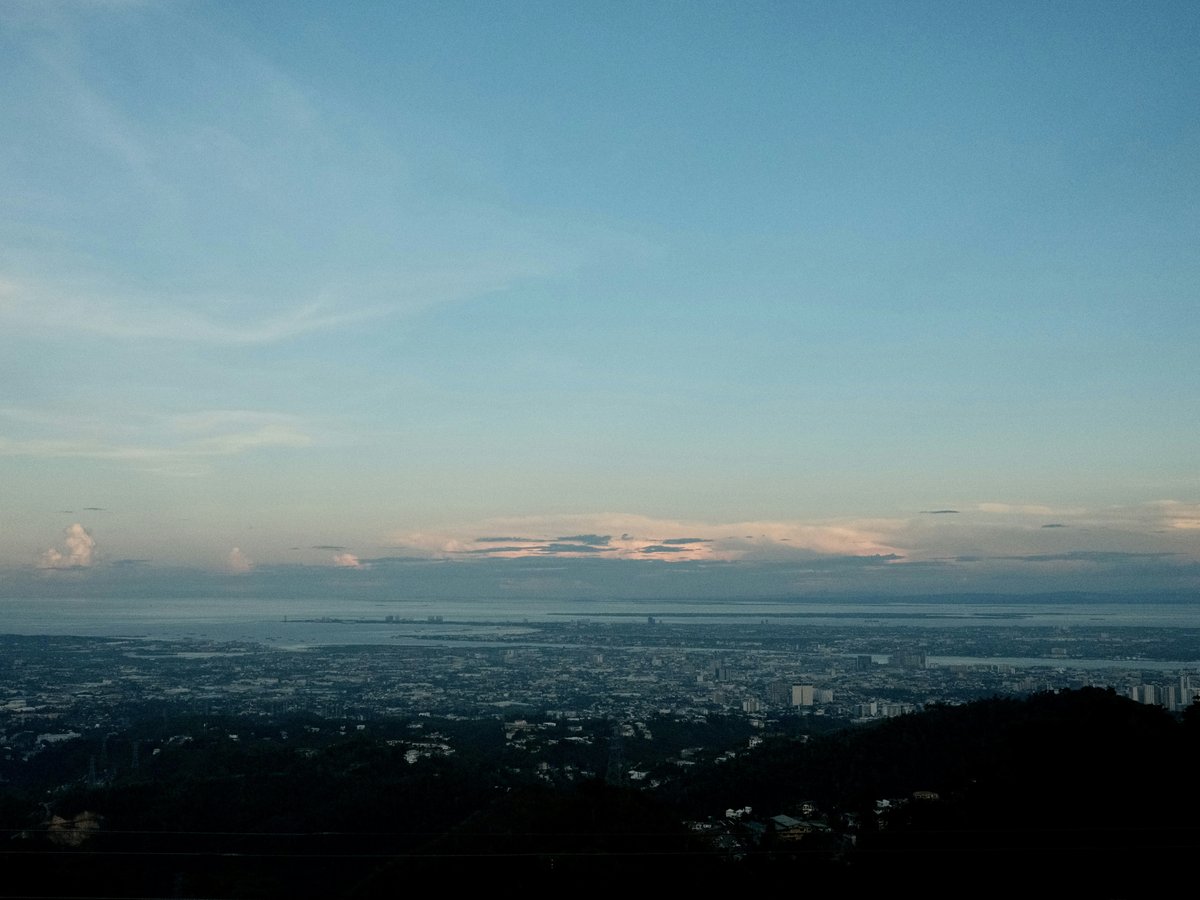
Cebu City runs along the eastern shore of Cebu island, pinched between limestone hills to the west and the Mactan Channel to the east. The layout is mostly linear. Downtown occupies the southern end near the port, where the old Spanish grid fans out from Colon Street. Moving north along Osmeña Boulevard, the city climbs gently through the Capitol Site area around Fuente Osmeña Circle, then into the Lahug and Banilad residential corridors. IT Park and Cebu Business Park sit roughly 4 kilometers north of the old center, anchoring the city's modern commercial life. Mactan Island lies across the channel, connected by two bridges, and holds both the international airport and the resort strip along Punta Engaño. On a mid-September morning at 27.5°C with 84% humidity, the air currently feels closer to 32.6°C, overcast and heavy. The Philippine peso trades at about 62.73 to 1 USD. No single neighborhood defines the city. Each layer reflects a different decade of growth, and the gaps between them are short enough to cross by taxi in 10 to 15 minutes.
Neighborhoods
-
Downtown (Colon to Parian)
The oldest district in the city, and it looks the part. Fort San Pedro, completed in 1565, anchors the waterfront's southern edge near Pier 1. A few hundred meters north, the Minor Basilica of the Holy Child has stood since 1739, and foot traffic around it still peaks on Sundays when families arrive for morning mass. Colon Street, reportedly the oldest paved road in the Philippines, runs through the center. Most buildings along it are postwar concrete, two to three stories, with hand-painted signage in Cebuano and English. The streets are narrow and loud. Jeepneys idle in traffic, and the smell of dried fish drifts from Carbon Market's open-air stalls a few blocks east.
- Best for
- Budget travelers, history-focused visitors, and anyone who wants a working Philippine city rather than a resort version of one
- Key streets
- Colon Street for the full sensory experience, Magallanes Street near the Basilica and Magellan's Cross, and Zulueta Street along the Fort San Pedro approach. The lanes between M.C. Briones and Calderon streets lead into the thick of Carbon Market.
-
Fuente Osmeña / Capitol Site
The midpoint between old and new Cebu. Fuente Osmeña Circle is a traffic roundabout with a tiered fountain, flanked by the Capitol Building to the west and mid-range hotels on the surrounding blocks. The pace is slower than downtown but noisier than Lahug. Museo Sugbo, opened in 2008 inside the old provincial jail on M.J. Cuenco Avenue, sits a few blocks east and holds rotating exhibits on Cebuano history and the Japanese occupation. F. Ramos Street runs north from the circle past pharmacies, bakeries, and local Filipino restaurants where a meal runs 120 to 200 PHP.
- Best for
- Mid-budget travelers who want walkable access to both the historic south and the modern north without committing to either end
- Key streets
- Osmeña Boulevard (the main north-south artery), F. Ramos Street for everyday errands, Don Jose Avila Street, and the blocks around Cebu Normal University
-
Lahug / IT Park
This is where the money moved. IT Park occupies a former airstrip that became a business and dining zone, with call centers in mid-rise towers and street-level restaurants open until 02:00 or later. The Sugbo Mercado night food market runs on weekends inside the park, pulling crowds for grilled seafood and lechon belly at 150 to 250 PHP per serving. Lahug proper, the residential neighborhood surrounding the park, has quieter side streets lined with apartment blocks and coffee shops. The Cebu City Philippines Temple, a Latter-day Saints temple completed in 2010, sits on a hillside in the upper Lahug area near Nivel Hills.
- Best for
- Digital nomads and remote workers. Cebu scores 7.8/10 for digital-nomad suitability (sourced from TTDI's editorial rubric). Late-night food options inside IT Park and reliable wifi make the area practical for shifted schedules.
- Key streets
- Salinas Drive for cafes and restaurants, Mindanao Avenue inside IT Park, and Governor M. Cuenco Avenue heading toward the Crossroads mall area
-
Cebu Business Park / Ayala Area
The most manicured part of the city. Ayala Center Cebu anchors a planned district with wide sidewalks, a terraced outdoor mall, and imported-brand retail. Hotels here cost 3,000 to 6,000 PHP per night. The Terraces wing, facing Cardinal Rosales Avenue, has a row of mid-range restaurants where Korean, Japanese, and Filipino meals run 300 to 500 PHP per head. The whole area feels more like a Makati side street than provincial Cebu. That said, a taxi to Colon Street takes about 10 minutes, so the polish does not cost you access to the old city.
- Best for
- Families. Cebu rates 6.8/10 for family friendliness (see the TTDI Family-Friendliness Index). The Ayala mall has a cinema, supermarket, and a pediatric clinic on the second floor. Business travelers and anyone wanting predictable comfort will find the most consistent hotel standards here.
- Key streets
- Archbishop Reyes Avenue connects the Business Park to IT Park, Cardinal Rosales Avenue faces the Terraces restaurant row, and the pedestrian terrace inside Ayala Center itself is worth a slow loop
-
Mango Avenue (General Maxilom Avenue)
Cebu's nightlife strip runs about 1.2 kilometers from Fuente Osmeña Circle northward along General Maxilom Avenue. Bars, KTV lounges, and late-night grills line both sides of the road. The noise peaks around 23:00 on Fridays and Saturdays. By day, the same stretch is unremarkable, with auto-parts shops and 7-Eleven branches occupying the ground floors. The transition is sharp. You might walk by at 14:00 and wonder what the fuss is about.
- Best for
- Solo travelers comfortable with nightlife areas. Worth noting that Cebu's solo-traveler safety sits at 5.2/10 (see the TTDI Solo-Safety Index), so the usual precautions apply after dark, especially on the side streets off the main strip.
- Key streets
- General Maxilom Avenue itself, with most of the activity concentrated between Fuente Circle and Mango Square Mall. Juana Osmeña Street has a few quieter bars set back from the main road.
-
Banilad
A residential corridor north of Lahug, split between gated subdivisions and the commercial strip along Governor M. Cuenco Avenue. Banilad Town Centre and a row of car dealerships mark the area. The pace is noticeably slower than central Cebu, quieter streets, more trees, and fewer jeepneys. Most expats who stay longer than a month settle somewhere along this corridor, drawn by the proximity to Cebu International School and similar institutions.
- Best for
- Long-stay visitors, families with school-age children, and people who prefer neighborhood quiet over the central city's energy
- Key streets
- Governor M. Cuenco Avenue for everyday needs, Banilad Road toward the older residential areas, and A.S. Fortuna Street, which crosses into neighboring Mandaue and has become the metro area's most competitive restaurant row
-
Mactan Island
Across the Marcelo Fernan Bridge, Mactan holds the international airport and the region's beach-resort concentration. Lapu-Lapu City covers most of the island. The resort strip lines the Punta Engaño shoreline on the southeast tip, where properties like Shangri-La and Crimson face warm, calm water. Inland Mactan is denser and more industrial. The Mactan Shrine in Barangay Mactan holds two monuments facing each other. The Magellan Monument, erected in 1866, and the Lapulapu Monument, dedicated over a century later in 1981, commemorate the 1521 battle from opposing sides.
- Best for
- Beach-resort travelers, families wanting pool and waterfront access, and anyone with an early departure from Mactan-Cebu International Airport
- Key streets
- Maximo V. Patalinghug Jr. Avenue from the airport toward the resort area. The guitar-making workshops cluster along lanes near Barangay Maribago, where Alegre Guitar and other makers still shape instruments by hand.
FAQ
Which neighborhood is best for a first-time visitor to Cebu?
Fuente Osmeña or the Ayala/Business Park area. Both sit in the geographic middle of the city, making it straightforward to reach downtown's historic sites or Mactan's beaches by taxi. Fuente offers lower hotel rates in the 1,500 to 2,500 PHP range, while the Business Park provides more consistent air conditioning and walkable dining options within the Terraces complex.
How do I get between Cebu's neighborhoods?
Jeepneys run fixed routes along the main roads, with fares starting at 13 PHP. Grab is the most reliable option for door-to-door trips, with a ride from IT Park to downtown running around 150 to 200 PHP depending on traffic. Some taxi drivers on the Mactan bridges may try to negotiate a flat rate instead of using the meter. The crossing from Cebu City to Mactan takes 20 to 40 minutes depending on the bridge and time of day.
Where should LGBTQ+ travelers consider staying in Cebu?
Cebu currently scores 4.5/10 for LGBTQ+ friendliness (sourced from TTDI's editorial rubric). The IT Park and Ayala areas tend to be the most cosmopolitan corridors and the least likely to draw unwanted attention. LGBTQ+ nightlife in Cebu is relatively low-key compared to Manila, with a handful of bars scattered around the Mango Avenue area rather than a concentrated scene.
What is the best area for trying Cebuano food?
Downtown around Carbon Market for raw ingredients and street snacks, and the Larsian barbecue compound near Fuente Osmeña Circle for the full grilling experience. At Larsian, you pick raw seafood, pork, or chicken from the stalls, pay by weight, and they grill it on the spot. A full meal for two runs about 300 to 500 PHP. For lechon specifically, the Carreta area near CIT University has a row of dedicated stands. The National Museum of the Philippines in Cebu, a few blocks from Carbon Market, might be worth folding into a food walk through the old city.
Do I need to stay on Mactan Island if I want beach access?
Not necessarily. Day trips from Cebu City to Mactan's resort beaches take 30 to 45 minutes by taxi each way. Staying in the city gives you more dining and nightlife at lower hotel rates, while Mactan resorts offer direct waterfront access and feel more self-contained. If your main goal is island-hopping to Olango or the Hilutungan Marine Sanctuary, Mactan cuts your morning transit time significantly.
Is Cebu walkable or do I need transport for everything?
Some neighborhoods are walkable within themselves. The Ayala Business Park area has proper sidewalks, and downtown's historic sites cluster within a 15-minute walk of each other. But moving between neighborhoods means a jeepney, taxi, or Grab ride. Sidewalks along Osmeña Boulevard and Colon Street are narrow and crowded, and the heat makes long walks uncomfortable for most visitors. Budget 100 to 200 PHP per ride between districts.
Last verified by automated review (v1.7.2) on . What is automated review?