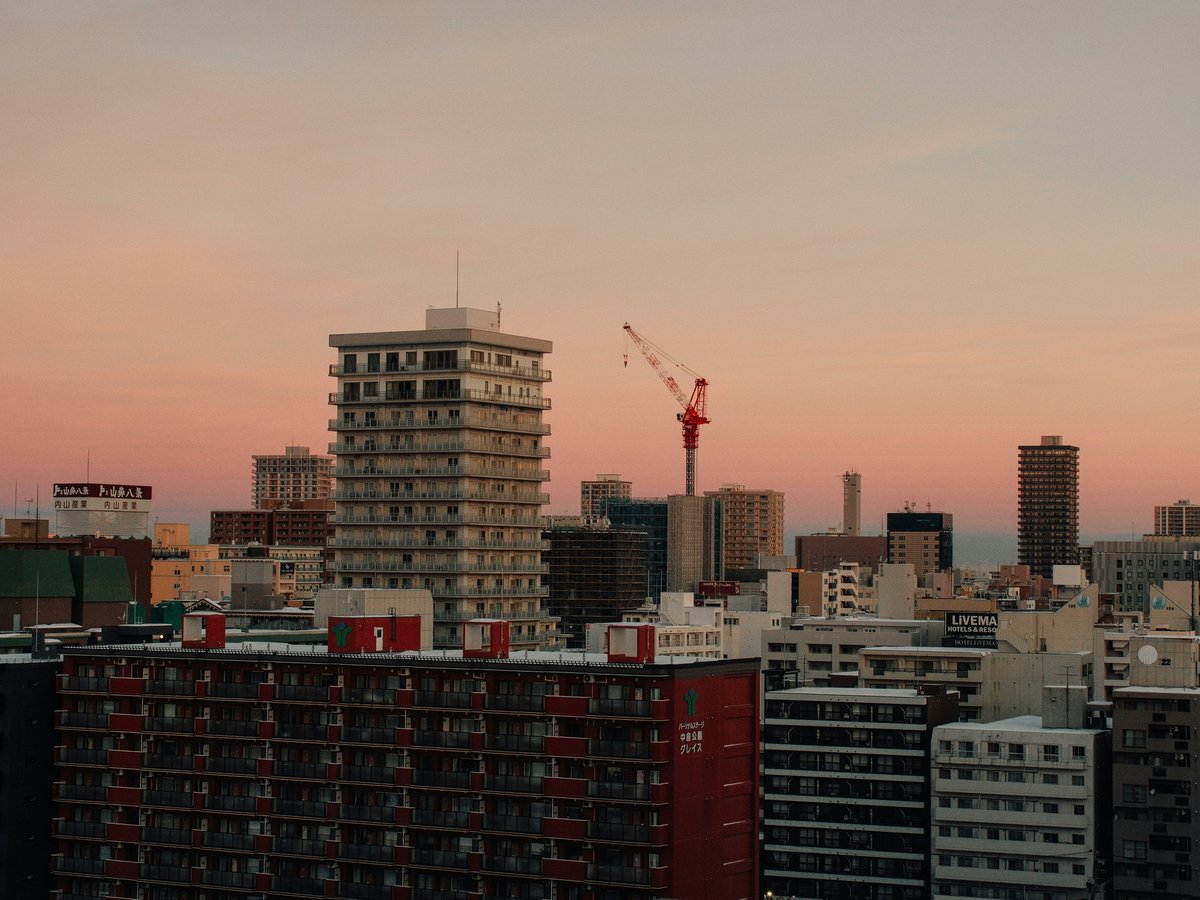
Sapporo tends to catch first-time visitors off guard. You arrive expecting a city that revolves around its snow festival and beer, and then you find yourself wandering a university campus that feels more like a boreal forest, or standing inside a volcanic glass pyramid in a park designed by Isamu Noguchi, and none of it has cost you a single yen. The city sprawls across a wide river plain backed by mountains on three sides, which means the free scenery alone — birch-lined avenues, salmon running up the Toyohira River in autumn, snow blanketing Odori Park in winter — likely outperforms what you'd pay to see elsewhere. Sapporo was also purpose-built on a grid in the 1870s, so it's one of the most walkable cities in Japan. You can cross from the old government district to the brewery quarter in under an hour on foot, passing through parks and covered arcades the whole way. Worth noting: Hokkaido's capital has a quieter, more spacious rhythm than Tokyo or Osaka. The crowds thin out, the sidewalks widen, and nobody is rushing you along. That breathing room is itself a kind of luxury, and it happens to be free.
Free attractions
-
Hokkaido University Museum (北海道大学総合博物館)
Permanently free. Housed in a handsome 1929 building on the Hokudai campus, this museum covers everything from mammoth fossils and Ainu ethnography to Einstein's letters to a Hokkaido physicist. The mineral collection alone — iridescent labradorite, deep purple amethyst clusters — could hold you for an hour. Smell the old wood floors. The building stays cool even in July, which is a bonus. Rotating exhibitions on the ground floor change several times a year, and they're consistently better curated than you'd expect from a university collection.
Kita-ku (Hokkaido University campus)Museum -
Former Hokkaido Government Office (赤れんが庁舎)
Sapporo's signature red-brick building, modeled on American state capitols and completed in 1888, recently reopened after a multi-year restoration. Entry is free. The interior has been updated with exhibition spaces covering Hokkaido's colonization-era history and development, while the exterior — warm red brick against Hokkaido's pale sky — still photographs beautifully. The surrounding garden fills with irises in June and goes fiery with autumn maples in October.
Chuo-kuHistoric landmark -
Sapporo Beer Museum (サッポロビール博物館)
The self-guided tour through Japan's oldest beer brand's history is free — you just walk in. The building is a former star-shaped brewery from 1890, all exposed brick and copper kettles. You'll trace the evolution of Hokkaido's brewing industry through old advertisements, bottles, and equipment. The premium guided tour and tasting hall cost money, mind you, but the museum floor itself requires no ticket and no reservation. The malty smell that fills the whole complex is a sensory bonus you can't avoid even if you tried.
Higashi-ku (Sapporo Garden Park)Museum -
Hokkaido Shrine (北海道神宮)
Set inside a dense forest of towering Yezo spruce and Sakhalin fir at the edge of Maruyama Park, this is Hokkaido's principal Shinto shrine. Always free. The approach through the woods is genuinely atmospheric — dappled light, cool air that smells of resin and damp earth, the occasional rustle of Ezo squirrels in the branches overhead. In early May the cherry blossoms bloom here about a month later than in Honshu, and the shrine grounds fill with hanami picnics. The New Year hatsumode draws massive but good-natured crowds.
Chuo-ku (Maruyama)Shrine -
Moerenuma Park (モエレ沼公園)
Isamu Noguchi's final major project — a 188-hectare park built on a former waste disposal site, now sculpted into geometric landforms, a glass pyramid (Hidamari), fountains, and play mountains. Free to enter year-round. The scale is hard to grasp until you're standing on top of Mount Moere, a 62-meter artificial hill, looking back at the city grid. In winter the park turns into a cross-country skiing area. The Sea Fountain runs its 40-minute water show sequence on summer afternoons — check the current schedule posted at the park entrance. Wind blows across this open ground, so bring a layer.
Higashi-kuPark / Public art -
Sapporo Salmon Museum (豊平川さけ科学館)
Permanently free, year-round. A small science center on the banks of the Toyohira River dedicated to the chum salmon that still spawn here every autumn. Between September and November, you can walk outside to the adjacent stream and watch salmon fighting their way upstream — the water runs shallow and you're standing right at the edge. Inside, the aquarium tanks hold salmon at every life stage. It's compact and honestly a bit dated, but the outdoor observation site during the run is something you won't forget. The sound of fish thrashing in knee-deep water stays with you.
Minami-ku (Makomanai Park area)Museum / Nature -
Odori Park (大通公園)
The 1.5-kilometer green belt that divides Sapporo's grid runs from the TV Tower in the east to the Sapporo District Court in the west. Always open, always free. Seasonal flower beds — lilacs in late May, roses through summer — line the promenades. In winter the trees go bare and the park transforms into the Snow Festival site. During the warmer months, the roasted corn vendors on the western blocks fill the air with a charred-sweet smell that defines summer in this city. The park is essentially Sapporo's living room.
Chuo-kuPark -
Asahiyama Memorial Park (旭山記念公園)
A hillside park on the city's western edge with an unobstructed panoramic view of the entire Sapporo grid stretching to the horizon. Free, open year-round, and particularly striking after dark when the city lights spread out below you in a clean grid pattern. The drive or bus ride up takes about 20 minutes from central Sapporo. On clear winter nights the air is so dry and cold that the lights seem to sharpen. There's a small playground and picnic area, but most people come for the view.
Chuo-ku (western hills)Viewpoint / Park
Free activities
-
Hokkaido University Ginkgo Avenue walk
The roughly 380-meter row of ginkgo trees on the Hokudai campus turns solid gold in late October. It's one of Hokkaido's most photographed autumn scenes, and there's no gate, no ticket — just walk onto the campus. Even outside of autumn, the campus grounds are worth an hour of wandering: the poplar avenue, the elm-lined canal, the experimental farm where cows graze against a backdrop of modern lecture halls. The whole campus has an almost rural stillness.
Kita-kuWalking route -
Tanukikoji Shopping Arcade (狸小路商店街)
Seven covered blocks of shops, restaurants, and eccentric storefronts running east-west through Chuo-ku. Browsing costs nothing, and the people-watching is first-rate. The arcade is over 150 years old and has a cheerfully chaotic energy — you'll pass a traditional tea shop next to an arcade game parlor next to a drugstore blasting J-pop. The covered roof keeps you dry in rain or snow, which makes it a reliable free activity in any weather. In the evening, the neon and signage light up and the whole stretch takes on a different personality.
Chuo-kuMarket / Shopping arcade -
Nijo Market (二条市場) browsing
Sapporo's oldest public market, operating since around 1903 on the banks of the Sosei River. You can walk through for free and take in the displays of Hokkaido crab, uni, ikura, scallops, and seasonal fish. The vendors tend to be welcoming even if you're just looking. The smell is unmistakably marine — brine and seaweed and crushed ice. It's smaller and less polished than Tsukiji's outer market, which is part of its appeal. Go early in the morning for the fullest displays.
Chuo-kuMarket -
Toyohira River walking and cycling path
A paved path runs along both banks of the Toyohira River for several kilometers through the city. Flat, easy walking or cycling, and surprisingly quiet given that you're in a city of two million. In autumn, salmon spawn in the shallows near Makomanai, and you can spot them from the bridges and bankside trails. In summer, families set up barbecues along the grassy banks. The mountain views upstream, especially on clear mornings, are quietly spectacular.
Runs north-south through the cityWalking / Cycling route -
Sapporo Art Park outdoor sculpture garden (札幌芸術の森 野外美術館)
The Sapporo Art Park sits in the forested southern outskirts, and while the indoor galleries charge admission, you can walk the grounds and enjoy the surrounding forest paths for free. The outdoor sculpture museum has a separate ticket, but the broader park area — woods, trails, clearings with occasional installations — is open and costs nothing. The air out here smells of pine and wet leaves, and it's noticeably cooler than central Sapporo in summer.
Minami-kuArt / Nature walk -
Sosei River promenade and public art walk
The Sosei River was revitalized with a landscaped promenade through central Sapporo, and the stretch between Odori and the Botanical Garden district now has benches, plantings, and scattered public art pieces. It's a calm, flat walk that connects several of the city's free attractions. Still being improved in sections, but the completed parts are pleasant and see far fewer tourists than the main grid streets.
Chuo-kuWalking route / Public art
Free events
-
Sapporo Snow Festival (さっぽろ雪まつり)
Early February (typically 7-10 days, dates vary yearly)Sapporo's defining event. Massive snow and ice sculptures line Odori Park, and the Susukino site features illuminated ice carvings. Viewing is entirely free — you just walk through. The level of sculptural detail on the large pieces is genuinely jaw-dropping. Cold, obviously, with temperatures often around minus 5 to minus 10 Celsius. Dress for it. The crowds are substantial but move steadily.
Odori Park, Susukino, Tsudome -
Yosakoi Soran Festival (YOSAKOIソーラン祭り)
Early to mid-June (typically 5 days)A high-energy dance festival where teams of dozens to hundreds perform choreographed routines on stages and streets across the city. The street performances are free to watch, and the energy is infectious — pounding taiko drums, vivid costumes, and coordinated movement that ranges from traditional to borderline acrobatic. Odori Park hosts the main stage. You'll hear the music blocks away.
Odori Park and multiple street venues across Chuo-ku -
Sapporo Lilac Festival (さっぽろライラックまつり)
Late May to early June (roughly 10 days)Celebrates the city's official tree. Over 400 lilac trees bloom in Odori Park, filling the air with a sweet, almost powdery fragrance. Free admission. There are usually wine garden sections (wine costs money, naturally) and small craft stalls. The timing lines up with Sapporo's brief, vivid spring. It's a low-key event — less spectacle, more neighborhood celebration.
Odori Park (main), Kawashimo Park -
Sapporo Autumn Fest (さっぽろオータムフェスト)
Mid-September to early October (roughly 4 weeks)A month-long food festival spread across Odori Park. Entry is free; food and drink are purchased individually. The emphasis is on Hokkaido-sourced ingredients — grilled lamb, fresh seafood, dairy, local wine and beer. Even if you don't buy anything, walking through the tented food villages and taking in the smells of charcoal-grilled ikura and melted Hokkaido cheese is an experience. The atmosphere is relaxed and festive without being rowdy.
Odori Park -
Sapporo White Illumination
Late November through mid-MarchTrees and structures along Odori Park, Ekimae-dori, and the Minami Ichijo area are strung with lights from late November through March. Free to walk through. The displays are elegant rather than garish — white and warm tones mostly, reflecting off the snow. On cold clear nights, the combination of fresh snow, illuminated trees, and crisp air is quietly beautiful. It tends to be most crowded in December; January and February offer the same views with fewer people.
Odori Park, Ekimae-dori, Minami Ichijo-dori -
Hokkaido Shrine Festival (北海道神宮例祭 / Sapporo Matsuri)
Mid-June (typically June 14-16)Sapporo's largest traditional festival. A portable shrine procession winds through the city center, and the shrine grounds host food stalls, carnival games, and performances. Free to attend — the stall food costs money, but watching the procession and the festival atmosphere is free. The procession route from the shrine through Chuo-ku is lined with spectators. Currently tends to draw around a million visitors over its run.
Hokkaido Shrine to Chuo-ku streets
Seasonal timing and what it means for free activities
Sapporo's free offerings shift dramatically by season, more so than most Japanese cities. Winter — roughly November through March — is defined by snow and cold, but also by the Snow Festival and the illuminations. The parks are still accessible, though Moerenuma Park's open expanses become cross-country ski terrain and the Hokkaido University campus goes quiet under heavy snowfall. Spring arrives late, usually not until early May, when the lilacs and cherry blossoms overlap in a compressed two-week burst. Summer is short, warm, and dry by Japanese standards — highs around 25 to 28 Celsius — and that's when the outdoor parks, river paths, and cycling routes hit their peak. Autumn brings the ginkgo avenue at Hokudai and the salmon run on the Toyohira, both concentrated in October. To be fair, there's no bad season to visit on a budget — but if you're choosing, the late September through October window currently seems to offer the best overlap of free events, autumn color, and comfortable temperatures.
Free things that aren't always obvious
A few free options in Sapporo tend to get overlooked. The observation lobby of the JR Tower (T38) charges admission, but the ground-floor atrium of the JR Tower itself, with its soaring glass ceiling, is free to enter and architecturally interesting. The rooftop garden of the Sapporo Factory shopping complex is open to the public and offers a quieter green space in the middle of the brewery district. Maruyama Park, adjacent to Hokkaido Shrine, has walking trails that wind up into actual forest — Ezo squirrels and woodpeckers are common, and the canopy keeps the trails cool in summer. The park itself is free and open, though the small zoo within it charges a modest fee. You might also notice that many of Sapporo's subway stations have small art installations — mosaics, sculptures, glass panels — that were commissioned when the lines were built for the 1972 Olympics. They're easy to walk past, but a few are genuinely worth pausing for, especially in the Odori and Namboku Line stations.
Getting around for free (or nearly)
Sapporo's grid layout makes walking practical in ways that hillier or more sprawling Japanese cities don't. The underground pedestrian network — Chi-Ka-Ho (チカホ) — runs for about 520 meters beneath Ekimae-dori, connecting Sapporo Station to Odori. It's heated, dry, and lined with pop-up shops and art displays. In winter, this becomes a lifeline for getting between the station area and the Odori district without facing the cold. Above ground, the grid means you rarely get lost. That said, reaching Moerenuma Park or the Sapporo Art Park on foot from the center is a long haul — budget for bus fare to those outer sites, or check whether your accommodation offers bicycle rentals. Sapporo is flat enough that cycling covers the city efficiently, and many hostels and budget hotels lend bikes for free or a small fee.
FAQ
Are Sapporo's major attractions genuinely free, or is there usually a catch?
Most of the places listed here are permanently free with no catch — the Hokkaido University Museum, Hokkaido Shrine, Odori Park, and Moerenuma Park charge nothing at any time. The Sapporo Beer Museum's self-guided tour is free, though the tasting room and premium guided tour cost extra. That distinction is clearly marked at the entrance. For the seasonal events like the Snow Festival and Yosakoi Soran, viewing and attending is free, but food and drink stalls obviously charge. There's rarely a hidden surcharge or mandatory donation at Sapporo's free sites.
What is the best time of year to visit Sapporo on a budget?
Late September through mid-October likely offers the best value overlap. The Autumn Fest is running in Odori Park, the ginkgo trees at Hokkaido University turn gold, salmon start spawning in the Toyohira River, and accommodation prices tend to be lower than during the Snow Festival or summer peak. Winter is spectacular but cold — temperatures drop well below freezing — and the Snow Festival period in early February pushes hotel rates up considerably. Summer is comfortable and has long daylight hours, but it's also peak domestic tourism season.
Can I visit the Sapporo Beer Museum without paying anything?
Yes. The self-guided tour of the museum is free — you walk through the exhibits at your own pace, no reservation needed. The premium guided tour, which includes a tasting, currently costs around 1,000 yen and does require a reservation. The Star Hall tasting room is separate and also paid. But the museum floor itself, with the historical exhibits and the original brewing equipment, is entirely free.
Is Moerenuma Park worth the trip from central Sapporo?
It is, but you should plan for it. The park is in the northeast outskirts, about 30 to 40 minutes by bus from Sapporo Station. Once there, the scale is unlike anything else in the city — Noguchi designed it as a single sculptural landscape, and the geometric hills, the glass pyramid, and the Sea Fountain feel closer to land art than a municipal park. Bring water and sun protection in summer; bring warm layers in winter. The park is flat and exposed, so wind is a factor year-round. Budget at least two hours to walk the main circuit.
Are there free museums in Sapporo that are genuinely worth visiting?
The Hokkaido University Museum is the standout — it's free, well-curated, and covers an unexpectedly wide range from paleontology to physics. The Sapporo Salmon Museum is also free and is particularly rewarding during the autumn salmon run when you can watch spawning fish outside. The Sapporo Beer Museum's free self-guided tour is more of a brand experience than a traditional museum, but the historical content about Hokkaido's brewing industry is solid. Beyond those, keep an eye on the Hokkaido Museum of Modern Art and Hokkaido Museum, which occasionally offer free admission on specific dates — Culture Day on November 3 is typically one of them, though it's worth confirming closer to your visit.
Is it safe to walk around Sapporo at night?
Sapporo is generally very safe for walking at night, even by Japanese standards. The grid layout means you're rarely far from a main road or a convenience store. The Susukino entertainment district gets lively after dark and has its share of touts, but it's not dangerous — just busy. The parks and river paths are unlit in most sections after dark, so stick to the main streets and the underground Chi-Ka-Ho passage if you're walking between Sapporo Station and Odori late at night. Common sense applies, but violent crime against visitors is extremely rare.
Last verified by automated review (v1.7.2) on June 5, 2026. What is automated review?