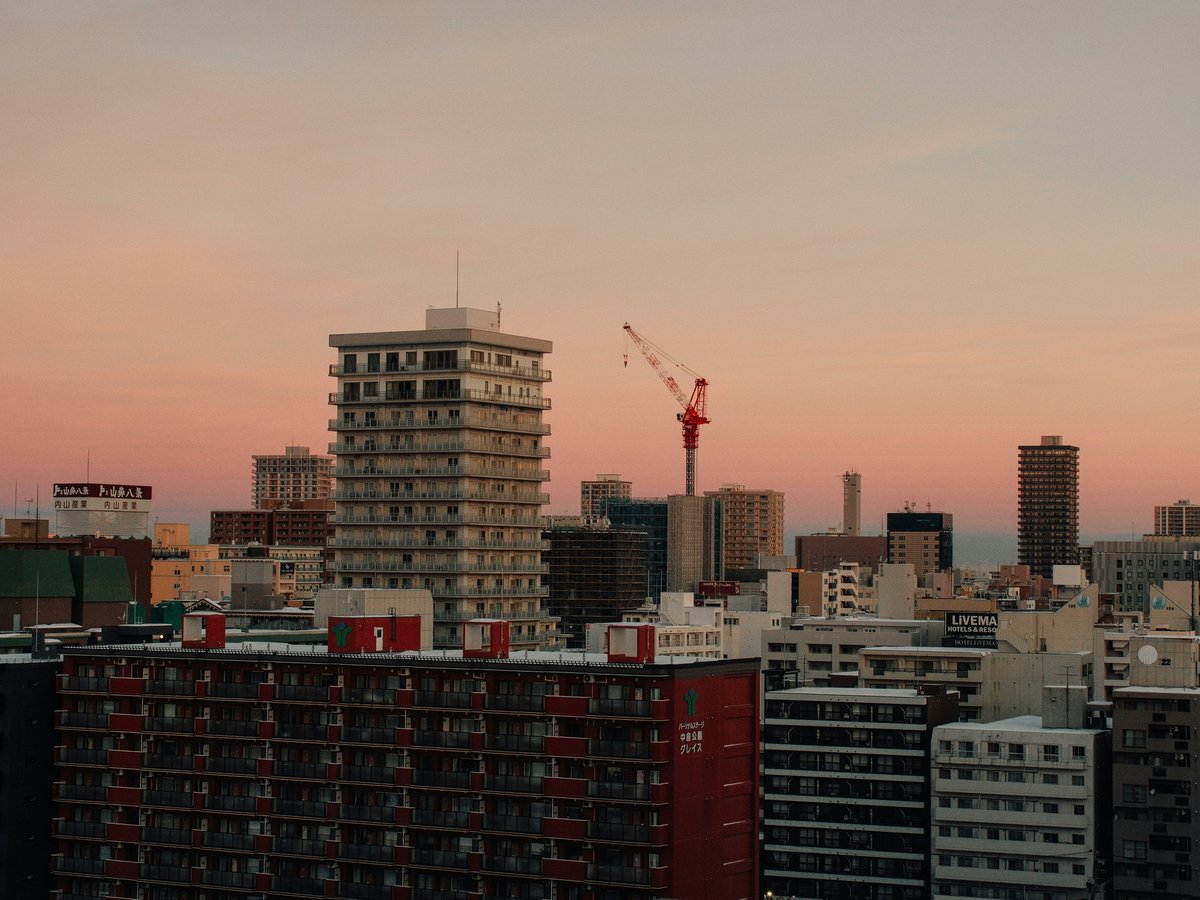
Sapporo is laid out on a grid, which makes it one of the easier Japanese cities to navigate on foot. The city essentially fans out from two anchors: Sapporo Station to the north and Odori Park running east-west through the middle. Everything south of Odori slides gradually into Susukino, the nightlife district, and then into the quieter residential stretches around Nakajima Park. West of center, the grid gives way to tree-lined streets and the low hills around Maruyama. The numbered street system (running north-south) and the jo system (blocks north or south of Odori) means you can orient yourself without a map once you get the logic. Most visitors stick to the rectangle between the station and Susukino, but the city rewards you for wandering further out: particularly west toward Maruyama or south past Nakajima Park. Worth noting: Sapporo feels spacious in a way most Japanese cities don't. The blocks are wide, the sidewalks generous, and you can see the sky. That openness is deliberate: the city was planned during the Meiji era with American-style grid planning, and it still shows.
Neighborhoods
-
Sapporo Station Area (Kita-ku)
Corporate and transit-focused, with big department stores and hotel towers clustered around the station. The area hums during rush hour and lunch breaks but gets oddly quiet by 9 PM. The underground shopping passages (the Paseo and APIA complexes) give it a bit of a mall-city feel. Not the prettiest part of Sapporo, but functional. The JR Tower observation deck at the top of the station building offers probably the best city panorama, and on clear winter days you can see all the way to the Ishikari Plain.
- Best for
- Business travelers, transit convenience, anyone arriving late or leaving early who wants to minimize logistics
- Key streets
- Kita 5-jo-dori running west from the station, the underground Paseo and APIA corridors, Sapporo Stellar Place on the station's south side, Kita-guchi (north exit) for the university direction
-
Odori
Odori Park splits the city like a green spine, and the neighborhood around it has a measured, almost European pace. Office workers eat lunch on the park benches in summer, and the TV Tower at the east end has been standing there since 1957 looking slightly retro against the newer buildings. The south side of the park has more of the cafes and independent shops; the north side is government buildings and banks. In February, this is ground zero for the Snow Festival: massive ice sculptures line the park and you can smell the corn soup and grilled lamb from the food stalls two blocks away. The rest of the year it's calmer than you'd expect for a city center.
- Best for
- First-time visitors who want to be central without the noise of Susukino, couples, anyone who values walkability to both the station and the entertainment district
- Key streets
- Odori Park itself (from Nishi 1-chome to Nishi 12-chome), Minami 1-jo-dori for cafes and boutiques, Nishi 4-chome intersection where the subway lines cross, the Tanukikoji arcade entrance at the south edge
-
Tanukikoji
Sapporo's oldest covered shopping arcade stretches about a kilometer between Nishi 1-chome and Nishi 7-chome, and it still feels like a neighborhood unto itself. The eastern blocks (1 through 3) skew toward tourist shops and drugstores now, but once you pass Nishi 4-chome things get more local: used bookstores, a couple of old-school kissaten coffee shops with wood paneling and no Wi-Fi, and small restaurants where the menu is handwritten on the wall. The arcade roof keeps the snow off, which matters more than you'd think from November through March. It smells like roasted sweet potatoes in autumn and yakitori smoke year-round.
- Best for
- Shoppers, anyone who likes covered arcades and the slow discovery of small independent stores, rainy-day wandering
- Key streets
- Tanukikoji arcade blocks 1 through 7 (Nishi 1 to Nishi 7), the cross streets at Nishi 3 and Nishi 5 where side alleys branch off, Minami 2-jo and Minami 3-jo running parallel
-
Susukino
Susukino is the entertainment district, full stop. Neon signs stack five and six stories high, and on weekend nights the streets fill with a mix of salary workers, students from Hokkaido University, and tourists finding their way between izakaya and bars. It can feel a bit overwhelming on a Friday at midnight (the touts outside some of the nightclubs are persistent) but a block or two off the main drag it settles into proper neighborhood drinking spots where the bartender knows everyone's name. The area has real culinary depth if you look past the chains. The smell of miso broth and lamb fat from the jingisukan grills hangs in the cold air most evenings. By day, Susukino is surprisingly sleepy: shuttered storefronts and delivery trucks.
- Best for
- Nightlife seekers, solo travelers who want to bar-hop, food-obsessed visitors willing to explore past the obvious spots
- Key streets
- Ekimae-dori (the main boulevard running south from Sapporo Station through Susukino), Minami 4-jo through Minami 7-jo for the densest concentration of bars and restaurants, the alley behind Ramen Yokocho between Minami 5 and Minami 6
-
Maruyama
West of the city center, past Nishi 18-chome or so, the grid loosens and the streets start climbing gently toward Maruyama Park. This is where Sapporo's quieter money lives: low-rise apartment buildings, independent bakeries, natural wine bars, and boutiques that would fit in Tokyo's Jiyugaoka. The pace drops noticeably. You hear birdsong from the park's old-growth forest, which is striking for a neighborhood ten minutes by subway from downtown. Maruyama Koen Station on the Tozai Line puts you right at the edge of it. The area around Kita 1-jo and Minami 1-jo west of Nishi 23 has a concentration of small restaurants: French-Japanese fusion places, specialty coffee roasters, and a couple of bakeries that draw people from across the city.
- Best for
- Couples and families looking for a residential feel with good dining, nature lovers who want Maruyama Park and the Hokkaido Shrine within walking distance, anyone who prefers quiet evenings over neon
- Key streets
- The stretch along Kita 1-jo west of Maruyama Koen Station, Ura-Sanku (the back streets between Minami 1 and Minami 3 around Nishi 25-chome), the approach road to Hokkaido Shrine through Maruyama Park
-
Nakajima Park Area
South of Susukino, past the noise, Nakajima Park sits along the Toyohira River and brings the energy level way down. The park itself has a concert hall (Kitara, known for its acoustics), a Japanese garden, and enough space that you can lose the city for a while. The surrounding blocks are residential and mid-range, not as polished as Maruyama, not as hectic as Susukino. A few business hotels and mid-tier places cluster near Nakajima Koen Station. In summer, the park fills with joggers and families; in winter, the frozen paths are eerily quiet and beautiful if you're dressed for it. The river walk south along the Toyohira is one of those things that doesn't make any guidebook's top ten but probably should.
- Best for
- Budget-conscious visitors who still want subway access, families with kids who need park space, anyone who finds Susukino too intense but wants to be close enough to walk there for dinner
- Key streets
- The Toyohira River path running south from the park, Minami 9-jo through Minami 15-jo between the park and the river, Nakajima Koen-dori approaching from the north
-
Nijo Market Area
Nijo Market has been operating since 1903, and the neighborhood around it carries that old commercial weight. The market itself is a few blocks of seafood stalls, produce vendors, and small restaurants: it gets compared to Tsukiji, but it's smaller, less performative, and the vendors are more likely to talk to you if it's not peak tourist season. The surrounding streets between Odori and the Sosei River still have a few old brick-facade buildings from the early Showa era mixed in with newer construction. Mornings here start early; by 6:30 AM the crab vendors are calling out prices and the smell of grilling scallops drifts into the cold air. By mid-afternoon, half the stalls are closing up.
- Best for
- Food-focused travelers, early risers, anyone who wants to eat their way through a market district for breakfast or lunch
- Key streets
- Nijo Market's main hall between Sosei-gawa East and Nishi 1-chome along Minami 3-jo, the Sosei River promenade for a post-meal walk, Minami 2-jo heading east toward the Creation Center
-
Teine
Out on the western edge of the city, Teine is suburban Sapporo: residential blocks, family restaurants, and the kind of quiet that would bore a nightlife-focused visitor but suits families and ski-season travelers. Teine Ski Resort is the draw here, sitting right on the city's western hills, and it's reachable by bus from Teine Station in about fifteen minutes. The resort hosted some events during the 1972 Winter Olympics and still has a mix of beginner and intermediate runs with genuine city views from the top. The neighborhood around Teine Station has convenience stores, a few local ramen shops, and not much else after dark. It feels like a different city from Susukino.
- Best for
- Skiers and snowboarders on a budget who don't need to be downtown, families who want space and quiet, visitors with rental cars who plan to explore wider Hokkaido
- Key streets
- Teine Station area along the JR Hakodate Line, Route 5 heading toward the ski resort, the residential grid between Teine and Hoshioki stations
FAQ
Where should I stay in Sapporo if it's my first visit?
Odori is the safest bet for a first visit. You're walking distance from the station, Susukino, Tanukikoji, and Nijo Market without being in the thick of any one scene. The subway hub at Odori Station connects all three lines, so you can reach Maruyama or Nakajima Park in five minutes. Hotels around Minami 1-jo and Nishi 4-chome put you right in the center of the grid. If you're arriving late or leaving early for day trips, staying near Sapporo Station is more practical but less interesting.
Is Susukino safe to stay in or just visit for nightlife?
Susukino is safe by any reasonable standard: this is Japan, after all. That said, the immediate blocks around Minami 4 and 5 on Ekimae-dori can feel a bit much late at night with the touts and neon. Hotels a block or two off the main strip (toward Minami 7 or 8) are quieter and still walking distance from everything. The area is genuinely dead during the day, so if street noise at 2 AM bothers you, check which direction your room faces before booking.
How walkable is Sapporo between neighborhoods?
Very walkable in summer: the grid makes navigation simple and you can cover Sapporo Station to Susukino in about twenty minutes on foot. Winter changes the equation. Sidewalks ice over, wind chill drops walking comfort significantly, and what was a pleasant fifteen-minute stroll becomes a careful ten-minute shuffle. The underground passages between Sapporo Station and Odori (Chi-Ka-Ho) and from Odori to Susukino help a lot from November through March. The subway is clean, frequent, and covers all the main neighborhoods; a day pass currently costs 830 yen and is worth it if you're making three or more trips.
Which neighborhood has the best food scene?
Depends what you're after. Susukino has the sheer volume: hundreds of izakaya, ramen shops, jingisukan grills, and bars stacked on top of each other. Nijo Market is the morning option for seafood. Maruyama is where the more refined dining happens: small French-Japanese restaurants, specialty coffee, natural wine. For the classic Sapporo miso ramen experience, Susukino's Ramen Yokocho alleys are the obvious pick, though honestly the best individual ramen shops tend to be scattered across the city rather than concentrated in one area. Soup curry (which is a Sapporo original) pops up everywhere but Suage near Odori seems to be a consistent local favorite.
Is it worth staying near Teine for skiing?
Only if skiing is your primary reason for visiting. Teine Ski Resort is solid for a city mountain, and staying near Teine Station saves you the daily commute. But you'll miss out on the food and nightlife, and the neighborhood itself is residential suburbia. Most visitors are better off staying central and taking the bus to Teine: it's maybe forty minutes from downtown. If you're planning multiple Niseko days, staying near Sapporo Station gives you easier access to the express bus or JR lines heading that direction.
When is the best time to visit Sapporo for someone who hates crowds?
Late September through mid-November is likely the sweet spot. The summer festival crowds and the Snow Festival rush are both months away, the autumn colors in Maruyama Park peak around mid-October, and the weather is crisp but still comfortable for walking. Early to mid-December (after the leaves drop but before the Snow Festival buildup in late January) is another quiet window, though you'll want proper winter gear by then. Weekdays year-round are noticeably calmer than weekends in the central areas.
Last verified by automated review (v1.7.2) on . What is automated review?