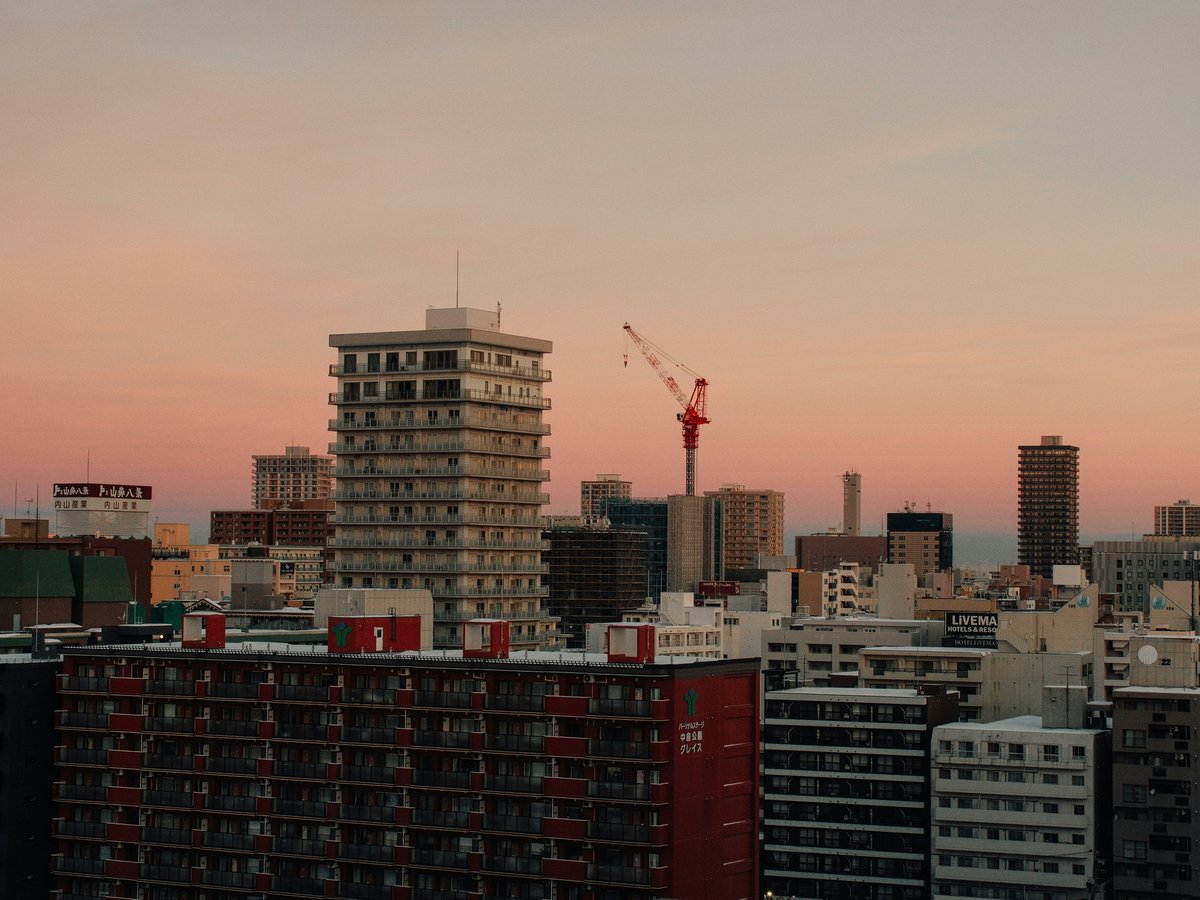
Sapporo sits in a wide plain hemmed in by low mountains on three sides, with the Sea of Japan coast about 30 kilometers to the northwest. The Toyohira River cuts through the city center, and from most elevated spots you can see forested ridgelines that start, quite literally, where the subway ends. It's a city that still feels like it was carved out of wilderness fairly recently, which, to be fair, it was. Hokkaido's capital only really took shape in the 1870s, and the surrounding forests and volcanic terrain haven't gone anywhere. Summers run warm but rarely oppressive, with July and August temperatures hovering around 25°C. Winters are another story entirely: heavy, persistent snow from November through March buries the city under meters of powder and transforms those same hiking trails into ski routes and snowshoe corridors. The shoulder seasons (late May through June and September through mid-October) tend to be the sweet spot for most outdoor pursuits, though each season has its own draw. You'll notice the air here carries a different quality than mainland Japan: drier in summer, sharper in winter, and scented with birch and spruce once you step off pavement.
Outdoor activities
-
Backcountry and Resort Skiing
Sapporo hosted the 1972 Winter Olympics, and the skiing infrastructure still reflects that history. Teine Highland and Teine Olympia sit on Mt. Teine, roughly 40 minutes from downtown by car. Bankei and Fu's Snow Area are even closer: you can reach Bankei by city bus. The real draw for serious skiers, though, is the backcountry access. Sapporo Kokusai, about an hour south in the Jozankei corridor, gets enormous snowfall and has some sidecountry gates. The powder here is dry and deep, consistently lighter than what you'd find at most Honshu resorts. Worth noting: avalanche awareness is essential in the backcountry, and guided tours are available through local outfitters.
- Difficulty
- Varies: resort runs from beginner to advanced; backcountry requires experience
- Duration
- Half-day to full day
- Best season
- December through March
-
Road and Gravel Cycling
The flat river corridors make Sapporo surprisingly good cycling territory. A paved path follows the Toyohira River for kilometers, running from Makomanai in the south through downtown and out toward the northern suburbs. In summer, you'll share it with joggers and families, but early mornings are quiet. For gravel and touring, the roads heading toward Jozankei wind through forested valleys with minimal traffic once you clear the suburbs: the gradient is steady but rarely punishing. Rental bikes are available at several shops near Odori, and some hotels lend decent city bikes for free. The smell of wet earth and cedar on those valley roads after a rain is one of those sensory details that sticks with you.
- Difficulty
- Easy along river paths; moderate on hill routes toward Jozankei
- Duration
- 2 to 6 hours depending on route
- Best season
- May through October
-
Snowshoeing
Once the snow settles in December, the trail network around Sapporo turns into snowshoe terrain. Mt. Maruyama and the paths through Nopporo Forest Park are popular entry points: the packed snow under your feet makes a satisfying crunch, and the silence of the winter forest is genuinely striking. Guided snowshoe tours operate in Jozankei and the Shikotsu-Toya area as well. You don't need technical skills, just warm layers and waterproof boots. Rental snowshoes are available at outdoor shops in the city and at some trailheads.
- Difficulty
- Easy to moderate
- Duration
- 2 to 4 hours
- Best season
- December through March
-
Cross-Country Skiing
Sapporo has maintained cross-country ski courses at several parks, a legacy of the city's Nordic skiing culture. Makomanai Park and Nishioka Park both groom trails in winter, and Takino Suzuran Hillside Park on the city's southern edge has longer courses through rolling terrain. The tracks are generally well-maintained, and the flat to gently undulating terrain keeps things accessible. Equipment rental is available at the parks, though quality varies.
- Difficulty
- Easy to moderate
- Duration
- 1 to 4 hours
- Best season
- January through early March
-
Trail Running
The same trail network that serves hikers in summer works well for trail running, particularly the routes up Mt. Maruyama, through the Asahiyama Memorial Park area, and along the forested ridges south of the city. The Moiwa trails offer a more sustained climb if you want elevation work. The footing is generally good (packed dirt and roots, with some rocky sections) though it can get slippery after rain. A few organized trail races happen each summer in the Sapporo area, drawing runners from across Hokkaido.
- Difficulty
- Moderate to strenuous depending on route
- Duration
- 1 to 4 hours
- Best season
- June through October
-
Fishing on the Toyohira River
The upper reaches of the Toyohira River, upstream from Jozankei, hold cherry salmon (yamame) and Dolly Varden (oshorokoma). Fly fishing here has a following among locals, and the water clarity can be remarkable: you'll often spot fish before casting. Access is straightforward along the road toward Jozankei Onsen, with pulloffs near several good stretches. You'll need a Hokkaido inland fishing license, available at tackle shops in the city. Mind you, catch-and-release is the norm on many stretches, and barbless hooks are expected.
- Difficulty
- Beginner-friendly with basic gear; fly fishing has a learning curve
- Duration
- Half-day
- Best season
- June through September
Day hikes
-
Mt. Maruyama (225m)
The gateway hike for anyone staying in Sapporo. Take the Tozai subway line to Maruyama-Koen station and you're at the trailhead in 10 minutes on foot. The trail winds through old-growth forest: dense canopy, mossy ground, bird calls filling the silence. The summit is modest but gives a clear view over the city toward the mountains to the south and west. The whole thing takes maybe 90 minutes round trip at a relaxed pace, and the trail is well-maintained with steps on the steeper sections. Families with young kids do this regularly. That said, it can get slippery after rain, and the descent is steep enough to warrant decent footwear.
- Difficulty
- Easy
- Duration
- 1 to 1.5 hours round trip
- Best season
- May through November; also accessible with snowshoes in winter
-
Mt. Moiwa (531m)
Moiwa sits just southwest of downtown, and you can reach the trailhead by streetcar or bus. Most people know it for the ropeway and the night views from the summit, but the hiking trail up the back side is the real experience. The route through the forest is steeper than Maruyama, with some sections that'll have you grabbing tree roots for balance. The forest transitions from broadleaf lower down to conifers near the top. On a clear day the summit panorama takes in the city, Ishikari Bay, and the mountain ranges stretching south. Allow about two hours up and maybe 90 minutes down. The trail is well-signed but less groomed than Maruyama's.
- Difficulty
- Moderate
- Duration
- 3 to 4 hours round trip
- Best season
- May through October
-
Mt. Teine (1,023m)
The highest peak you can reasonably day-hike from Sapporo proper. The trailhead is accessible by car (about 40 minutes from downtown) or by bus to the ski resort base and hiking from there. The route climbs through birch and spruce forest, emerging above the treeline for the final push to the summit. The views from the top are expansive: on clear days you can see across to the Shakotan Peninsula coastline. The trail has some rocky, exposed sections near the summit that require careful footing. This is a proper hike, not a stroll. Bring layers; it's noticeably cooler up top even in midsummer, and the wind can pick up fast.
- Difficulty
- Moderate to strenuous
- Duration
- 5 to 6 hours round trip
- Best season
- June through October
-
Jozankei Area: Futamata Trail and Goshiki Onsen Hike
Jozankei Onsen sits about an hour south of central Sapporo by bus, in a narrow valley carved by the Toyohira River. The gorge itself is scenic (steep rock walls, autumn colors that are genuinely spectacular in October) and several trail options fan out from the town. The paths along the river are gentle and suit most fitness levels. Longer options head into the surrounding mountains and connect to forest roads. The area is at its best in early to mid-October when the maples and birches turn. After hiking, the onsen is right there, which is a combination that's hard to argue with.
- Difficulty
- Easy to moderate depending on route
- Duration
- 2 to 5 hours depending on trail choice
- Best season
- June through October, peak autumn color in early to mid-October
-
Nopporo Forest Park Traverse
About 30 minutes east of downtown by train and bus, Nopporo Shinrin Koen is a large swath of preserved forest between Sapporo and Ebetsu. The trails are mostly flat to gently rolling, winding through mixed forest that feels surprisingly wild for its proximity to the city. A century-old observation tower (Hokkaido Centennial Memorial Tower) marks the park's center and is visible from a distance. The Historical Village of Hokkaido is within the park grounds if you want to combine nature with history. The trails tend to be quiet on weekdays: you might see more squirrels than people.
- Difficulty
- Easy
- Duration
- 2 to 3 hours for a circuit
- Best season
- May through November
Water activities
-
Kayaking on Lake Shikotsu
Lake Shikotsu, about an hour south of Sapporo, is a caldera lake with water clarity that still catches you off guard even when you're expecting it. On calm days you can see the bottom at remarkable depths: the blue-green color shifts depending on the light and time of day. Several outfitters in the Shikotsu Kohan area rent kayaks and run guided tours, including clear-bottom kayak tours that have become popular in recent years. The lake is large enough that wind can build swells, so conditions matter. Morning paddles tend to be calmer. Water temperature stays cold even in summer: refreshing to touch, less so to fall into without a dry bag nearby.
- Difficulty
- Easy to moderate; wind conditions can increase difficulty
- Duration
- 2 to 4 hours
- Best season
- June through September
-
Rafting on the Shiribetsu River
The Shiribetsu River, about 90 minutes southwest of Sapporo near Niseko, offers the best whitewater rafting accessible as a day trip from the city. Spring snowmelt from late April through June brings the most exciting water levels: the rapids run Class II to III depending on the section and water level, enough to get the adrenaline going without requiring technical paddling experience. Several rafting operators run half-day trips with transport from Sapporo or meeting points near Niseko. The river valley scenery is gorgeous, with Mt. Yotei's volcanic cone visible on clear days.
- Difficulty
- Moderate; no experience required for guided trips
- Duration
- Half-day (2 to 3 hours on the water)
- Best season
- Late April through June for best water levels; tours run through September
-
Swimming and Beach Access at Otaru and Ishikari
Sapporo doesn't have its own beaches, but the coast is close. Otaru's Ranshima Beach is roughly 45 minutes by car and has a short swimming season: late July through mid-August is the window when water temperatures approach tolerable. Ishikari Beach is closer, maybe 30 minutes north, but the water tends to be rougher and cooler. To be fair, Hokkaido beach swimming is an acquired taste. The Sea of Japan side doesn't warm up the way Pacific beaches do, and the swimming season is brief. But on a hot August afternoon, the contrast between the cool water and warm sand has its own appeal. Facilities at both beaches are basic.
- Difficulty
- Easy
- Duration
- Half-day trip
- Best season
- Late July through mid-August
-
Canoeing on the Chitose River
Downstream from Lake Shikotsu, the Chitose River runs clear and gentle through forested lowlands. Guided canoe and kayak trips are available from outfitters near Shikotsu, covering sections where the current does most of the work and you steer around the occasional fallen tree. The water is shallow and transparent: you'll see salmon spawning in autumn if your timing is right. It's a mellow, contemplative kind of paddling, suited to families or anyone who wants to be on the water without the intensity of whitewater. The sound of the paddle dipping and the current murmuring against the hull is about all you hear.
- Difficulty
- Easy; suitable for beginners and families
- Duration
- 1.5 to 3 hours
- Best season
- May through October; salmon spawning visible September through November
Parks & gardens
-
Odori Park
FreeA 1.5-kilometer green corridor running east-west through downtown, Odori Park is the closest thing Sapporo has to a central plaza. It's divided into 13 blocks, each with a slightly different character: some have fountains and flower beds, others open lawns where office workers eat lunch. In summer the lilac trees bloom and the whole strip smells faintly sweet. In February, the Snow Festival transforms it with enormous ice sculptures. The park functions as the city's living room, and the mix of people here on a weekend afternoon (families, couples, tourists, old men on benches) gives a good read on the city's temperament.
Highlights: Lilac trees in bloom (late May), corn-on-the-cob vendors in summer, TV Tower views from the eastern end, seasonal beer gardens along the strip
-
Moerenuma Park
FreeDesigned by sculptor Isamu Noguchi, this park occupies a former waste disposal site on Sapporo's northeastern edge. It feels more like a land art installation than a municipal park: geometric earthen mounds, a glass pyramid, a fountain that erupts on a schedule, and vast open lawns. The scale is striking; you can spend a couple of hours walking it and still miss sections. In winter, the hills become sledding and cross-country ski terrain. The whole place has a meditative quality, especially on overcast days when the green of the lawns deepens against grey sky.
Highlights: Noguchi's glass pyramid (Hidamari), the Sea Fountain performance (runs April to October), Mt. Moere for panoramic views, rental bikes for circling the grounds
-
Hokkaido University Botanical Garden
Tucked just west of Sapporo Station, this botanical garden dates to 1886 and still functions as a research facility. It's a surprisingly dense patch of old-growth forest and curated plantings in the middle of the city: tall elms and ash trees block out the surrounding buildings almost completely. The natural history museum inside is a bit dated but worth a look. The greenhouse collections are modest compared to major botanical gardens elsewhere, but the outdoor sections, particularly in autumn when the maples turn, have a quiet quality that's hard to find this close to a train station.
Highlights: Original Hokkaido forest remnant with labeled native species, autumn maple color (October), Ainu ethnobotany collection, the Northern Peoples museum building
-
Maruyama Park
FreeThis park wraps around the lower slopes of Mt. Maruyama on the city's western side, reachable by subway in about 15 minutes from downtown. The old-growth forest here includes Mongolian oaks and katsura trees that have been standing for centuries: the canopy is dense enough that summer temperatures drop noticeably once you're under it. Maruyama Zoo occupies part of the grounds, but the wilder sections toward the mountain trail are where the park earns its reputation. Cherry blossoms draw crowds in early May, and the shrine (Hokkaido Jingu) at the park's base adds a ceremonial anchor.
Highlights: Hokkaido Jingu shrine grounds, centuries-old forest canopy, cherry blossom viewing (early May), connection to Mt. Maruyama hiking trail, wild bird observation
-
Takino Suzuran Hillside Park
A national government park on Sapporo's southern fringe, Takino Suzuran sits in a forested valley about 40 minutes from downtown by car. It's large: you could walk for a couple of hours without retracing your steps. The waterfalls (Ashiribetsu Falls is the standout) are the main draw in summer, along with wildflower meadows and a children's adventure playground. In winter, the park converts to a snow play area with tubing hills and cross-country courses. The air smells like wet leaves and pine sap. Bring lunch: the on-site options are basic.
Highlights: Ashiribetsu Falls (a genuine waterfall within city limits), lavender fields in summer, autumn foliage trails, winter tubing and snow play zone
-
Nakajima Park
FreeA central park straddling the Toyohira River's Nakajima area, this is Sapporo's most accessible urban green space after Odori. The pond, Hōhei-kan historical building, and walking paths make it a low-key respite. It's the kind of park where you'll see people reading on benches and ducks drifting across the water. Not dramatic, but pleasant. The Japanese garden section is small and well-maintained, and the park connects to a riverside walking path heading south.
Highlights: Hōhei-kan (Meiji-era Western-style building), central pond with seasonal waterfowl, Japanese garden section, autumn ginkgo trees along the paths
Practical tips
- Footwear and Trail Conditions
- Most Sapporo-area trails are well-maintained but not paved. Exposed roots, loose gravel, and mud after rain are common. Proper hiking shoes with ankle support are worth it for anything beyond Mt. Maruyama. In winter, insulated waterproof boots and crampon attachments are essential: ice patches persist on north-facing slopes well into April. Trail conditions can change quickly, particularly at higher elevations.
- Sun Protection and Heat
- Hokkaido summers are milder than Honshu, but UV exposure at elevation is still significant. Sunscreen and a hat are non-negotiable for ridgeline hikes. Humidity is lower than Tokyo, so you may not feel how much you're sweating: drink more water than you think you need. Carry at least a liter per person for any hike over two hours, more on hot days. Vending machines disappear once you leave the trailhead.
- Layering for Mountain Weather
- Temperature can drop 8 to 10°C between the city and a summit like Mt. Teine, and weather shifts fast. A packable wind shell and a fleece mid-layer take up almost no space and save miserable descents. Even in July, mornings and evenings at elevation feel cool. In shoulder seasons, rain gear is essential: Hokkaido's autumn rain is persistent and cold.
- Bears
- Hokkaido is home to brown bears (higuma), and they are present in the forests around Sapporo. Bear bells are standard equipment and sold at every outdoor shop and many convenience stores. Make noise on the trail, especially around blind corners and near streams. Bear spray is available but not commonly carried on popular trails. Sightings near the city are rare but not unheard of, particularly in spring and autumn. Check local advisories at trailheads: closures happen when bears are spotted nearby.
- Public Transit to Trailheads
- Sapporo's subway and bus network reaches several trailheads directly. Maruyama is a subway ride away. Buses run to Jozankei, Takino Park, and Moiwa's base. Lake Shikotsu requires a bus from Shin-Chitose Airport or a car: there's no direct Sapporo bus. For Niseko and the Shiribetsu River, a rental car or tour transport is the practical option. An IC card (Kitaca or SAPICA) covers most local transit.
- Winter Gear Rentals
- If you're visiting for winter activities and don't want to fly with ski gear, rental shops in the city and at the resorts are well-stocked. Quality varies: the resort rentals tend toward older equipment, while city shops like Rhythm or dedicated rental outfits offer newer gear. Book ahead during peak season (late December through February), especially for popular sizes. Snowshoe rentals are available at several outdoor shops and at some park facilities.
FAQ
What is the best time of year for outdoor activities in Sapporo?
It depends entirely on what you want to do. For hiking, cycling, and water sports, June through September is the core season, with September and early October adding autumn colors. For skiing, snowshoeing, and winter sports, December through March delivers consistent snow. May and late October are transitional: still hikeable on lower trails, but higher elevations may have lingering snow or early accumulation. There's no single best month; each season has a distinct personality.
Are hiking trails in the Sapporo area well-marked?
The popular trails (Maruyama, Moiwa, Teine) are generally well-signed with distance markers and directional posts. Japanese is the primary language on signage, though major trails increasingly have some English. Trail junctions on less-traveled routes can be ambiguous, so a downloaded trail map (apps like Yamap are popular in Japan) is a smart backup. The trails themselves are usually obvious to follow, but a wrong turn at an unmarked fork can add time and frustration.
Do I need to worry about bears when hiking near Sapporo?
Brown bears live in the forests around Sapporo, and awareness is warranted. Carry a bear bell, make noise, and hike in groups when possible. The risk on popular, well-trafficked trails like Maruyama is low, but it increases on quieter routes and in early morning or late evening hours. Check trailhead notice boards for recent sighting reports: trails are occasionally closed when bears are active nearby. The bears generally avoid humans, but surprising one at close range is the scenario to prevent.
Can I swim in Lake Shikotsu?
Technically yes, though the water temperature stays quite cold even in midsummer: typically around 15 to 18°C near the surface in August. Brief dips are refreshing; extended swimming without a wetsuit is uncomfortable for most people. The lakeshore at Shikotsu Kohan has shallow areas where wading is pleasant. Kayaking and canoeing are more practical ways to enjoy the water for extended periods. There are no lifeguards, so swim at your own judgment.
Is it possible to hike year-round in the Sapporo area?
Lower elevation trails like Maruyama remain accessible in winter with proper gear: snowshoes or light crampons, insulated boots, and warm layers. The experience changes completely: packed snow replaces dirt, the forest goes quiet, and the views open up through bare branches. Higher routes like Mt. Teine become backcountry winter terrain requiring avalanche awareness and mountaineering skills. Spring trails can be muddy and partially snow-covered into May. Summer and autumn are the most straightforward seasons for casual hikers.
How do I get to Lake Shikotsu from Sapporo without a car?
The most practical public transit route is to take the JR Rapid Airport train from Sapporo to Shin-Chitose Airport (about 40 minutes), then catch the Chuo Bus bound for Shikotsu Kohan (about 55 minutes). Buses run several times daily in summer but less frequently in winter: check the schedule in advance. Alternatively, some tour operators offer day-trip packages with transport included. A rental car gives you more flexibility and takes about 70 to 80 minutes from central Sapporo.
Last verified by automated review (v1.7.2) on . What is automated review?