What's the must-see thing in Rio de Janeiro?
Christ the Redeemer on Corcovado, not at midday. Take the cog train from Cosme Velho early, before the tour buses stack up by mid-morning. The summit sits above Rio de Janeiro's cloud line in June, and you'll have the viewing platform nearly to yourself. Sugarloaf Mountain at golden hour and Tijuca National Park fill days two and three.
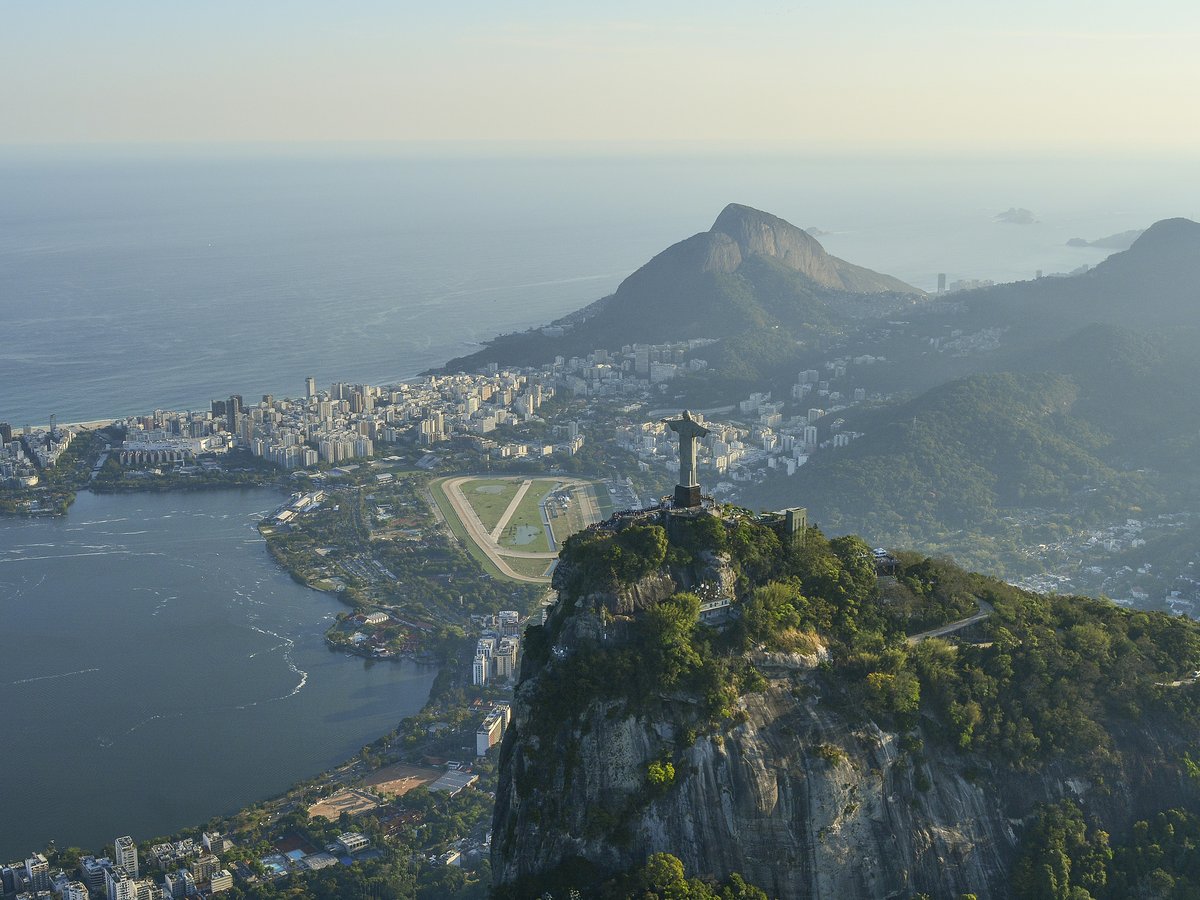
Christ the Redeemer on Corcovado is the answer, and it's not close. The 38-metre Art Deco statue, completed in 1931, stands at 710 metres above sea level on a granite peak that catches clouds before any other point in Rio de Janeiro. Go at 8am. The Trem do Corcovado cog train from Cosme Velho station runs every 20 minutes, tickets around R$95, about $18 at current exchange rates. By 10am, 30-plus tour buses have unloaded at the summit platform and the viewing deck feels like a packed Metro car. In the early morning the air is still cool, around 17 to 19°C in June, and the granite under your feet holds the night's chill. You can hear the forest canopy of Tijuca below you, not tour guides with megaphones. The statue is reinforced concrete clad in roughly 6 million soapstone tiles, and from directly below the outstretched arms span 28 metres against whatever sky Rio de Janeiro gives you that morning. Book the train at least a day ahead. Walk-up tickets exist on quiet weekdays, but on weekends the early slots fill days in advance.
Sugarloaf Mountain, Pão de Açúcar to locals, works best in late afternoon. The cable car from Praia Vermelha in the Urca neighbourhood runs in two stages, currently around R$130 for adults, about $25. The first stage stops at Morro da Urca at 220 metres, where a small bar sells cold Brahma chopp for R$18 and the terrace faces west toward Guanabara Bay. The second car climbs to the 396-metre summit. Timing matters. If you arrive by 4:30pm, you catch the golden-hour light over Botafogo Bay and watch the city shift from afternoon haze to the early flicker of streetlights along Praia do Flamengo. The wind picks up at the top, enough to make you glad you brought a layer. That said, the views from Sugarloaf and Corcovado show you different cities. Corcovado looks down at the urban grid. Sugarloaf looks across the water toward Niterói and the open Atlantic. You want both angles. The cable car's last ascent tends to run around 7:50pm, but check the posted schedule at the Urca base station.
Tijuca National Park, established in 1961 and covering around 3,953 hectares, is the reason Rio de Janeiro feels different from São Paulo or Buenos Aires. It's likely the largest urban forest on earth replanted by human hands. Emperor Pedro II ordered the reforestation in the 1860s after coffee plantations stripped the hillsides and Rio de Janeiro's water supply started failing. The park wraps around Corcovado and connects to trails that drop you from Atlantic rainforest canopy into the Jardim Botânico neighbourhood within 20 minutes of walking. The Pico da Tijuca trail, about 3 hours round trip, takes you to 1,022 metres. Expect mud after rain, roots sprawling across the path, and the thick wet smell of decomposing leaves under a closed canopy where howler monkeys call from somewhere you can't pin down. Entry is free. Mind you, this is not a manicured city park. The trails have real elevation gain, cell service drops out past the first kilometre on most routes, and the forest gets dark under the canopy even at noon. Bring water and proper shoes, not the Havaianas from Copacabana.
Beyond the big three, Rio de Janeiro's neighborhoods carry the rest of a visit. Lapa, south of Centro, is where the samba still lives. The Arcos da Lapa aqueduct, built in 1750, frames the entrance to a strip of bars and dance halls that pull crowds from Thursday through Saturday. Carioca da Gema on Rua Mem de Sá has live samba most nights, cover around R$30. Santa Teresa sits on the hill above Lapa, reachable by the restored Bonde tram from Centro for R$20. The narrow streets feel more like Lisbon than the rest of Rio, with artist studios and small galleries around the Largo do Guimarães square. Bar do Mineiro there serves feijoada completa on Saturdays for around R$55, thick with black beans and smoked pork. For getting around, Rio de Janeiro's Metro Line 1 connects the Zona Sul beaches to Centro in about 20 minutes, R$6.90 per ride. The system runs from 5am to midnight on weekdays, shorter hours on Sundays. A reloadable Riocard from any station covers Metro, bus, and the VLT light rail downtown.
Copacabana's 4-kilometre boardwalk between Posto 2 and Posto 6 is more functional than scenic. The sand is coarse and grey-brown, not the white powder of postcards, but the mosaic-patterned calçadão sidewalk has its own energy, with vendors selling açaí bowls for R$12 and fresh coconut water for R$8. Ipanema, a 10-minute walk south past the Arpoador rocks, has cleaner sand and calmer crowds around Posto 9. For food, Cervantes in Copacabana stays open past midnight and the filé mignon with pineapple sandwich runs about R$45. In Botafogo, Cobal do Humaitá is a covered food hall with a dozen stalls, plates from R$25 to R$60. Worth noting, the Museu Nacional in Quinta da Boa Vista lost roughly 90% of its collection in a September 2018 fire and remains partially closed for reconstruction. Check the museum's status before making the trip to São Cristóvão. For your first 72 hours in Rio de Janeiro, the sequence is Corcovado morning, Sugarloaf at golden hour, Tijuca on day two, Lapa and Santa Teresa on day three.
The top three
Christ the Redeemer
The 1931 Art Deco statue on Corcovado is the single image that defines Rio de Janeiro worldwide. Arrive early and the summit platform is nearly empty, the cloud forest canopy audible below, with views stretching from Guanabara Bay to the Zona Sul coastline.
Sugarloaf Mountain
The two-stage cable car to 396 metres gives you the best late-afternoon view in Rio de Janeiro. Face west over Botafogo Bay, watch the light turn gold on the water, and the wind off the Atlantic keeps the heat at bay.
Tijuca National Park
Likely the largest hand-replanted urban forest on earth, 3,953 hectares of Atlantic rainforest wrapping around Corcovado. Free entry, real trails with real elevation, and the Pico da Tijuca hike to 1,022 metres earns the proper shoes you packed.
Reservations required for at least one of these.
Verified attractions
Sourced from Wikidata and OpenStreetMap: each entry links to its authoritative page.
-
Christ the Redeemer
monumentcolossal statue of Jesus in Rio de Janeiro, Brazil
View on Wikidata -
Maracanã Stadium
stadiumstadium in Rio de Janeiro, Brazil
View on Wikidata -
Copacabana
beachneighborhood of Rio de Janeiro
View on Wikidata -
Ipanema District
beachneighborhood of Rio de Janeiro
View on Wikidata -
Museu Nacional
museummuseum of UFRJ in Rio de Janeiro, Brazil
View on Wikidata -
Estádio Nilton Santos
stadiummulti-use stadium in Rio de Janeiro, Brazil, and the home field of the football club Botafogo
View on Wikidata -
Valongo Wharf
archaeological siteformer wharf in Rio de Janeiro
View on Wikidata -
Rio de Janeiro Cathedral
churchcathedral in Rio de Janeiro, Brazil
View on Wikidata -
Tijuca National Park
parkBrazilian national park
View on Wikidata -
America Football Club
monumentassociation football club
View on Wikidata -
Barra Velodrome
stadiumvelodrome in Rio de Janeiro, Brazil
View on Wikidata -
Brazilian Academy of Letters
museumBrazilian literary non-profit society
View on Wikidata -
Niterói Contemporary Art Museum
museumart museum
View on Wikidata -
Maria Lenk Aquatic Center
attractionSports venue in Rio de Janeiro, Brazil
View on Wikidata -
Marina da Glória
marinaMarina in Rio
View on Wikidata -
Olaria Atlético Clube
monumentFootball club in Brazil
View on Wikidata -
Deodoro Stadium
stadiumTemporary stadium in Deodoro, Rio de Janeiro, Brazil
View on Wikidata -
Estádio São Januário
stadiumfootball stadium
View on Wikidata -
Rio de Janeiro Botanical Garden
gardenpark of the Botanical Garden, environmental preservation area of the Rio de Janeiro state in Brazil
View on Wikidata -
Candelária Church
churchchurch in Rio de Janeiro
View on Wikidata -
Museu Nacional de Belas Artes
museumnational art museum in the city of Rio de Janeiro, Brazil
View on Wikidata -
Teatro Municipal
theatertheater in Rio de Janeiro, Brazil
View on Wikidata -
Deodoro Aquatics Centre
stadiumswimming venue in Deodoro, Rio de Janeiro, Brazil
View on Wikidata -
National Historical Museum
museumhistory museum in Rio de Janeiro, Brazil
View on Wikidata -
Urca
monumentneighborhood of Rio de Janeiro
View on Wikidata -
Museum of Modern Art, Rio de Janeiro
museumart museum
View on Wikidata -
Museum of Tomorrow
museumscience museum
View on Wikidata -
Old Cathedral of Rio de Janeiro
churchRoman Catholic church in Rio de Janeiro, Brazil
View on Wikidata -
Quinta da Boa Vista
parkpublic park in Rio de Janeiro, Brazil
View on Wikidata -
Flamengo Park
parklargest public park and recreation area in Rio de Janeiro, Brazil
View on Wikidata -
Paço de São Cristóvão
palacepalace in Rio de Janeiro
View on Wikidata -
Paço Imperial
museumbuilding in Rio de Janeiro
View on Wikidata -
Estádio das Laranjeiras
stadiumStadium das Laranjeiras
View on Wikidata -
Gustavo Capanema Palace
palacemodernist office building in Rio de Janerio, Brazil
View on Wikidata -
Copacabana Stadium
stadiumformer Olympic beach volleyball venue in Rio de Janeiro, Brazil
View on Wikidata -
Ilha Fiscal
monumentisland in Rio de Janeiro
View on Wikidata -
Parque Lage
parkpark in Zona Sul, Brazil
View on Wikidata -
Brazilian Historic and Geographic Institute
museumarchive in Rio de Janeiro, Rio de Janeiro
View on Wikidata -
Carmen Miranda Museum
museummuseum in Rio de Janeiro, Brazil
View on Wikidata -
Catete Palace
palacepalace in Rio de Janeiro, Brazil
View on Wikidata
Last verified by automated review (v1.7.2) on . What is automated review?