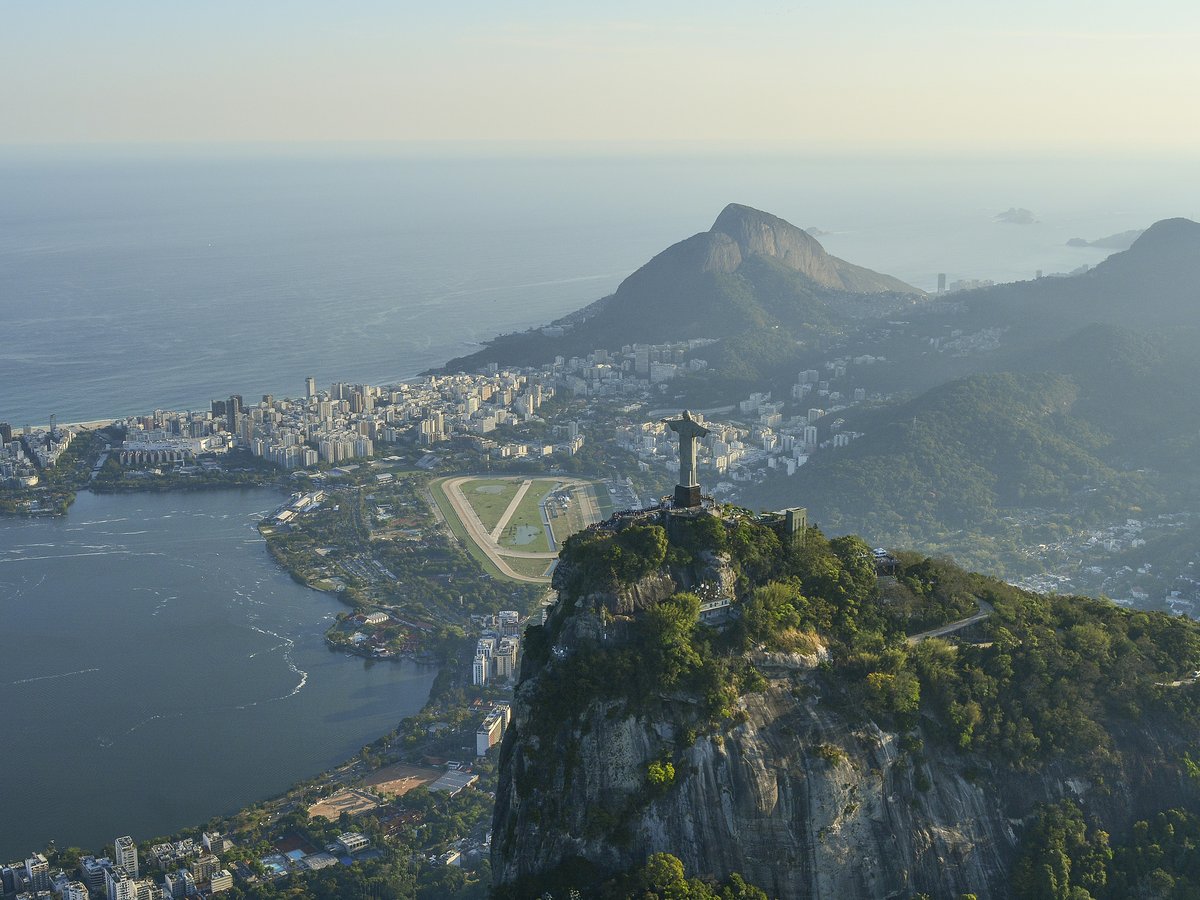
Rio de Janeiro might be the only major city where the geography alone makes the trip worthwhile, and none of it requires a ticket. Copacabana stretches 4 kilometers of open sand between Posto 1 and Posto 6. Ipanema runs another 2.6 kilometers westward. Both beaches are free and open around the clock, with lifeguard stations staffed from roughly 7am to 7pm. The Floresta da Tijuca, at around 3,300 hectares, is the largest urban forest in the world, and there is no entrance fee. Centro has free museums that pull serious weight. The Centro Cultural Banco do Brasil hosts major exhibitions year-round without charging admission, and it consistently draws over a million visitors per year. The Museu do Amanhã and the Museu de Arte do Rio both waive admission every Tuesday. Worth noting, the city's cultural life tilts heavily toward the street. Samba circles form at Pedra do Sal in the port district on Monday and Friday nights. During Carnaval, hundreds of blocos parade through open neighborhoods with no ticket required. A 30-minute walk from Lapa into Santa Teresa passes the Escadaria Selarón, 19th-century houses, and sweeping views of Baía de Guanabara, covering roughly 3 kilometers at zero cost.
Free attractions
-
Parque Nacional da Tijuca (Floresta da Tijuca)
The largest urban forest in the world covers roughly 3,300 hectares of Atlantic Forest inside Rio's city limits. Trails lead to the Vista Chinesa pavilion at 380 meters, the 30-meter Cascatinha Taunay waterfall, and the Mesa do Imperador lookout. The park is typically open daily from 8am to 5pm and there is no entrance fee. You might spot toucans, capuchin monkeys, and coatis on the quieter paths toward the Pico da Tijuca summit at 1,022 meters.
Alto da Boa Vista / Tijucapark -
Parque Lage
This estate sits at the base of Corcovado, with English-style gardens and courtyards that Italian architect Mario Vodret designed in the 1920s. The Escola de Artes Visuais occupies the main mansion, and free exhibitions rotate through its galleries. The inner courtyard has a pool with Corcovado rising directly behind it, one of Rio's most photographed angles. Open daily from 8am to 5pm, no entry fee.
Jardim Botânicopark -
Parque do Flamengo (Aterro do Flamengo)
Roberto Burle Marx and architect Affonso Eduardo Reidy designed this 1.2-million-square-meter waterfront park, which opened in 1965. It runs along the bay from near Santos Dumont Airport to the base of Morro da Viúva. Bike paths, football pitches, and several cultural buildings sit within the park grounds. The late-afternoon view of Pão de Açúcar across the water is worth the walk alone. Open 24 hours, no fee.
Flamengo / Glóriapark -
Escadaria Selarón
Chilean artist Jorge Selarón began covering these 215 steps in hand-painted tiles in 1990 and continued until his death in January 2013. The staircase connects Rua Joaquim Silva in Lapa to the convent area in Santa Teresa. Tiles from over 60 countries line the steps, each one placed by Selarón himself. It is a public stairway, always open, always free.
Lapa / Santa Teresalandmark -
Centro Cultural Banco do Brasil (CCBB Rio)
The CCBB occupies a 1906 neoclassical building on Rua Primeiro de Março in Centro. Exhibitions are always free, and the programming is genuinely strong. The CCBB Rio regularly draws over a million visitors per year. That number places it among the most-visited art institutions in the Americas. Four floors of gallery space, plus a theater and cinema. Open Wednesday through Monday, 9am to 9pm.
Centromuseum -
Museu do Amanhã
Santiago Calatrava's cantilevered science museum sits on Pier Mauá in the Porto Maravilha district. It opened in December 2015 as part of Rio's Olympic-era waterfront redevelopment. Standard admission is currently around R$30, but every Tuesday entry is free. Arrive early on free Tuesdays, as the line tends to stretch past the reflecting pools by 11am. Open Tuesday through Sunday, 10am to 6pm.
Centro / Porto Maravilhamuseum (free on Tuesdays) -
Museu de Arte do Rio (MAR)
The MAR occupies two connected buildings on Praça Mauá. One is a 1916 palace, the other a former bus terminal, joined by a flowing concrete rooftop canopy. Exhibitions focus on Rio's visual culture and social history. Standard admission is around R$20, but Tuesdays are free, the same policy as the neighboring Museu do Amanhã. Open Tuesday through Sunday, 10am to 5pm.
Centro / Porto Maravilhamuseum (free on Tuesdays) -
Mosteiro de São Bento
Benedictine monks founded this monastery in 1590 on Morro de São Bento, a hill above the port. The current church, finished in the 18th century, contains some of the finest Baroque gilt woodwork in Brazil. Gregorian chants on Sundays at 10am draw a packed congregation. The interior is gilded from floor to ceiling, and the contrast with the plain stone facade is startling. Free entry, though photography is restricted during services.
Centroreligious site -
Real Gabinete Português de Leitura
This library on Rua Luís de Camões was built between 1880 and 1887 in Neo-Manueline style, a Portuguese Gothic revival modeled after the Jerónimos Monastery in Lisbon. The main reading room holds over 350,000 volumes under a stained-glass skylight. Three tiers of dark-wood shelving line the walls from floor to ceiling. Free to enter, typically open Monday through Friday, 10am to 5pm.
Centrolibrary / landmark -
Igreja da Candelária
This Baroque-Neoclassical church near Praça XV was built over more than a century, from 1775 to 1898. The marble in the nave was imported from Verona and Lisbon. The main dome's painted panels, completed in the 1880s, depict the church's founding legend from 1609. Free entry, typically open Monday through Friday 7:30am to 4pm, weekends 9am to 1pm.
Centroreligious site -
Casa França-Brasil
One of the first neoclassical buildings in Rio, this former customs house from 1820 now hosts rotating contemporary art exhibitions. The space is intimate, typically 1 or 2 exhibitions at a time, on Rua Visconde de Itaboraí near Praça XV. Always free. Open Tuesday through Sunday, 10am to 6pm.
Centrogallery -
Pedra do Arpoador
This granite outcrop sits between Copacabana and Ipanema and has become Rio's de facto sunset gathering point. Locals and visitors climb the rocks in the late afternoon. When the sun drops behind the Morro Dois Irmãos peaks, the crowd often breaks into applause. The view takes in the full sweep of Ipanema beach and, on clear days, the distant Pedra da Gávea. Open at all hours, no fee.
Ipanema / Copacabanaviewpoint
Free activities
-
Copacabana Beach
Copacabana's 4 kilometers of sand stretch from Forte do Leme at the eastern end to Pedra do Arpoador at the western tip. The calçadão, a wave-patterned mosaic sidewalk designed by Roberto Burle Marx, runs the full length. The beach is divided into numbered postos, lifeguard stations from 1 to 6, each with a slightly different crowd. Posto 5 tends to draw locals, while Posto 2 is more tourist-heavy. Swimming is free, though the undertow near Posto 6 can be strong.
Copacabanabeach -
Ipanema Beach
Ipanema's 2.6-kilometer stretch of sand runs from the Arpoador rocks westward to the Jardim de Alah canal near Leblon. Each numbered posto draws a different crowd. Posto 9 has been the bohemian gathering point since the bossa nova era. Posto 8 is a largely LGBTQ+ section. The sand gets packed on weekends between December and March, but weekday mornings tend to be quiet even in high season.
Ipanemabeach -
Boulevard Olímpico and Porto Maravilha Street Art Walk
The waterfront promenade built for the 2016 Olympics runs from Praça Mauá through the old port district. Eduardo Kobra's 3,000-square-meter mural Etnias covers the side of a warehouse near the eastern end. It depicts five indigenous faces representing the five continents and was painted by a team of 12 over 2 months in 2016. Other large-scale murals line the route, and the full walk takes about 40 minutes end to end.
Centro / Porto Maravilhawalking route / public art -
Feira Hippie de Ipanema (Sunday Market)
This open-air market at Praça General Osório has been running every Sunday since 1968. Around 700 stalls sell handicrafts, art, clothing, and food. Browsing costs nothing, and on a sunny Sunday the crowd can number in the thousands. The market runs from roughly 7am to 2pm. Praça General Osório is a 5-minute walk from Ipanema beach.
Ipanemamarket -
Saara Market District
Saara stands for Sociedade de Amigos das Adjacências da Rua da Alfândega, a roughly 600-shop open-air market district in Centro that has been operating since the 1960s. The streets between Rua Buenos Aires and Rua da Alfândega are permanently pedestrianized and packed with stalls. Browsing costs nothing, and the atmosphere shifts from Lebanese bakeries to Chinese goods shops to Brazilian costume suppliers within a single block.
Centromarket -
Morro da Urca Hiking Trail
A marked trail from Praia Vermelha leads up to the first peak of the Sugarloaf complex, Morro da Urca, at 220 meters. The hike takes 20 to 30 minutes through Atlantic Forest. The summit has a panoramic view of Baía de Guanabara, Botafogo, and the Cristo Redentor statue on Corcovado. The trail itself is free. From the top you can buy a one-way cable car ticket to Pão de Açúcar if you choose, but the Morro da Urca viewpoint costs nothing.
Urcahiking -
Mureta da Urca Sunset Gathering
The low stone seawall along Avenida Portugal in Urca is where locals gather at sunset with cold beer and petiscos from nearby bars. The view across the bay includes Niterói, the Ponte Rio-Niterói bridge, and the silhouette of Pão de Açúcar directly above. The mureta is a public seawall, no charge. Come around 5pm on a weekday and the wall will likely be lined with neighborhood regulars.
Urcalocal experience
Free events
-
Roda de Samba at Pedra do Sal
Monday and Friday evenings, from around 7pmAn open-air samba circle at the historic Pedra do Sal rock in the Saúde neighborhood, where Rio's Afro-Brazilian musical traditions first took root. Local musicians set up near the base of the rock and play samba de raiz from around 7pm until late. Food vendors line the surrounding streets and the crowd mixes neighborhood regulars, music students, and visitors.
Pedra do Sal, Largo João da Baiana, Saúde -
Carnaval Street Blocos
February or March, approximately 2 weeks before and during CarnavalRio's street Carnaval is separate from the Sambódromo parades, which require tickets. Hundreds of free blocos parade through neighborhoods during the Carnaval period. Some draw over a million participants. Cordão da Bola Preta, founded in 1918, is the largest. Monobloco, Sargento Pimenta, and Bloco da Preta each bring their own musical identity.
Various neighborhoods citywide -
Bloco Rehearsals (Ensaios de Carnaval)
November through early February, typically weekendsFrom November through early February, many blocos hold open rehearsals in parks, squares, and streets across the city. These are effectively free mini-Carnavals. Monobloco's rehearsals at Quinta da Boa Vista park have drawn upward of 50,000 people. Schedules appear on individual bloco pages and are aggregated on the Prefeitura do Rio's Carnaval portal.
Various, commonly Quinta da Boa Vista, Lapa, Copacabana -
Free Concerts at Parque das Ruínas
Varies, typically weekends. Consult the municipal culture calendar.The ruins of Laurinda Santos Lobo's 1920s mansion in Santa Teresa have been converted into a cultural center with an open-air stage. Free concerts, exhibitions, and cultural events rotate through the venue on a varying schedule. The terrace has a 360-degree view of Centro, Baía de Guanabara, and the Ponte Rio-Niterói. Check the Centro Cultural Municipal calendar for dates.
Rua Murtinho Nobre 169, Santa Teresa -
Feira do Lavradio
First Saturday of each month, roughly 10am to 7pmA monthly antiques and arts fair on Rua do Lavradio in Lapa. Around 400 vendors line the cobblestone street with furniture, vinyl records, vintage clothing, and ceramics. Live music sets up at several points along the route, and the surrounding bars spill onto the sidewalk. Browsing is free.
Rua do Lavradio, Lapa
Beaches Beyond the Zona Sul Headliners
Praia Vermelha, at the base of Pão de Açúcar, is only about 100 meters long and sheltered by the surrounding granite hills. The water tends to be calmer than at Copacabana, and the setting feels removed from the Zona Sul crowds despite being a 10-minute walk from them. Praia da Urca, a tiny strip along the bay side of the neighborhood, attracts almost no tourists despite being a 15-minute walk from Botafogo metrô. Farther out in the Zona Oeste, Prainha sits between green cliffs about 40 kilometers west of Centro and fills up with surfers on weekends. Grumari, another kilometer beyond Prainha, is even quieter and backed by protected restinga vegetation. Both are free but harder to reach without a car. Bus 3305 from Campo Grande gets you close to Prainha, though service can be infrequent. Closer to Centro, Praia de Botafogo is not ideal for swimming due to water quality, but the Enseada de Botafogo promenade has the postcard view of Pão de Açúcar. The 2-kilometer waterfront walk there costs nothing.
A Free Morning Walk Through Centro
Start at Praça XV de Novembro, where the Paço Imperial (free entry) dates to 1743 and hosts rotating exhibitions. Walk 5 minutes north on Rua Primeiro de Março to the Igreja da Candelária, then double back south to the CCBB and Casa França-Brasil, all within a 3-block radius. Continue west along Rua do Ouvidor, a pedestrian street that was Rio's commercial heart in the 19th century. At the end of Ouvidor, turn left toward the Confeitaria Colombo at Rua Gonçalves Dias 32, an 1894 tearoom with Belle Époque mirrors and stained glass. The interior is free to admire, though the pastries run R$15 to R$40. From Colombo, it is a 10-minute walk to the Real Gabinete Português de Leitura. The whole route covers about 2.5 kilometers and takes 2 to 3 hours with stops.
What Costs Money (So You Can Plan Around It)
Cristo Redentor on Corcovado currently runs R$80 to R$100 for international visitors via the official Paineiras cog train or van, depending on the season. The Sugarloaf cable car, the Bondinho do Pão de Açúcar, costs around R$130 for foreign adults. The Sambódromo parades during Carnaval start at roughly R$50 for the bleachers, the arquibancada, and go well past R$1,000 for better seating. The Jardim Botânico charges around R$17 admission. Mind you, there are free alternatives to parts of these paid experiences. The Morro da Urca hiking trail from Praia Vermelha reaches 220 meters with an unobstructed view of Baía de Guanabara at no cost. The street Carnaval blocos cost nothing and, for many cariocas, are the real Carnaval. You can see Cristo Redentor clearly from the free Vista Chinesa lookout in the Floresta da Tijuca, or from Mirante Dona Marta on the road below Corcovado.
FAQ
Is it safe to visit the free beaches and parks in Rio de Janeiro?
Copacabana, Ipanema, and Leblon beaches are generally safe during daylight, with lifeguard and police presence along the sand. Keep your phone in a zipped pocket rather than in hand, especially on crowded stretches near Posto 2 in Copacabana. Parque do Flamengo and Parque Lage are best visited during the daytime. Parque Nacional da Tijuca is safe on marked trails during opening hours, typically 8am to 5pm. At night, stick to well-lit areas in Copacabana, Ipanema, Lapa, and Urca.
Can I visit Cristo Redentor for free?
No. Access to Corcovado and the Cristo Redentor statue currently requires a paid ticket, running R$80 to R$100 for international visitors through the Paineiras transport system. There is no free-entry day. However, you can see the statue clearly from several free viewpoints, including Vista Chinesa in the Floresta da Tijuca, Parque da Cidade in Gávea, and the Mirante Dona Marta lookout on the road below Corcovado.
What day of the week gives access to the most free museums?
Tuesday. Both the Museu do Amanhã (normally around R$30) and the Museu de Arte do Rio (normally around R$20) waive admission on Tuesdays. The CCBB and Casa França-Brasil are free every day they are open. A Tuesday spent in the Porto Maravilha and Centro districts lets you visit 4 major cultural venues for nothing.
How do I reach Rio's free attractions on public transport?
The Metrô serves Copacabana (stations Cardeal Arcoverde, Siqueira Campos, Cantagalo), Ipanema (General Osório), Botafogo, and Centro (Cinelândia, Carioca, Uruguaiana). The VLT light rail connects Centro stations to Praça Mauá for the Museu do Amanhã and MAR. For the Floresta da Tijuca, take a bus to Alto da Boa Vista or use a rideshare app. A single Metrô or VLT ride currently costs around R$7.
When is the best time of year for free events in Rio?
The Carnaval season, from roughly November through March, is when Rio has the densest calendar of free outdoor events. Bloco rehearsals start in November and build through January. Carnaval itself, usually in February or March, fills the streets for about 2 weeks. That said, year-round events like the Pedra do Sal samba circles run every week regardless of season. July and August are cooler, around 20 to 25 degrees Celsius, with fewer tourists and shorter lines at the free museums.
Are Rio's free museums worth visiting compared to the paid ones?
The CCBB Rio regularly ranks among the most-visited art institutions in the world, with programming that has included major international retrospectives. The Museu do Amanhã won multiple architecture awards after opening in 2015 and covers earth sciences, climate, and cosmology across interactive floors. The Real Gabinete Português de Leitura holds over 350,000 volumes in a Neo-Manueline reading room completed in 1887. Free entry in Rio does not signal lesser quality.
Last verified by automated review (v1.7.2) on . What is automated review?