Stay in Rio de Janeiro in November
96 hotels in the Trip.com pool for Rio de Janeiro, from US$16 a night.
Opens Trip.com on Fri 6 Nov to Sun 8 Nov 2026; change the dates there.
November in Rio de Janeiro is the month the city pivots from its cooler, drier winter toward the sticky heat of summer. The single most important thing to know is that the major samba schools, the same escolas that perform at Carnival in February, open their weekly rehearsal parties (ensaios) in November. Mangueira in Tijuca, Salgueiro near Andaraí, Portela in Madureira. These Saturday-night events pack 1,000 to 3,000 people into open-air quadras where the school's percussion section and singers run through the year's samba-enredo until well past midnight. Expect average highs of 27°C (80°F) and lows near 21°C (69°F), with humidity settling at 81%. Rain arrives on roughly 13 of the month's 30 days, totaling about 100mm, almost always as sharp afternoon thunderstorms rather than grey all-day drizzle.
Pricing sits in a comfortable gap. The quiet winter months have ended, but the December-through-February peak, when domestic tourists flood Copacabana and Leblon and hotel rates climb 40-60% above average, has not arrived yet. November rates tend to hover at or slightly below the annual mean. You'll find shorter queues at Pão de Açúcar and Cristo Redentor on weekday mornings. Three public holidays fall in the month, on November 2, 15, and 20, and the long weekends around those dates often pull cariocas out of the city to beach towns like Búzios and Paraty, leaving Rio itself a touch quieter.
To be fair, November is not Rio at its peak intensity. You won't get the bone-dry sunshine of June or July, and you won't get Carnival's unfiltered chaos. What you get is a city warming up, figuratively and literally. The beaches are swimmable, the samba rehearsals still feel local and participatory rather than tourist-saturated, and you can walk into a Leblon restaurant on a Friday night without a reservation. The trade-off is real, though. Afternoon rain can wipe out outdoor plans, trails in Parque Nacional da Tijuca get slippery, and the humidity fogs your sunglasses the moment you step outside from air conditioning.
Why visit in November
- Samba school ensaios open to the public at schools like Mangueira, Salgueiro, and Portela, offering a rawer, more participatory experience than the commercialized February Sambódromo parades
- Shoulder-season hotel rates in Copacabana and Ipanema run noticeably below the December-February peak, with better room availability across Zona Sul
- Three public holidays (November 2, 15, and 20) create long weekends and a festive mood without peak-season congestion at major attractions
- Beach water temperatures reach 22-24°C, warm enough for comfortable swimming after the cooler winter months when the Atlantic dips to 19-20°C
- Daylight hours extend past 18:30 sunset, giving 2 more hours of evening light than June or July for outdoor dining and waterfront walks
Worth knowing
- Afternoon thunderstorms hit on roughly 13 of the month's 30 days, dropping 100mm of rain total and often forcing you indoors between 14:00 and 16:00
- Humidity at 81% makes any physical activity, from hiking Pedra da Gávea to climbing the Escadaria Selarón, considerably more exhausting than in the dry months of June through August
- Some trails in Parque Nacional da Tijuca become slippery and occasionally close after heavy downpours, limiting hiking options on rain days
- November lacks a single marquee event to anchor a trip around. It sits between seasons in the cultural calendar, which can feel like a lull if you were hoping for peak energy
Best for
Think twice if
November sits at the front edge of Rio's wet season. Daytime highs typically reach 27°C (80°F), cooling to around 21°C (69°F) after dark. The 100mm of monthly rainfall tends to arrive in sharp afternoon bursts rather than all-day drizzle. You might get a week of clear mornings followed by 3 days of heavy afternoon storms. The humidity hovers near 81%, which you'll notice most in the early morning before the ocean breeze picks up around 10:00. Compared to the dry months of June and July (36-39mm of rain), November feels noticeably stickier, though still cooler than the peak summer heat of January and February when highs reach 30°C. Mornings are often the best part of the day, with clear skies and temperatures around 24-25°C before the clouds build.
Seasonal caution
- The UV index in Rio regularly reaches 11-13 in November, classified as extreme by the WHO. Sunburn can occur in under 15 minutes of unprotected midday exposure, even on overcast days. This is not a suggestion. Apply SPF 50+ every 2 hours, wear a hat, and reapply after swimming at Ipanema or Copacabana.
- Afternoon thunderstorms can produce localized flash flooding on low-lying streets in Centro and parts of Tijuca. The drainage system in older neighborhoods struggles with sudden heavy rain. Avoid walking through standing floodwater, which often contains sewage runoff.
Year-round climate
Averages from the last 5 years.
| Month | Avg high (°C) | Avg low (°C) | Rainfall (mm) |
|---|---|---|---|
| Jan | 30 | 24 | 149 |
| Feb | 30 | 24 | 88 |
| Mar | 30 | 23 | 100 |
| Apr | 27 | 21 | 105 |
| May | 26 | 20 | 40 |
| Jun | 25 | 19 | 36 |
| Jul | 24 | 18 | 39 |
| Aug | 25 | 18 | 66 |
| Sep | 27 | 20 | 46 |
| Oct | 26 | 20 | 100 |
| Nov | 27 | 21 | 100 |
| Dec | 29 | 22 | 139 |
Holidays and festivals in November
Public holidays
- All Souls' Day(Dia de Finados)2 November 2026
- Republic Proclamation Day(Proclamação da República)15 November 2026
- Black Awareness Day(Dia da Consciência Negra)20 November 2026
When is Christmas season in 2026?
27 November to 26 December 2026
Christmas season is a major cultural celebration in Rio de Janeiro. In 2026 it runs from 27 November to 26 December 2026.
Best things to do in November
Attend a samba school ensaio at Mangueira or Salgueiro
cultureThe quadras of Rio's top samba schools open for weekly rehearsal parties from November through Carnival. Mangueira's quadra in Tijuca holds around 3,000 people, with the bateria (drum corps of 250-300 percussionists) running through the year's samba-enredo at full volume. The concrete floor vibrates under your feet. Salgueiro near Andaraí tends to draw a slightly younger crowd.
November is the first month the ensaios run consistently on Saturday nights, and the crowds are still manageable compared to the packed January and February rehearsals.Booking tipArrive by 22:00 to get a good spot near the bateria. Most quadras have a modest cover charge at the door, paid in cash (reais).
Hike Pedra da Gávea via the Carrasqueira trail
natureThe 842-meter granite monolith in Barra da Tijuca offers one of Rio's most demanding day hikes, roughly 5-6 hours round trip from the trailhead near Barra. The final section involves a scramble up a rock face using fixed ropes. From the summit, the view stretches from Ipanema to the Serra do Mar. November's morning cloud cover sometimes clears by 09:00, giving you a window of visibility.
Temperatures are warm but have not yet hit the January peak of 30°C+, making the exposed granite sections more tolerable. Start before 07:00 to finish before afternoon storms.Booking tipNo permit needed, but go with a guide if you have not done the scramble section before. Groups leave from the Barra trailhead early on weekends.
Swim and bodysurf at Prainha
beachA 700-meter crescent of sand tucked between two headlands on the western edge of the city, past Recreio dos Bandeirantes. The beach faces southwest and picks up consistent swells in November. The water is rougher than Copacabana, and the sand is coarser, but the setting feels wild by Rio standards. A handful of barraca stalls sell coconut water and grilled fish.
Spring swells from the South Atlantic produce the most consistent bodysurf-size waves at Prainha between October and December. Water temperatures of 22-23°C make it comfortable without a wetsuit.Booking tipTake the 2016 bus from Recreio or drive, as there is limited parking that fills by 10:00 on weekends. No rideshare coverage past Recreio on busy days.
Walk the Arcos da Lapa to Santa Teresa on foot
sightseeingStart at the Arcos da Lapa aqueduct in Centro, then climb the narrow Escadaria Selarón (215 tile-covered steps) up into Santa Teresa. The neighborhood's winding streets pass by colonial-era houses, small galleries, and bars like Bar do Mineiro where locals drink draft chopp at sidewalk tables. The whole walk takes about 90 minutes at a slow pace.
November's extended daylight past 18:30 means you can start mid-afternoon and still have golden light in Santa Teresa for the return leg. The humidity keeps crowds thinner than the dry-season peak.Visit the Feira de São Cristóvão
cultureA permanent fair inside a massive pavilion in the São Cristóvão neighborhood, with over 600 stalls selling food, music, and crafts from Brazil's Nordeste region. The forró music stages run live bands on Friday and Saturday nights. The smell of carne de sol and queijo coalho grilling on skewers fills the main hall. Worth noting, this is where many cariocas from the Nordeste diaspora gather on weekends.
November's warmer evenings make the open-sided pavilion comfortable for the first time since winter. The Festa Junina decorations are gone, and the space returns to its regular rhythm of live forró and regional food.Booking tipGo on Friday after 20:00 for the best live music. The fair is open Thursday through Sunday; weekday afternoons are quiet.
Take the Corcovado rack railway to Cristo Redentor
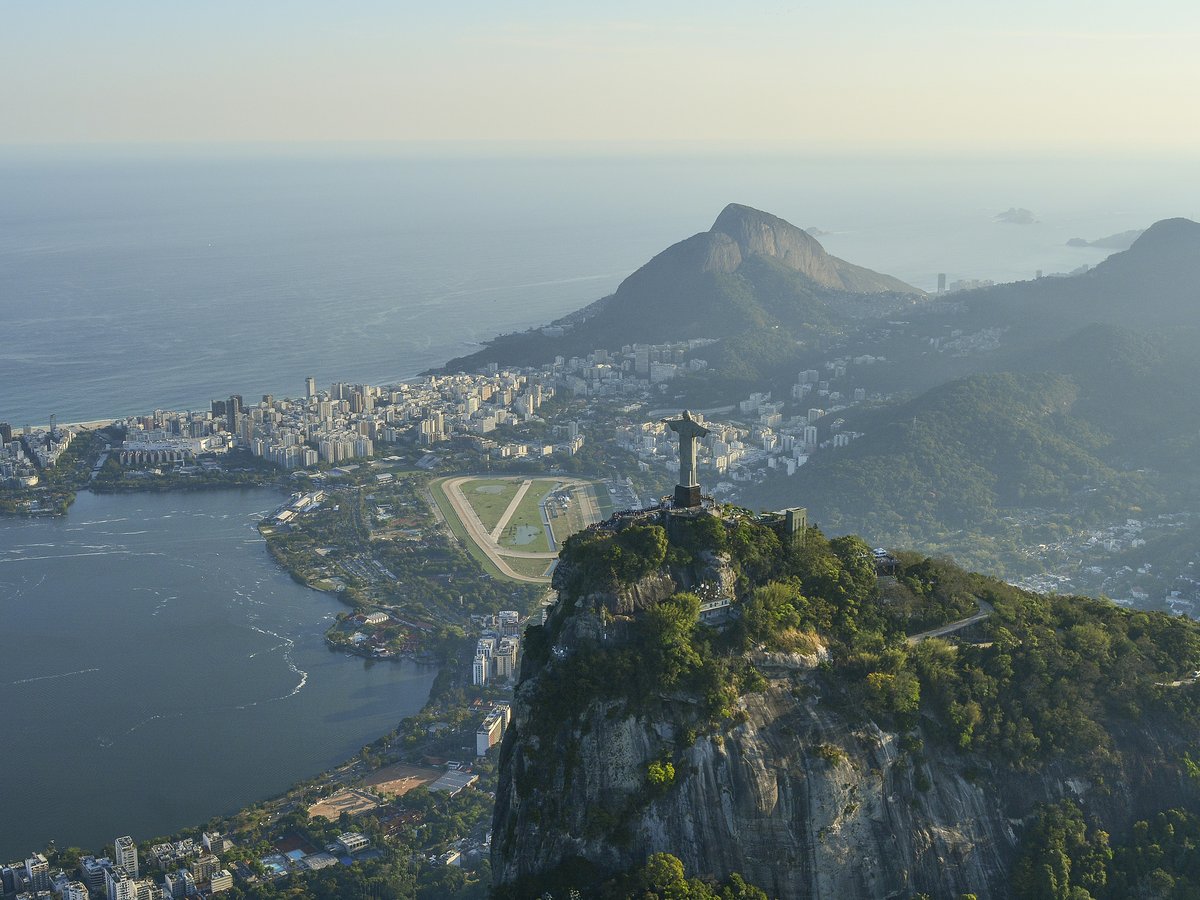
sightseeingThe 3.8-kilometer Estrada de Ferro do Corcovado rack railway climbs through the Tijuca forest canopy to the 710-meter summit. The train has run since 1884, and the 20-minute ride passes through dense Atlantic Forest with occasional breaks in the canopy revealing views of Guanabara Bay. At the top, the 30-meter Cristo Redentor statue stands on a platform with 360-degree views of the city.
November weekday mornings before 10:00 see noticeably shorter queues than the December-February peak season. The shoulder-season timing means less wait for the train at Cosme Velho station.Booking tipBook train tickets online in advance through the official site. Morning departures before 09:00 offer the clearest skies before afternoon clouds build.
What to eat in November
In season: fruit
Manga (mango)
Early mango season in Rio's Southeast region. Street vendors in Centro and at Feira de São Cristóvão start selling espada, tommy, and rosa varieties by mid-November. The fruit tends to be slightly tart compared to the fully ripe December and January harvest, but the price drops as supply increases through the month.
Caju (cashew fruit)
The bright yellow and red caju fruit appears at feiras like the Thursday market on Rua General Glicério in Laranjeiras around mid-November. Most Brazilians know the nut, but the fruit itself is tart and fibrous, typically squeezed into fresh juice. The flavor is sharp, almost astringent, nothing like the mild nut inside.
On menus now
Açaí na tigela
Available year-round, but November's rising heat makes the frozen açaí bowls from Bibi Sucos in Leblon and the beach kiosks along Copacabana especially appealing. November marks the transition when cariocas shift from winter comfort food back to cold açaí topped with granola, banana, and guaraná syrup. The berry is harvested in Pará and shipped frozen to Rio, peaking in availability from late October onward.
Street food peaks
Caldinho
Small cups of thick, hot soup, typically feijão (black bean), camarão (shrimp), or abóbora (pumpkin), sold at bars and outside samba school quadras in Lapa and Zona Norte on rehearsal nights. The samba season drives demand, and cariocas treat caldinho as a late-night pairing with beer between sets. The smell of toasted garlic and cumin drifts from the portable carts, and each cup comes in a small styrofoam container you can hold with one hand.
Regular events in November
Dia de Finados (Day of the Dead)Free
November 2 is a national holiday. Cariocas visit the Cemitério São João Batista in Botafogo and the Cemitério do Caju to lay flowers and clean family graves. Unlike Mexico's Día de los Muertos, the Brazilian observance is quiet and reflective. Many businesses close.
November 2Proclamação da RepúblicaFree
November 15 marks Brazil's 1889 proclamation of the republic. Government buildings in Centro fly flags, and there are sometimes small military parades near the Palácio Duque de Caxias. Most businesses close, and many cariocas use the long weekend to leave the city.
November 15Dia da Consciência NegraFree
November 20 honors Zumbi dos Palmares and celebrates Afro-Brazilian culture. Events concentrate in the Zona Norte and Centro, with music stages, capoeira circles, and cultural programming at the Museu de Arte do Rio (MAR) on Praça Mauá. Rio officially adopted this as a municipal holiday in 2002.
November 20Start of samba school ensaio season
The major escolas de samba begin their weekly Saturday-night rehearsals in their home quadras across Zona Norte. Mangueira, Salgueiro, Portela, and Beija-Flor in Nilópolis all open to the public, with live bateria percussion and the current year's samba-enredo on repeat until 03:00 or later.
Saturdays from early November through CarnivalBest places this November
Pão de Açúcar (Sugarloaf Mountain)
landmarkThe 2-stage cable car from Praia Vermelha in Urca to the 396-meter summit offers views across Guanabara Bay, Niterói, and the Zona Sul coastline. November weekday mornings tend to have shorter waits than the summer peak. The sunset from the top is one of Rio's best, with the sky turning orange behind Corcovado.
UrcaParque Nacional da Tijuca
natureThe 3,953-hectare urban rainforest contains over 30 waterfalls, the Pico da Tijuca (1,022m summit), and trails ranging from 30-minute walks to full-day scrambles. November's rain makes the forest floor slippery but keeps the waterfalls like Cascatinha Taunay at their fullest. The smell of damp leaf litter and bromeliads is strong after morning rain.
TijucaMuseu de Arte Contemporânea de Niterói (MAC)
museumOscar Niemeyer's 1996 saucer-shaped museum sits on a cliff across Guanabara Bay in Niterói, about 20 minutes by ferry from Praça XV. The permanent collection is secondary to the building itself and the view back toward Rio. The ferry ride alone is worth the trip, passing Ilha Fiscal and the naval base.
NiteróiEscadaria Selarón
landmarkThe 215 steps connecting Lapa to Santa Teresa, covered in over 2,000 tiles collected by Chilean artist Jorge Selarón from more than 60 countries. He worked on the project from 1990 until his death in 2013. The steps get direct sun in the morning, which makes the colored tiles glow. Afternoons bring shade and slightly fewer visitors.
Lapa / Santa TeresaPraia de Ipanema
beachThe 2-kilometer beach is divided into sections (postos) with distinct crowds. Posto 9 near Rua Farme de Amoedo draws a younger, artsy crowd. Posto 8 is popular with families. November water temperatures of 22-24°C make it comfortable for swimming, and the late-afternoon light over Dois Irmãos mountain creates the postcard view. The sand is clean and fine-grained.
IpanemaFeira do Lavradio
marketA monthly antique and arts fair on Rua do Lavradio in Lapa, held on the first Saturday of each month. The street fills with stalls selling vintage furniture, vinyl records, and old maps alongside live choro and samba bands playing from bar doorways. The November edition benefits from the warmer evening temperatures.
LapaPedra do Telégrafo
natureA granite outcrop in Guaratiba on Rio's far west side, famous for the optical-illusion photos where visitors appear to hang off a cliff edge. The hike from the trailhead takes about 90 minutes. The actual ledge is only about 2 meters above a grassy slope, but the angle makes it look like a sheer drop over the ocean. November mornings before 08:00 have the shortest queues for the photo spot.
Guaratiba
Your packing checklist
Tick items off as you pack. Your progress saves in this browser.
All packed — have a great trip.
Insider tips
The samba school ensaios at smaller schools like Unidos da Tijuca or Imperatriz Leopoldinense tend to feel more intimate than Mangueira's massive quadra. The percussion section is right in front of you, and you can often talk to the musicians between sets.
Weekday mornings between 08:00 and 10:00 are the sweet spot for Pão de Açúcar and Cristo Redentor. The first cable car and first train carry far fewer people, and you get the added benefit of cooler temperatures before the midday heat.
The ferry from Praça XV to Niterói costs very little and gives you a 20-minute harbor cruise with views of both cities. Many visitors pay much more for organized boat tours that cover the same water.
On the 3 holiday weekends (November 2, 15, and 20), Zona Sul empties out as cariocas head to Búzios, Angra dos Reis, and Paraty. If you stay in Rio, you'll find the beaches and restaurants noticeably less crowded.
Carry small bills in reais for samba school cover charges, beach vendors, and market stalls. Many smaller vendors in Zona Norte and at the feiras still prefer cash, though card acceptance has improved across Zona Sul.
Avoid these mistakes
- Skipping sunscreen on overcast November days. The UV index still reaches dangerous levels through cloud cover in Rio. Sunburn happens in under 15 minutes at midday, cloudy or not.
- Planning a full day of outdoor activities without checking the afternoon forecast. Rain typically hits between 14:00 and 16:00, so front-load hikes and outdoor sightseeing to the morning.
- Taking a taxi or rideshare to Pão de Açúcar during morning rush hour. Traffic on the road through Botafogo and into Urca can add 30-40 minutes. The metro to Botafogo station plus a short walk is faster and more predictable.
- Wearing flip-flops on the Tijuca trails after rain. The forest paths turn to mud, and exposed roots become slippery. Trail shoes or at minimum grippy sandals prevent falls.
- Arriving at a samba school ensaio before 23:00 and expecting the main bateria to be playing. Most quadras don't hit full energy until midnight. The warm-up sets start earlier, but the headlining percussion section typically goes on late.
Practical tips for November
November's 3 public holidays (the 2nd, 15th, and 20th) close banks, government offices, and many shops. Plan errands and currency exchange around these dates. Pharmacies and supermarkets in Zona Sul generally stay open. The metro runs on a reduced holiday schedule, so check METRÔ RIO's site for adjusted times. For samba ensaios, wear light clothes you don't mind getting sweaty, as the quadras have no air conditioning and the dancing generates serious heat. Mosquito repellent matters in November, especially near the Tijuca forest and Lagoa Rodrigo de Freitas, as the rains bring standing water. Dengue cases in Rio typically rise from November onward, so DEET-based repellent applied at dusk is worth the effort.
FAQ
Is November a good time to visit Rio de Janeiro?
November is a solid shoulder-season choice. You get warm beach weather (27°C highs, 22-24°C ocean water), lower hotel rates than the December-February peak, and the start of samba school rehearsal season. The trade-off is afternoon rain on roughly 13 days and 81% humidity. It ranks around 7th out of 12 months for visiting, behind the dry winter months and the Carnival period, but ahead of the rainiest months of December and January.
Does it rain a lot in Rio in November?
November typically sees about 100mm of rain spread across 13 days. The rain almost always arrives as sharp afternoon thunderstorms between 14:00 and 16:00 rather than all-day drizzle. Mornings are usually clear and warm. Plan outdoor activities for before noon and you'll likely stay dry. The storms pass quickly, and evenings often clear up.
Can I attend Carnival rehearsals in November?
Yes. The major samba schools open their quadras for weekly ensaios (rehearsals) from November through Carnival. Mangueira, Salgueiro, Portela, and Beija-Flor all hold Saturday-night sessions with full bateria percussion and the current year's samba-enredo. November rehearsals are less crowded than January and February, giving you closer access to the musicians and a more participatory atmosphere.
What should I wear to a samba school ensaio?
Light, breathable clothing. The quadras are open-air concrete spaces with no air conditioning, and you'll be standing and dancing for hours in 25°C+ night temperatures with high humidity. Comfortable closed-toe shoes with grip are better than sandals on the often-wet concrete floors. Carry minimal valuables. Many regulars wear their school's colors, which you can buy at stalls near the quadra entrance.
Is it safe to swim at Rio's beaches in November?
Water temperatures of 22-24°C make November comfortable for swimming at Copacabana, Ipanema, and Leblon. The Zona Sul beaches have lifeguard stations (postos) staffed daily. Pay attention to flag warnings for currents, which tend to be stronger in the spring swell season. Prainha and Grumari on the west side have rougher surf and fewer lifeguards, so swim with caution there.
Things to Do in Rio de Janeiro in November
 Free cancellation
 Rio's Full Day: Selarón Steps, Christ & Sugarloaf – Tickets & Lunch Included
Day trip: free cancellation.
via Viator Free cancellation
 The Best Half Day in Rio with Christ Redeemer and Sugar Loaf Hill
City tour: 5 hours, free cancellation.
via Viator Free cancellation
 A Day in Rio - City Tour
City tour: 9 hours, free cancellation.
via Viator Free cancellation
 Explore the Best of Tijuca Forest – Hike to Peaks, Caves & Falls
Outdoor experience: 5 hours, free cancellation.
via Viator Free cancellation
 Rio de Janeiro Sunset Sailing Tour with Drinks
Cruise: 3 hours, free cancellation.
via Viator Free cancellation
 Full Day Excursion to Petrópolis from Rio de Janeiro
Day trip: free cancellation.
via ViatorFind a flight to Rio de Janeiro
Live fares to Rio de Janeiro appear here once cookies are accepted.
Last verified by automated review (v1.7.2) on . What is automated review?