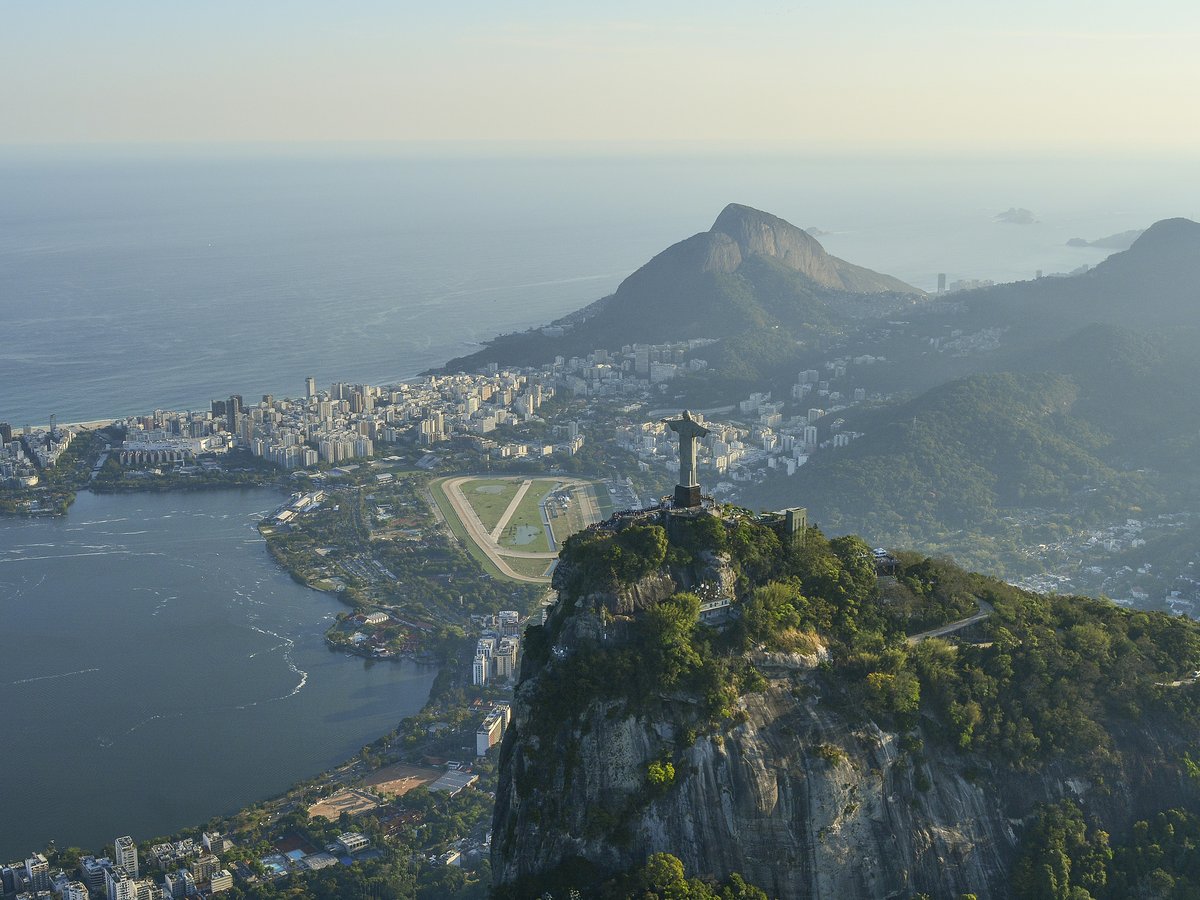
Stay in Rio de Janeiro in September
96 hotels in the Trip.com pool for Rio de Janeiro, from US$16 a night.
Opens Trip.com on Fri 25 Sep to Sun 27 Sep 2026; change the dates there.
September is one of the driest months in Rio de Janeiro, with roughly 46mm of rain spread across about 8 days. You're catching the city at the tail end of winter, before the wet season returns in October and November. Daytime temperatures sit around 26.5°C (80°F), nights drop to a comfortable 19.5°C (67°F), and the humidity hovers at 77%. It's warm enough for afternoon beach time but cool enough that you won't be drenched in sweat climbing to Mirante Dona Marta or hiking through the Parque Nacional da Tijuca.
Crowds are noticeably thinner than the December-through-March peak. Carnival season is months away in either direction, and the big summer holidays haven't started. Brazilian Independence Day falls on September 7, which brings a military parade down Avenida Presidente Vargas and fills restaurants in Lapa and Botafogo for the long weekend. Rock in Rio, the massive biennial music festival at Parque Olímpico in Barra da Tijuca, lands in September during its on-years and has drawn over 700,000 attendees across two weekends.
That said, September won't give you Rio at full volume. The Atlantic off Copacabana sits around 21°C (70°F), which feels bracing for anything beyond a quick dip. Samba schools are in rehearsal mode, not performance mode. If you came for Carnival's fever pitch or the packed Réveillon fireworks on New Year's Eve, this is the wrong month. Spring officially arrives around September 22, and the ipê trees bloom yellow and pink across the hillsides of Cosme Velho and Laranjeiras.
Getting into the city from Galeão (GIG) takes 30-50 minutes by taxi or rideshare to Zona Sul, depending on traffic along the Linha Vermelha expressway. The BRT Transcarioca bus connects the airport to Barra da Tijuca in about 40 minutes and is by far the cheapest option. For Copacabana and Ipanema, most visitors grab a yellow taxi from the regulated stand outside arrivals. Santos Dumont (SDU), the downtown airport for domestic shuttles from São Paulo, sits closer to Zona Sul and a cab to Copacabana from there takes about 15 minutes.
A note on neighborhoods. Zona Sul, the tourist spine running from Flamengo through Botafogo, Copacabana, Ipanema, and Leblon, is generally well-patrolled and comfortable for walking day and night. Santa Teresa has a bohemian charm but its winding streets get quiet after dark, so stick to the main drag around Largo do Guimarães. Centro empties out on weekends and evenings. Lapa is lively on Friday and Saturday nights but watch your phone and wallet in the crowds around the Arcos da Lapa. Avoid flashing expensive cameras or jewelry on the beach anywhere, and use hotel safes for passports. These are street-smart basics, not reasons to stay away.
Why visit in September
- Dry weather with only about 8 rain days in September gives you more clear skies for Pão de Açúcar views and Tijuca hikes than any month from October through March.
- Accommodation in Zona Sul drops significantly outside the peak season. A beachfront room in Copacabana in September might cost what a side-street room costs in February, and domestic flights into Galeão follow the same trend.
- Queues at Cristo Redentor and the Sugarloaf cable car shrink considerably. A visit that takes 90 minutes in January might take 30 in September.
- Temperatures around 26°C (80°F) are comfortable for walking the steep streets of Santa Teresa, the trails in Tijuca, and the waterfront at Parque do Flamengo without the punishing heat of a Rio summer.
- The ipê trees begin flowering in late August and September, covering hillsides and parks in yellow and pink blooms. Quinta da Boa Vista and Parque do Flamengo tend to have particularly dense clusters.
Worth knowing
- The Atlantic Ocean off Copacabana and Ipanema sits around 21°C (70°F) in September. That's cold enough to discourage long swimming sessions, especially on overcast mornings with onshore wind.
- Outside Independence Day and the occasional Rock in Rio edition, September lacks the festive energy that defines Rio's identity. The city feels quieter, more workaday. Some bars in Lapa that pack out on summer weekends run at half capacity.
- Cold fronts from the south (frentes frias) still push through occasionally, dropping temperatures to 15-17°C (59-63°F) for a day or two. They blow over fast but can catch you off guard if you packed only shorts and tank tops.
- Some beachside kiosks and seasonal restaurants in areas like Prainha and Grumari operate on reduced hours or close entirely during the low season.
Best for
Think twice if
September marks the end of Rio's dry winter season, with spring arriving around the 22nd. Expect mild, mostly sunny days that feel warm by midafternoon but noticeably cooler after sunset. The humidity at 77% is lower than the 80-85% of summer months, and the air feels lighter. Morning fog sometimes settles over the Tijuca mountains and burns off by 10 AM. The occasional cold front from the south brings a gray, breezy day with temperatures dropping into the mid-teens Celsius, but these typically last only 24-48 hours before the sun returns.
Seasonal caution
- Cold fronts (frentes frias) from southern Brazil still push through Rio in September, typically 2-3 times during the month. These can drop daytime highs to 18-20°C (64-68°F) and bring overcast skies and gusty wind for 1-2 days. They pass quickly but can spoil a beach day.
- The UV index in Rio de Janeiro remains high even in September, often reaching 8-10 on clear days. The lower sun angle compared to summer can feel deceptive. Sunburn is a real risk, especially at exposed viewpoints like Pedra Bonita and Mirante Dona Marta.
Year-round climate
Averages from the last 5 years.
| Month | Avg high (°C) | Avg low (°C) | Rainfall (mm) |
|---|---|---|---|
| Jan | 30 | 24 | 149 |
| Feb | 30 | 24 | 88 |
| Mar | 30 | 23 | 100 |
| Apr | 27 | 21 | 105 |
| May | 26 | 20 | 40 |
| Jun | 25 | 19 | 36 |
| Jul | 24 | 18 | 39 |
| Aug | 25 | 18 | 66 |
| Sep | 27 | 20 | 46 |
| Oct | 26 | 20 | 100 |
| Nov | 27 | 21 | 100 |
| Dec | 29 | 22 | 139 |
Holidays and festivals in September
Public holidays
- Independence Day(Dia da Independência)7 September 2026
Headline events
Brazilian Independence Day
September 7
National holiday on September 7 with a military parade along Avenida Presidente Vargas in Centro. The long weekend fills Zona Sul restaurants and draws domestic travelers to the city. Fireworks typically light up the Aterro do Flamengo waterfront after dark.
Rock in Rio
Mid-to-late September (biennial, on-years only)
One of the world's largest music festivals, held at Parque Olímpico in Barra da Tijuca during its biennial on-years. The event spans two weekends with 7 concert days, drawing over 700,000 total attendees across international and Brazilian headliners on the Palco Mundo stage.
Best things to do in September
Hike Pedra da Gávea
hikingThe 842-meter granite monolith in the Tijuca forest is one of Rio's most demanding day hikes, with a scramble section near the summit called the Carrasqueira that requires some hand-over-hand climbing. The panoramic view from the top spans from Barra da Tijuca to Niterói across Guanabara Bay.
September's dry weather and 26°C (80°F) temperatures reduce mud on the trail and heat exhaustion risk compared to summer months.Booking tipGo with a licensed guide from a company registered with ICMBio. The Carrasqueira section is not safe without one unless you have technical climbing experience.
Visit Cristo Redentor at sunrise
sightseeingThe 38-meter Art Deco statue atop Corcovado (710 meters) is Rio's most visited landmark. The van service from Largo do Cosme Velho or the Corcovado Rack Railway gets you to the base, and the platform wraps around the statue's feet with 360-degree views of the city.
September's low crowds mean the viewing platform isn't packed, and the dry mornings produce sharper visibility toward Pão de Açúcar and the Zona Norte.Booking tipBook the earliest available time slot on the official Paineiras website. Mornings tend to be clearest before any afternoon haze builds.
Explore the Parque Nacional da Tijuca
natureThe 39-square-kilometer urban rainforest contains waterfalls, lookout points, and over 30 marked trails. The Cascatinha Taunay waterfall drops about 30 meters and sits near the park's main entrance. Toucans and capuchin monkeys are common along the quieter trails toward Pico da Tijuca (1,022 meters).
Lower rainfall in September keeps trails drier and reduces the risk of flash flooding at stream crossings. The cooler temperatures make the 3-4 hour hikes to the peak more comfortable.Booking tipEnter through the Alto da Boa Vista gate. Weekday mornings see the fewest other hikers.
Take the Sugarloaf cable car at sunset
sightseeingThe two-stage cable car rises from Praia Vermelha to Morro da Urca (220 meters), then to the summit of Pão de Açúcar (396 meters). The first platform has a small amphitheater that hosts live samba on some evenings. The second offers unobstructed views of Copacabana, Botafogo Bay, and Cristo Redentor.
September sunsets around 5:45 PM cast warm, low-angle light across Guanabara Bay. The shorter queues mean you can linger on the upper platform.Booking tipArrive about 90 minutes before sunset to catch the light from the Morro da Urca level first, then ride up to the summit for the final glow.
Walk the Selarón Steps in Lapa
cultureThe 215 tile-covered steps connecting Lapa to Santa Teresa were the life's work of Chilean artist Jorge Selarón, who started tiling them in 1990. The steps are covered in over 2,000 tiles from more than 60 countries, and the colors are vivid in the morning light before the narrow stairway fills up.
September's low tourist volume means fewer people blocking the steps for photos. Mid-morning on a weekday, you might have stretches of the stairway to yourself.Hang glide from Pedra Bonita
adventureTandem hang gliding launches from the 520-meter Pedra Bonita ramp in the Tijuca forest and lands on Praia do Pepino in São Conrado. The flight lasts roughly 10-15 minutes depending on thermals, and the view takes in Morro Dois Irmãos, the Rocinha favela, and the coastline south toward Barra.
September's stable, dry air and consistent thermals off the coastal cliffs make for reliable flying conditions. Summer thunderstorms cancel more flights than winter weather does.Booking tipBook directly with operators registered with the Brazilian Hang Gliding Association (ABVL). Morning flights tend to have smoother air.
Cycle the Lagoa Rodrigo de Freitas loop
outdoorThe 7.5-kilometer paved path around the saltwater lagoon in Zona Sul passes through Jardim Botânico, Leblon, and Ipanema neighborhoods. Bike rental stations from the Bike Rio system are positioned every few hundred meters around the perimeter. The north shore faces Cristo Redentor directly.
The 26°C (80°F) temperature and lower humidity make a full lap comfortable without the sweat-soaked exhaustion of a January ride. The ipê trees along the western shore add bursts of yellow.Explore the Feira de São Cristóvão
cultureThis massive permanent market in a pavilion near São Cristóvão covers 30,000 square meters and has over 600 stalls selling food, music, crafts, and clothing from Brazil's Nordeste region. The smell of carne de sol and queijo coalho grilling hits you at the entrance. Live forró bands play on weekend evenings.
The pavilion is covered, so weather doesn't matter, but September weekends are less overwhelming than summer ones. You can browse the stalls without being carried along by the crowd.Booking tipGo on a Friday or Saturday evening after 7 PM for the full atmosphere with live music. Sunday afternoons tend to be family-oriented and calmer.
What to eat in September
In season: fruit
Mexerica (tangerine)
Brazilian tangerine season runs roughly from April through September. By the end of the month the fruit is at its sweetest and most fragrant, sold from carts in Largo do Machado and at the Feira de São Cristóvão for very little.
On menus now
Caldo verde
This hearty kale and sausage soup peaks in popularity during Rio's cooler months. September evenings in Botafogo and Santa Teresa still feel cool enough to warrant a bowl, and most botequins keep it on the menu through the end of winter.
Açaí bowls
The frozen açaí berry pulp shipped from Pará is available all year in Rio, but September's mild temperatures make the thick, cold bowls feel less like a shock to the system than in peak winter. Leblon and Ipanema juice bars tend to pile on granola, banana, and guaraná syrup.
Feijoada
Rio's signature Saturday lunch dish, a slow-cooked black bean stew with pork cuts, stays on heavy rotation through September. The cooler weather gives you more appetite for it. Restaurants in Botafogo and Lapa typically serve it as a weekend set meal with rice, farofa, collard greens, and orange slices.
Street food peaks
Tapioca crepes
Available year-round but particularly satisfying as a light meal during September's mild weather. Street vendors along the Copacabana boardwalk fill them with coconut, cheese, or condensed milk. The warm, chewy texture and sweet coconut smell tend to draw a line by late afternoon.
Regular events in September
Independence Day CelebrationsFree
Public holiday on September 7 with a military parade on Avenida Presidente Vargas, live music in Praça Tiradentes, and fireworks over Aterro do Flamengo. Many restaurants and bars in Lapa and Botafogo run festive menus for the long weekend.
September 7Rio Gastronomia
An annual food festival typically held at a waterfront venue in the port area (Pier Mauá or similar). Dozens of Rio's restaurants set up booths and offer tasting-size portions, and there are cooking demonstrations from well-known Brazilian chefs. The event usually runs over a long weekend.
Late September or early October (varies by year)Dia do Samba celebrationsFree
While the official Dia Nacional do Samba falls on December 2, September sees samba schools in Cidade do Samba in the port area holding open rehearsals (ensaios) as they begin preparing for next year's Carnival. Mangueira and Salgueiro tend to draw the biggest rehearsal crowds. The energy is raw and the drumlines are deafening in the best possible way.
Weekends throughout SeptemberPrimavera (Spring) cultural programming
The official start of spring on September 22 triggers a wave of gallery openings and outdoor events. The Jardim Botânico typically hosts guided walks focused on the blooming orchid and bromeliad collections. The Museu de Arte Moderna (MAM) in Aterro do Flamengo often opens new exhibitions around the equinox.
Late SeptemberBest places this September
Mirante Dona Marta
viewpointThis 340-meter lookout point above Botafogo provides one of the most photogenic views of Cristo Redentor with Pão de Açúcar behind it. September's clear mornings give sharp contrast between the green hillside and the deep blue of Guanabara Bay. The access road winds up from Cosme Velho and is steep but paved.
BotafogoJardim Botânico
natureFounded in 1808, Rio's 54-hectare botanical garden contains over 6,500 species, including a famous avenue of 134 imperial palm trees, some over 30 meters tall. September's mild weather and the start of spring blooms make it one of the most pleasant months to walk the grounds. The cactarium and orchid house are particularly active this time of year.
Jardim BotânicoMuseu do Amanhã
museumSantiago Calatrava's futuristic science museum on Praça Mauá in the revitalized Porto Maravilha district sits on a pier jutting into Guanabara Bay. The building itself is worth the visit for the architecture. September weekdays see short queues compared to the 90-minute waits common in high season.
CentroParque Lage
parkThis public park at the foot of Corcovado has a 1920s Italianate mansion with an interior courtyard cafe surrounded by a pool. The visual arts school (Escola de Artes Visuais) hosts rotating exhibitions in the mansion's galleries. From the grounds, walking trails lead into the Tijuca forest.
Jardim BotânicoPraia Vermelha
beachThis small, sheltered 200-meter beach at the base of Pão de Açúcar is surrounded by dense Atlantic Forest and feels worlds apart from the open expanse of Copacabana. The calm water is warmer than the open-ocean beaches because the cove blocks the southern swells. September mornings here are particularly quiet.
UrcaForte de Copacabana
landmarkThe early-20th-century military fort at the southern tip of Copacabana Beach houses a small army museum and a cafe with outdoor tables on the ramparts overlooking the full sweep of Copacabana's 4-kilometer crescent. The view north toward the Leme end of the beach is the classic postcard angle.
CopacabanaSanta Teresa neighborhood
neighborhoodRio's hilltop bohemian quarter has cobblestone streets, colonial-era houses painted in fading pastels, and small galleries and ateliers. The area around Largo do Guimarães has a cluster of restaurants and bars. September's mild evenings make the steep walk up from the Carioca metro station comfortable rather than sweltering.
Santa TeresaIlha Fiscal
landmarkThis neo-Gothic teal palace on a small island in Guanabara Bay hosted the last Imperial Ball in 1889, 6 days before the Republic was proclaimed. Access is by a short boat ride from the Naval Cultural Center near Praça XV. Guided tours run on weekends and the ornate interiors feel like a time capsule of the Brazilian Empire's final days.
Centro
Your packing checklist
Tick items off as you pack. Your progress saves in this browser.
All packed — have a great trip.
Insider tips
The Sugarloaf cable car's first departure tends to be nearly empty. Most tourists arrive mid-morning, so the earliest slot gives you the upper platform with maybe a dozen other people and better light for photos toward Cristo Redentor.
Samba school rehearsals in September are open to the public and completely different from the polished Carnival parade. Mangueira's rehearsals in Mangueira neighborhood and Salgueiro's in Andaraí draw locals who dance alongside the performers. The sound of 300 drummers in a concrete quadra reverberates through your chest.
Copacabana's beachfront kiosks vary wildly in quality within a few hundred meters. The stretch between Postos 4 and 5 (lifeguard stations) tends to have better-maintained setups and cleaner chairs than the Leme end.
For the classic Ipanema sunset view, skip the crowded Arpoador rock and walk 200 meters south along the rocks toward the Mirante do Arpoador path. The angle toward Morro Dois Irmãos is almost identical, with a fraction of the crowd.
The VLT light rail in the Porto Maravilha area is free-to-board in practice (the validation gates are often open), but it's worth tapping your transport card to avoid any issues. It connects Praça Mauá, the Museu do Amanhã, and the São Cristóvão area more efficiently than the bus network.
September nights in Lapa start late. The bars around Rua Mem de Sá don't fill up until 11 PM on Fridays and Saturdays. Arriving at 8 PM means drinking alone for 2 hours.
Avoid these mistakes
- Underestimating Pedra da Gávea. The trail is 5-6 hours round trip with a technical scramble section. Tourists in flip-flops or without water get into trouble regularly. Bring proper shoes, 2 liters of water per person, and start before 8 AM.
- Assuming September beach weather matches the postcards. The water is 21°C (70°F) and mornings can be overcast. Pack a windbreaker for the beach, not a bikini top and shorts.
- Taking an unmarked taxi from Galeão airport. The regulated yellow taxi stand outside arrivals uses metered or tabulated fares. Unmarked cars inside the terminal quote inflated rates.
- Skipping the Feira de São Cristóvão because it's outside Zona Sul. The market is a 15-minute rideshare from Copacabana and offers a side of Brazilian culture (Nordeste food, forró music, cordel literature) that the tourist-facing beach neighborhoods don't.
- Visiting Cristo Redentor at midday. The platform is at its most crowded between 11 AM and 2 PM year-round, even in September. Early morning or late afternoon slots cut your wait significantly and give better photo light.
Practical tips for September
September in Rio needs a layered approach to planning. Book Corcovado (Cristo Redentor) tickets through the official Paineiras website at least 3-4 days ahead, even in low season, since same-day availability is limited. The MetrôRio system covers most of Zona Sul and Centro, with Lines 1 and 4 connecting Ipanema to downtown in about 20 minutes. Bus routes exist but are confusing for newcomers, so rideshare apps (99 and Uber both operate in Rio) tend to be the easiest option for anywhere the metro doesn't reach. Carry a photocopy of your passport rather than the original. Most restaurants in Zona Sul accept international credit cards, but market stalls and smaller botequins in Lapa and Santa Teresa often deal in cash or Pix (Brazil's instant payment system). Pharmacies (Drogaria Pacheco and Drogasil are the major chains) are on nearly every block in Copacabana and sell sunscreen, insect repellent, and basic medications without a prescription.
FAQ
Is September a good time to swim at Copacabana and Ipanema beaches?
The ocean temperature sits around 21°C (70°F) in September, which is on the cool side for extended swimming. Short dips are fine, and you'll see locals in the water, but it's not the warm tropical bath you get from December through March. Praia Vermelha in Urca has calmer, slightly warmer water because the cove blocks ocean swells. Hotel pools are a reliable backup on overcast days.
Does Rock in Rio happen every September?
Rock in Rio is biennial, meaning it happens every other year in Rio de Janeiro. During on-years it typically fills two weekends in September at Parque Olímpico in Barra da Tijuca. During off-years, September has no major music festival. Check the official Rock in Rio website to confirm whether your travel year is an on-year.
How safe is Rio de Janeiro for tourists in September?
Zona Sul (Copacabana, Ipanema, Leblon, Botafogo) is generally well-patrolled and comfortable for walking. Standard precautions apply year-round, not only in September. Keep your phone out of sight on the beach, don't wear visible jewelry, and use hotel safes for valuables. Lapa on weekend nights is lively but pickpocket-prone in the crowds around Arcos da Lapa. Centro and the port area are quiet after business hours on weekdays and largely empty on weekends.
What should I wear in Rio in September?
Light, breathable clothing for daytime (cotton or linen), plus a jacket or hoodie for evenings when temperatures drop to around 19°C (67°F). If a cold front passes through, you might want long trousers and a warmer layer for a day or two. Comfortable shoes with grip are necessary for cobblestoned Santa Teresa and any Tijuca trails. Sunscreen is non-negotiable even on overcast days due to high UV at this latitude.
Is it worth visiting Rio in September if I only have 3 days?
Three days is enough for the core highlights with September's shorter queues. Day 1 could cover Cristo Redentor in the morning and Parque Lage in the afternoon. Day 2, Sugarloaf at sunset and the Botafogo waterfront. Day 3, a Tijuca hike or beach day depending on conditions. September's lighter crowds mean you spend less time waiting and more time at each site than you would in peak season.
Things to Do in Rio de Janeiro in September
 Free cancellation
 Best of Rio in One Day: Christ Redeemer, Sugarloaf & Local Lunch
City tour: free cancellation.
via Viator Free cancellation
 Rio's Full Day: Selarón Steps, Christ & Sugarloaf – Tickets & Lunch Included
Day trip: free cancellation.
via Viator Free cancellation
 The Best Half Day in Rio with Christ Redeemer and Sugar Loaf Hill
City tour: 5 hours, free cancellation.
via Viator Free cancellation
 A Day in Rio - City Tour
City tour: 9 hours, free cancellation.
via Viator Free cancellation
 Explore the Best of Tijuca Forest – Hike to Peaks, Caves & Falls
Outdoor experience: 5 hours, free cancellation.
via Viator Free cancellation
 Rio de Janeiro Sunset Sailing Tour with Drinks
Cruise: 3 hours, free cancellation.
via ViatorFind a flight to Rio de Janeiro
Live fares to Rio de Janeiro appear here once cookies are accepted.
Last verified by automated review (v1.7.2) on . What is automated review?