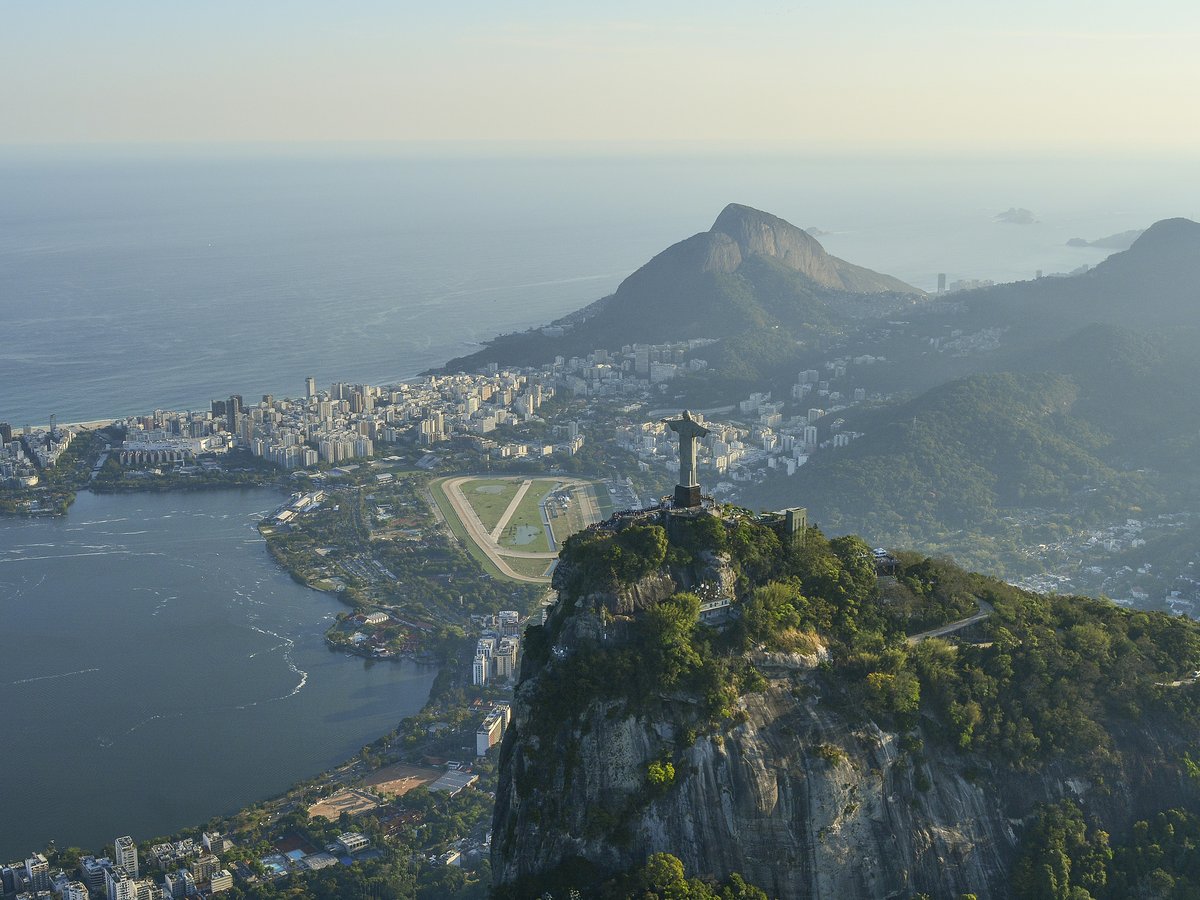
Rio de Janeiro for families
Rio de Janeiro scores 5.8 out of 10 for families, 120th of the 130 cities TTDI measures. The 3 lists picked for families in Rio de Janeiro carry 36 places. Christ the Redeemer, Teatro Municipal and America Football Club lead the picks.
Rio de Janeiro for families with kids, in numbers
- Score for families
- 5.8 out of 10120th of 130 cities
- Picks on this page
- 36 places across 3 lists, led by Christ the Redeemer, Teatro Municipal, America Football Club
Questions families with kids ask about Rio de Janeiro
-
Family-friendly
Rio de Janeiro scores 5.8/10 for family friendliness (see the TTDI Family-Friendliness Index). Beaches, AquaRio aquarium, and Tijuca National Park give kids real adventure, but petty crime risk, summer heat above 35°C, and sidewalks that defeat most strollers keep the score honest. Best with kids aged 5 and older who can handle walking.
Read the full answer → -
Is it safe?
Rio de Janeiro scores a 4.2 out of 10 for solo-traveler safety (see the TTDI Solo-Safety Index). Phone snatching, opportunistic mugging, and beach theft are daily risks beyond a few safe corridors. Leblon, Ipanema's beachfront blocks, and Urca are the reliable neighborhoods. Carry a decoy phone, skip visible jewelry, and use the 99 ride-hail app after dark. Emergency: 190.
Read the full answer → -
What to pack
Pack for Rio de Janeiro's two-season split. June through September brings 15-25°C days with cool evenings. December through March means 35°C+ heat with daily afternoon downpours. Year-round, bring SPF 50 sunscreen (3-4x cheaper outside Brazil), a cross-body anti-theft bag, walking shoes for Santa Teresa's cobblestones, and a Type N plug adapter. Leave expensive jewelry at home.
Read the full answer → -
Getting around
Uber and 99 for anything beyond your neighborhood, Metrô Rio Line 1 for the Copacabana-to-Centro corridor, your feet for everything inside Zona Sul. A single metro ride in Rio de Janeiro costs R$7.50. Download 99 before landing, as it tends to run 10-20% cheaper than Uber on the same route.
Read the full answer → -
Best time to visit
May through September. Rio de Janeiro's winter is dry, with daytime temperatures around 22 to 27°C and clear skies over Copacabana and Sugarloaf. Hotel rates in Ipanema drop 30 to 40% from the December to February peak. You skip the afternoon downpours that soak Tijuca National Park from November through March, and Copacabana's water still holds at 22°C for swimming.
Read the full answer →
Curated for families with kids
-

Must-see attractions
Rio's must-see list is a strange one, because the city's signature image: the colossal statue of Jesus on the ridge above the rainforest: is so dominant it can flatten everything else into a footnote. It shouldn't. The civic Rio, the one downtown locals walk through, is a tight cluster of churches, theatres and palaces in the old Centro, almost all of them within a few blocks of Praça Floriano and Praça Tiradentes. This list keeps the obvious anchor at the top, then turns deliberately toward that walkable Centro core: a working opera house, a modernist cone of a cathedral, a colonial wharf with a darker history, two cathedrals (one Catholic and old, one Presbyterian and downtown), a 19th-century parish church on the harbour, three theatres of very different eras, a diplomatic palace, and (because Rio is also a football town) the Tijuca headquarters of a club that predates most of the buildings around it. Twelve stops, mostly on foot, that argue Rio is more than its postcard.
See the picks → -

Best free attractions
Free Rio is the version locals use: public parks the city runs for itself, working squares used by the people who live nearby, and a Brazilian national park that earns its rank by what it is. The twelve picks below lean toward open ground: a botanical garden at Rua Jardim Botânico, 1008, postal code 22460-030, the largest public park and recreation area in the city, a square on Praça da República in Centro, a Centro pocket park between Rua São José and Avenida Nilo Peçanha, the central-region neighbourhood of Cinelândia, the square called Praça XV de Novembro, Tijuca National Park itself, the public park of Quinta da Boa Vista, the smaller Passeio Público, the public square at Praça Mauá, the Largo da Misericórdia, and Praça Marechal Âncora. The list favors early hours, when the heat has not landed and locals still own the ground. Read it in rank order, or jump to whichever neighbourhood you are sleeping in.
See the picks → -

Best museums
Rio's museum map is not a downtown loop. It is a walk that starts near Praça Quinze, threads through the old avenues of Centro, drops down to the port at Praça Mauá, crosses Guanabara Bay to a cliff on the Niterói side, and eventually pulls south through Glória, Flamengo and Catete. The twelve rooms below hold a national art museum in Rio, a literary non-profit society the city treats as public infrastructure, a history museum in Rio de Janeiro, a science museum on the redeveloped port, an art museum set into Parque do Flamengo, and a museum in Rio de Janeiro whose subject is the Republic itself. Skip the assumption that Rio's culture lives entirely between Copacabana and Ipanema; the entries below are worth a ferry, a Centro morning, and an afternoon in Lapa. Together they are how the city argues with its own history: colonial, imperial, republican, tropical, and unfinished. Bring water, comfortable shoes, and time; several sit within a single Centro block, and several are an afternoon apart.
See the picks →
Browse experiences
Family & Kids in Rio de JaneiroOther traveler types
- For foodies
Rio de Janeiro for foodies
- For digital nomads
Rio de Janeiro for digital nomads
- For solo travelers
Rio de Janeiro for solo travelers
- For couples
Rio de Janeiro for couples
- For budget travelers
Rio de Janeiro on a budget
- For luxury travelers
Rio de Janeiro for luxury travelers
- For first-timers
Rio de Janeiro for first-time visitors