Stay in Rio de Janeiro in May
96 hotels in the Trip.com pool for Rio de Janeiro, from US$16 a night.
Opens Trip.com on Fri 7 May to Sun 9 May 2027; change the dates there.
May is when Rio de Janeiro stops performing. The Carnival floats have been stored for 3 months, summer's suffocating heat has broken, and the city settles into an autumn rhythm that feels almost conspiratorial in its calm. Daytime highs average 25.9°C (79°F), nights cool to around 20°C (68°F), and rainfall drops to roughly 40mm for the entire month. Compare that to January's 149mm deluge and you start to see why Cariocas themselves seem more relaxed in May.
The beaches along Copacabana and Ipanema still get warm enough for afternoon sunbathing on most days, though you'll want a light layer by the time the sun dips behind the Dois Irmãos peaks around 5:15pm. The Atlantic cools to about 23°C (73°F), noticeably below February's 26-27°C. That said, the payoff is clearer air. The haze that smothers Rio during humid summer months tends to lift by mid-April, and May mornings from Pão de Açúcar can feel almost startlingly sharp. You can see the full sweep of Guanabara Bay without squinting through moisture.
Hotel rates in Ipanema and Leblon drop 30-40% below the December-February peak. Restaurants in Botafogo that required a week's notice during Réveillon have open tables on a Saturday night. The tradeoff is real, though. Sunset at 5:15pm cuts your beach window short, and the cultural calendar is genuinely quiet. No headline festivals, no Carnival energy, no New Year's fireworks on Copacabana. May in Rio is for people who want the city on its own terms, without the spectacle.
Why visit in May
- Rainfall drops to around 40mm across roughly 7 rainy days. October through March averages 2-3 times that, so May feels notably drier.
- Hotel rates across Copacabana, Ipanema, and Leblon fall 30-40% compared to December-February peak season pricing.
- Average highs of 25.9°C (79°F) make outdoor sightseeing at Cristo Redentor and Tijuca comfortable without the 30°C+ summer sweat.
- Queue times at Cristo Redentor and Pão de Açúcar shrink from summer's 60-90 minutes to 15-20 minutes on weekday mornings.
- Clearer skies and lower humidity improve photography conditions from elevated viewpoints like Vista Chinesa and Mirante Dona Marta.
Worth knowing
- Sunset arrives around 5:15pm, cutting beach afternoons short compared to January's 7:30pm golden hour.
- Atlantic water temperature cools to roughly 23°C (73°F), which might feel brisk if you're expecting Caribbean warmth.
- May sits in a cultural quiet period between Carnival (February) and Festa Junina (June). No headline events draw energy to the city.
- Occasional cold fronts (frentes frias) can push temperatures below 18°C (64°F) for 2-3 days, catching visitors who packed only shorts and tank tops.
Best for
Think twice if
May brings Rio's autumn in full. Mornings typically start around 20°C (68°F) with a softness to the air that feels different from summer's sticky dawn. By early afternoon, temperatures climb to about 25.9°C (79°F). Comfortable for walking. Not pool weather in the shade. Rainfall drops to roughly 40mm spread across 7 days, usually arriving as short afternoon showers rather than the all-day downpours of January. Humidity sits at about 80%, which still feels tropical but noticeably less oppressive than February's 85%+ combined with 30°C heat. The occasional cold front rolling up from the south can drop temperatures to 15-16°C (59-61°F) for a couple of days, and those mornings carry a chill that surprises first-time visitors who associate Rio purely with heat.
Year-round climate
Averages from the last 5 years.
| Month | Avg high (°C) | Avg low (°C) | Rainfall (mm) |
|---|---|---|---|
| Jan | 30 | 24 | 149 |
| Feb | 30 | 24 | 88 |
| Mar | 30 | 23 | 100 |
| Apr | 27 | 21 | 105 |
| May | 26 | 20 | 40 |
| Jun | 25 | 19 | 36 |
| Jul | 24 | 18 | 39 |
| Aug | 25 | 18 | 66 |
| Sep | 27 | 20 | 46 |
| Oct | 26 | 20 | 100 |
| Nov | 27 | 21 | 100 |
| Dec | 29 | 22 | 139 |
Holidays and festivals in May
Public holidays
- Labour Day(Dia do Trabalhador)1 May 2027
- Corpus Christi(Corpus Christi)27 May 2027
Best things to do in May
Hike Pedra Bonita in Parque Nacional da Tijuca
hikingThe 1.5-hour trail from the Estrada das Canoas trailhead leads to a 696m granite summit with panoramic views of São Conrado beach, Pedra da Gávea, and the Barra da Tijuca coastline. May's clearer skies mean you'll likely see all the way to the Ilha Grande on the horizon. The trail is moderate, well-marked, and a hang-glider launch ramp sits at the top.
Temperatures in the low 20s°C and reduced humidity make the climb far more comfortable than in summer's 30°C+ heat. Trail traffic drops significantly after Easter.Booking tipNo booking needed for the hike itself. Arrive before 8am on weekends to secure parking near the trailhead. The route is inside a national park that is free to enter.
Visit Cristo Redentor on a weekday morning
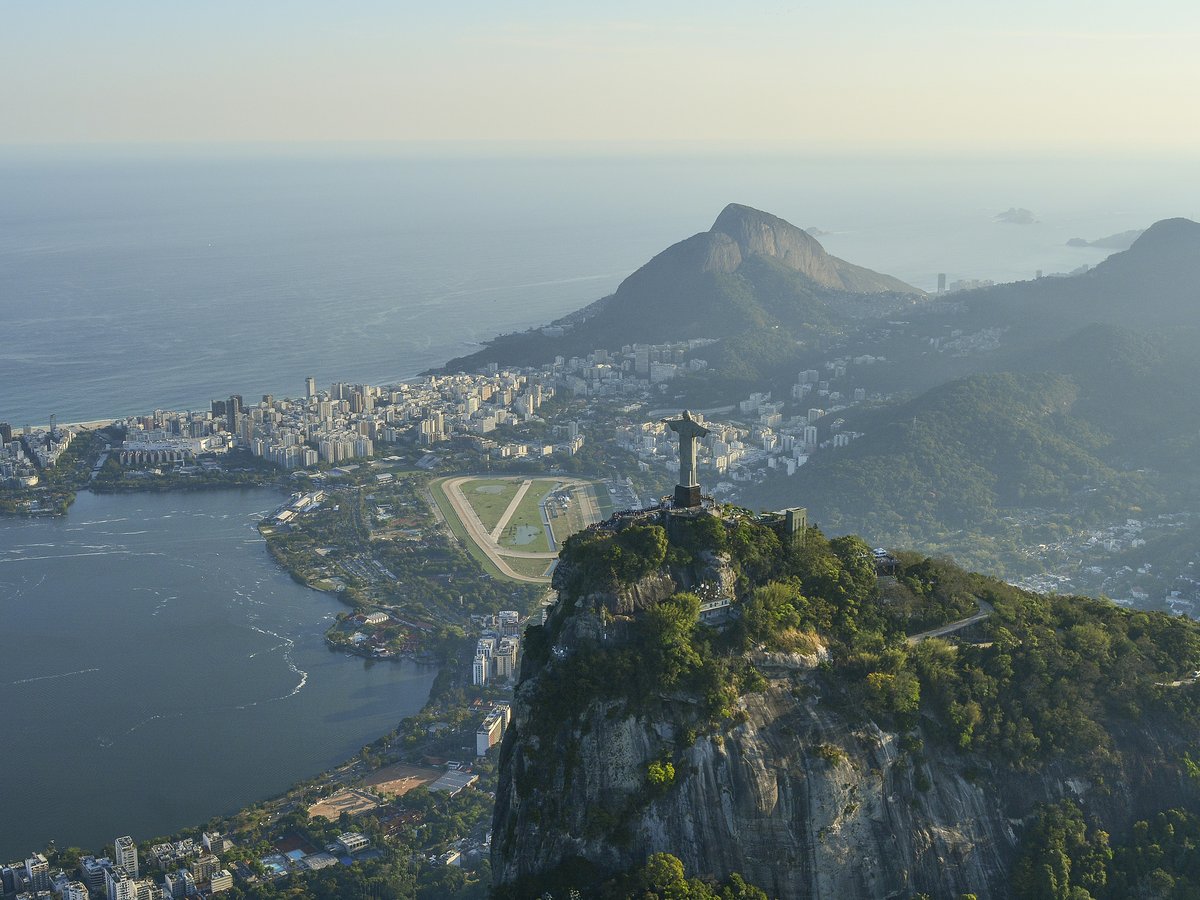
sightseeingThe 38m Art Deco statue atop Corcovado at 710m sits inside Parque Nacional da Tijuca. The van shuttle from Largo do Machado or the Corcovado rack railway from Cosme Velho both run year-round. From the viewing platform, you get the classic postcard sweep of Pão de Açúcar, Lagoa Rodrigo de Freitas, and Copacabana beach laid out below.
May's low-season crowd levels mean weekday morning visits typically have 15-20 minute waits instead of summer's 60-90 minutes. Clearer autumn air improves visibility from the summit.Booking tipBuy the train or van tickets online a day or two ahead. The first train departs Cosme Velho at 8am, and that first slot tends to have the shortest lines and best light for photos.
Sunset at Arpoador Rock
experienceThe rocky point between Ipanema and Copacabana beaches has been Rio's communal sunset spot for decades. Locals gather on the flat rocks, someone usually brings a guitar, and the crowd applauds as the sun drops behind Morro Dois Irmãos. In May, the sun sets around 5:15pm and the angle sends warm light across the face of Dois Irmãos in a way that the summer sunset path doesn't quite replicate.
The autumn sun position creates a lower, warmer light angle that photographers favor. Fewer tourists means you can find a spot on the rocks without arriving 2 hours early.Booking tipFree and open. Arrive by 4:30pm to find a comfortable rock. Bring a light jacket for the breeze after sunset.
Explore Santa Teresa by bonde
culturalRio's last surviving streetcar, the bonde, runs from Centro over the Arcos da Lapa aqueduct and up into the hillside neighborhood of Santa Teresa. The route passes colonial-era mansions, street art murals, and the Parque das Ruínas cultural center with its open-air terrace overlooking Guanabara Bay. The cobblestone streets are lined with small galleries and ateliers.
May's cooler temperatures make walking Santa Teresa's steep cobblestone streets far more pleasant. The neighborhood's cafes and bars feel livelier in the cooler weather, with outdoor tables comfortable for lingering.Booking tipThe bonde departs from the station near Largo da Carioca in Centro. Lines are shorter on weekday mornings. Wear closed-toe shoes for the cobblestones.
Take the Pão de Açúcar cable car at golden hour
sightseeingThe 2-stage cable car rises first to Morro da Urca (220m) and then to the 396m summit of Pão de Açúcar. The panorama covers Copacabana, Botafogo Bay, Cristo Redentor, Niterói across the water, and the Serra dos Órgãos mountain range to the north. Morro da Urca has a small amphitheater that hosts live music events on some evenings.
May's drier air and lower humidity tend to produce sharper visibility than summer months. The 5:15pm sunset means golden hour starts around 4:30pm, and the cable car runs until 9pm, so you can stay for the city lights.Booking tipBook tickets online to skip the ground-level queue. The last ascent is at 8pm. For the best light, aim to be on Morro da Urca by 4pm.
Walk the Trilha do Morro da Urca
hikingInstead of taking the first cable car stage, you can hike to Morro da Urca on a shaded 25-minute trail that starts at Praia Vermelha. The path winds through Atlantic Forest, past small monkeys (saguis) and tropical birds. At the top, you meet the cable car platform and can ride the second stage to Pão de Açúcar's summit.
The trail can be slippery in Rio's rainy season (December-March). By May, the path is typically dry and firm. Cooler mornings in the low 20s°C keep the hike comfortable under the tree canopy.Booking tipThe trail entrance is at the far end of Praia Vermelha, near the Círculo Militar building. You still need a cable car ticket for the second stage to the summit. Morning light is best.
Browse the Feira de São Cristóvão
culturalThis permanent marketplace in the Pavilhão de São Cristóvão in the Zona Norte celebrates Northeastern Brazilian culture. Over 700 stalls sell regional food, forró music, leather goods, hammocks, and cachaça. Live forró and baião bands play on weekends, and the food stalls serve dishes like carne de sol, baião de dois, and tapioca crepes.
The market runs year-round, but May's cooler evenings make the open-air food courts more comfortable for extended eating. The post-Carnival, pre-Festa Junina lull means the market is busy with locals rather than tourists.Booking tipFree entry during the week. The market is liveliest on Friday evenings through Sunday. Take the Metrô to São Cristóvão station and walk 10 minutes.
Kayak on Lagoa Rodrigo de Freitas
outdoorThe 2.4km-circumference saltwater lagoon sits between Ipanema, Leblon, Gávea, and Jardim Botânico, ringed by a cycling and running path. Rental kayaks and stand-up paddleboards are available from kiosks on the south shore. From the water, you get a distinctive low-angle view of Cristo Redentor and the Dois Irmãos peaks.
May's lighter winds and calmer water surface make paddling conditions more stable than in gusty spring months. The lower sun angle in late afternoon sends golden light across the water toward Cristo Redentor.Booking tipKiosks on the Avenida Borges de Medeiros side of the lagoon rent equipment by the hour. Late afternoon gives the best light. No advance booking needed on weekdays.
What to eat in May
In season: fruit
Ponkan tangerine
Brazilian ponkan season peaks from May through July. You'll find them stacked at every corner fruit stand in Copacabana and at the Feira de São Cristóvão for a couple of reais per kilo. The skin peels off in one piece, and the segments have that sweet-tart balance that imported tangerines never quite match.
Caqui (persimmon)
The tail end of persimmon season runs through May. Roadside vendors in the Zona Norte neighborhoods sell them soft and almost honey-sweet. Açaí bowls at Leblon juice bars sometimes top with sliced caqui this time of year.
On menus now
Caldos
As evening temperatures dip below 22°C, Rio's boteco bars start ladling out caldos. Caldo verde (potato and kale), caldo de feijão (black bean), and caldo de camarão (shrimp) appear on chalkboard menus across Lapa and Botafogo. Thick, salty, served in ceramic cups you hold with both hands.
Feijoada
Rio's definitive dish becomes more appealing as the temperature drops below 26°C. Saturday feijoada is a Carioca institution year-round, but the cooler May air makes the heavy stew of black beans, pork cuts, and sausage feel appropriate rather than punishing. Confeitaria Colombo in Centro serves a traditional version on Saturdays.
Street food peaks
Milho verde (grilled corn)
Late May marks the unofficial start of corn season in Rio, as vendors begin setting up charcoal grills on sidewalks ahead of Festa Junina in June. The kernels come slathered in butter and sometimes sprinkled with cinnamon sugar. The smell of roasting corn drifting through Largo do Machado on a cool May evening is one of those sensory markers of the season turning.
What to drink
Vinho quente
Hot spiced wine starts appearing at bars and street stalls in late May, weeks before the Festa Junina parties of June. The mix of red wine, sugar, cloves, cinnamon, and ginger stays warm in your hands on a 19°C evening. Bars around Praça São Salvador in Laranjeiras tend to put it on the menu as soon as the first cold front hits.
Regular events in May
Dia do Trabalhador (Labour Day)Free
May 1 is a national holiday in Brazil. Banks, government offices, and many shops in Centro close. Copacabana and Ipanema beaches see a bump in domestic visitors from São Paulo and Minas Gerais for the long weekend. Some unions and workers' organizations hold rallies in Centro and at Cinelândia.
May 1Dia das Mães (Mother's Day)
The second Sunday of May is one of Brazil's biggest commercial holidays and the busiest restaurant day of the year after Christmas. Restaurants across Leblon, Ipanema, and Botafogo fill up days in advance. Confeitaria Colombo in Centro typically has a waitlist. Shopping malls like BarraShopping and Shopping Leblon run extended hours the week before.
Second Sunday of MayNoites Cariocas at Morro da Urca
A series of open-air live music events held on the Morro da Urca plateau, the first cable car stop on the way to Pão de Açúcar. Acts range from samba and MPB to jazz and bossa nova. The setting, with Guanabara Bay and Botafogo's city lights below, is one of Rio's more distinctive concert venues. Events tend to run monthly, with May dates typically announced a few weeks ahead.
Varies, usually one Saturday evening in MayBest places this May
Mirante Dona Marta
viewpointA 340m lookout point inside Parque Nacional da Tijuca, accessible by car or a steep 20-minute walk from the road. The viewpoint sits directly between Cristo Redentor above and Botafogo Bay below, with Pão de Açúcar framed in the distance. May's clearer air makes this the best months for unobstructed photography. The Michael Jackson statue (commemorating his 1996 music video filmed here) is at the base of the access road.
BotafogoParque Lage
parkA public park at the base of Corcovado with a stately Italianate mansion (now the Escola de Artes Visuais) set against a backdrop of Atlantic Forest. The mansion courtyard has a cafe and a shallow pool. Walking trails wind into the surrounding forest, and the more ambitious Trilha do Corcovado begins here (a 2-3 hour hike up to Cristo Redentor). In May, the park is quiet enough on weekday mornings that you might have the courtyard almost to yourself.
Jardim BotânicoMuseu de Arte Contemporânea (MAC Niterói)
museumOscar Niemeyer's flying-saucer-shaped museum perches on a clifftop in Niterói, across Guanabara Bay from Rio. The 16-minute ferry from Praça XV to Niterói's Estação das Barcas is part of the experience, with views of Rio's skyline receding behind you. The museum's curving ramp and floor-to-ceiling windows frame the bay and Pão de Açúcar. The permanent collection focuses on Brazilian contemporary art from the 1950s onward.
NiteróiJardim Botânico
gardenRio's 137-hectare botanical garden, founded in 1808 by Dom João VI, holds over 6,500 plant species. The 750m-long royal palm avenue (Aleia Barbosa Rodrigues) is the visual centerpiece. May's cooler weather is comfortable for the 2-3 hours of walking the paths through the Amazonian, Japanese, and cactus sections. The orchid house has peak blooms in the autumn months.
Jardim BotânicoPraça São Salvador
neighborhoodA quiet residential square in Laranjeiras ringed by bars and restaurants. On weekday evenings, locals bring guitars, set up folding chairs, and drink beer on the grass. It's the kind of neighborhood scene that tourist-heavy Lapa can't replicate. In May, the cooler evenings make sitting outdoors comfortable past 10pm. Bars around the square start serving vinho quente and caldos as the temperature drops.
LaranjeirasForte de Copacabana
historic siteThe 1914 military fort at the southern tip of Copacabana beach houses the Museu Histórico do Exército and the Confeitaria Colombo cafe outpost. The fort's oceanfront terrace has one of Rio's best perspectives on the full 4km sweep of Copacabana beach, with the Dois Irmãos peaks and Vidigal favela in the background. May's thinner crowds mean you can linger at a terrace table without pressure.
CopacabanaPedra do Telégrafo
hikingA granite rock formation at the peak of Morro do Telégrafo in Pedra Branca State Park, in Rio's far west Zona Oeste. The 1.5-hour trail from Barra de Guaratiba leads to the famous photo spot where the rock's angle creates the illusion of hanging over a cliff (the ground is about 3m below). May's lower humidity and 20-25°C temperatures make the exposed trail far more bearable than summer.
Guaratiba
Your packing checklist
Tick items off as you pack. Your progress saves in this browser.
All packed — have a great trip.
Insider tips
The first cable car up to Pão de Açúcar leaves at 8am, and May mornings often have a thin mist that burns off by 9:30am. If you time it right, you'll watch the city emerge from the haze, and you'll share the summit with maybe 15 other people.
Confeitaria Colombo's Centro location (Rua Gonçalves Dias 32) is the historic original from 1894, with Belgian mirrors and stained glass. The Forte de Copacabana outpost has the better view but none of the interior grandeur. Visit both, but go to Centro for the architecture.
The Metrô from Ipanema (General Osório) to São Cristóvão for the Feira takes about 25 minutes and avoids the traffic that makes the same trip 45-60 minutes by taxi on weekends. Leave from the General Osório station.
May 1 (Dia do Trabalhador) is a national holiday. Banks close, ATMs run low by afternoon, and some smaller restaurants in Centro shut for the day. Stock up on cash the night before if you're outside the Zona Sul tourist areas.
The Trilha Transcarioca, a 180km trail network crossing Rio from Barra de Guaratiba to Paquetá Island, has several day-hike segments in Tijuca that are well-marked and maintained. May's dry, cool conditions are likely the best window for attempting the longer segments.
Sunset at Mureta da Urca is a local alternative to the tourist-heavy Arpoador scene. The low seawall along the Urca waterfront faces west across Botafogo Bay, and neighborhood regulars bring coolers of beer and sit on the wall. The Cristo Redentor statue lights up as darkness falls.
Avoid these mistakes
- Packing only summer clothes. May's cold fronts (frentes frias) are a real weather pattern that hits 2-3 times per month. Temperatures can drop to 15°C overnight, and a day spent shivering in shorts and flip-flops is a wasted day.
- Assuming all attractions keep summer hours. Several museums and cultural venues in Centro and Santa Teresa shift to shorter autumn hours after Easter, closing at 5pm instead of 6pm. Check the specific venue's schedule for May.
- Skipping Niterói because it's 'across the bay.' The Barcas ferry from Praça XV takes 16 minutes, the MAC Niterói is a Niemeyer landmark, and the Niterói skyline view back toward Rio is arguably the city's best panorama. Half a day is enough.
- Trying to eat out on Dia das Mães (second Sunday of May) without a reservation. This is the biggest restaurant day in Brazil outside of Christmas. Restaurants across Ipanema and Leblon start filling their booking sheets a week or more in advance.
- Relying on the beach for entertainment and arriving after 4pm. With sunset at 5:15pm, the beach window closes fast in May. Plan beach time for late morning through early afternoon and save viewpoints and indoor venues for the late afternoon.
Practical tips for May
May in Rio calls for flexibility with layers. Mornings often start cool enough for a long-sleeve shirt, afternoons warm to t-shirt weather around 25°C, and evenings slide back toward 20°C. The temperature swing matters more than the absolute numbers, since going from a warm lunch in Botafogo to an outdoor table in Laranjeiras at 8pm can feel genuinely chilly. Public transit works well for the main tourist corridor. The Metrô Line 1 connects General Osório (Ipanema) to Botafogo, Largo do Machado, and Centro in under 20 minutes, and the MetrôRio card is reloadable at any station. Taxis and rideshares are affordable by European and North American standards, but weekend traffic in the Zona Sul can double trip times. For beach days, Posto 9 on Ipanema remains the default tourist gathering point, though Posto 11 toward Leblon tends to be quieter and has easier access to the Leblon restaurant strip. Water temperature at 23°C is swimmable but not bathwater. Most locals swim comfortably at this temperature, though visitors from tropical destinations might find it bracing for the first few minutes. Carry cash in smaller denominations, since many beach vendors, street food carts, and smaller botecos in Lapa and Santa Teresa still prefer cash over cards. ATMs inside bank branches (Bradesco, Itaú, Banco do Brasil) are more reliable and safer than standalone machines.
FAQ
Is May a good time to visit Rio de Janeiro?
May is one of Rio's better months for visitors who prefer comfortable weather and lower costs. Average highs of 25.9°C (79°F) and roughly 40mm of rain across 7 days make it drier and milder than the October-March wet season. Hotel rates drop 30-40% from peak season. The main tradeoff is shorter daylight (sunset at 5:15pm) and a quiet cultural calendar between Carnival and Festa Junina.
Can you still swim at Copacabana and Ipanema beaches in May?
Yes. Atlantic water temperatures average about 23°C (73°F) in May, which is cooler than summer's 26-27°C but still comfortable for swimming. Most Cariocas swim year-round. Air temperatures reach 25-26°C on clear afternoons, warm enough for sunbathing. The beaches are less crowded than in summer, so you'll have more space on the sand.
What should I wear in Rio in May?
Light layers. Daytime calls for t-shirts, shorts, and sandals, but bring a light sweater or hoodie for evenings when temperatures dip to 20°C or below. If a cold front (frente fria) passes through, temperatures can drop to 15-16°C for 2-3 days, so at least one pair of long pants and a jacket are worth packing. Closed-toe shoes are better for cobblestone neighborhoods like Santa Teresa.
Are there any festivals or events in Rio in May?
May is one of Rio's quieter months for events. Dia do Trabalhador (May 1) is a national holiday with union rallies and some public gatherings in Centro. Dia das Mães (second Sunday) is Brazil's biggest restaurant day of the year. The Noites Cariocas live music series at Morro da Urca sometimes holds a May edition. But there are no headline festivals on the scale of Carnival (February) or Festa Junina (June).
How much cheaper is Rio in May compared to peak season?
Hotels across the Zona Sul (Copacabana, Ipanema, Leblon) typically run 30-40% below December-February peak rates. International flights from hubs like Miami, Lisbon, and Buenos Aires also tend to cost less. Restaurants and tours generally keep steady prices year-round, but some operators offer promotional rates during the low season to fill capacity. The first week of May can see a small bump from the Dia do Trabalhador long weekend.
Things to Do in Rio de Janeiro in May
 Free cancellation
 Rio's Full Day: Selarón Steps, Christ & Sugarloaf – Tickets & Lunch Included
Day trip: free cancellation.
via Viator Free cancellation
 The Best Half Day in Rio with Christ Redeemer and Sugar Loaf Hill
City tour: 5 hours, free cancellation.
via Viator Free cancellation
 A Day in Rio - City Tour
City tour: 9 hours, free cancellation.
via Viator Free cancellation
 Explore the Best of Tijuca Forest – Hike to Peaks, Caves & Falls
Outdoor experience: 5 hours, free cancellation.
via Viator Free cancellation
 Rio de Janeiro Sunset Sailing Tour with Drinks
Cruise: 3 hours, free cancellation.
via Viator Free cancellation
 Full Day Excursion to Petrópolis from Rio de Janeiro
Day trip: free cancellation.
via ViatorFind a flight to Rio de Janeiro
Live fares to Rio de Janeiro appear here once cookies are accepted.
Last verified by automated review (v1.7.2) on . What is automated review?