Best Time to Visit Savannah, by Season
Savannah's average highs swing 16.6 degrees between January's 15.6°C and July's 32.2°C, and that arc shapes everything from hotel rates to how long you'll last on a walking tour. A month-by-month breakdown naming the best window for every kind of traveller, built on 5-year daily-observation averages.
Published
1 March and April Own Savannah's Best Weather, and the Crowds Have Noticed
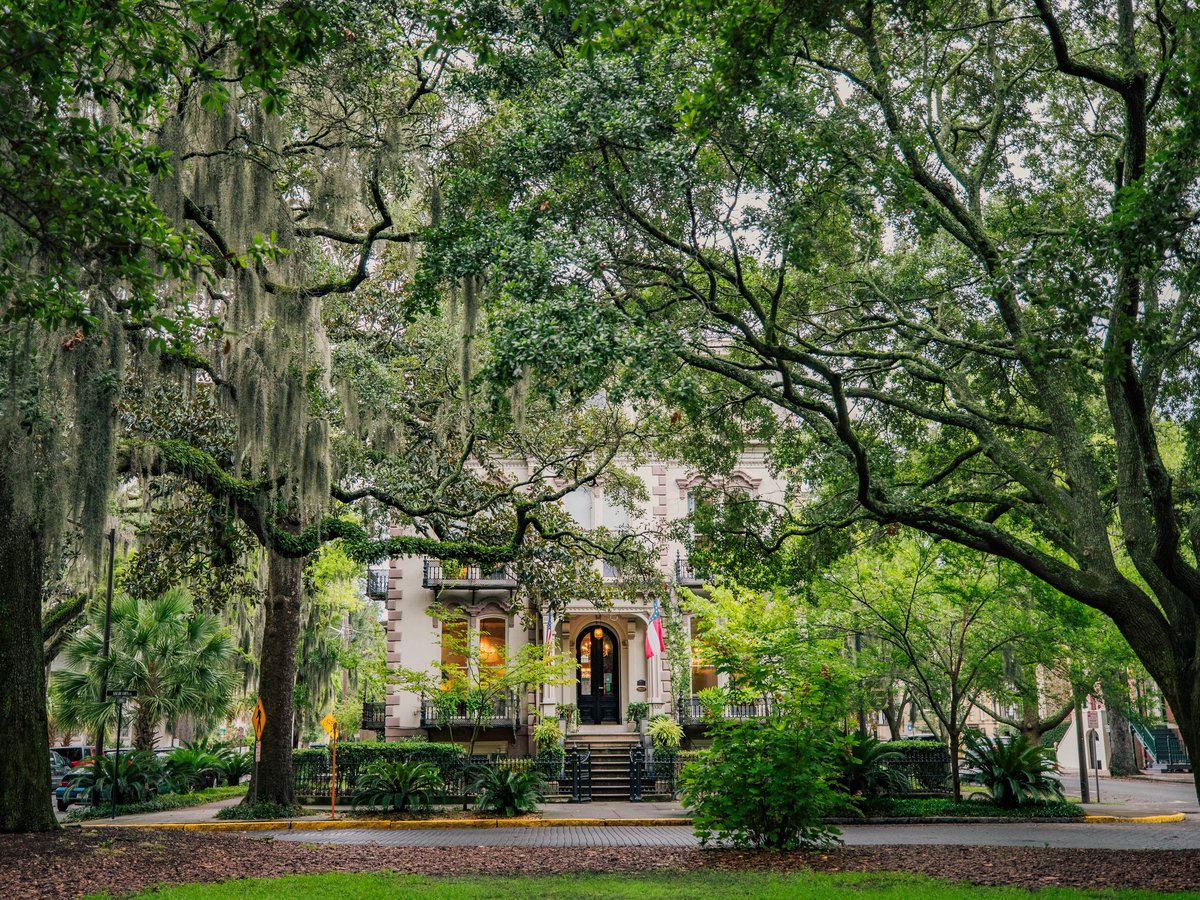
Walk through any of Savannah's squares in early March and you'll catch Confederate jasmine starting to open, the morning air still cool enough at 11.8°C to raise goosebumps on bare arms. March averages a high of 22.0°C and a low of 11.8°C. April pushes to 24.8°C with overnight lows settling around 14.7°C. That two-month range of 22.0°C to 24.8°C is warm enough for shirtsleeves all day but mild enough that walking Savannah's oak-canopied grid feels pleasant rather than punishing.
Everyone has figured this out. March and April are peak season in Savannah, and the crowds reflect it. St. Patrick's Day, which Savannah celebrates with a parade that shuts down the entire downtown, compresses hotel availability in mid-March to nearly nothing. If you can travel the first two weeks of March, before the parade weekend, you still get those 22.0°C highs without fighting for a table along River Street.
February sits right below this window at 19.3°C highs and 9.1°C lows. That 2.7°C gap between February's 19.3°C and March's 22.0°C is noticeable but manageable, and it buys you a quieter, cheaper version of spring. Some mornings feel brisk near the Savannah River, where wind off the water drops the perceived temperature a few degrees. But February tends to cost noticeably less than March, and the daylight is long enough for a full day of walking.
On the other end, May jumps to 28.2°C highs and 18.9°C lows. That 3.4°C leap from April's 24.8°C to May's 28.2°C marks the boundary where Savannah tips from comfortable warmth into real heat. You'll feel the difference past 28°C by mid-afternoon.
To be fair, April's consensus status exists for good reason. The 24.8°C high and 14.7°C low are likely the most universally comfortable conditions Savannah offers. For a quieter version of the same weather, the first week of March still delivers 22.0°C highs with noticeably less congestion than late March or April.
The first two weeks of March deliver 22.0°C highs before St. Patrick's Day crowds fill every hotel in the Historic District.
2 October Matches April's 24.8°C Highs Without the Peak-Season Markup
Spanish moss hangs still on a warm October afternoon in Bonaventure Cemetery, the only sound a mockingbird somewhere deep in the live oaks overhead. October's average high is 24.8°C, identical to April's 24.8°C. The low settles at 15.5°C, about 0.8°C above April's 14.7°C. On paper, October and April are weather twins. In practice, October costs less and draws fewer visitors to Savannah's Historic District.
October falls after summer's peak and before the holiday travel surge that builds through late November. September still averages 28.7°C highs and 20.7°C lows, so the first few days of October might carry residual warmth. By mid-month the evenings cool to around 15.5°C, comfortable enough to linger outside at a pub on River Street without overheating.
November drops to 20.8°C highs and 11.2°C lows, still mild by most standards. The window from mid-October through mid-November might be Savannah's most underrated stretch. You move from October's 24.8°C through November's 20.8°C, a 4.0°C spread that falls comfortably in walking-weather range.
The catch is hurricane season. Savannah sits low enough on the Georgia coast that tropical systems occasionally disrupt travel plans between June and November. The probability of a direct hit in any given October week remains low, but the possibility means some visitors prefer March or April's certainty. That said, a 24.8°C day in Savannah with dramatically fewer tourists than April tends to be worth that marginal risk.
If April is the safe consensus pick, October is the contrarian one. October's 24.8°C high and 15.5°C low deliver the same walking conditions as April with far fewer visitors in the squares.
3 July's 32.2°C Highs and 24.1°C Lows Turn Savannah Into a Steam Bath
Step outside in Savannah in July and the heat meets you like a wall of wet fabric. Not dry desert heat. This is coastal Georgia humidity, where the air feels thick against your skin and your glasses fog the moment you leave air conditioning. July's average high reaches 32.2°C, the hottest month in Savannah's calendar. The average low is 24.1°C, which means the city barely cools after sunset.
That 24.1°C overnight low is the figure most visitors underestimate. Compare it to March, where the low of 11.8°C means mornings start cool and fresh. In July, you wake up warm. June opens the summer corridor at 30.7°C highs and 22.4°C lows. August mirrors it at 30.8°C highs and 23.5°C lows. All three months share the same character. Highs stay above 30°C and lows refuse to drop below 22°C.
The upside is price. Summer is Savannah's off-season, and hotel rates in the Historic District tend to fall substantially between June and August. If you tolerate heat well, June's 30.7°C or August's 30.8°C are marginally more bearable than July's 32.2°C peak. The 1.5°C difference between June's 30.7°C and July's 32.2°C seems small on paper. On cobblestone streets with limited shade, those degrees feel meaningful.
Mind you, summer has its loyalists. Savannah's restaurants are easier to book, the squares along Bull Street are quieter, and the pace slows to something that suits the city's own rhythm. But the physical cost is real. Plan outdoor time before 10 AM or after 5 PM. The midday stretch, when the temperature pushes past 30°C across the Historic District, is best spent inside with the air conditioning.
4 January's 15.6°C Highs Make It Savannah's Quietest Bargain
There is something particular about Savannah's squares in January. The tourist trolleys still run, but half-empty. The light through the live oaks has a low, winter-angle warmth that photographers chase, gold-toned even when the air reads 15.6°C at peak afternoon. January is Savannah's coldest month, with an average high of 15.6°C and an average low of 5.7°C.
A 15.6°C afternoon in Savannah is sweater weather, not parka weather. You can walk the Historic District for hours with a layer or two. The 5.7°C lows mean mornings might start cold enough to see your breath near the Savannah River, but by late morning the temperature tends to climb into the teens. December is similar at 17.5°C highs and 8.3°C lows. February warms to 19.3°C highs and 9.1°C lows. The three-month winter window from December through February keeps highs between 15.6°C and 19.3°C.
For budget-focused visitors, this is the window to target. Hotel rates tend to reach their floor in January and early February, picking up as March's 22.0°C peak season approaches. The 15.6°C to 19.3°C high range means you miss Savannah's famous springtime warmth, but you gain something harder to buy. Empty squares. No waiting for tables. The feeling of having the city to yourself.
Whether Savannah works at 15.6°C depends on what you came for. If you want the architecture, the food, and the live-oak canopy of Forsyth Park, a 15.6°C January afternoon delivers all of it without the sweat. If you want to sit in Chippewa Square and read for an hour in shirtsleeves, April's 24.8°C or October's 24.8°C will serve you better. January's 15.6°C asks you to keep walking, and in exchange you'll have Forsyth Park and the surrounding squares largely to yourself.
January's 15.6°C asks you to keep walking. In exchange, you'll have the squares to yourself.
5 May and September Bracket Summer at Nearly 29°C, for Very Different Reasons
A late May afternoon in Savannah smells like cut grass and warm pavement, the humidity starting to assert itself after April's restraint. May's average high is 28.2°C, a noticeable step up from April's 24.8°C. The low reaches 18.9°C, warm enough that evenings feel balmy rather than cool. September mirrors May from the other side of summer at 28.7°C highs and 20.7°C lows. The daytime highs differ by only 0.5°C. The lows sit 1.8°C apart.
Despite near-identical temperatures, May and September play different roles in Savannah's travel calendar. May marks the last comfortable month before summer's 30°C-plus wall arrives. June's highs hit 30.7°C, and once you cross that threshold the feel of the city changes. May still carries the momentum of spring, especially in the first two weeks. By late May the humidity builds noticeably, but the 28.2°C high remains manageable if you pace yourself and stay in the shade along the squares.
September is the first month on the descent. August's 30.8°C highs ease to September's 28.7°C, a 2.1°C drop that registers in the evening air. September evenings at 20.7°C feel meaningfully different from August's 23.5°C lows. That 2.8°C gap is the difference between sitting outside in Savannah's squares comfortably and still reaching for a cold drink to cope.
Both months offer lower rates than the peak spring window but carry weather risk. May brings the leading edge of summer heat. September sits in the peak of Atlantic hurricane season. Neither is a guaranteed smooth trip, but both deliver temperatures in the 28°C range without peak-season crowds along River Street. If you're choosing between them, May's 18.9°C lows edge it on overnight comfort, while September's 20.7°C lows mark the start of the cooling trend toward October's 24.8°C highs.
6 November and February Are the Shoulder Months Most Visitors Skip
November light in Savannah has a crispness you feel against your cheeks at 8 AM, when the temperature hovers near 11.2°C and the live oaks still hold every leaf. November's average high is 20.8°C, its low 11.2°C. February sits close at 19.3°C highs and 9.1°C lows. Both months occupy the zone between the cool winter core and the popular spring and fall peaks, and both tend to be overlooked by visitors planning a trip to Savannah.
November's 20.8°C is close enough to March's 22.0°C that the walking experience through the Historic District feels similar, with shorter days and fewer tourists sharing the sidewalks. The gap between November's 20.8°C and December's 17.5°C is 3.3°C. That drop marks where Savannah's season tips from light-jacket territory to proper-coat mornings. If you visit in the first half of November, you'll likely catch conditions closer to October's 24.8°C than to December's 17.5°C.
February works the same arithmetic from the other direction. At 19.3°C highs, it sits 2.7°C below March's 22.0°C. Early February feels like winter in Savannah, with lows around 9.1°C that make mornings along the Savannah River genuinely cold. Late February begins to hint at spring. The azalea bloom in Forsyth Park typically starts between late February and early March, so a late-February visit might catch the first color.
Both months reward flexible travellers willing to check a forecast before booking. November at 20.8°C and February at 19.3°C are mild enough for all-day walking in layers. Neither draws the crowds that March, April, or October command. The trade-off is day-to-day variability. Any given November or February afternoon might land several degrees above or below the monthly average, which is why these months stay cheaper than March's 22.0°C or October's 24.8°C windows.
7 The Verdict: Budget Travellers Take January, Couples Take October
Here is what the temperature data suggests when you match Savannah's climate to different travel priorities.
Budget travellers should target January. The 15.6°C highs and 5.7°C lows keep most visitors away, and hotel rates fall accordingly. If January's 15.6°C feels too cool, February at 19.3°C highs is only marginally more expensive and still well below peak pricing. The budget sweet spot runs January through February, when highs range from 15.6°C to 19.3°C and Savannah sits at its quietest.
Families with school-age children are typically locked into break windows, which means late March, June, or late December. Of those three, late March is the clear winner at around 22.0°C highs and 11.8°C lows. June's 30.7°C highs and 22.4°C lows make sustained outdoor time with young children difficult after mid-morning. December's 17.5°C is workable with layers, and holiday decorations across the Historic District add atmosphere, but 8.3°C lows feel cold for families arriving from warmer climates.
Couples seeking the most atmospheric window should consider October. The 24.8°C highs and 15.5°C lows are ideal for lingering outdoors after sunset in Savannah's squares. October draws fewer visitors than April, when the identical 24.8°C high comes with peak-season congestion across the Historic District. April remains a strong alternative if you prefer spring's certainty and tolerate the crowds.
Solo visitors walking at their own pace might find November the strongest fit. The 20.8°C high supports long walking days across the Historic District without overheating. The 11.2°C lows keep mornings fresh without biting. Savannah's solo safety score currently sits at 6.2 out of 10, so sticking to well-trafficked areas after dark is advisable in any season.
Across all categories, October at 24.8°C is the single best month. March at 22.0°C is the runner-up for those who prefer cool-morning freshness over October's warmer evenings at 15.5°C.
October at 24.8°C is the single best month across all categories. March at 22.0°C is the runner-up.
Last verified by automated review (v1.7.2_onboard-savannah-flagship-2026-09-10) on . What is automated review?