Honolulu With Kids: What Works
Honolulu scores 8.5 for families, which measures sidewalks and bus routes, not whether Diamond Head will make your toddler cry. This is the itinerary shape that survives small children, the marquee sight that is a meltdown trap, and the under-rated attraction that saves the day.
Published · Updated
1 1. Honolulu's 8.5 Family Score Is Real, but the Fine Print Matters More Than the Number
The warm salt air hits you the moment you step off the jet bridge at Daniel K. Inouye International Airport, a wall of 27°C humidity that settles on your skin like a damp towel. Honolulu earns an 8.5 out of 10 on the family-friendliness index, and that number is honest. But it measures infrastructure, not execution. The 8.5 reflects Waikiki's flat sidewalks, the fact that children under 5 ride TheBus for free, and the density of restrooms within a 3-block radius of Kalakaua Avenue. It does not tell you that Diamond Head will wreck your Tuesday, or that Hanauma Bay's reservation slots fill by 7 AM, or that Pearl Harbor's USS Arizona Memorial bans all bags, including diaper bags.
Honolulu's family infrastructure sits somewhere between San Diego and Singapore on the global scale. TheBus covers 93 routes across O'ahu, and the Skyline rail opened its first segment in June 2023 between East Kapolei and Aloha Stadium, with the full line to Ala Moana Center still under construction. Most resort-zone restaurants along Waikiki's Lewers Street and Kalia Road seat children without hesitation. Highchairs appear without asking at Eggs 'n Things on Saratoga Road, which has been feeding family crowds since 1974.
The 8.5 does not account for hidden friction. Hotel parking in Waikiki runs $35-45 per day at most garages. The walk from your car to the sand at Ala Moana Beach Park takes about 4 minutes. The same walk from a Waikiki hotel parking structure, loaded with a stroller and snorkel gear, takes closer to 15 minutes. That gap matters when someone is mid-meltdown at the crosswalk on Kalia Road.
Honolulu is a genuine family destination, not a theme park with a beach. A theme park manages your day for you. Honolulu does not. You manage it, or it manages you. With children under 5, the difference between a good day and a bad one often comes down to which parking lot you chose at 8:30 AM.
The 8.5 measures infrastructure, not execution.
2 2. Skip Waikiki Beach Before 4 PM and Walk 10 Minutes West to Ala Moana Beach Park
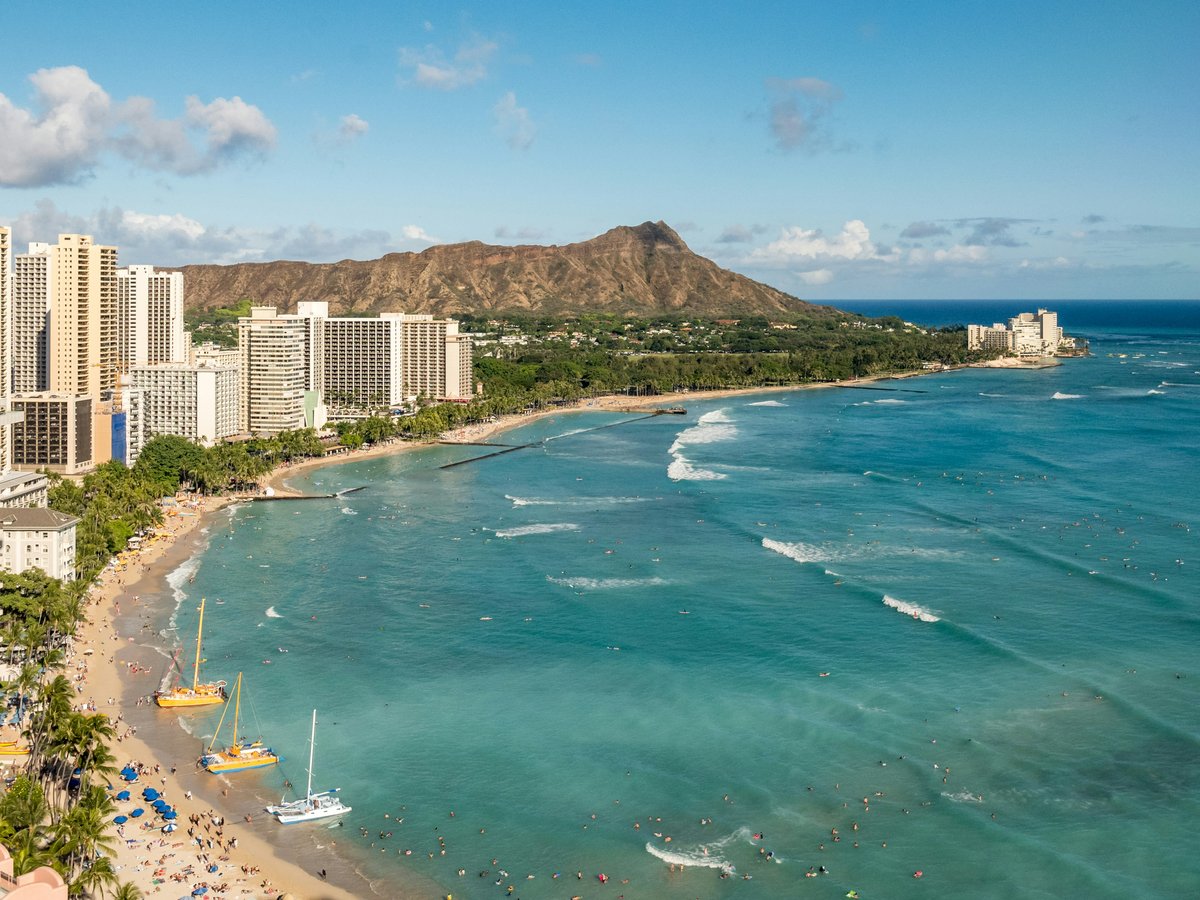
The surf at Waikiki Beach sounds louder than you expect, a low thud that echoes off the seawall near the Duke Kahanamoku statue on Kalakaua Avenue. By 10 AM on any Saturday, the sand between the Royal Hawaiian Hotel and the Moana Surfrider is packed shoulder-to-shoulder. Beach chair rentals from the vendors near Kuhio Beach run $25-30 for a half day. The water stays warm year-round, around 26°C, but the shore break along the main strip drops off fast enough to make parents of 3-year-olds nervous. Lifeguard towers are posted. They are also watching 400 people at once.
Ala Moana Beach Park sits about a 10-minute walk west of Waikiki, past the Hilton Hawaiian Village and its Friday-night fireworks. The difference hits immediately. Ala Moana's reef creates a protected lagoon near the peninsula called Magic Island, where the water stays waist-deep for about 50 meters out. Families from Kaimuki and Manoa spread out here on weekends with pop-up tents and coolers bought at Don Quijote on Kaheka Street. Parking is free. The lot fills by 9 AM on weekends, closer to 10:30 on weekdays. The restrooms are permanent structures, not porta-potties, and a paved path along the shore handles strollers without the sand-in-the-wheels problem.
Worth noting. If you do Waikiki Beach, go after 4 PM. The day-trippers thin out, the light softens, and the water temperature still holds at 26-27°C. The stretch near the concrete jetty called Kapahulu Groin is calmer and shallower than the main strip. Locals call it Baby Beach for good reason. It sits a 5-minute walk south of the Honolulu Zoo entrance on Kapahulu Avenue.
The move for families with kids under 5 is splitting the schedule. Ala Moana Beach Park mornings, when parking is still open and the trade winds keep things around 28°C. Waikiki evenings, when you can walk from dinner on Lewers Street to the sand in 3 minutes and let the children run while the sun drops behind the Waianae Range around 7:10 PM in summer.
Locals call it Baby Beach for good reason.
3 3. Diamond Head Is the Marquee Meltdown Trap for Anyone Under 5. Makapuu Lighthouse Trail Is the Fix.
The trailhead at Diamond Head State Monument smells like sunscreen and impatience by 8 AM. The 1.3-kilometer trail to the summit gains about 170 meters of elevation. The final stretch runs through a narrow tunnel built around 1908 and up a 99-step staircase with no handrail on one side. Adults enjoy the climb. A 3-year-old finds it terrifying. The hike takes about 40 minutes for a fit adult, closer to 90 minutes with a child who wants to be carried after the first switchback. There is no shade on most of the route, and the exposed rock surface reaches 33-35°C by midmorning. Reservations have been required since 2022, at $5 per person for non-residents, and the parking lot inside the crater holds about 170 cars.
Diamond Head is genuinely worth the effort for families with kids 8 and older. The summit view spans from the Waikiki skyline to Koko Head, and on clear days you can see Molokai across the Kaiwi Channel, about 42 kilometers away. But with anyone under 5, this is the single biggest meltdown trap in Honolulu. The trail is too steep to stroller, too long to carry, and too hot to negotiate.
The fix is Makapuu Lighthouse Trail, about 25 minutes east of Waikiki on Kalanianaole Highway. The trail runs 1.6 kilometers, fully paved, gaining only 152 meters. The state resurfaced it in 2019, and the pavement handles jogging strollers without trouble. The lighthouse at the end dates to 1909 and sits on a sea cliff above the Makapuu tide pools. From November through April, humpback whales are visible from the overlook without binoculars. The trailhead parking lot at 8 AM on a weekday sits about a third full.
To be fair, Diamond Head's view is more dramatic, giving you the full Waikiki skyline panorama. Makapuu gives you raw coastline and open Pacific. But the question for families is not which view wins. The question is whether anyone will still be speaking to each other at the top. Makapuu Lighthouse Trail has no entrance fee and requires no reservation.
The question is whether anyone will still be speaking to each other at the top.
4 4. Honolulu Zoo at 10 AM, Waikiki Aquarium After Nap. That Is the Winning Day.
The Honolulu Zoo opens at 10 AM, and the smell of plumeria along the entrance path mixes with something distinctly animal before you reach the ticket window. Adult admission is $19, children 3 to 12 pay $11, and kids under 3 enter free. The zoo covers about 17 hectares at the Diamond Head end of Waikiki, bordering Kapiolani Park, and the walk from most Waikiki hotels takes 15-20 minutes east along Kalakaua Avenue.
The strongest section for small children is the Keiki Zoo, a petting area with goats and sheep that opens at 10:30 AM. The African Savanna exhibit, with giraffes and zebras, sits at the back of the grounds and takes about 20 minutes to reach at a toddler's pace. The full loop runs about 90 minutes with a child who stops at everything, closer to 2 hours if you include the playground near the flamingo pond. You will be done by noon. This is a feature, not a flaw.
The Waikiki Aquarium sits a 10-minute walk east of the zoo, along the seawall past Kapiolani Beach. The aquarium has operated since 1904, making it one of the oldest public aquariums in the United States. Adult admission is $12, children 4 to 12 pay $5, and the full visit takes about 45-60 minutes. The Hawaiian monk seal exhibit on the outdoor terrace faces the open ocean. The jellyfish gallery stays cool and dim. Both of those matter at 2 PM when someone has been in the Hawaiian sun since breakfast.
The day shape that works. Honolulu Zoo from 10 AM to noon. Lunch on Monsarrat Avenue, where Bogart's Cafe serves acai bowls for about $14 and Pioneer Saloon does plate lunches for $13-16. Back to the hotel for nap from 1 to 2:30 PM. Waikiki Aquarium from 3 to 4 PM. The total cost for a family of four across both the Honolulu Zoo and Waikiki Aquarium lands around $70 before food, which is a cheap day in a city where a single snorkel tour runs $80-120 per adult.
5 5. Pearl Harbor Demands the Kind of Patience No Child Under 7 Has
The visitor center at Pearl Harbor opens at 7 AM, and the first thing you notice is how quiet the parking lot feels, even full. The site sits about 5 kilometers west of downtown Honolulu, off the H-1 freeway at exit 15A. The USS Arizona Memorial program includes a 23-minute documentary film followed by a Navy boat ride to the memorial over the sunken battleship. Admission is free. Timed-entry tickets release online 60 days in advance and sell out within hours for peak-season dates between December and March.
No bags are permitted inside. Not backpacks, not purses, not diaper bags. A storage facility at the entrance charges $5 per item. The documentary plays in a sealed theater with no exit until it finishes. The boat ride to the USS Arizona Memorial takes about 10 minutes each way. Children must remain seated and quiet on both the boat and the memorial structure, which floats directly above the remains of 1,177 sailors and Marines killed on December 7, 1941. The mood is heavy. A 4-year-old cannot carry it.
For families with children 8 and older, Pearl Harbor is among the most important historical sites in the Pacific. The Battleship Missouri at Ford Island charges $34.99 for adults and $17.49 for children 4-12. Kids can walk the teak deck where Japan's representatives signed the instrument of surrender on September 2, 1945. The Pearl Harbor Aviation Museum, also at Ford Island, charges $25 for adults and $15 for children, and its flight simulator keeps 10-year-olds occupied for a solid 30 minutes.
For families with children under 7, redirect the morning to Bishop Museum in the Kalihi neighborhood, about a 20-minute drive from Waikiki on the H-1 westbound. The Hawaiian Hall spans 3 floors of natural history and Polynesian artifacts. Admission runs $26.95 for adults and $18.95 for children 4-12. The Science Adventure Center has hands-on exhibits built for ages 3-8, including a simulated volcano and a wind tunnel. Bishop Museum closes at 5 PM, and your children will try to stay until then.
The mood is heavy. A 4-year-old cannot carry it.
6 6. Hanauma Bay Needs a Reservation, a 7 AM Alarm, and Kids Who Can Swim
The water at Hanauma Bay is clear enough to see reef from the overlook 30 meters above, before you even touch the sand. The bay fills an ancient volcanic crater about 20 minutes east of Waikiki on Kalanianaole Highway. On calm mornings the surface looks like pale green glass over the coral. Hanauma Bay is O'ahu's most-visited snorkeling site. Before the reservation system launched in 2021, daily visitor counts reached about 3,000. The current cap sits near 1,000 visitors per day, which has cut the crowd to roughly a third of what it was.
Non-resident admission to Hanauma Bay is $25 per person. Children 12 and under enter free. Reservations open online at 7 AM, two days in advance, and sell out within minutes during peak season from December through April. Set an alarm. The bay is closed Mondays and Tuesdays for reef recovery. Parking in the lot above Hanauma Bay costs $3, and a tram runs from the lot to the beach for $1.25 each way. That tram fee sounds trivial until you are carrying a 3-year-old and a mesh bag of snorkel gear up the return hill, which covers about 300 meters with a 60-meter elevation gain.
The honest assessment for families. Snorkeling at Hanauma Bay works well for children 6 and older who are comfortable in water over their heads. The inner reef sits close to shore, the fish are thick, and the depth over the shallow sections runs 1-2 meters. For younger children who cannot swim independently, the bay tends to frustrate more than delight. The shoreline is rocky, the wading area is small, and it gets packed by 10 AM. There is no lifeguarded splash zone.
A better choice for the under-5 crowd is Kailua Beach Park on O'ahu's Windward Coast, about 30 minutes from Waikiki through the Pali Highway tunnels. The sand at Kailua Beach Park feels like flour. The water stays shallow for 30 meters out, and the beach rarely packs the way Hanauma Bay does. Parking at the lot on South Kalaheo Avenue is free on weekdays. Mind you, there is no reef and no snorkeling at Kailua Beach Park. That is the tradeoff. A toddler will be perfectly happy with the sand and the 28°C water.
Set an alarm.
7 7. The Three-Day Itinerary Shape That Survives Small Children in Honolulu
At 6:30 AM on your first morning in Honolulu, the light through the hotel window looks different from anywhere on the mainland. It filters through trade-wind clouds that typically sit around 600 meters. Jet lag from the West Coast runs 2-3 hours behind, from the East Coast 5-6 hours. Your children will wake early. The Waikiki sidewalks are empty at 6:30 AM, and that head start is yours to use.
Day 1 is the beach day. Ala Moana Beach Park by 8:30 AM, before the lot fills. Magic Island lagoon from 9 to 11 AM. Walk to Ala Moana Center for lunch, a 5-minute walk from the park. L&L Hawaiian Barbecue runs about $10-13 for a plate lunch. Back to the hotel by 1 PM for nap. At 4:30 PM, walk to Waikiki Beach at the Kapahulu Groin for the golden-hour session, when the water still holds at 26°C and the crowds have thinned. Dinner on Lewers Street. In bed by 7:30 PM Hawaii time.
Day 2 is the zoo and aquarium day. Honolulu Zoo at 10 AM, $19 and $11 admission. Monsarrat Avenue for lunch at Bogart's Cafe or Pioneer Saloon. Hotel for nap from 1 to 2:30 PM. Waikiki Aquarium at 3 PM, $12 and $5 admission. If the children are still vertical at 5 PM, Kapiolani Park has a flat grass field with shade trees and room to run. The Saturday farmers market at Kapiolani Community College, a 10-minute walk south, runs from 7:30 to 11 AM and sells shave ice for $5-6 if your timing aligns.
Day 3 is the drive day. Makapuu Lighthouse Trail by 8 AM, the paved stroller-friendly path with possible whale sightings from November through April. The round trip takes about 60-80 minutes with small children. Continue east on Kalanianaole Highway to Kailua Beach Park, about a 15-minute drive from the trailhead. Pick up poke bowls at Foodland Farms in Kailua Town for about $12-15 per bowl.
The pattern across all 3 days stays the same. Morning activity before the heat peaks around 1 PM. Midday retreat to air conditioning and naps. Late afternoon back outside in softer light. This rhythm matches children under 5, who overheat faster than adults, and the weather pattern of Honolulu, where afternoon rain showers hit the Ko'olau Range side on roughly 40% of summer days between 2 and 4 PM. Waikiki sits on the dry leeward side and stays clear during most of these, which is why your hotel pool deck at the Hilton Hawaiian Village or the Sheraton Waikiki still works at 2:30 PM.
Last verified by automated review (v1.7.0_onboard-honolulu-flagship-2026-06-06) on . What is automated review?