Compare every Turkey city in March →
March in Cappadocia is still winter. That's the single most important thing to know before you book. Average highs reach only 11.3°C (52°F), nights regularly drop to -1°C (30°F) or colder, and this is the wettest month of the year for the region, with roughly 56mm of rain across about 10 days. Some of that precipitation falls as snow, particularly around the higher ground near Uçhisar and across the plateau west of Göreme.
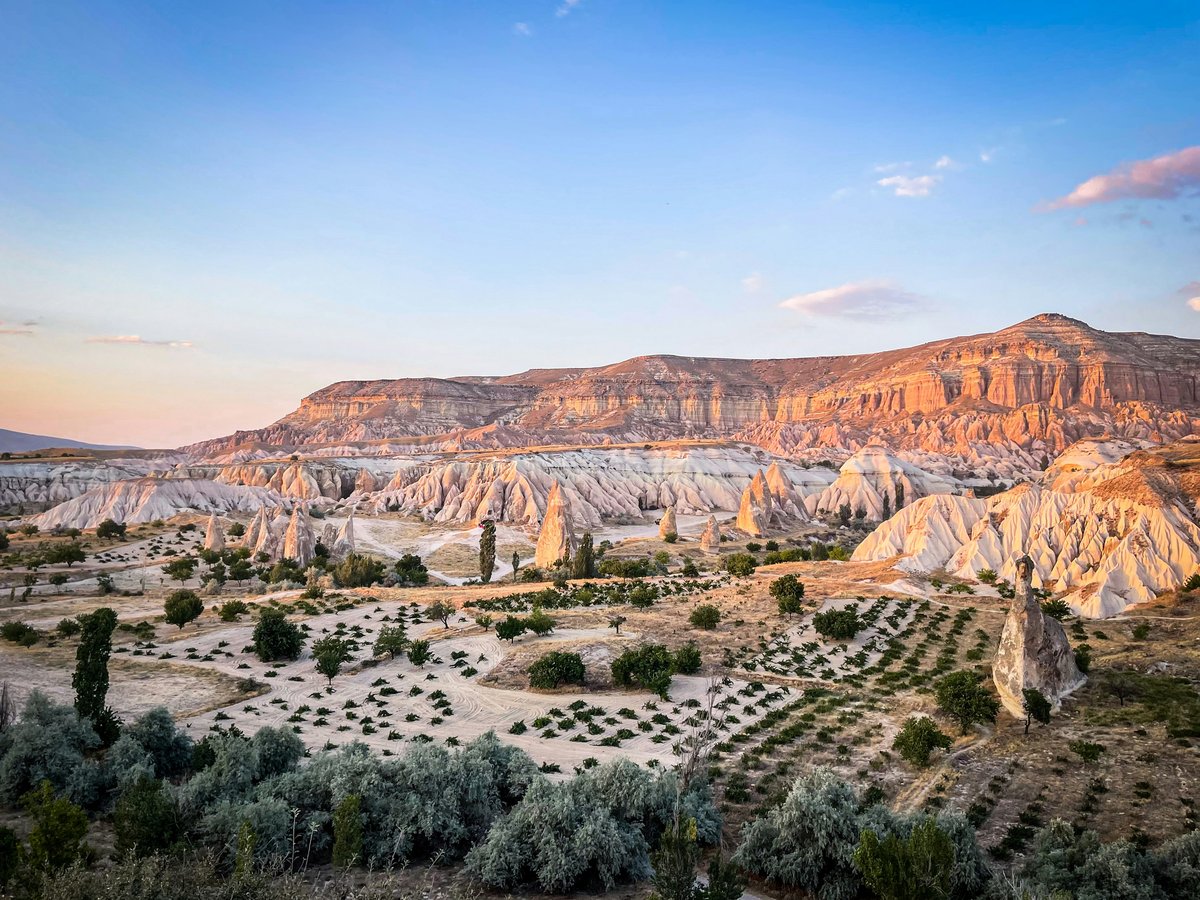
That said, there's a genuine case for visiting Cappadocia in March. The Göreme Open-Air Museum, which fills with tour groups from May through October, might have 5 visitors total on a March weekday. Cave hotel rates in Ürgüp and Göreme drop significantly from summer peaks, and you'll find low-season pricing across the board. Snow on the fairy chimneys at Devrent Valley and Pasabag gives the terrain a moody, almost lunar quality that July's dusty beige doesn't match.
March weather grounds Cappadocia's hot air balloon flights on perhaps 40-50% of mornings. If the balloon matters to you, build at least 3-4 mornings into your itinerary and book through your hotel for easier rebooking. Temperatures at balloon altitude, roughly 300m above the valley floor, feel 5-10°C colder than ground level. Dress for -5°C (23°F) even if the forecast reads 4°C (39°F). On the mornings when flights do launch, you might share the sky with 20-30 balloons instead of the 100-150 that crowd the dawn in July.
Why visit in March
- Cave hotel rates in Ürgüp and Göreme drop to a fraction of their summer peak pricing in March. The savings make it possible to try a high-end carved-stone suite that would blow through your budget in peak season.
- You can spend 30 uninterrupted minutes studying the 11th-century Pantocrator fresco inside the Karanlık Kilise, where a summer visit means being shuffled through every 5 minutes by a guard managing the queue of 200+ daily visitors.
- Snow-dusted fairy chimneys at Pasabag and Devrent Valley create photographic conditions that don't exist in the dry summer months. The low-angle March light tends to produce sharper, moodier contrasts against the white-capped tuff formations.
- The underground cities stay a constant 13-15°C year-round, making them a comfortable and weather-proof activity on cold or rainy March days. Kaymakli's 8 levels feel almost warm compared to the wind above ground.
Worth knowing
- March is Cappadocia's wettest month at 56mm across 10 rainy days. Valley trails in Rose Valley and Ihlara Valley turn muddy and slippery after rain, and the red clay stains everything it touches.
- Balloon flight cancellations run at roughly 40-50% of mornings due to wind and low visibility. A 2-night stay gives you poor odds of flying.
- Nighttime temperatures drop below freezing. If your cave hotel doesn't have good heating, the stone walls amplify the cold rather than insulating against it.
- Some restaurants and shops in smaller towns like Mustafapaşa and Ortahisar operate on reduced winter schedules, closing earlier or shutting down on weekdays entirely.
Best for
Think twice if
March sits firmly on winter's side of the transition to spring in Cappadocia. Daytime highs average 11.3°C (52°F), comfortable enough for walking in layers, but nights regularly drop to -1°C (30°F) or lower. This is the wettest month of the year for the region, with about 56mm of precipitation across 10 rainy days. Some falls as snow, especially on higher ground near Uçhisar and along the Erciyes Dağı foothills to the east. Humidity averages 63%, which feels dry compared to coastal Turkey. By late March, the days stretch noticeably longer than February, and you'll occasionally get a string of 2-3 crisp, clear mornings that hint at the spring to come.
Seasonal caution
- Nighttime temperatures regularly drop below 0°C (32°F) in March. Ice forms on hiking trails in shaded sections of Rose Valley and Pigeon Valley, especially before 10am. Roads between Göreme and Avanos can be slippery at dawn before the sun warms the pavement.
- Snow squalls can appear with little warning, especially in early March. The higher terrain around Uçhisar and the approach road to Ihlara Valley tends to be most affected. Carry a waterproof layer even on clear mornings.
Year-round climate
Averages from the last 5 years.
| Month | Avg high (°C) | Avg low (°C) | Rainfall (mm) |
|---|---|---|---|
| Jan | 7 | -3 | 45 |
| Feb | 6 | -4 | 29 |
| Mar | 11 | -1 | 56 |
| Apr | 19 | 5 | 49 |
| May | 22 | 8 | 49 |
| Jun | 27 | 13 | 32 |
| Jul | 31 | 15 | 2 |
| Aug | 32 | 16 | 7 |
| Sep | 26 | 11 | 20 |
| Oct | 20 | 6 | 17 |
| Nov | 15 | 2 | 34 |
| Dec | 9 | -1 | 38 |
Holidays and festivals in March
Public holidays
- Eid al-Fitr First Day (Tentative Date)(Ramazan Bayramı 1. Gün (Tentative Date))10 March 2027
- Eid al-Fitr Second Day (Tentative Date)(Ramazan Bayramı 2. Gün (Tentative Date))11 March 2027
- Eid al-Fitr Third Day (Tentative Date)(Ramazan Bayramı 3. Gün (Tentative Date))12 March 2027
Best things to do in March
Hot air balloon flight over the fairy chimneys
sightseeingLaunching at dawn from fields near Göreme, balloons drift over the tuff pillars, pigeon houses carved into cliff faces, and the winding course of the Kızılırmak river valley. March flights carry fewer passengers per basket than summer runs, and the snow-capped landscape below looks entirely different from its dusty summer version.
Fewer balloons in the sky (20-30 vs 100-150 in July) and snow on the formations create rare photographic conditions. Operators tend to offer flexible rebooking at no extra charge during the low season.Booking tipBook through your hotel for easier rebooking when flights cancel. Build at least 3-4 mornings into your stay to account for the 40-50% cancellation rate.
Explore Kaymakli Underground City
culturalDescend 8 levels into the volcanic tuff beneath the village of Kaymakli, 20km south of Göreme. The tunnels connect churches, stables, wine cellars, and storage rooms carved by early Christians. The constant 13-15°C temperature underground feels warm compared to the March wind above.
A weatherproof activity for rainy or snowy March days. Low visitor numbers mean you can linger in the narrow passages without queuing behind tour groups.Hike the Ihlara Valley gorge
hikingThe 14km gorge cut by the Melendiz River runs between Ihlara village and Selime monastery. Rock-cut churches with Byzantine frescoes dot the cliff walls at intervals. The river sounds amplify in the narrow canyon, and by late March the first wildflowers appear along the trail's lower sections.
Solitude. On a March weekday you might encounter 10-15 other hikers across the full 14km. Summer sees hundreds per day. The cooler temperatures also make the full-length hike more comfortable than the 35°C July version.Booking tipStart from the Ihlara end (south) and arrange a pickup at Selime. The trail can be muddy after rain, so allow 5-6 hours for the full route.
Visit Zelve Open-Air Museum
culturalThree valleys of abandoned cave dwellings, churches, and a mosque, occupied continuously until 1952 when rockfalls forced evacuation. The site sees a fraction of Göreme Open-Air Museum's visitors even in summer. In March you might have entire cave complexes to yourself.
Near-total solitude and atmospheric winter light. The rock formations take on a different character when dusted with snow, and the absence of other visitors lets you hear the wind moving through the empty caves.Sunset at Kızılçukur (Red Valley)
sightseeingThe oxidized iron in the tuff formations turns deep crimson as the sun drops behind the valley rim. A viewpoint trail leads from the parking area above Ortahisar to the best vantage, about a 15-minute walk. The rock face holds the warm color for roughly 20 minutes before fading.
March sunsets hit the valley at a lower angle than summer, intensifying the red tones. You'll likely share the viewpoint with 2-3 other people instead of the 30-40 who gather here on a June evening.Pottery workshop in Avanos
culturalAvanos has produced red-clay pottery since Hittite times, drawing on deposits from the Kızılırmak river banks. Several workshops along the main street offer hands-on sessions where you throw your own pot on a kick wheel. The clay is cool and gritty, and the smell of damp earth fills the small studios.
A warm, indoor activity for cold or rainy March days. Workshops are less busy than in summer, so you'll likely get more one-on-one time with the potter.Booking tipChez Galip and Venessa Seramik both run walk-in sessions. No reservation needed in March.
Explore Derinkuyu Underground City
culturalThe deepest accessible underground city in Cappadocia reaches 8 floors below the surface, with capacity for an estimated 20,000 people. Ventilation shafts, communal kitchens, a cruciform church on the lowest level, and rolling stone doors that sealed each floor independently. The scale is difficult to grasp until you're standing in it.
Constant 13-15°C underground makes this comfortable on any March day. Minimal crowds mean you can take your time navigating the narrow connecting tunnels without feeling rushed.What to eat in March
On menus now
Mantı
Kayseri-region beef dumplings peak in the cold months. Kitchens across Göreme and Ürgüp serve them with garlic yogurt and dried-mint butter. March is the tail end of prime mantı season before menus pivot toward lighter spring fare.
Testi kebabı
Meat, peppers, and tomatoes sealed inside a clay pot and slow-roasted in a wood-fired oven. The pot gets cracked open at your table with a small hammer. The smell of charred clay mixing with the stew is particular to Cappadocia, and the dish is especially satisfying after a cold day hiking the valleys.
Pekmez with tahini
Grape molasses drizzled over tahini and scooped with bread is a standard cold-weather breakfast across central Anatolia. The thick, sweet-bitter paste shows up at nearly every pension breakfast table in Göreme and Ürgüp through March.
Çömlek soup
A hearty lamb and chickpea soup slow-cooked in a clay pot, served steaming at lokanta-style restaurants in Avanos and Göreme. The warmth cuts right through a cold March afternoon. Most places ladle it from a communal pot that's been simmering since morning.
Street food peaks
Gözleme with spring greens
By late March, the first wild greens and leeks appear at village markets around Avanos and Mustafapaşa. Local women fold them into thin dough and cook it on a convex iron griddle called a saç. The slight bitterness of the early greens is a sign that winter is finally ending.
Regular events in March
Nevruz (Nowruz) celebrationsFree
The spring equinox festival on March 21 brings bonfires, folk dancing, and outdoor gatherings to towns across central Anatolia. In Cappadocia, small celebrations take place in Avanos and Nevşehir, with families jumping over fires at dusk. The tradition marks the arrival of longer days.
March 20-21Çanakkale Victory DayFree
March 18 is a national holiday commemorating the 1915 naval victory at the Dardanelles. Government buildings in Nevşehir and Ürgüp fly flags, and some schools hold ceremonies. Not a tourist-focused event, but shops and banks may close or run shorter hours.
March 18Best places this March
Göreme Open-Air Museum
culturalUNESCO-listed complex of rock-cut churches and monasteries with Byzantine frescoes dating from the 10th to 12th centuries. The Karanlık Kilise (Dark Church) preserves some of the best-condition pigments in all of Cappadocia. March visitors can study each church at their own pace.
GöremeUçhisar Castle
sightseeingThe highest point in Cappadocia at roughly 1,350m elevation. The hollowed-out rock fortress offers 360-degree views across the valleys, though March cloud cover sometimes limits visibility. The climb through the interior passages takes about 15 minutes.
UçhisarPasabag (Monks Valley)
naturalStriking multi-headed fairy chimneys with hermit cells carved into the upper caps. The formations here are some of the most photographed in the region. Snow cover in March adds a layer of contrast that the dry summer landscape lacks.
Between Göreme and AvanosDevrent (Imagination) Valley
naturalA field of tuff formations that erosion has shaped into animal-like silhouettes. No churches or frescoes here, only geology. The valley sits at slightly higher elevation and tends to hold snow longer than the lower valleys, making early March visits particularly atmospheric.
North of GöremeSelime Monastery
culturalThe largest rock-cut monastery in Cappadocia, carved into a cliff face at the northern end of Ihlara Valley. The cathedral-sized main hall, kitchen with a stone chimney, and multi-level living quarters suggest a community of considerable size. George Lucas reportedly drew inspiration from it for scenes in Star Wars.
Selime villageRose Valley trail
hikingA 4km hiking trail through pink-tinged rock formations connecting Göreme to Çavuşin. Rock-cut churches appear along the route, some with fragments of painted decoration still visible. The trail surface can be muddy in March after rain, but the color of the wet rock intensifies the pink tones.
Between Göreme and ÇavuşinAvanos old town
culturalThe pottery-making center on the banks of the Kızılırmak (Red River), Turkey's longest river. The old town's narrow streets are lined with workshops, and the Ottoman-era Sarıhan caravanserai sits 6km east of town. March brings quiet streets and working potters unbothered by summer tour buses.
Avanos
Your packing checklist
Tick items off as you pack. Your progress saves in this browser.
All packed — have a great trip.
Insider tips
Book your balloon flight through your cave hotel rather than directly with the operator. Hotels have standing relationships with the flight companies and can rebook you for the next available morning without the back-and-forth. This matters in March when cancellations are frequent.
The Karanlık Kilise (Dark Church) inside Göreme Open-Air Museum charges a separate entrance fee on top of the main museum ticket. It's worth it. The frescoes are in noticeably better condition because the limited light exposure slowed deterioration. In March you might be the only person inside.
Avanos pottery workshops are a reliable rainy-day activity, but the quality varies. Look for workshops where the potter still uses a traditional kick wheel rather than an electric one. The clay comes from the Kızılırmak riverbed, and the reddish color is natural, not glazed.
If your balloon gets cancelled, drive to the Göreme panoramic viewpoint at dawn anyway. Watching the few balloons that do launch from below, with snow on the fairy chimneys, is still a strong photographic opportunity. The viewpoint is on the Uçhisar road, about 2km from Göreme center.
The underground cities (Kaymakli and Derinkuyu) are 30 minutes south of Göreme by car. Visit Derinkuyu for depth (8 floors, the deepest accessible) and Kaymakli for breadth (wider tunnels, easier navigation). Doing both in one day is feasible but tiring. Pick one if time is short.
Avoid these mistakes
- Booking only 2 nights and expecting to fly a balloon. The 40-50% cancellation rate in March means you need at least 3-4 mornings to have a reasonable chance. A 2-night stay gives you only 1-2 dawn windows.
- Packing for spring weather because the calendar says March. Cappadocia sits at 1,000m+ elevation in central Anatolia, far from any moderating coast. Nighttime temperatures drop below freezing, and the wind chill on exposed viewpoints makes it feel colder still.
- Skipping the separate Karanlık Kilise ticket inside Göreme Open-Air Museum. The extra fee puts some visitors off, but the church contains the best-preserved frescoes in the region. In March with minimal crowds, the experience is worth every lira.
- Wearing light shoes on valley hikes. The red clay soil in Rose Valley and Pigeon Valley becomes slippery and adhesive after rain. Sneakers and sandals end up ruined and dangerous on the steeper sections.
- Driving to Ihlara Valley without checking road conditions first. The approach road climbs to higher elevation and can be icy or snow-covered in early March. Ask your hotel about current conditions before setting out.
Practical tips for March
March in Cappadocia requires winter planning despite the calendar suggesting spring. Most cave hotels run central heating, but the thick stone walls stay cool. Ask specifically about heating when booking, as some budget properties rely on space heaters that struggle against the thermal mass of the rock. Rental cars are the most flexible transport option, but check for winter tires if visiting in early March. The roads between Göreme, Ürgüp, and Avanos are well-maintained, but secondary routes to Ihlara Valley and Soğanlı can be icy before mid-morning. Dolmuş minibuses connect the main towns but run on reduced winter schedules, sometimes only 3-4 departures per day between smaller villages. Restaurants in Göreme center stay open year-round, but dining options in Ortahisar, Mustafapaşa, and Çavuşin thin out considerably. Eat dinner by 20:00 in the smaller towns. Sunset comes at roughly 18:30 in early March and 19:30 by month's end after the clocks change. Turkish lira cash is useful at village markets and smaller pottery workshops that may not take cards.
FAQ
Will I be able to fly a hot air balloon in Cappadocia in March?
Possibly, but not certainly. Balloon flights cancel on roughly 40-50% of March mornings due to wind and low visibility. Build at least 3-4 mornings into your stay and book through your hotel for easier rebooking. On mornings when flights do launch, you'll share the sky with 20-30 balloons rather than the 100-150 of peak summer.
How cold does Cappadocia get in March?
Average daytime highs reach about 11.3°C (52°F), comfortable enough for walking in layers. Nights regularly drop to -1°C (30°F) or below, and pre-dawn balloon launches at altitude feel closer to -5°C (23°F). This is genuine winter weather. Pack thermal layers, waterproofs, and warm accessories for extremities.
Are the main attractions open in March?
Yes. Göreme Open-Air Museum, Kaymakli and Derinkuyu underground cities, Uçhisar Castle, and Zelve Open-Air Museum all operate year-round, though some may have slightly shorter winter hours. The major advantage is minimal crowds. Some restaurants and shops in smaller villages like Mustafapaşa run reduced schedules or close on weekdays.
Is March a good time to hike in Cappadocia?
It depends on your tolerance for cold and mud. The valley trails through Rose Valley, Pigeon Valley, and Ihlara Valley are all accessible, but rain turns the red clay soil slippery and ice can form on shaded sections before mid-morning. Wear waterproof boots with strong grip. The cooler temperatures make the longer Ihlara Valley hike (14km) more comfortable than in summer heat.
Do I need a car to get around Cappadocia in March?
A rental car gives you the most flexibility, especially for reaching Ihlara Valley (about 80km from Göreme) and the underground cities (30 minutes south). Dolmuş minibuses connect Göreme, Ürgüp, and Avanos but run reduced winter schedules. Guided day tours operate year-round with smaller groups of 3-4 people in March versus 12-15 in summer.
Things to Do in Cappadocia in March

Cappadocia Hot Air Balloon Ride / Royal Balloon
Outdoor experience: 3.5 hours.
via Viator Free cancellation
 Full Day Cappadocia Tour( Red Tour + Underground City )
Day trip: free cancellation.
via Viator Free cancellation
 Cappadocia Hot Air Balloon Tour Over Fairychimneys
Outdoor experience: 3 hours, free cancellation.
via Viator Free cancellation
 Original Green Tour Ihlara Valley, Underground City & Monastery
Outdoor experience: 7.8 hours, free cancellation.
via Viator Free cancellation
 Cappadocia Green Tour - Classic Route (Popular)
Day trip: free cancellation.
via Viator Free cancellation
 Cappadocia Customizable Private Tour with Guide and Vehicle
Day trip: free cancellation.
via ViatorFind a flight to Cappadocia
Live fares to Cappadocia appear here once cookies are accepted.
Last verified by automated review (v1.7.2) on . What is automated review?