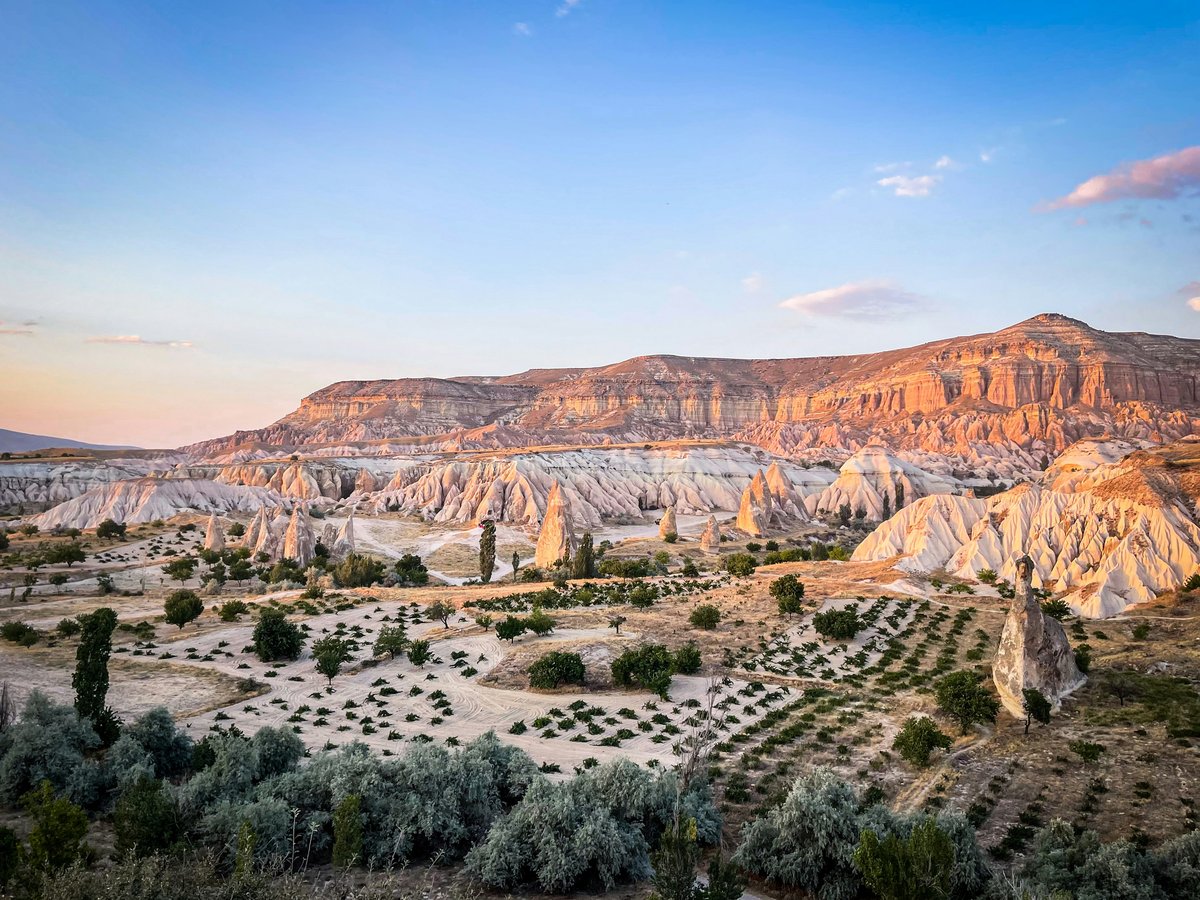
Cappadocia's nightlife won't remind you of Istanbul or Bodrum. This is a region of small towns scattered across volcanic valleys in central Anatolia, and the after-dark scene reflects that geography. Göreme, with a resident population of around 2,000 that swells tenfold in summer, is where most visitors end up drinking. Ürgüp, about 20 minutes east, tends to draw a more local crowd and has deeper roots in Cappadocia's winemaking tradition. You might hear Turkish pop bleeding out of a cave bar at 11 PM while fairy chimneys glow under floodlights down the street. The overall pace is slow. People sit, they talk, they share a bottle of regional wine or work through a round of raki with white cheese and melon. Most places close by 1 or 2 AM, even on weekends. That said, in peak season from June through September, a handful of spots in Göreme will keep the lights on until 3 or 4 AM if the crowd holds. Mind you, this is not a party destination. It is a place where you drink with a view of 60-million-year-old rock formations, and that tends to change what you want from a night out.
The Bar Scene in Cappadocia's Cave Towns
Most of Cappadocia's bars are concentrated along Göreme's main street, Müze Caddesi, and the narrow lanes branching off it toward the Open Air Museum. You'll find a mix of rooftop terraces with valley views, ground-level cave bars carved into the soft tuff rock, and a few wine-focused spots. The cave bars have a particular feel. Low ceilings, rough stone walls that stay cool even in August when it's 35°C outside, dim lighting, and that faint mineral smell of old volcanic rock. Several of these double as restaurants earlier in the evening and shift to a drinks-only mood after 10 PM. Rooftop bars are the draw in summer. Göreme sits in a bowl surrounded by fairy chimneys and rock-cut churches, and from a 3rd-floor terrace the sunset view toward Kızılçukur (Red Valley) is hard to beat. A glass of local wine from Turasan or Kocabağ, both based in Ürgüp, might run 150 to 250 Turkish lira depending on the label and the venue's markup. Cocktails tend toward the 200 to 350 lira range at the more polished spots, though the cocktail culture here is still relatively young compared to Istanbul's Beyoğlu scene. Ürgüp has a quieter bar scene. The town's Temenni Tepesi (Wish Hill) area and the streets around Cumhuriyet Meydanı have a handful of wine bars that lean on the local production. Cappadocia has been a wine region since Hittite times, and there are currently around a dozen active wineries in the Ürgüp-Avanos corridor. The volcanic soil and the continental climate at 1,100 meters elevation produce distinctive wines from Emir (white) and Öküzgözü (red) grapes. A tasting flight at a winery-adjacent bar is a different experience from the tourist-facing Göreme scene. More locals, less English on the menu, and someone might explain what makes Emir grown at altitude taste different from the same grape in Elazığ. Dive bars exist, though calling them that might be generous. A few older lokanta-style places in Göreme and Avanos serve Efes or Bomonti on draft alongside simple meze, and the crowd skews toward local tradesmen and off-duty tour guides. These tend to be smoky, fluorescent-lit, and entirely indifferent to aesthetics. A half-liter of Efes might cost 80 to 120 lira. To be fair, these spots offer something the terrace bars don't. You'll hear unfiltered opinions about which balloon companies cut corners and which valleys are being overdeveloped.
Clubs in Cappadocia, or the Absence of Them
Cappadocia does not have a club scene in any conventional sense. There are no dedicated nightclubs with DJ booths, bottle service, and bouncers checking dress codes. The region's towns are too small, too seasonal, and too conservative in the off-months to support that model. What you will find are a few bar-restaurants in Göreme that push the tables aside after midnight on Friday and Saturday nights in summer and turn up the speakers. Turkish pop and Anatolian rock dominate the playlists. Think Tarkan, Sezen Aksu, or Barış Manço deep cuts if the DJ has taste. Occasionally someone will mix in Western club tracks, but the crowd tends to respond better to Turkish music. Dancing happens, but it's more spontaneous than structured. No dress code. No cover charge at most places. You might see someone in hiking boots next to someone in a linen shirt, and nobody cares. The closest thing to a proper club night happens during Göreme's occasional outdoor party events in summer, usually organized by one of the larger hostels or a local events promoter. These are sporadic, maybe 2 or 3 times a month in July and August, and you'll hear about them through hostel bulletin boards or Instagram rather than any formal listing. They might draw 100 to 200 people. The music leans toward house and techno at these events, and they can run until 3 or 4 AM. If you genuinely want a club night, Kayseri is the nearest city with proper nightclubs. It's about 75 minutes by car from Göreme. Nevşehir, the provincial capital 15 minutes away, has a few late-night spots along Atatürk Bulvarı, but they cater almost entirely to locals and the vibe is more wedding-reception than nightclub. Worth noting that Turkey's nightlife laws allow venues to serve alcohol until the early hours, but Cappadocia's municipalities tend to be stricter about noise ordinances than Istanbul or Antalya, which keeps things from getting too rowdy.
Live Music Across the Valleys
Live music in Cappadocia falls into two categories. There is the Turkish Night folklore show, and there is everything else. The Turkish Night shows happen at large restaurant-venues in Avanos and the Göreme outskirts, typically in converted caravanserais or purpose-built event spaces. Expect belly dancing, Anatolian folk dances (particularly the semah, the Alevi whirling ritual), live saz (bağlama) players, and a set dinner with unlimited local wine. These run about 400 to 700 lira per person depending on the venue, and they cater almost exclusively to tour groups. The quality varies. Some have genuinely skilled musicians and dancers who've performed for decades. Others feel like going through the motions. They tend to start around 8 PM and wrap by 11 PM. Beyond the tourist circuit, live music appears in smaller doses. A few Göreme bars bring in acoustic acts on weekends during the summer season. You might hear a solo guitarist playing Turkish folk standards, or a small combo doing Anatolian rock. The bağlama, a long-necked lute with a sharp, buzzy tone, is the signature instrument of the region. Central Anatolia has its own folk music tradition distinct from the Black Sea or Aegean styles, with asymmetric time signatures (7/8 and 9/8 meters are common) and lyrics that tend toward themes of separation and longing. Avanos, the pottery town on the Kızılırmak River about 8 km from Göreme, occasionally hosts live music along its riverside promenade in summer. The setting is pleasant. You sit near the water, the red clay smell of the riverbank mixes with grilled meat from nearby restaurants, and the sound carries across the valley. These events are irregular and rarely advertised online, so asking at your hotel is the most reliable way to find out what's happening. Ürgüp's wine bars sometimes feature jazz or bossa nova on Friday nights in season. This is a newer development, appearing in the last 5 or 6 years as the town's hospitality scene has matured. The crowds are small, maybe 30 to 40 people, and the atmosphere is closer to a private living room than a concert venue.
Nightlife neighborhoods
-
Göreme Center (Müze Caddesi and surroundings)
The main tourist strip with the highest density of bars, restaurants, and rooftop terraces. Fairy chimney views from elevated spots. The crowd is heavily international, with backpackers mixing alongside couples on romantic getaways. Gets loud on summer weekends. The smell of hookah smoke and grilled köfte drifts between the stone buildings.
- Best for
- First-timers, social drinkers, and anyone who wants options within walking distance. Best on Friday and Saturday nights from June through September.
-
Ürgüp (Cumhuriyet Meydanı area)
Quieter and more refined than Göreme, with wine bars and small restaurants clustered around the main square and the streets climbing toward Temenni Hill. More Turkish-speaking locals in the mix. The old stone houses create a warmer, less backpacker-oriented atmosphere. Summer evenings here smell like jasmine and grilled aubergine.
- Best for
- Wine lovers, couples, and travelers who want a slower evening with fewer crowds. Good any night, though Friday sees the most activity.
-
Avanos Riverside
A working town that hasn't been fully polished for tourism. The Kızılırmak (Red River) promenade has a few bars and tea gardens that stay open late in summer. The sound of running water and the occasional call to prayer from the old mosque create an atmosphere that feels more authentically central Anatolian than Göreme's international scene.
- Best for
- Travelers looking for a local experience away from the main tourist circuit. Best on warm evenings when the riverside spots set up outdoor seating.
-
Uçhisar
The hilltop castle town has limited nightlife, but a couple of hotel bars and terraces offer the highest vantage points in the region. Drinks here tend toward the expensive side given the boutique hotel clientele. On a clear night, you can see across the valleys all the way to Erciyes Dağı, the 3,917-meter volcano south of Kayseri. It's cold up here after dark, even in summer. Bring a layer.
- Best for
- Special occasion drinks with a view. Small groups or couples willing to pay hotel-bar prices for an extraordinary setting.
-
Nevşehir (Atatürk Bulvarı)
The provincial capital has a handful of late-night bars and restaurants along its main boulevard, but they cater to local university students and government workers rather than tourists. The scene is more conservative and the menus are in Turkish. Cheap beer, simple meze, and Turkish pop on the speakers. Not a destination in itself, but a window into how central Anatolian towns spend their evenings.
- Best for
- Curious travelers who want to see nightlife outside the tourist bubble. Students and budget-minded locals.
Safety after dark
Cappadocia is generally safe after dark, and violent crime targeting tourists is rare in the region. The main risks are practical rather than criminal. First, transport. There is no reliable late-night public transit between towns. If you're drinking in Göreme and staying in Ürgüp, you'll need a taxi, and you should agree on the price before getting in. Meters are uncommon for intercity trips in Cappadocia. Expect to pay around 300 to 500 lira for a Göreme-to-Ürgüp ride after midnight. Your hotel can usually call a driver they trust. Second, the terrain. Cappadocia's streets are uneven, poorly lit outside the main strips, and full of loose volcanic gravel. Walking back to a cave hotel after a few glasses of wine on dark hillside paths requires caution. A phone flashlight is not optional. Third, drink awareness. Drink spiking is not a widely reported problem in Cappadocia, but standard precautions apply anywhere. Watch your glass, especially in the busier Göreme bars during peak season when crowds are dense. Fourth, balloon scams. After a night out, you may encounter people in bars or on the street selling discounted hot air balloon flights. Legitimate operators do not sell flights in bars at midnight. Book through your hotel or directly with licensed companies during business hours. Finally, alcohol sales in Turkey are restricted after 10 PM at shops and markets (a nationwide regulation since 2013), so buy your wine or beer before then if you want to drink at your accommodation.
Practical tips
- Tipping
- Tipping at bars in Cappadocia is appreciated but not expected at the level of North American norms. Rounding up the bill or leaving 10% is considered generous. At sit-down bars with table service, 10% is standard. At casual spots where you order at the bar, leaving the small change is enough.
- Cover Charges
- Cover charges are essentially nonexistent in Cappadocia's nightlife. Even the busier Göreme bars on summer weekends do not charge entry. The Turkish Night folklore shows charge a flat fee that includes dinner and drinks, typically 400 to 700 lira per person. Occasional special events might charge a small entry, but this is rare.
- What Locals Drink
- Raki (anise spirit, 45% ABV, served with cold water that turns it cloudy white) is the traditional evening drink, typically paired with white cheese, melon, and cold meze. Local wines from Cappadocian vineyards are popular and much cheaper than imported labels. Efes and Bomonti are the dominant beer brands. Ayran (salted yogurt drink) is the non-alcoholic default at dinner.
- When to Go Out
- Dinner in Turkey starts late by European standards, often 8 or 9 PM. The drinking crowd typically appears after 10 PM, and things pick up around 11 PM on weekends. In winter (November through March), many Göreme bars reduce hours or close entirely. The liveliest months are June through September, with July and August being peak season.
- Dress Code
- Cappadocia is casual. Shorts, sandals, and t-shirts are fine at every bar in the region. Ürgüp's wine bars and Uçhisar's hotel terraces skew slightly more polished, but nobody will turn you away for wearing hiking clothes. Turkey is a secular republic, but central Anatolia is more conservative than the coast. Modest dress is appreciated when walking through residential areas after dark.
- Paying the Bill
- Cash (Turkish lira) is still preferred at smaller bars, though credit cards are accepted at most tourist-facing venues in Göreme and Ürgüp. Some cave bars and older spots in Avanos are cash-only. ATMs are available on Göreme's main street and in Ürgüp's center, but they charge withdrawal fees for foreign cards, typically 15 to 25 lira per transaction.
FAQ
Is Cappadocia good for nightlife compared to other Turkish destinations?
Cappadocia is not a nightlife destination in the way that Istanbul, Bodrum, or Antalya are. The towns are small, the scene is seasonal, and most places close by 1 or 2 AM. What it offers instead is a distinctive atmosphere. Drinking in a cave bar or on a terrace overlooking ancient rock formations at midnight is an experience you won't replicate elsewhere in Turkey. Come for the setting, not the party.
Can you drink alcohol freely in Cappadocia?
Yes. Turkey permits alcohol sales and consumption, and Göreme and Ürgüp have numerous licensed bars and restaurants. Cappadocia is also a wine-producing region with its own vineyards and labels. That said, central Anatolia is more conservative than western Turkey, and public drunkenness or loud behavior late at night in residential areas will draw disapproval. Alcohol cannot be purchased from shops or markets after 10 PM nationwide.
What time do bars close in Göreme?
Most Göreme bars close between midnight and 1 AM on weeknights. On Friday and Saturday nights during summer (June through September), a few stay open until 2 or 3 AM, occasionally later if the crowd is large. In the off-season from November through March, many bars close entirely or operate on reduced schedules, sometimes opening only on weekends.
Is it safe to walk around Cappadocia at night?
The towns themselves are safe, and serious crime against tourists is uncommon. The bigger risk is the terrain. Streets are steep, uneven, and poorly lit once you leave the main commercial areas. The volcanic rock surface can be slippery, especially after rain. Use a flashlight on your phone when walking to hillside accommodations. If you're staying in a different town from where you're drinking, arrange a taxi through your hotel rather than walking between towns after dark.
Are there any nightlife options in Cappadocia during winter?
Winter nightlife is limited. Many Göreme bars close from November through March, and the ones that stay open keep shorter hours. Ürgüp maintains a more year-round scene because it has a larger resident population, and you can still find wine bars open on weekends. Hotel bars at the higher-end properties in Uçhisar and Göreme remain open for guests. Temperatures drop below freezing regularly from December through February, so rooftop terraces are out of the question.
Should I book Turkish Night shows in advance?
During July and August, booking 1 to 2 days ahead is a good idea since tour groups fill seats quickly. In shoulder season (April through May, September through October), same-day booking through your hotel usually works. Your hotel's front desk can arrange transport to and from the venue, which is helpful since most shows are held outside the town centers. Prices typically include dinner, drinks, and the performance.
Last verified by automated review (v1.7.2) on . What is automated review?