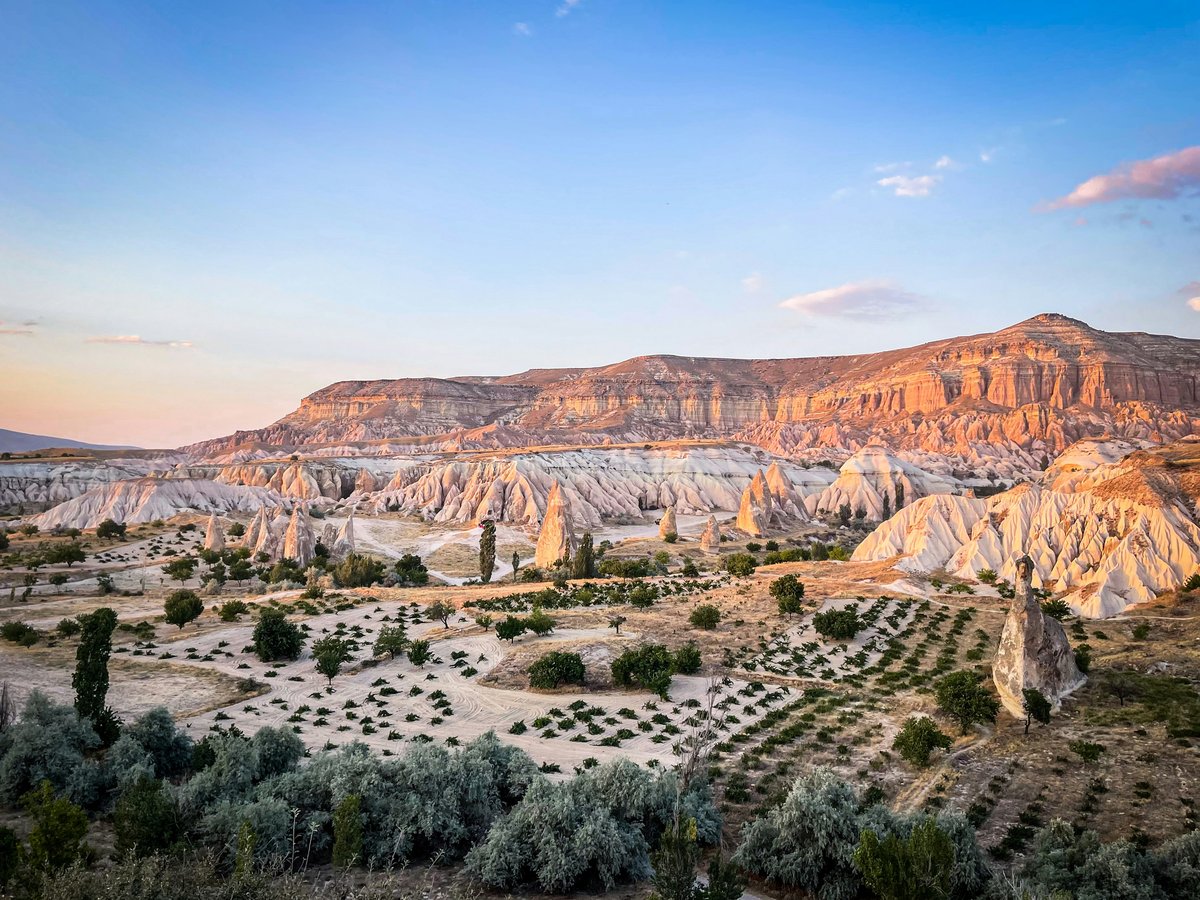
Cappadocia is not a single city but a region spread across several small towns in central Turkey's Nevsehir Province. The shopping here reflects that geography. Goreme, Avanos, Urgup, and Uchisar each have their own commercial personality, and what you'll find tends to be rooted in crafts that go back centuries. Avanos has been a pottery town since the Hittite period, roughly 4,000 years, thanks to the red clay deposits along the Kizilirmak River. Onyx and alabaster carving remains a living trade in Goreme and Urgup. Hand-woven kilims from the wider Nevsehir region still show up in local shops, though fewer families weave them now than a generation ago. Worth noting, Cappadocia is a relatively small market compared to Istanbul's Grand Bazaar or Antalya's sprawl. That works in your favor. Shopkeepers here tend to be less aggressive, prices start closer to what locals pay, and you're more likely to meet the person who made what you're buying. The tourist season runs roughly April through November, and shops in Goreme adjust their hours and stock accordingly. Off-season visitors in December or January might find half the storefronts shuttered, but the workshops in Avanos stay open year-round.
Shopping districts
-
Goreme Town Center
mid-range to tourist-inflatedThe main commercial strip in Goreme runs along Muze Caddesi, the road between the otogar and the Open Air Museum. You'll find maybe 40 or 50 shops packed into a few hundred meters, most of them selling ceramics, textiles, Turkish lamps, and leather goods. It feels a bit like a village high street that got stretched by tourism. The shops closest to the Open Air Museum end tend to mark up by 20 to 30 percent over what you'd pay deeper in town. A few rug dealers here carry genuine Cappadocian kilims alongside cheaper machine-made imports from Kayseri. You can usually tell by flipping the rug over. If the pattern looks identical on both sides, it was likely hand-knotted. Mornings before the tour buses arrive, around 8 to 9, are the quietest time to browse.
Best for: Ceramics, Turkish lamps, kilims, and quick souvenir shopping near the Open Air Museum
-
Avanos Old Town
budget to mid-rangeAvanos sits about 8 kilometers north of Goreme on the banks of the Kizilirmak, Turkey's longest river. The old town center around the Ulu Cami neighborhood is where the pottery workshops cluster. Some families here are fifth or sixth generation potters. The clay comes from the riverbed, a distinctive terracotta red that turns ochre when fired. You'll find workshops where you can watch potters throw on a kick wheel, and the pieces you buy might still be warm from the kiln. Prices in Avanos run noticeably lower than Goreme for comparable ceramics. A hand-painted bowl that goes for 150 to 200 lira in a Goreme gift shop might be 80 to 120 lira at the workshop that made it. The town also has a cluster of hair pottery shops near the river, a local oddity where visitors donate a lock of hair in exchange for a small ceramic piece. Mind you, the commercial pottery factories on the outskirts cater to bus tours and tend to push higher-end sets.
Best for: Handmade pottery direct from workshops, red clay ceramics, and watching artisans work
-
Urgup Town Square and Temenni Tepesi Area
mid-rangeUrgup has a different feel from Goreme. It is a proper Turkish town where locals outnumber tourists in most shops. The commercial center fans out from Cumhuriyet Meydani, the main square. You'll find carpet dealers with more serious stock here, some of them old family businesses that supply shops across the region. The streets climbing toward Temenni Tepesi, the hilltop with the Seljuk tomb, have a handful of antique and curio shops selling Ottoman-era copperwork, old kilims, and vintage jewelry. The local wine scene adds another dimension. Cappadocia's volcanic tuff soil grows Emir and Kalecik Karasi grapes, and several Urgup shops sell bottles from Turasan, Kocabag, and smaller producers. A bottle of decent local wine runs about 150 to 300 lira. Urgup's weekly market on Saturdays is where farming families from surrounding villages come to trade.
Best for: Serious carpet buying, local wines, antiques, and the weekly village market
-
Uchisar Castle Village
mid-range to upscaleUchisar clusters around the base of its castle rock, the tallest fairy chimney in Cappadocia at roughly 60 meters. The handful of shops here are quieter and slightly more curated than Goreme's strip. A few sell handmade felt goods and natural dye textiles. The village has attracted a small community of artisans over the past decade, partly drawn by the lower rents compared to Goreme. You might stumble across a workshop selling hand-carved onyx chess sets or alabaster lamps. The foot traffic is thinner, so shopkeepers tend to be more relaxed about bargaining. Uchisar is also where the French-speaking expat community has settled, and a couple of the shops reflect that sensibility with cleaner displays and fixed prices.
Best for: Curated artisan goods, onyx carvings, and quieter browsing away from tour groups
-
Mustafapasa Village
budget to mid-rangeMustafapasa, about 6 kilometers south of Urgup, was historically a Greek Orthodox village called Sinasos until the 1923 population exchange. The old Greek stone houses give it a distinct architectural character. Shopping here is minimal but specific. A women's cooperative sells hand-knitted socks, scarves, and small woven items at prices that seem to start around 50 to 100 lira for socks. The village also has a couple of small galleries showing local painters. Mustafapasa is not a place to shop for an afternoon. It is a place to find one or two things you won't see anywhere else in the region.
Best for: Handmade textiles from the women's cooperative, and village atmosphere
Markets
-
Urgup Saturday Market (Pazar)
food and general goodsThis is the real weekly market for Urgup and the surrounding villages. Local farmers bring produce, dried fruits, spices, homemade tarhana soup mix, and wheels of tulum cheese aged in goatskin. The textile section sells practical goods like headscarves, work trousers, and household fabric by the meter. It smells like dried peppers and fresh flatbread. The market sets up in an open lot near the center of town and runs from early morning until early afternoon. Tourists do come, but the crowd is mostly local families stocking up for the week. Prices are low and fixed. Nobody bargains at the pazar. A kilo of sun-dried apricots might run 60 to 100 lira depending on the season.
Every Saturday, roughly 7:00 to 14:00
-
Goreme Wednesday Market
food and householdA smaller weekly pazar that sets up in Goreme midweek. The selection leans toward produce, olives, honey, nuts, and household items. It is noticeably more compact than Urgup's Saturday version. Local vendors sell Cappadocian dried peppers, which have a smoky sweetness from being strung and air-dried on the fairy chimney rock faces. You might find a few stalls with handmade dolls or crocheted items. The market draws a mix of guesthouse owners buying breakfast supplies and tourists who happen to be in town on the right day.
Every Wednesday morning
-
Avanos Pottery Workshops and Courtyard Displays
artisanAvanos does not have a formal artisan market, but the cluster of workshops along the old town streets functions as one. Potters set their wares out on the pavement and in open courtyards. You can walk from studio to studio comparing styles. Some specialize in traditional Seljuk and Iznik-revival patterns. Others work in more contemporary forms. The clay dust hangs in the air and the kilns put out a dry, mineral heat you can feel from the street. Thursday tends to be active because of the local weekly market cycle, though the workshops are open most days. This is one of the few places in Turkey where you can buy a piece of pottery and watch it being made on the same visit.
Daily, typically 9:00 to 18:00, with some workshops open later in summer
-
Goreme Souvenir Bazaar Area
souvenir bazaarThe stretch of shops between the bus station and the mosque in Goreme has the densest concentration of souvenir stalls in the region. It is not a covered bazaar in the Istanbul sense but rather a row of small shops spilling onto the sidewalk. Turkish lamps with colored glass panels dominate the visual landscape. Leather goods, evil eye beads (nazar boncugu), textiles, and magnets round out the stock. The quality varies. Some shops carry factory-made goods from Denizli or Gaziantep, while others stock locally produced ceramics. The test is weight. Locally made Avanos pottery tends to be heavier and slightly irregular. Mass-produced pieces are lighter and perfectly uniform.
Daily, roughly 9:00 to 22:00 in peak season, shorter hours off-season
Souvenirs worth bringing home
The genuinely local purchases in Cappadocia come down to a short list. Avanos pottery is the headliner. A hand-painted plate or bowl made from Kizilirmak River clay is something you won't find replicated elsewhere in Turkey. Look for the characteristic red-brown base color and slight weight in the hand. Onyx and alabaster carvings are the other regional specialty. Cappadocia sits on volcanic deposits that produce a translucent honey-colored onyx. Small carved pieces like eggs, bowls, or chess sets come from local workshops in Goreme and Uchisar. Cappadocian wine is an underrated pick. The region's volcanic tuff soil produces distinctive whites from the Emir grape and reds from Kalecik Karasi. Turasan winery in Urgup has been producing since 1943. Bottles travel well and cost a fraction of what you'd pay for comparable European wines. Dried goods make easy, lightweight souvenirs. Sun-dried apricots from the Nevsehir region, dried peppers strung on twine, and local tarhana (a fermented grain and yogurt soup base) all pack flat and last for months. Hand-knotted kilims remain available but require more caution. Genuine Cappadocian kilims use natural dyes and wool from local sheep. They tend toward geometric patterns in muted reds, browns, and creams. A small authentic piece might start around 500 to 1,000 lira. Be skeptical of anything claimed to be antique without documentation. Nazar boncugu, the blue glass evil eye beads, are made across Turkey, not specifically in Cappadocia, but they've become a regional staple in gift shops. The glass ones from Izmir workshops are considered higher quality than the plastic versions.
Practical tips
- Bargaining
- Bargaining is normal in Cappadocia's tourist-facing shops but not at weekly pazars or grocery stores. In Goreme's souvenir strip, the first quoted price tends to be 30 to 50 percent above what the seller expects to receive. A reasonable approach is to counteroffer at about 60 percent of the asking price and meet somewhere in the middle. In Avanos pottery workshops, margins are thinner and haggling is gentler. Asking for a discount on multiple items is more effective than grinding on a single piece. In Urgup's carpet shops, bargaining is a longer ritual involving tea. That tea is not a commitment to buy.
- Payment Methods
- Cash in Turkish lira gets the best prices at small shops and market stalls. Most established shops in Goreme and Urgup accept Visa and Mastercard, though some add a surcharge of 2 to 5 percent for card payments. ATMs are available in Goreme, Urgup, and Avanos town centers. Ziraat Bankasi and Garanti BBVA machines tend to have the most reliable uptime. Some larger carpet dealers accept euros or dollars but at unfavorable exchange rates. Apple Pay and contactless payments have become more common since 2023, particularly in Goreme.
- Tax Refunds
- Turkey's VAT (KDV) rate is 20 percent on most goods. Non-resident tourists can claim a refund on purchases over 2,000 lira from a single shop, provided the shop participates in the Tax Free program and issues a tax-free form at the time of purchase. You'll need your passport. The refund is processed at the airport on departure, at customs counters before check-in. Allow at least 30 to 45 extra minutes for this process at Istanbul or Ankara airports. Not all Cappadocia shops are enrolled, so ask before assuming.
- Opening Hours
- Most shops in Goreme open around 9:00 and close between 20:00 and 22:00 during summer (May through October). Winter hours shrink to roughly 10:00 to 18:00, and some shops close entirely from December through February. Avanos workshops tend to keep steadier hours year-round, typically 9:00 to 18:00. Urgup shops follow standard Turkish retail hours of about 9:00 to 19:00. Weekly markets start early, around 7:00 to 8:00, and wind down by 14:00.
- Shipping Purchases Home
- Larger items like carpets or ceramic sets can be shipped by most established dealers. PTT, Turkey's postal service, has offices in Goreme and Urgup. A 5-kilogram package to Europe or North America costs roughly 300 to 500 lira via PTT and takes 2 to 4 weeks. Some carpet shops offer their own shipping, sometimes included in the purchase price for higher-value rugs. Get a tracking number regardless of the carrier. For fragile ceramics, Avanos workshops are generally practiced at packing for transit. Still, carrying hand luggage is safer for anything small enough.
- Authenticity
- The main risk in Cappadocia shopping is factory-made goods sold as handmade. For pottery, check the base for slight irregularities and ask to see the workshop. Machine-made pieces have perfectly smooth bottoms. For kilims, flip to the back and look for knot consistency. Genuine hand-knotted pieces show slight variations. Chemical dyes produce very bright, uniform colors while natural dyes have subtle variation within a single hue. Onyx carvings should feel cool and heavy. Resin imitations are lighter and warmer to the touch. If a seller claims something is antique, ask for a certificate of origin. Turkish customs can seize undocumented antiquities at the airport.
FAQ
Is Cappadocia good for carpet and rug shopping compared to Istanbul?
The selection in Cappadocia is smaller than Istanbul's Grand Bazaar, but that can work in your favor. Urgup has several established carpet dealers with strong regional stock, particularly Cappadocian kilims in geometric patterns with natural dyes. Prices tend to be 10 to 20 percent lower than Istanbul for comparable pieces because rents and overhead are lower. You're also more likely to buy directly from a family dealer who knows the provenance of each rug. That said, if you want a huge variety of styles from across Turkey and Central Asia, Istanbul still has more range.
What are the best days of the week to shop in Cappadocia?
Saturday is the standout for Urgup's weekly pazar, which is the largest open-air market in the region. Wednesday morning has Goreme's smaller weekly market. For Avanos pottery workshops, any weekday works, though Thursday tends to draw more local traffic. Weekdays in general are quieter for browsing Goreme's souvenir strip, since most tour groups arrive on weekends and during the ballooning hours between 5:00 and 8:00 in the morning.
Can I bring pottery and ceramics in my airline carry-on luggage?
Small pottery pieces like bowls, plates, and cups can go in carry-on luggage. Wrap each piece individually in clothing or bubble wrap. Most Avanos workshops will wrap purchases for you if you ask. Turkish airlines and Pegasus generally allow 8 kilograms of carry-on weight, so plan accordingly. For larger or heavier items, checked luggage or shipping through PTT is the safer bet. There are no customs restrictions on taking modern ceramics out of Turkey.
Do Cappadocia shops accept US dollars or euros?
Some larger shops and carpet dealers in Goreme and Urgup will accept dollars or euros, but the exchange rate they offer is typically 5 to 10 percent worse than what you'd get at an ATM. Turkish lira is always preferred and gets the best price. ATMs in Goreme, Urgup, and Avanos dispense lira. Decline the dynamic currency conversion option at ATMs, which locks in a poor rate. Pay in lira whenever possible.
How can I tell if Cappadocian pottery is genuinely handmade?
Genuine Avanos pottery made from Kizilirmak River clay has a distinctive reddish-brown base color before glazing. The pieces feel heavier than factory-made equivalents and show slight asymmetries on the base and rim. Turn the piece over. A hand-thrown pot will have faint concentric rings on the bottom from the wheel, while machine-made pieces are perfectly smooth. If you buy directly from a workshop in Avanos, you can usually watch the potter make a similar piece on the spot. The painted designs on handmade pieces show minor brush variations, while printed patterns are perfectly uniform.
Last verified by automated review (v1.7.2) on . What is automated review?