Compare every Turkey city in July →
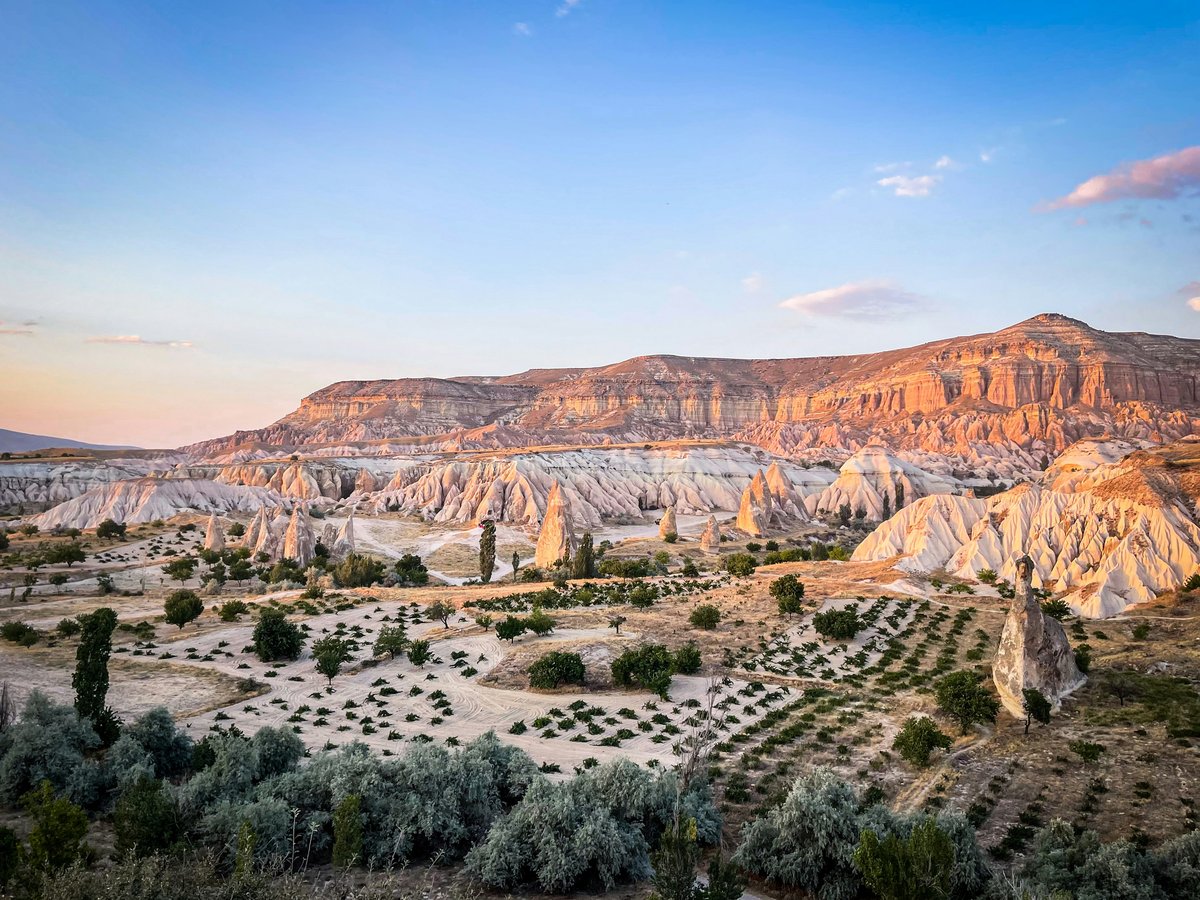
July in Cappadocia means dry heat, cloudless skies, and the largest tourist crowds of the year. Daytime temperatures typically reach 30.7°C (87°F), and the volcanic tuff of the fairy chimneys radiates warmth well into the evening. Rainfall is practically zero, averaging 2mm for the entire month. The Göreme valley floor shimmers by noon, and the stone paths through Rose Valley feel hot underfoot by mid-morning. This is peak season at its most concentrated, and you will notice it in the queues at the Göreme Open-Air Museum, the sold-out balloon manifests, and the hotel rates in Ürgüp.
That said, July has one quality that keeps drawing visitors despite the heat and prices. The near-zero precipitation and calm summer thermals make hot air balloon launches more reliable than any other month. Pilots across the Göreme launch fields report July cancellation rates below 5%, compared to 30-40% during the rainier spring. Daylight lasts past 8:30pm, giving hikers in Ihlara Valley and Kızılçukur (Red Valley) a wide window. Nights cool to around 15.4°C (60°F), and the 41% humidity keeps Cappadocia's heat from feeling anything like the coastal swelter of Antalya or Bodrum.
The trade-off is honest. You get the most reliable balloon flights and the longest hiking days, but you share them with maximum crowds at the highest prices of the year. If your schedule allows flexibility, September and May deliver comparable weather with far fewer people and 30-40% lower hotel rates.
Why visit in July
- Hot air balloon flights have the highest launch reliability of the year, with cancellation rates below 5% thanks to the dry, stable conditions across the Göreme launch sites.
- Daylight extends past 8:30pm, giving an extra 2-3 hours for hiking Red Valley, Pigeon Valley, and Ihlara Valley compared to winter months.
- The 15°C (27°F) swing between day and night means genuinely pleasant evenings on Ürgüp's terraced restaurant streets after a hot afternoon.
- Zero rain risk means every outdoor activity, from ATV tours through Devrent Valley to sunrise photography at Love Valley, can be planned with near-total confidence.
Worth knowing
- Peak-season crowds are at their annual maximum. The Göreme Open-Air Museum regularly hits its daily visitor ceiling by late morning, and the most popular balloon operators sell out 3-4 weeks ahead.
- Midday temperatures above 30°C (86°F) make exposed hiking between 11am and 4pm genuinely uncomfortable. The volcanic rock amplifies the heat, and shade is scarce across most valley trails.
- Hotel and tour prices hit their yearly high. A standard cave hotel room in Göreme or Uçhisar that runs 800-1,000 TL in May can reach 1,500-2,000 TL in July.
- The landscape is at its driest and most golden-brown. If you were hoping for the green valleys visible in April and May photography, July will look noticeably different.
Best for
Think twice if
July in Cappadocia brings consistently hot, dry days with cool nights. The sky is typically cloudless from sunrise to well past sunset. Mornings start pleasant around 15°C (60°F), but temperatures climb steadily, reaching the low 30s°C (upper 80s°F) by early afternoon. Humidity sits around 41%, which keeps the heat more tolerable than Turkey's Mediterranean coast. Wind tends to pick up in the afternoon across the plateau, carrying fine dust from the dry tuff formations. Rain is almost nonexistent, with only about 2mm falling across the entire month, often in a single brief event if it comes at all.
Seasonal caution
- UV index frequently reaches 9-10 (very high) due to the 1,000m (3,280 ft) plateau elevation and cloudless skies. Sunburn is a real risk even through light clothing during midday hours.
- Afternoon temperatures on exposed valley trails can exceed 35°C (95°F) on the hottest days. Heat exhaustion is a genuine concern on longer hikes through Ihlara Valley or the Red-Rose Valley loop if you start after 10am.
- Morning balloon rides launch around 5:00-5:30am, when ground temperatures still sit at 12-15°C (54-59°F). The contrast with midday heat catches visitors off guard. Dress in removable layers for the pre-dawn ride.
Year-round climate
Averages from the last 5 years.
| Month | Avg high (°C) | Avg low (°C) | Rainfall (mm) |
|---|---|---|---|
| Jan | 7 | -3 | 45 |
| Feb | 6 | -4 | 29 |
| Mar | 11 | -1 | 56 |
| Apr | 19 | 5 | 49 |
| May | 22 | 8 | 49 |
| Jun | 27 | 13 | 32 |
| Jul | 31 | 15 | 2 |
| Aug | 32 | 16 | 7 |
| Sep | 26 | 11 | 20 |
| Oct | 20 | 6 | 17 |
| Nov | 15 | 2 | 34 |
| Dec | 9 | -1 | 38 |
Holidays and festivals in July
Public holidays
- Democracy and National Unity Day(Demokrasi ve Millî Birlik Günü)15 July 2027
Best things to do in July
Hot air balloon ride over Göreme at sunrise
scenicAround 100-150 balloons launch from fields north of Göreme between 5:00 and 5:30am, drifting over the fairy chimney formations, Pigeon Valley, and Uçhisar Castle as the sun rises. Flights last roughly 60-90 minutes and reach altitudes of 300-900 meters (1,000-3,000 ft). Pilots navigate between the rock formations at low altitude, close enough to feel the warmth radiating off the tuff faces.
July's near-zero precipitation and stable morning thermals give the highest launch reliability of any month, with cancellation rates typically below 5%.Booking tipBook 3-4 weeks ahead for July mornings. Confirm your operator's Civil Aviation Authority (SHGM) license. Standard flights run 150-250 EUR per person. Premium options with smaller baskets and longer flight times can reach 350 EUR.
Sunrise hike through Güllüdere (Rose Valley) to Kızılçukur (Red Valley)
hikingA 6-7 km loop trail connecting two of Cappadocia's most photogenic valleys. The route passes cave churches with faded Byzantine frescoes, tunnels carved through pink and orange tuff formations, and a ridge with views toward Uçhisar. The stone shifts color as the sun moves, from pale rose to deep terracotta.
July's early 5:15am sunrise lets you complete the full loop before 9am, ahead of both the heat and the tour groups that arrive around 10am. The dry trail surface is at its firmest and most stable.Booking tipNo booking needed. Start from the Güllüdere trailhead near Göreme. Carry at least 1.5 liters of water per person. The trail is unmarked in sections, so download an offline GPS track beforehand.
Explore Derinkuyu Underground City during midday heat
cultureThe deepest accessible underground city in Cappadocia descends 8 levels and roughly 60 meters (200 ft) below ground. The carved-rock tunnels maintain a steady 13-15°C (55-59°F) year-round, and the air feels cool and damp the moment you step inside. The city housed up to 20,000 people during Byzantine-era raids.
The underground cities become a practical refuge from midday surface temperatures above 30°C. The 15-17°C difference between ground level and the lower chambers is immediately noticeable and welcome.Booking tipArrive before 10am or after 3pm to avoid the densest tour-bus crowds. Entry is approximately 150 TL. Claustrophobic visitors should note that some passages require ducking through narrow tunnels for 10-15 meters.
Sunset ATV ride through Devrent (Imagination) Valley
adventureA 1-2 hour ATV or quad-bike tour through the surreal rock formations north of Göreme, timed for the late-afternoon light when the tuff pillars cast long shadows. The route typically passes the camel-shaped rock, fairy chimney clusters, and open plateau sections where the landscape looks almost lunar. Dust hangs gold in the low-angle light.
July sunsets arrive around 8:15pm, and the hour from 7pm onward drops temperatures to a comfortable 25-27°C (77-81°F). The dry, firm ground makes for better ATV handling than the muddy spring conditions.Booking tipBook same-day at most Göreme agencies, but weekend sunset slots fill up by early afternoon. Expect 400-700 TL per ATV depending on tour length.
Pottery workshop in Avanos
cultureAvanos has been a pottery town since Hittite times, sitting on deposits of red clay from the Kızılırmak (Red River). Several workshops offer 1-2 hour classes where you throw a pot on a wheel and glaze it with traditional Cappadocian motifs. The clay is cool and wet in your hands, a welcome contrast to the dry heat outside.
July's dry air is ideal for the natural drying stage of pottery. Workshop owners in Avanos's old town keep longer summer hours, typically 8am-8pm, and run more frequent drop-in sessions than the winter schedule.Booking tipWalk-ins are usually possible on weekday mornings. The workshops along the Kızılırmak riverfront in central Avanos are the most established. Sessions run 150-300 TL per person.
Milky Way stargazing from the Uçhisar plateau
scenicCappadocia sits at roughly 1,000 meters (3,280 ft) elevation on the Central Anatolian plateau, well away from major light pollution sources. The area around Uçhisar Castle and the viewpoint terraces south of Göreme offers wide-open sky in every direction. The Milky Way core is visible to the naked eye on clear July nights.
July places the Milky Way's galactic center high in the southern sky after 10pm, and the month's near-zero cloud cover means almost every night is usable. Humidity at 41% provides cleaner transparency than the hazier spring months.Booking tipSeveral Göreme-based operators run guided stargazing sessions with telescopes for 300-500 TL. Walk 15 minutes south of Göreme center to escape the town's light spill if going independently.
Early morning walk through Ihlara Valley
hikingA 14 km (8.7 mi) canyon carved by the Melendiz River, with rock-cut churches, green riparian vegetation, and 100-meter (330 ft) canyon walls. The valley floor stays cooler than the plateau thanks to shade from the walls and the flowing water. Roughly 100 rock-cut churches dot the canyon, many with surviving frescoes from the 9th-11th centuries.
The river runs lower in July but still provides a green corridor that contrasts sharply with the parched plateau above. A 7am start lets you hike 3-4 hours in relative shade before the canyon floor heats up. The 360-step descent staircase is dry and stable.Booking tipEntry is approximately 130 TL. Drive or arrange transport to the Ihlara village entrance (south end) rather than Selime, so you hike downstream with the slight gradient. The riverside tea gardens at Belisırma are the only food stop on the trail.
Çavuşin village and the Church of St. John the Baptist
cultureThe old village of Çavuşin sits partially abandoned on a cliff face between Göreme and Avanos. The Church of St. John the Baptist (Çavuşin Kilisesi) contains some of the oldest frescoes in the region, likely dating to the 5th century. The crumbling cliff dwellings around it are open to walk through, with pigeon nests in the empty window frames and the smell of dry stone and wild thyme on the breeze.
July's dry conditions make the crumbling cliff paths in old Çavuşin safer and more navigable than the wetter spring months, when loose tuff becomes slippery. The site draws far fewer visitors than the Göreme museum, even in peak season.Booking tipFree to visit. The church may have a small entry fee of 30-50 TL. Best in the morning light, when the east-facing frescoes are illuminated through the doorway.
What to eat in July
In season: fruit
Kayısı (Cappadocian apricot)
July is peak apricot season in the Nevşehir and Kayseri provinces. Roadside stands along the Ürgüp-Avanos road sell firm, deep-orange kayısı by the kilogram. The local variety tends to be smaller and more intensely flavored than supermarket apricots, with a tart skin and sweet, almost honeyed flesh. You will find them sliced into breakfast spreads at every pension and cave hotel.
Karpuz (watermelon)
Turkish watermelon season peaks in July, and Central Anatolian melons are considered among the sweetest in the country. Vendors set up along the roads between Nevşehir and Göreme with truck beds stacked high. A whole melon runs 30-50 TL. The local habit is to eat it with beyaz peynir (white cheese), the salt playing off the sweetness.
On menus now
Kabak çiçeği dolması (stuffed squash blossoms)
Squash blossoms peak in late June through July across the Cappadocian plateau. Restaurants in Mustafapaşa and Ürgüp stuff them with a rice, herb, and pine nut filling, then braise them in olive oil. They appear on menus only during the 4-6 week blossom window.
Testi kebab (pottery kebab)
Meat, vegetables, and tomato stew slow-cooked inside a sealed clay pot, then cracked open tableside. The tradition is rooted in Avanos pottery culture, and July's influx of visitors means restaurants along Avanos's riverfront put on the most theatrical presentations. The sealed clay traps steam, keeping the lamb tender despite the dry summer air.
Street food peaks
Gözleme at trailhead stalls
Thin flatbread filled with spinach, potato, or ground meat, cooked on a convex iron griddle called a saç. July in Cappadocia brings gözleme to trailhead stalls near Ihlara Valley and the Güllüdere entrance, where village women prepare it fresh for hikers. The dough blisters and crisps on the hot iron, and you can smell the butter from 20 meters away.
What to drink
Ayran
Cold, salted yogurt drink that locals consume by the glass in July's heat. The version served in Cappadocia tends to be thicker and tangier than the bottled commercial kind. Restaurants in Göreme and Avanos often make it fresh, and some add a pinch of dried mint. At roughly 5-8 TL per glass, it is the cheapest way to rehydrate after a valley hike.
Regular events in July
Demokrasi ve Milli Birlik Günü (Democracy and National Unity Day)Free
Turkey's national commemoration of the failed 2016 coup attempt. Public ceremonies take place at the Nevşehir provincial government center and town squares across the region. Shops and some museums may have adjusted hours, and you might see flag displays and evening gatherings in Ürgüp and Göreme centers.
July 15Avanos Çömlek (Pottery) FestivalFree
Summer pottery demonstrations, exhibitions, and open-studio events along the Kızılırmak riverfront in Avanos. Local and visiting ceramicists display work, and several workshops offer discounted trial sessions during festival days. The atmosphere tends toward a relaxed craft fair with tea and live music in the evenings.
Mid-to-late July (dates vary by year)Nevşehir province summer yağlı güreş (oil wrestling) tournamentsFree
Village-level oil wrestling tournaments take place across Nevşehir province during July weekends. Competitors coat themselves in olive oil and grapple on grass fields, often as part of local harvest or holiday celebrations. The atmosphere is more family picnic than formal sporting event, with grilled corn vendors and tea sellers around the perimeter.
Weekends throughout July (village-specific scheduling)Best places this July
Göreme Open-Air Museum
museumThe UNESCO-listed complex of rock-cut churches and monasteries with Byzantine frescoes dating from the 10th to 12th centuries. In July, arrive before 9am to walk the site with minimal company before the first tour buses around 9:30am. The Karanlık Kilise (Dark Church) inside the complex charges an extra fee but holds the best-preserved pigment colors, partly because the small entrance limited light damage over centuries. By 10:30am in July, the main pathway can feel like a queue.
GöremeUçhisar Castle
viewpointThe highest point in Cappadocia, a natural rock citadel riddled with tunnels and chambers. The 360-degree view from the top takes in Erciyes Dağı (Mount Erciyes, 3,917m) to the east and the wide plateau to the south. In July, climb before 8am or after 6pm. Midday on the exposed summit, with no shade and heat radiating off the rock, is genuinely unpleasant.
UçhisarMustafapaşa (old Sinasos)
neighborhoodA quiet former Greek village 6 km south of Ürgüp, with stone mansions, carved facades, and the Sinasos church. Mustafapaşa draws a fraction of Göreme's foot traffic even in July. The village's small restaurants serve home-style Cappadocian cooking, and the evening calm on the main square feels like a different region entirely from the Göreme tourist strip.
MustafapaşaKaymaklı Underground City
museumThe second-deepest underground city after Derinkuyu, with 4 accessible levels and a constant interior temperature around 13°C (55°F). Kaymaklı tends to draw slightly fewer tour buses than Derinkuyu in July, making the narrow tunnels less claustrophobic. The ventilation shafts, storage rooms, and communal kitchen areas give a clear sense of how thousands lived underground for months at a time.
KaymaklıPaşabağ (Monks Valley)
natural landmarkA cluster of multi-headed fairy chimneys and a monk's retreat carved into a triple-capped formation. The site sits off the Göreme-Avanos road and takes about 30-45 minutes to walk through. In July, the pale tuff glows almost white in the afternoon sun, and the formations cast dramatic pointed shadows across the dusty ground. A small tea stand near the entrance sells fresh-squeezed juice.
ÇavuşinOrtahisar Castle and old town
viewpointA rock castle similar in structure to Uçhisar but with a quieter, more local-feeling base town. Ortahisar's old quarter has stone houses, a small market square, and several converted cave restaurants. The town is also a center for cool-storage caves carved into the rock, used for citrus and produce storage for decades. July evenings on the castle approach road, with the low sun hitting the rock face, are worth the 10-minute drive from Göreme.
OrtahisarZelve Open-Air Museum
museumThree interconnected valleys of abandoned cave dwellings, mosques, and churches. Zelve was inhabited until 1952, when rockfall risk forced evacuation. The site is rougher and less manicured than the Göreme museum, with loose rock paths and unrailed cliff edges that feel closer to exploration than tourism. In July, the empty cave interiors are noticeably cool, and the absence of Göreme-scale crowds makes it possible to sit inside a cave church alone with 10th-century frescoes.
Çavuşin
Your packing checklist
Tick items off as you pack. Your progress saves in this browser.
All packed — have a great trip.
Insider tips
The balloon viewpoint everyone photographs from is Aşıklar Tepesi (Lover's Hill) north of Göreme, but in July it is packed with 50-100 people by 5:15am. The terrace behind Uçhisar Castle's south face gives nearly the same angle with a fraction of the crowd. You will need a car or an early taxi to get there by 5am.
Göreme's main street restaurants mark up prices 30-50% over identical food in Ürgüp or Ortahisar. If you are staying in Göreme for the convenience, walk 10 minutes uphill toward the Aydınlı neighborhood above the bus station for meals at closer-to-local pricing.
The Göreme Open-Air Museum sells a separate ticket for the Karanlık Kilise (Dark Church), and many visitors skip it because of the extra cost. The frescoes inside are dramatically better preserved than anything else in the complex. The small doorway that limited light for centuries is exactly why the 11th-century pigments survived.
Ask your hotel about the Avanos Tuesday market (Salı Pazarı) for local produce, dried kayısı, and pottery at village prices. It is 15 minutes from Göreme by dolmuş and feels entirely different from the tourist-facing shops on the main road.
If you are renting a car, fill up in Nevşehir. Fuel stations near Göreme and Uçhisar charge noticeably more per liter, and the nearest 24-hour station is on the Nevşehir-Kayseri highway, about 20 minutes from the tourist core.
Avoid these mistakes
- Scheduling a full-day hiking itinerary through exposed valleys without accounting for the afternoon heat. In July, surface temperatures on unshaded tuff trails can exceed 35°C (95°F) by noon. Start every hike before 7am, and plan an underground city or museum visit for the 11am-4pm window instead.
- Booking a balloon flight for only one morning of a short trip. July has the best launch statistics, but even a 5% cancellation rate means you could lose your only chance. Book flights on two consecutive mornings, with the second as backup. The cost is far less than the regret of missing Cappadocia's signature experience entirely.
- Underestimating the distances between sites and trying to cover everything on foot or by dolmuş. Göreme, Ürgüp, Uçhisar, Avanos, and the underground cities are spread across 30+ km of plateau. Renting a car or scooter gives far more flexibility than relying on the dolmuş schedule, which runs less frequently than you might expect and drops off sharply after 7pm.
- Wearing sandals or open shoes into the underground cities. The carved stone stairs at Derinkuyu are worn smooth over centuries, and the lower levels have damp patches from condensation. Slipping in a narrow passage 40 meters underground is not a theoretical risk.
Practical tips for July
Book balloon flights and cave hotel rooms at least 4 weeks ahead for July dates. Domestic flights from Istanbul to Kayseri (ASR) or Nevşehir (NAV) airports should be reserved 3-4 weeks out, as July fares can reach 2-3 times off-season pricing. The Göreme Open-Air Museum opens at 8:00am in summer, and arriving at opening gives you roughly 90 minutes before the first tour bus wave. Most outdoor activities should be front-loaded into the early morning. Plan underground cities, pottery workshops, or indoor museum visits for the 11am-4pm heat window. Restaurants in Göreme and Ürgüp stay open later in July, with most kitchens serving until 10:30-11pm. Dress modestly when visiting active mosques and some church sites, covering shoulders and knees. The dolmuş (shared minibus) between Göreme, Avanos, Ürgüp, and Nevşehir runs roughly every 30 minutes during summer daylight hours, but service drops sharply after 7pm. Renting a car from Göreme or Ürgüp agencies gives far more flexibility, and July's bone-dry roads make driving straightforward. Tap water in Cappadocia is technically safe but heavily mineralized and tastes strongly of calcium. Locals and visitors overwhelmingly drink bottled water, available everywhere for 5-10 TL per 1.5L.
FAQ
Is July a good time to visit Cappadocia?
July is a good but not ideal time. The main advantage is near-perfect reliability for hot air balloon flights, with cancellations below 5% thanks to the dry, stable weather. The main drawbacks are peak-season crowds at all major sites, the highest accommodation and tour prices of the year, and daytime heat that regularly reaches 30-31°C (87-88°F). If you can only travel in summer, July works well as long as you plan around the heat by starting mornings early and using underground cities or museums as midday retreats. If you have schedule flexibility, September and May offer similar conditions with significantly fewer visitors and lower prices.
What is the weather like in Cappadocia in July?
July averages a high of 30.7°C (87°F) and a low of 15.4°C (60°F), with essentially no rainfall at 2mm for the month. Humidity is a moderate 41%. Days are hot and dry under cloudless skies, but the low humidity makes the heat less oppressive than coastal Turkish cities like Antalya or Bodrum. Nights cool down considerably, often requiring a light jacket for pre-dawn balloon rides. The 15°C swing between day and night is one of July's defining characteristics. UV is intense at Cappadocia's 1,000m elevation, so sun protection matters.
Is Cappadocia crowded in July?
Yes, July is the busiest month of the year. The Göreme Open-Air Museum, balloon launch sites, and popular viewpoints like Aşıklar Tepesi all see their highest visitor numbers. Tour buses arrive in waves from around 9:30am at the major sites. The impact is manageable with planning. Arrive at museums and trailheads at opening time, eat at restaurants outside the Göreme main strip, and explore quieter alternatives like Mustafapaşa, Zelve, and Ortahisar when the crowds at Göreme peak around midday.
How far in advance should I book a balloon flight for July in Cappadocia?
At least 3-4 weeks ahead for July dates. The most reputable operators with smaller basket sizes (16-20 passengers versus 28-32) fill up first. Expect to pay 150-250 EUR per person for a standard flight, or up to 350 EUR for premium options with smaller baskets and longer flight times. Book with an SHGM-licensed operator and confirm their cancellation and rebooking policy in writing before paying.
What should I wear in Cappadocia in July?
Dress in layers for the 15°C day-night swing. Early mornings (5-7am) sit at 12-15°C, so you will want a fleece or light jacket for balloon rides and sunrise hikes. By 10am you will be down to a t-shirt or lightweight long-sleeve. Breathable fabrics like linen or moisture-wicking synthetics handle the dry heat better than cotton. Sturdy closed-toe shoes with good tread are essential for the rocky, uneven trails through the valleys and underground cities. Modest clothing that covers shoulders and knees is expected at active mosques and some church sites.
Things to Do in Cappadocia in July

Cappadocia Hot Air Balloon Ride / Royal Balloon
Outdoor experience: 3.5 hours.
via Viator Free cancellation
 Full Day Cappadocia Tour( Red Tour + Underground City )
Day trip: free cancellation.
via Viator Free cancellation
 Cappadocia Hot Air Balloon Tour Over Fairychimneys
Outdoor experience: 3 hours, free cancellation.
via Viator Free cancellation
 Original Green Tour Ihlara Valley, Underground City & Monastery
Outdoor experience: 7.8 hours, free cancellation.
via Viator Free cancellation
 Cappadocia Green Tour - Classic Route (Popular)
Day trip: free cancellation.
via Viator Free cancellation
 Cappadocia Customizable Private Tour with Guide and Vehicle
Day trip: free cancellation.
via ViatorFind a flight to Cappadocia
Live fares to Cappadocia appear here once cookies are accepted.
Last verified by automated review (v1.7.2) on . What is automated review?