Compare every Turkey city in February →
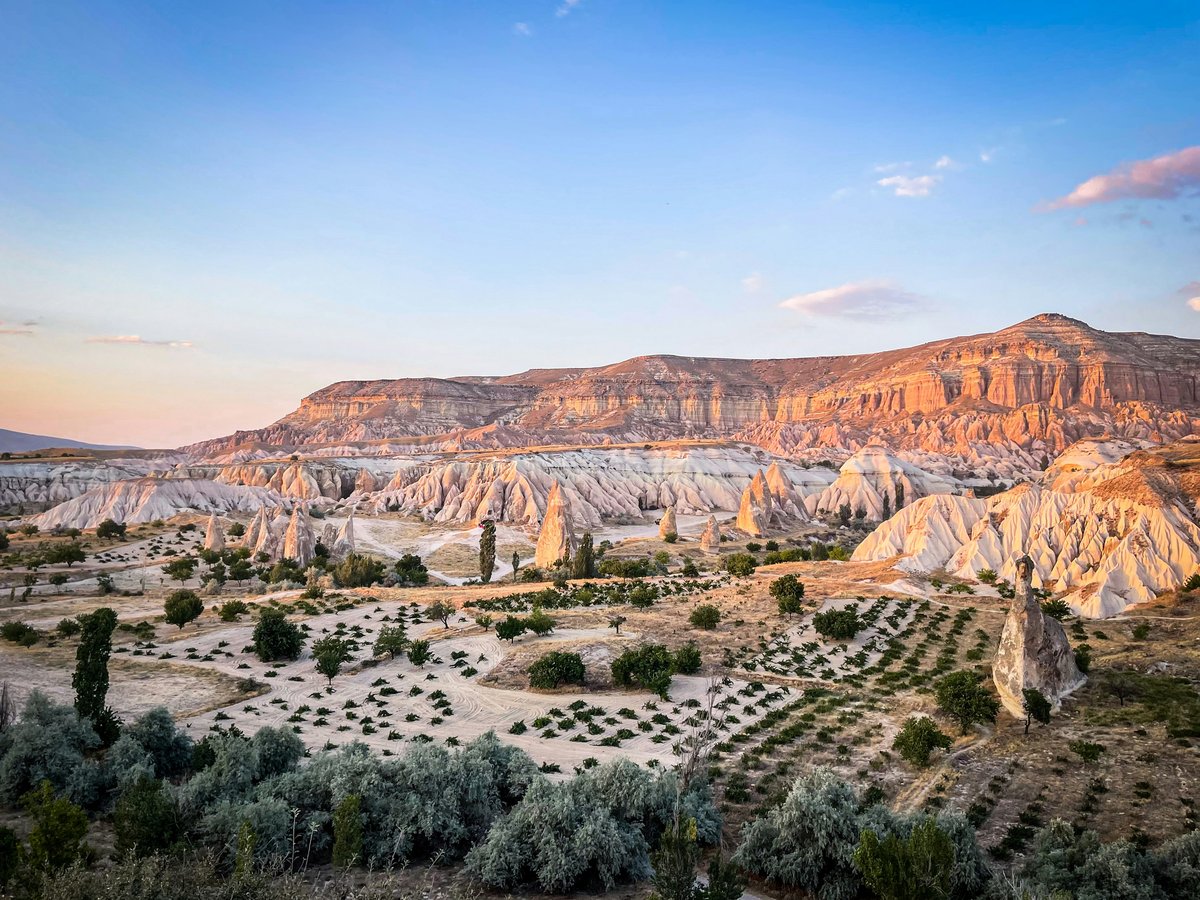
February in Cappadocia is a gamble, and the stakes are your hot air balloon ride. Winter weather grounds flights on roughly 40-50% of mornings this month, compared to near-daily launches between May and October. If you've planned your entire trip around that sunrise float over the Göreme valley, February will test your patience. Expect daytime highs around 6°C (43°F) and overnight lows near -4.5°C (24°F), with a real chance of snow blanketing the rock formations and cave dwellings across the region.
The upside is tangible if you can handle the cold. Cave hotels in Göreme and Ürgüp that run 200-300 euros per night in September might cost 80-120 euros in February. You'll likely have the Göreme Açık Hava Müzesi and underground cities like Derinkuyu to yourself. Snow-dusted fairy chimneys against a grey Central Anatolian sky are, to be fair, some of the most striking winter scenery in Turkey. Fewer than 5 rainy days are typical, and the 29mm of monthly precipitation often falls as snow rather than rain at higher elevations.
Mind you, February is not a month for 15-kilometer valley treks or outdoor restaurant terraces. Several restaurants in smaller villages like Çavuşin and Mustafapaşa keep reduced hours or close entirely. Trails through Ihlara Valley can ice over without warning. February tends to work best as a 3-4 day trip focused on underground cities, cave churches, pottery workshops in Avanos, and hoping for that one clear balloon morning.
Why visit in February
- Snow-covered fairy chimneys create rare winter photography opportunities that only appear from December through February. The contrast of white snow against the tuff formations around Paşabağ and Love Valley draws serious photographers from across Europe.
- Cave hotel rates in Göreme and Ürgüp drop 40-60% from the September-October peak, making luxury cave rooms genuinely affordable.
- The Göreme Açık Hava Müzesi, Derinkuyu, and Kaymaklı see a fraction of their summer foot traffic. In February, you can study 11th-century Byzantine frescoes in the Karanlık Kilise without being herded through by a tour group.
- On the mornings balloons do fly, you'll share the sky with 20-30 balloons instead of the 100-150 that launch on peak summer mornings. The views are less cluttered, and the snow-covered landscape below is genuinely different from the ochre tones of autumn.
Worth knowing
- Hot air balloon cancellations run 40-50% in February due to wind, snow, and low visibility. If you have only 1-2 nights, you may leave without flying at all.
- Overnight temperatures regularly drop below -4°C (24°F), and cold snaps can push lows to -10°C (14°F). This is genuine Central Anatolian winter, not a mild Mediterranean chill.
- Restaurants and shops in smaller villages like Çavuşin, Ortahisar, and Mustafapaşa operate on reduced hours or close entirely during deep winter.
- Valley hiking trails around Rose Valley, Love Valley, and Ihlara Valley can be icy and dangerous, particularly on north-facing slopes and in early morning before any thaw.
Best for
Think twice if
February in Cappadocia is proper Central Anatolian winter. Daytime highs sit around 6.2°C (43°F), which feels colder on the exposed plateau where wind cuts across the valleys with nothing to block it. Nights regularly drop to -4.5°C (24°F), and cold snaps can push lows below -10°C (14°F). Snowfall is common, though accumulation varies from year to year. Some Februaries bring a thick blanket that lasts weeks, others see only brief dustings that melt by afternoon. The 29mm of monthly precipitation falls across roughly 5 days, often as snow at higher elevations around Uçhisar and as cold rain on the valley floors near Göreme. Humidity sits around 68%, which is not oppressive but adds a damp chill to the already cold air. Cloud cover is frequent, though clear mornings do appear, and those are the days the balloons fly.
Seasonal caution
- Overnight temperatures regularly drop below -4°C (24°F), with cold snaps pushing lows to -10°C (14°F) or colder. Hypothermia risk is real if you're caught underdressed on valley trails as afternoon light fades and temperatures plunge.
- Black ice forms on roads and trails between Nevşehir, Göreme, and the valley paths, especially in early morning and after sunset. If driving, confirm your rental car has winter tires before leaving the airport.
- Balloon flights at altitude expose passengers to temperatures 5-10°C colder than ground level. At 300 meters above the valley floor, a ground reading of 0°C feels closer to -8°C (18°F) with wind. Dress for well below freezing if you secure a flight.
Year-round climate
Averages from the last 5 years.
| Month | Avg high (°C) | Avg low (°C) | Rainfall (mm) |
|---|---|---|---|
| Jan | 7 | -3 | 45 |
| Feb | 6 | -4 | 29 |
| Mar | 11 | -1 | 56 |
| Apr | 19 | 5 | 49 |
| May | 22 | 8 | 49 |
| Jun | 27 | 13 | 32 |
| Jul | 31 | 15 | 2 |
| Aug | 32 | 16 | 7 |
| Sep | 26 | 11 | 20 |
| Oct | 20 | 6 | 17 |
| Nov | 15 | 2 | 34 |
| Dec | 9 | -1 | 38 |
Best things to do in February
Hot air balloon ride over snow-covered Cappadocia
scenicThe fairy chimneys, valleys, and cave dwellings look entirely different under snow. February balloon flights carry fewer passengers and share the sky with 20-30 balloons instead of the 100-150 you'll see in peak summer. The landscape below is muted whites and greys rather than the warm ochres of autumn. It's a quieter, more intimate experience, though the cold at 300 meters altitude in an open basket means dressing for roughly -10°C (14°F).
Snow-covered landscape is only visible December through February, and February's lower precipitation (29mm vs January's 45mm) offers slightly better odds of a clear morning.Booking tipBook for the first morning of your stay so weather cancellations leave you backup mornings. Choose a company that offers free rescheduling rather than the cheapest option.
Derinkuyu Underground City exploration
historyThis 8-level underground city extends about 60 meters below the surface and once sheltered roughly 20,000 people. The tunnels, storage rooms, wine cellars, and ventilation shafts are fascinating in any season, but February adds a practical comfort. The constant underground temperature of 7-8°C (45-46°F) is warmer than the surface air. You'll shed a layer going in, not add one.
The constant 7-8°C underground temperature is warmer than February's surface air, making the 1-2 hour exploration comfortable rather than sweltering (as it can be in July-August).Booking tipGo early morning to avoid overlap with the small number of tour groups that still operate in winter. No advance booking needed in February.
Snow photography at Paşabağ and Love Valley
photographyPaşabağ's mushroom-shaped fairy chimneys and the tall, slender rock pillars of Love Valley take on a completely different character under fresh snow. The white covering emphasizes the organic, sculptural shapes of the tuff formations. February light tends to be soft and diffused through thin cloud, which works well for the pink and cream tones of the rock.
Snow on the fairy chimneys is a narrow 2-3 month window. February's lower total precipitation means more dry intervals between snowfalls for shooting.Booking tipHire a private guide with a car rather than joining a group tour. You'll need flexibility to chase clear weather windows, which can open and close within hours.
Pottery workshop in Avanos
culturalAvanos sits on the Kızılırmak river and has been a pottery town for centuries. The red clay from the riverbanks is still used in the workshops that line the old town. In February, the workshop interiors are warm from continuously firing kilns, and the potters have genuine time to walk you through throwing and glazing rather than rushing through 15-minute tourist demonstrations.
Fewer tourists means potters offer unhurried, genuinely instructional sessions rather than the quick, assembly-line demos of summer. Kiln-heated workshops are a welcome refuge from the cold.Booking tipWalk in rather than booking through your hotel. Hotels mark up workshop fees by 30-50%. Head to the workshops along the main street of Avanos's old quarter.
Göreme Açık Hava Müzesi without crowds
historyThis UNESCO World Heritage site contains some of the finest Byzantine cave churches in Turkey, with frescoes dating to the 10th and 11th centuries. The Karanlık Kilise (Dark Church) is the highlight, with remarkably preserved color in its small, dim interior. In summer, tour groups cycle through in tight 15-minute windows. In February, you might be the only visitor in the Dark Church for 20 minutes.
Summer visitor numbers at this site reach thousands per day. February drops to a fraction of that, allowing unhurried study of the cave church frescoes.Booking tipThe Karanlık Kilise requires a separate ticket beyond the main museum entry. In February, the extra cost is worth it since you'll likely have the chamber to yourself.
Turkish hamam experience
wellnessCappadocia has several traditional hamams in Göreme, Ürgüp, and Avanos. The experience involves a steam room, a vigorous scrub on a heated marble slab (göbektaşı), and a soap-foam massage. The heat contrast between the hamam's 40°C (104°F) interior and February's freezing outdoor air makes the warmth feel more intense and the relaxation deeper.
The cold-to-hot contrast after a day of walking through freezing valleys makes the hamam experience physically more rewarding than in the already-warm summer months.Booking tipBook for late afternoon after a day of sightseeing. Most hamams in Göreme take walk-ins in February, but calling ahead ensures your preferred time slot.
Day trip to Erciyes Dağı for skiing
adventureMount Erciyes, a 3,917-meter dormant volcano about 80 kilometers east of Göreme near Kayseri, has developed into a proper ski resort over the past decade. The slopes are less crowded and less expensive than the western Turkish resorts near Bursa. February is peak snow season, and combining 2 days of Cappadocia sightseeing with 1-2 days of skiing is a winter itinerary that few tourists consider.
February is peak snow season at Erciyes. Snow cover at the 2,200-meter base is most reliable in January-February, with powder days more frequent than in the shoulder months of December and March.Booking tipRent equipment at the resort base rather than hauling your own. The drive from Göreme takes about 90 minutes. Start early to maximize slope time.
Kaymaklı Underground City
historyThe largest excavated underground city in Cappadocia extends across 4 open levels (with 4 more closed to visitors). The chambers are wider and the corridors slightly less claustrophobic than Derinkuyu, making it a good alternative if tight spaces bother you. The stone-carved wine presses and communal kitchens give a stronger sense of daily life underground.
Like Derinkuyu, the constant underground temperature around 7-8°C is a February advantage. Virtually no queues at tunnel bottlenecks that can back up for 20 minutes in summer.Booking tipVisit on a weekday morning. Even in low season, Turkish school groups on Yarıyıl Tatili (semester break) occasionally visit on weekends in early February.
What to eat in February
On menus now
Testi kebabı
The signature Cappadocia dish becomes even more satisfying in February's cold. Lamb, tomatoes, peppers, and garlic are sealed inside a clay pot with bread dough, then slow-cooked. The waiter cracks the pot at your table, releasing a rush of hot steam that feels more dramatic when the air outside is near freezing. Every sit-down restaurant in Göreme serves a version.
Mantı
Kayseri, about 75 kilometers east of Göreme, considers itself the mantı capital of Turkey. These tiny Central Anatolian dumplings come topped with garlicky yogurt, dried mint, and sumac-spiced butter. February menus across Cappadocia feature richer, heavier fillings as restaurants lean into winter comfort food.
Tandır çorbası
Slow-cooked lamb broth served in heavy bowls across Cappadocia's winter menus. The meat falls apart after hours in a tandır oven. The soup is thick enough to warm you through an afternoon of walking the underground city tunnels at Derinkuyu or Kaymaklı.
Sucuklu yumurta
Spicy cured beef sausage fried with eggs in a copper pan, a winter breakfast fixture across Central Anatolia. The sucuk in this region is drier and more intensely spiced with cumin and garlic than coastal varieties. February mornings in a Göreme cave hotel typically start with this alongside warm bread and çay.
Kabak tatlısı
Pumpkin dessert baked with sugar and topped with walnuts and clotted cream. Winter pumpkins from the Central Anatolian plateau reach their sweetest in January and February, making this the peak season for the dish. Restaurants in Ürgüp and Göreme serve it as a standard winter dessert.
In markets
Pekmez with tahini
Cappadocia's grape molasses is a winter breakfast tradition, swirled with tahini on fresh bread. The same volcanic soil that formed the fairy chimneys produces concentrated, dark-flavored grapes. Local pekmez from farms around Ürgüp and Avanos tends to be stronger and more complex than mass-produced versions from the coast.
Regular events in February
Valentine's Day tourism peak
Cave hotels in Göreme and Ürgüp market heavily to Turkish couples for the February 14 weekend. Special balloon flight packages, candlelit testi kebab dinners, and romantic cave suite promotions are common. This is the one weekend in February when Cappadocia accommodation approaches moderate-season occupancy levels, though still well below summer.
February 14, with bookings concentrated on the surrounding weekendYarıyıl Tatili (Turkish semester break)Free
Turkish public schools break for 2 weeks, typically spanning late January through the first or second week of February. Domestic families visit Cappadocia during this period, particularly on weekends. The underground cities and the Göreme museum see more foot traffic than the rest of February, though still far less than summer levels.
Typically late January through first two weeks of February (dates shift annually)Ürgüp Çarşamba Pazarı (Wednesday Market)Free
Ürgüp's open-air market runs every Wednesday year-round, including through the coldest weeks of February. Local vendors sell dried apricots, walnuts, pekmez, honey, spices, and winter produce. It's smaller in winter than summer but more authentic, with fewer tourist-oriented stalls and more genuine local commerce. The market sets up in the town center near the Temenni Tepesi area.
Every Wednesday, morning through early afternoonBest places this February
Göreme Açık Hava Müzesi
museumThe UNESCO-listed open-air museum with 10th-11th century cave churches and Byzantine frescoes. February's near-empty galleries let you stand in the Karanlık Kilise (Dark Church) for as long as you want, studying the vivid pigments in quiet rather than being swept along by a tour group. The Tokalı Kilise (Buckle Church) at the entrance has some of the most detailed frescoes and is included in the main ticket.
GöremeDerinkuyu Underground City
historical siteThe deepest accessible underground city in Cappadocia, extending 8 levels and roughly 60 meters below the surface. The constant 7-8°C underground temperature is a genuine relief from February's surface cold. The ventilation shafts, wine cellars, and a subterranean church are all more atmospheric with fewer visitors echoing through the tunnels.
DerinkuyuUçhisar Kalesi
viewpointThe highest point in Cappadocia, this natural rock citadel offers 360-degree views of the surrounding valleys. On a clear February day, you can see the snow-capped summit of Erciyes Dağı (3,917 meters) to the east. The climb is steep and can be icy, so tread carefully, but the panorama of white-dusted fairy chimneys and cave dwellings below is worth the effort.
UçhisarPaşabağ (Monks Valley)
natural landmarkThe mushroom-shaped fairy chimneys here are among Cappadocia's most recognizable formations. Under February snow, the caps of the chimneys collect white drifts that emphasize their surreal profiles. A hermit monk's cave chapel partway up one chimney is accessible via a short scramble, though check footing carefully when the rock is wet or icy.
Between Göreme and AvanosAvanos old-town pottery workshops
culturalThe town of Avanos on the Kızılırmak river has produced pottery from local red clay for over 4,000 years. In February, workshop owners have time for proper instruction. The kiln heat keeps the interiors warm while the rest of the town is cold and quiet. The old quarter along the river has the most traditional workshops, distinct from the tourist-oriented shops on the main road.
AvanosKaymaklı Underground City
historical siteWider corridors and more open chamber layouts than Derinkuyu make Kaymaklı slightly more comfortable for visitors who are uneasy in tight spaces. The carved stone wine presses and communal grain stores give a domestic feel to the underground complex. In February, the usual bottleneck at the narrowest passage between levels 2 and 3 simply does not exist.
KaymaklıTemenni Tepesi (Wish Hill), Ürgüp
viewpointA hilltop viewpoint at the edge of Ürgüp with panoramic views toward Erciyes Dağı and the fairy chimney formations to the west. Less visited than the Göreme panorama points, Temenni Tepesi catches good afternoon light on the snow-capped volcano. February sunsets here tend to be clear and cold, with the mountain turning pink as the light drops.
ÜrgüpZelve Açık Hava Müzesi
museumAn abandoned cave village that was inhabited until 1952, when erosion made it unsafe. The multi-level dwellings, churches, and a small mosque carved into the rock feel more raw and less manicured than Göreme's museum. In February, the silence in the empty valley is almost total. Snow on the eroded pinnacles adds a melancholy beauty, and you will likely be the only visitor.
Near Avanos
Your packing checklist
Tick items off as you pack. Your progress saves in this browser.
All packed — have a great trip.
Insider tips
Book your balloon flight for the first morning of your stay, not the last. If weather cancels it, you still have remaining mornings to try again. February's 40-50% cancellation rate means you need 3-4 potential mornings for reasonable odds of one launch.
The Karanlık Kilise (Dark Church) inside the Göreme Açık Hava Müzesi requires a separate ticket. In summer, the small chamber is uncomfortably packed. In February, you might stand alone with the 11th-century frescoes for 15-20 minutes, which makes the extra fee genuinely worthwhile.
The Wednesday market (Çarşamba Pazarı) in Ürgüp is where locals buy dried apricots, walnuts, pekmez, and honey at a fraction of the price charged in Göreme's tourist-oriented shops. It runs year-round, even through February's coldest weeks.
Ask your cave hotel whether they heat with a central system or individual space heaters. Central heating keeps the room at a steady 20-22°C (68-72°F) all night. Portable heaters in poorly insulated caves can struggle when outdoor temperatures hit -8°C (18°F), and you will wake up cold.
If your balloon gets cancelled, head to Temenni Tepesi (Wish Hill) in Ürgüp for a sunrise view of Erciyes Dağı. The snow-capped 3,917-meter volcano catches first light in a way that makes a solid consolation for a grounded morning.
Avoid these mistakes
- Planning only 1-2 nights and expecting a guaranteed balloon flight. In February, you need at least 3 nights to have reasonable odds of one clear launch morning. A single night means you are probably leaving without flying.
- Choosing the cheapest cave room without checking the heating system. February nights in Cappadocia reach -10°C (14°F) on cold snaps, and some budget cave conversions in Ortahisar or Uçhisar rely on a single portable heater. Spend the extra 20-30 euros per night for proper central heating.
- Wearing smooth-soled shoes on valley trails. Paths through Rose Valley, Love Valley, and the Ihlara gorge freeze overnight and stay slippery through mid-morning. Pack boots with proper tread or skip the valley hikes entirely.
- Driving from Kayseri airport (ASR) to Göreme without confirming winter tires. The 75-kilometer route crosses exposed plateau above 1,000 meters elevation. Turkish rental companies do not always equip winter tires by default, and the road ices over regularly in February. Ask explicitly when you collect the car.
Practical tips for February
Book your balloon flight with a company that offers free rescheduling for weather cancellations rather than choosing the cheapest operator. Given the 40-50% grounding rate in February, flexibility matters more than saving a few euros. Most Göreme-based companies require a deposit and will notify you by 5:00 AM on flight mornings. Check whether your cave hotel has central heating before booking, as some older cave conversions in Ortahisar and Uçhisar lack proper insulation. Both Nevşehir Kapadokya Airport (NAV) and Kayseri Erkilet Airport (ASR) serve the region, with ASR typically having more winter flight options from Istanbul on Turkish Airlines and Pegasus. The drive from Kayseri to Göreme takes about an hour in good conditions but can be longer on icy roads. If you are not driving, arrange a hotel shuttle or use one of the airport transfer minibuses that run year-round. The Müze Kart (museum pass) covers the Göreme Açık Hava Müzesi, Zelve, and the underground cities, and typically pays for itself within 2 visits. Most restaurants in central Göreme stay open through February, but many in Ürgüp, Ortahisar, and outlying villages reduce their hours or close entirely for winter. Ask your hotel for current dinner recommendations rather than wandering.
FAQ
Is February a good time to visit Cappadocia?
February is a fair but not ideal time. The region is at its quietest and cheapest, and snow-covered fairy chimneys are genuinely photogenic. The main drawback is hot air balloon cancellations, which run at roughly 40-50% due to winter weather. If a balloon ride is your primary reason for visiting, you are taking a real gamble. Plan at least 3 nights to improve your odds. If you are more interested in the underground cities at Derinkuyu and Kaymaklı, cave churches at Göreme, and winter photography, February works reasonably well at a significantly lower cost than peak season.
Do hot air balloons fly in Cappadocia in February?
They do fly, but not reliably. Turkey's Civil Aviation Authority (SHGM) controls launch permissions, and high winds, snow, or low visibility will ground all flights. February has a cancellation rate of roughly 40-50%. When flights do go up, the winter landscape with snow-covered valleys and 20-30 balloons instead of 100-150 creates a very different experience from the crowded summer flights. Book with a company that offers free rescheduling and give yourself at least 3 potential mornings.
Does it snow in Cappadocia in February?
Snow is common but not guaranteed every day. The monthly average is 29mm of precipitation across about 5 days, and much of it falls as snow, particularly at higher elevations around Uçhisar and along the plateau. Some years bring heavy snowfall that turns the valleys white for weeks, while others see only light dustings that melt by afternoon. Average lows of -4.5°C (24°F) mean that snow, when it does fall, tends to stick. Pack proper winter gear regardless.
What is the weather like in Cappadocia in February?
Cold. Average highs reach only 6.2°C (43°F), and average lows drop to -4.5°C (24°F). Cold snaps can push overnight temperatures below -10°C (14°F). Monthly rainfall is relatively low at 29mm across roughly 5 days, often falling as snow. Humidity sits at 68%. Wind on the open Anatolian plateau makes the air feel colder than the thermometer suggests. You will need proper winter clothing with thermal layers, a windproof coat, insulated boots, hat, and gloves. It is not extreme by Scandinavian standards, but it is genuinely cold.
Is Cappadocia crowded in February?
No. February is one of the quietest months of the year across the region. You will find few other tourists at the Göreme Açık Hava Müzesi, the underground cities, or on valley trails. The one exception is Valentine's Day weekend around February 14, when domestic Turkish couples book cave hotels for romantic getaways, and the Göreme area sees a brief bump in occupancy. The Turkish school semester break (Yarıyıl Tatili) in early February can bring some family visitors on weekends. Outside those windows, you will often have attractions nearly to yourself.
Things to Do in Cappadocia in February

Cappadocia Hot Air Balloon Ride / Royal Balloon
Outdoor experience: 3.5 hours.
via Viator Free cancellation
 Cappadocia Sunrise Hot Air Balloon Flight / Discovery Balloons
Outdoor experience: 3 hours, free cancellation.
via Viator Free cancellation
 Full Day Cappadocia Tour( Red Tour + Underground City )
Day trip: free cancellation.
via Viator Free cancellation
 Cappadocia Hot Air Balloon Tour Over Fairychimneys
Outdoor experience: 3 hours, free cancellation.
via Viator Free cancellation
 Original Green Tour Ihlara Valley, Underground City & Monastery
Outdoor experience: 7.8 hours, free cancellation.
via Viator Free cancellation
 Cappadocia Green Tour - Classic Route (Popular)
Day trip: free cancellation.
via ViatorFind a flight to Cappadocia
Live fares to Cappadocia appear here once cookies are accepted.
Last verified by automated review (v1.7.2) on . What is automated review?