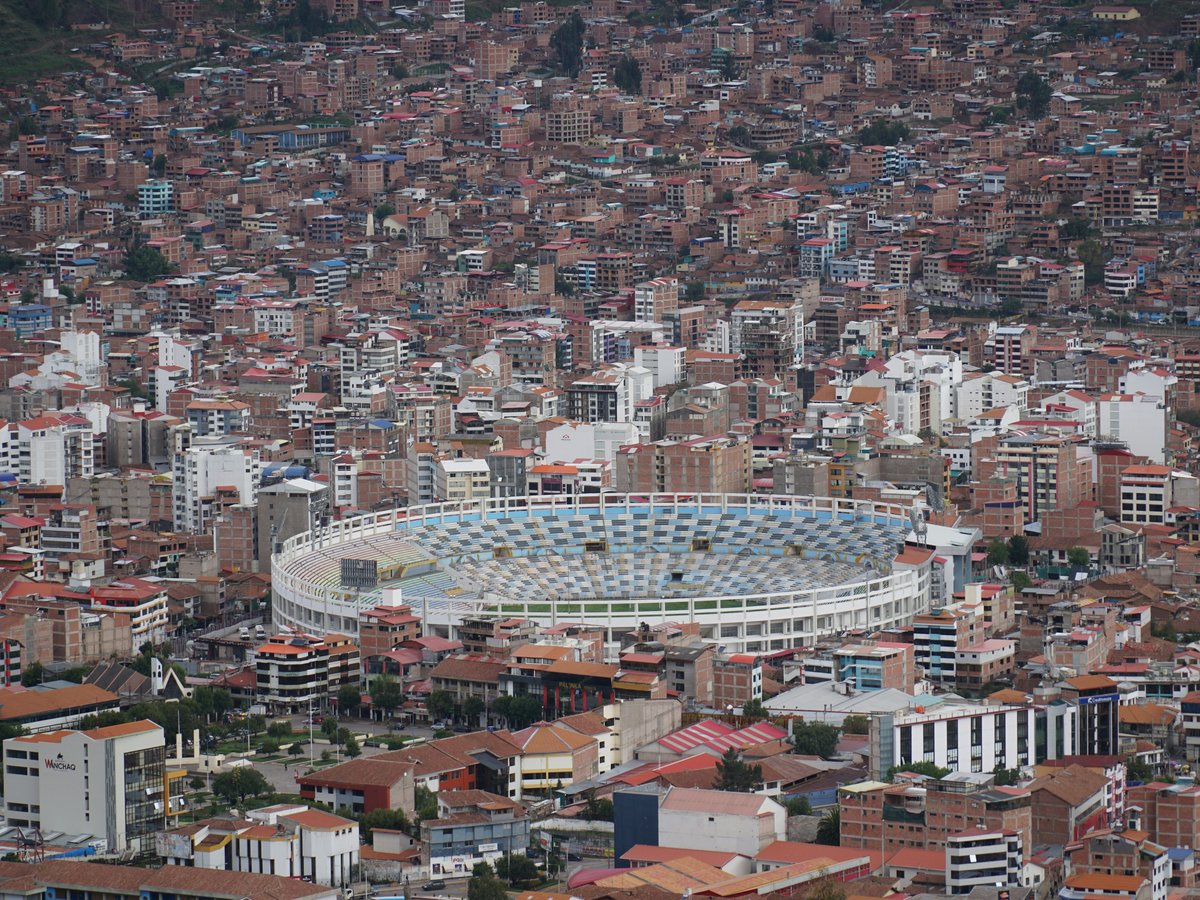
Best Time to Visit Cusco, by Season
Cusco's average daily highs swing only 2.8°C across the entire year, from March's 16.4°C floor to September's 19.2°C peak. The real decision comes down to rain, crowds, cost, and whether you can sleep at 4.5°C in July.
Published
1 Cusco's 2.8-Degree Secret: The Thermometer Barely Moves but the Calendar Changes Everything
The air at 3,400 meters above Cusco has a particular thinness, a clarity that makes afternoon sunlight land harder on your forearms than at sea level. Stand in Plaza de Armas on a September afternoon and the thermometer reads 19.2°C. Come back in March and it reads 16.4°C. That 2.8-degree range covers the entire spread of average daily highs across 12 months in Cusco.
Most travelers assume the city has dramatic seasons. By daytime temperature, Cusco does not. January averages 16.8°C. August averages 18.9°C. That 2.1-degree gap is smaller than the temperature swing of a single London afternoon in April. You would struggle to feel the difference at midday in Cusco, especially with equatorial-latitude sun at 3,400 meters adding perceived warmth no thermometer captures.
Cusco's overnight lows tell a sharper story. July drops to an average of 4.5°C before dawn, cold enough for frost on terracotta rooftops and breath that clouds inside your room at 4 AM. December holds at 8.0°C overnight. February reaches 8.2°C, the warmest nights of the year. The 3.7-degree gap between July's lows and February's lows is the difference between sleeping well in Cusco and lying awake under every blanket your hostel provides.
Rain, crowds, and cost swing far harder than temperature across Cusco's year. September at 19.2°C highs and 6.4°C lows gives you dry trails, manageable crowds, and moderate prices. July at 18.5°C and 4.5°C delivers the same dry weather but peak pricing and Inti Raymi congestion. The daytime difference between those 2 months is 0.7°C. The experience gap is far wider than that reading suggests.
This guide projects all 12 months using 5-year daily averages from the Open-Meteo archive. April at 17.0°C and October at 19.1°C sit 2.1 degrees apart on the thermometer, but April still has wet-season rain while October's skies are clearing. Both read nearly the same in Cusco. The calendar does not.
The gap between Cusco's warmest and coolest months is 2.8 degrees. The gap between their experiences is enormous.
2 June and July Promise Dry Skies but Deliver 4.5°C Nights
At 5 AM in July, Cusco sounds like a city bracing itself. Dogs bark across the San Blas neighborhood. A shopkeeper scrapes frost off a metal shutter, and the scraping carries through the thin pre-dawn air at 3,400 meters. The thermometer reads 4.5°C, and the colonial-era hostel that looked warm in photographs has no central heating.
June and July are Cusco's dry-season showcase, and the daytime numbers deliver. June averages 17.7°C during the afternoon. July reaches 18.5°C. Both bring reliable clear skies over the Sacsayhuaman ruins and dry trail conditions on the Inca Trail to Machu Picchu. Cusco's nights in these 2 months, though, are the year's coldest. June drops to 4.7°C on average after dark. July hits 4.5°C.
July's daily temperature swing covers 14 degrees in Cusco, from 4.5°C at dawn to 18.5°C by 2 PM. You need two wardrobes in a single day. A down jacket for the 6 AM bus to the Sacred Valley. A T-shirt for midday sun at Ollantaytambo. Travelers arriving from Lima's coastal 20°C-plus humidity find themselves genuinely unprepared for how fast the Andes cool after sunset.
Compare July's 4.5°C nights to December's 8.0°C or February's 8.2°C. The wet season runs 3.5 to 3.7 degrees warmer after dark. You sleep better in Cusco's December than in its July, full stop. The trade is rain, and whether that trade works depends on your itinerary. If the Inca Trail is your centerpiece, wet-season mud matters on the 4-day approach. If your plans center on Cusco's restaurants, markets, and San Pedro neighborhood, those operate year-round regardless of weather.
Peak-season pricing in June and July reflects demand, not warmth. June's 17.7°C high sits 1.5 degrees below September's 19.2°C. You pay more for dry skies and Inti Raymi on June 24, not for Cusco's best weather. September delivers warmer days, warmer nights at 6.4°C, and thinner crowds.
3 September Wins the Numbers: 19.2°C Highs and the Year's Best Balance
The light in Cusco changes in August. It takes on a yellow-white intensity that bounces off the limestone cathedral walls on Plaza de Armas and makes you squint even in shade. The sun at 3,400 meters in the dry season feels closer than altitude alone explains. August's average high of 18.9°C and September's 19.2°C are the 2 warmest months in the 5-year Open-Meteo archive.
Nights improve here compared to June and July. August's average low of 5.3°C runs nearly a full degree above July's 4.5°C. September climbs to 6.4°C, and in a Cusco hostel that 1.9-degree jump from July is the gap between one wool blanket and three. September's combination of 19.2°C days and 6.4°C nights is the year's most comfortable temperature profile for Cusco, warmer than July by 0.7°C during the day and 1.9°C at night.
August attracts peak-season overflow, particularly the first 2 weeks when European holiday schedules overlap with North American summer travel. September thins noticeably after the first week. The weather between August and September in Cusco differs by half a degree during the day. The crowd dynamics differ by a much wider margin.
For the Inca Trail and multi-day Sacred Valley treks, September is likely the optimal month from Cusco. Trails have dried from any late-August moisture. Nighttime temperatures at camp of 6.4°C run 1.9°C warmer than July's 4.5°C, which matters after a full day of walking at altitude. Permit availability tends to open up after the August crush. October's 19.1°C high comes close, barely one-tenth of a degree behind September's 19.2°C, but rain probability climbs in October's second half.
If you can travel in only one month, September is the answer for Cusco. August at 18.9°C and 5.3°C is the runner-up for travelers on a summer schedule. May at 17.4°C highs and 6.2°C lows offers a drier-than-October window earlier in the year, though it runs 1.8°C cooler than September's 19.2°C by day.
September's 19.2°C days and 6.4°C nights deliver the year's best temperature spread for comfort in Cusco.
4 October and November Ride the Edge: 19.1°C Fades as the Afternoon Rain Arrives
The first wet-season shower in Cusco tends to arrive without warning in late October. You might be on the second floor of a cafe overlooking Plaza de Armas when the sky turns the color of wet concrete. Heavy drops hit the flagstones hard enough to splash your ankles from 3 meters away. Ten minutes later, the sun comes back over the Andes. November's showers last longer and hit harder.
October's average high of 19.1°C is functionally identical to September's 19.2°C in Cusco. One-tenth of a degree separates the 2 months by daytime warmth. October's nights average 7.4°C, a full degree warmer than September's 6.4°C, making sleep more comfortable. By the temperature data alone, October looks like Cusco's best month. The catch is rain. Clear mornings give way to afternoon storms with increasing frequency, and unpaved trail sections in the Sacred Valley deteriorate by October's final week.
November's average high drops to 18.6°C, still warmer by day than any month from December through June. November's low of 7.9°C matches January for the fourth-warmest night of the year in Cusco. The temperature profile remains comfortable for walking the cobblestoned streets near San Blas. But November is a full wet-season month in the Andes. Rain falls most afternoons, sometimes for 2 to 3 hours.
For city-focused travelers who skip multi-day treks, early October might be Cusco's single best value window of the year. You get September-adjacent warmth at 19.1°C, warmer nights at 7.4°C versus September's 6.4°C, lower prices, and fewer tour groups at Sacsayhuaman. The rain risk in early October is a late-afternoon event, manageable with a light jacket.
November suits budget travelers who accept afternoon rain in exchange for lower accommodation costs near Plaza de Armas. November's 18.6°C high and 7.9°C low deliver warmer conditions overall than the June-July peak season, where 17.7°C days and 4.5°C nights are the norm despite premium pricing.
5 December Through February Trade Clear Skies for the Year's Warmest Nights
Rain at 3,400 meters above Cusco sounds different than at sea level. The drops hit tile roofs in the San Pedro neighborhood with a sharpness that carries down the narrow streets, and the smell of wet earth mixes with corn roasting on street-side grills. December through February forms the core of the wet season. Most travel advice tells you to skip Cusco during these months entirely. The temperature data complicates that recommendation.
December averages 17.9°C during the day and 8.0°C at night in Cusco. January comes in at 16.8°C and 7.9°C. February runs 16.6°C and 8.2°C. Those daytime highs are the lowest of the year alongside March's 16.4°C, but the gap from September's peak is modest. February's 16.6°C sits only 2.6 degrees below September's 19.2°C. Cloud cover at 3,400 meters reduces UV exposure, so the perceived warmth gap narrows further.
The overnight numbers are where the wet season wins outright. February's 8.2°C low is the warmest of any month in the entire 5-year archive. December's 8.0°C ranks second. Compare either to July's 4.5°C or June's 4.7°C. The wet season runs 3.5 to 3.7 degrees warmer after dark than the peak dry season that most travelers pay a premium to visit.
The Inca Trail closes during February for annual maintenance, removing the primary draw for trekking visitors to Cusco. January trails stay open but muddy. Machu Picchu operates year-round, and January through February sees fewer visitors at the site than any other 2-month window.
For travelers whose priority is Cusco's urban core, the central market, and the San Blas neighborhood, these 3 months deliver warmer nights than peak season, lower accommodation costs, and thinner crowds. January's 16.8°C high and 7.9°C low work well for walking the city. February's 8.2°C overnight average might be reason enough to choose the wet season if sleeping at July's 4.5°C sounds difficult.
February's 8.2°C low is the warmest overnight reading of any month. July's 4.5°C is the coldest. Cusco forces you to choose between sunshine and sleep.
6 March Through May: The Year's Coolest Highs Give Way to Cusco's Best Value Window
March mornings in Cusco tend to start grey. The light filters through low clouds and gives the red tile rooftops a muted, brownish tone. Puddles from overnight rain sit in the uneven cobblestones near Plaza de Armas. March is the tail of the wet season, and its average high of 16.4°C is the lowest of any month in the entire dataset.
That 16.4°C is the year's floor for Cusco. It sits 2.8 degrees below September's 19.2°C ceiling. March nights average 7.6°C, still notably warmer than June's 4.7°C or July's 4.5°C but a step down from February's year-best 8.2°C. Rain remains frequent in March, though storms tend to be shorter than in January or February.
April is where Cusco's weather turns. The average high climbs 0.6 degrees to 17.0°C. April's nighttime low of 6.9°C starts the cooling trend that continues through May at 6.2°C and into June at 4.7°C. Skies open for longer stretches during April. By mid-month, many afternoons in Cusco deliver the clear golden light that defines the dry season proper.
May completes the transition at 17.4°C highs and 6.2°C lows. The Inca Trail has been open since March, and trail conditions across the Sacred Valley improve steadily as the ground dries. May is drier than April and 0.4°C warmer during the day (17.4°C vs April's 17.0°C), though 0.7°C cooler at night (6.2°C vs April's 6.9°C). By late May, the weather around Cusco is functionally dry-season.
For budget travelers, April and early May offer Cusco's strongest value window. Dry-season pricing has not arrived. Crowds at Sacsayhuaman and the Sacred Valley remain light. April's 17.0°C is 2.2 degrees cooler than September's 19.2°C, but at 3,400 meters with direct sun, the gap feels smaller than it reads. May's 6.2°C nights need a warm fleece but run 1.5 degrees warmer than July's 4.5°C.
7 The Verdict: September for Weather, February for Warm Nights, April for Value
Every traveler who asks when to visit Cusco is asking a different question, shaped by whether they prioritize weather, cost, crowds, or how well they sleep at 3,400 meters. The 5-year Open-Meteo temperature archive makes the trade-offs concrete, month by month.
The weather-first traveler wants September. Its 19.2°C average high is the year's warmest daytime temperature in Cusco. Its 6.4°C low is cold but survivable. Rain probability stays low. Trails across the Sacred Valley are dry. Crowds have thinned from the August peak. If September is unavailable, October's 19.1°C high comes within one-tenth of a degree, though rain risk builds in the second half of October. August at 18.9°C and 5.3°C is the backup for travelers on a summer schedule.
The budget traveler wants January or February in Cusco. February's 8.2°C average low is the warmest overnight reading in the dataset. January's 7.9°C is nearly as comfortable. You trade daytime warmth (February's 16.6°C ranks second-lowest, above only March's 16.4°C) for lower accommodation costs and thinner crowds. The Inca Trail closes during February for maintenance. Cusco's restaurants and markets operate normally through the wet season.
The cold-averse traveler should skip June and July entirely. July's 4.5°C average low and June's 4.7°C make sleeping difficult in Cusco's budget accommodation, which rarely has heating. November at 7.9°C, December at 8.0°C, or February at 8.2°C deliver warmer nights. All 3 fall in the wet season. Cusco's warmest nights and its rainiest months are the same window. That is the central trade-off this city forces on every visitor.
The Inca Trail trekker wants September or early October from Cusco. September's 19.2°C days and 6.4°C nights give the best combination of warmth and dry conditions at camp. May at 17.4°C highs and 6.2°C lows is a solid earlier alternative, 1.8°C cooler by day but less crowded than August.
The festival traveler visits Cusco in June regardless. June's 17.7°C high and 4.7°C low are the admission price for Inti Raymi on June 24 at Sacsayhuaman. Pack thermal layers for the 4.7°C nights.
Cusco's warmest nights and its rainiest months are the same window. That is the central trade-off this city forces on every visitor.
Last verified by automated review (v1.7.2_onboard-cusco-flagship-2026-08-16) on . What is automated review?