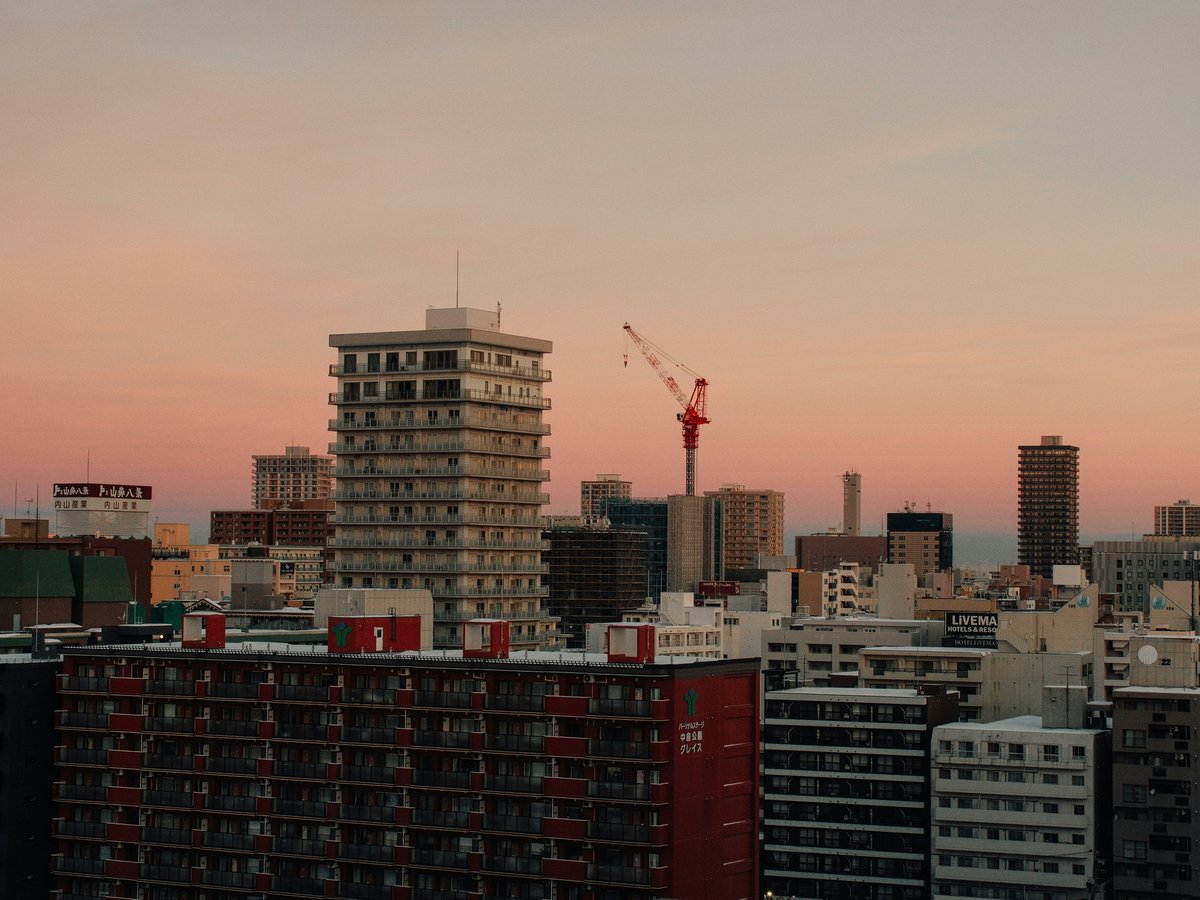
Best Time to Visit Sapporo, by Season
Sapporo's climate swings from -10.6°C January nights to 26.8°C July afternoons: a 37-degree range that means each month delivers a fundamentally different city. Here is the honest trade-off between weather, crowds, and price for every season, with one best window named per traveller type.
Published · Updated
1 January's -10.6°C Nights Are the Price of Admission: February Is the Smarter Winter Bet
Wind cuts through three layers before you cross the first block outside in January. That is the reality of a month averaging -2.6°C for daytime highs and dropping to -10.6°C after dark: Sapporo at its absolute coldest. Snow squeaks underfoot, that particular dry crunch you only hear well below freezing. Your phone battery dies in your pocket within the hour.
February improves the numbers without erasing the bite. Average highs climb to -1.4°C and overnight lows reach -9.2°C: about 1.2 degrees warmer by day and 1.4 degrees warmer at night than January. That margin sounds trivial on paper. After thirty minutes walking between heated buildings, you feel the difference in your fingertips. February is also peak winter season: the Snow Festival fills the city centre and accommodation prices spike accordingly. That 1.2-degree daily improvement between January's -2.6°C and February's -1.4°C shifts the line between a painful outdoor walk and a manageable one: thin comfort, but real.
The contrarian play: January delivers identical powder snow with far thinner crowds and lower hotel rates. If deep snow is what you came for, January is the honest pick. December sits between the two: averaging just 0.4°C for highs and -7.3°C for lows: winter firmly established but still 3 degrees warmer during the day than January's -2.6°C. February's -1.4°C splits the difference, though the festival premium makes it the priciest winter month by a wide margin.
Choose among the three like this. January for powder seekers who own gear rated for those -10.6°C nights and want the quietest slopes and cheapest beds. February for the spectacle, accepting crowd premiums you will not encounter in December or January. December for visitors who want illuminated snowscapes but prefer the relative mildness of 0.4°C afternoons: December's nightly low of -7.3°C is cold, certainly, but sits 3.3 degrees above January's overnight floor. Mind you, none of these months qualify as comfortable by mainland-Japan standards. The question is which register of cold fits your trip.
If deep snow is what you came for, January is the honest pick, and the cheapest.
2 March Promises Spring but Delivers 4.2°C and Slush: The Budget Traveller's Secret
Step outside on a March morning in Sapporo and the air smells wet, not the clean cold of January, but the damp, mineral scent of snow surrendering. Gutters run with grey meltwater. Sidewalks alternate between ice patches and bare concrete in a way that demands serious boots. With average highs of 4.2°C and lows still at -4.9°C, March is Sapporo's awkward middle child: too warm for powder, too cold for anything resembling spring.
April pushes temperatures into genuinely new territory. The average high reaches 12.3°C and overnight lows settle at 2.4°C: the first month where an hour-long walk does not require layering against real cold. Cherry blossoms tend to arrive in late April or early May here, weeks behind Tokyo, which means April visitors often catch the build-up: parks greening, snow retreating to shadowed corners, that restless anticipation of a city shaking off half a year of winter.
Budget-conscious travellers, take note. Both months sit in a pricing trough between winter peak season and the late-spring surge. March's 4.2°C average high scares away the crowds, which pushes accommodation costs down and thins queues at every attraction. April's 12.3°C days draw more visitors as the month progresses, but early April still feels quiet compared to the Golden Week rush beginning in late April.
The honest read: March is not pretty. Grey snow piles, patches of dead grass, the mood of a city mid-thaw: it lacks winter's drama and spring's colour in equal measure. But those 4.2°C days and -4.9°C nights keep crowds away while making Sapporo perfectly walkable in a decent jacket. April is the straight upgrade: 12.3°C highs, lows finally above freezing at 2.4°C, and the slow start of blossom season. Neither month delivers the postcard, though. That comes in May.
3 May and June Are the Window Most Visitors Miss, And the Best for First-Timers
There is a morning in mid-May when Sapporo's parks smell like fresh-cut grass for the first time since October, and the temperature at nine already sits comfortable in a light jacket. May averages 17.2°C for daytime highs with overnight lows of 7.7°C: the first month that feels genuinely warm without the humidity that blankets Japanese summers further south. You can eat lunch outside. You can walk for hours. Simple pleasures after six months of indoor everything.
June pushes into steady warmth: 22.0°C average highs and 13.0°C lows. Parks hit full green, rooftop beer gardens open across the city, and the days stretch long. This is Sapporo at its most liveable: warm enough for short sleeves by afternoon, cool enough at 13.0°C overnight to sleep with the windows open instead of running air conditioning.
Compare those numbers to what follows. July averages 26.8°C for highs with overnight lows of 18.7°C. August is nearly identical: 26.7°C and 19.3°C. The jump from June's 22.0°C to July's 26.8°C (close to 5 degrees) marks the line where pleasant tips into sticky. July nights at 18.7°C feel meaningfully warmer than June's 13.0°C, and domestic tourism prices spike alongside the thermometer.
For first-time visitors, May and June represent the clearest win on Sapporo's calendar. May's 17.2°C days handle every outdoor activity without heat stress, and the 7.7°C evenings call for just a light jacket: pleasant, not punishing. June's 22.0°C adds warmth while staying below the humidity line. Both months fall before school holidays, which keeps accommodation rates down and crowds thin.
One catch: late June brings Sapporo's rainy stretch, and several days of grey drizzle are likely. Worth the trade. June's 22.0°C days and 13.0°C nights under clouds still feel better than August's 26.7°C and 19.3°C under clear skies.
May and June are Sapporo at its most liveable: warm enough for short sleeves, cool enough to sleep with the windows open.
4 July and August Peak at 26.8°C: Comfortable by Mainland Standards, Still Sapporo's Priciest
The first thing you notice stepping off a train in late July is that Sapporo smells different: warm asphalt, grilled corn from street vendors, the faintly sweet air of a city in full leaf. At 26.8°C average highs with 18.7°C overnight lows, July is the warmest month on the calendar. Sapporo's 26.8°C is precisely why domestic visitors flood north: mainland Japan's summer runs far hotter, and Hokkaido has always been the escape valve.
August runs almost identical: 26.7°C for highs and 19.3°C for lows. The 0.1-degree daytime difference between the two months means nothing in practice, but August's overnight lows sit 0.6 degrees warmer at 19.3°C versus July's 18.7°C. You notice that gap in a room without air conditioning. August nights hold their warmth a bit longer.
This is domestic tourism at full tide. School holidays push hotel prices to annual highs, restaurants fill early, and every outdoor festival runs at capacity. The Obon holiday period in mid-August tends to be the most packed week of Sapporo's entire year.
To be fair, summer has genuine appeal. July's 26.8°C days are warm enough for hiking without overheating, and 18.7°C evenings make outdoor dining a comfortable all-T-shirt affair. August's 19.3°C nights stretch that window well past dinner. Set these against June's 22.0°C days and 13.0°C nights and you are trading perfect walking weather for warmer evenings and a full festival calendar.
The honest call: if you come from a hot climate, July and August will feel mild and manageable at 26.8°C and 26.7°C. If you came specifically for Sapporo's famous northern coolness, these months will not deliver it: September's 22.8°C days and 14.0°C nights bring that quality back. Summer is the right pick only for visitors whose schedule is locked to school holidays or who want the festival atmosphere above all else.
5 September Resets to June Temperatures: Autumn's Best-Kept Secret
By mid-September, the air in Sapporo carries a faint edge of woodsmoke and turning leaves: a sharp, clean scent that signals the pivot. Daytime highs average 22.8°C and nights settle at 14.0°C, placing September strikingly close to June's 22.0°C days and 13.0°C nights. Nearly identical walking weather with one important difference: the domestic summer wave has receded and accommodation prices have come back down.
October accelerates the change. Highs fall to 15.9°C with overnight lows at 6.5°C: a 6.9-degree daytime drop from September's 22.8°C. Foliage peaks through much of October, and Hokkaido's autumn colours are worth the trip on their own, but that 6.5°C overnight low is a clear signal: winter arrives fast this far north. For context, October's 15.9°C daytime high sits close to April's 12.3°C: the two shoulder months bookend the warm season with similar jacket weather but very different moods.
The shift between September and October is the sharpest seasonal pivot on Sapporo's calendar. September's 22.8°C still reads as a second summer. October's 15.9°C feels like late autumn anywhere else. Packing for October demands genuine range: light layers for those 15.9°C afternoons, a proper coat for 6.5°C evenings.
For autumn visitors, September is the safer comfort pick. Those 22.8°C highs and 14.0°C lows match early June's pleasantness while sidestepping summer crowds entirely. October is for colour chasers willing to layer up: 15.9°C days remain perfectly walkable, and the 6.5°C nights give a bowl of hot soup curry the urgency that September's milder 14.0°C does not quite demand. That said, late October can spring early snow flurries on you. The numbers tell the story: November's average high plunges to just 9.0°C with lows scraping 0.4°C, and that transition starts biting well before the month officially turns.
6 November's 0.4°C Nights Mark the Turn: Sapporo's Forgotten Shoulder Month
The first frost arrives sometime in November, and you smell it before you feel it: that mineral sharpness in the dawn air, the particular hush when moisture crystallizes out of the atmosphere. Average highs of 9.0°C and overnight lows of 0.4°C place November in a narrow band: cold enough to empty the tourist hotels, warm enough that the city has not yet switched to its full winter identity of packed ski slopes and ice festivals.
This is Sapporo's forgotten month. October's 15.9°C highs and autumn colours draw leaf-peepers. December's 0.4°C highs and fresh powder draw the ski crowd. November offers neither peak foliage nor snow deep enough for the slopes, and accommodation prices reflect that vacancy. The 9.0°C daytime average keeps walking comfortable in a warm coat, but those 0.4°C overnight lows require the kind of layering most visitors associate with proper winter.
Compare November to March, its mirror across the calendar. March averages 4.2°C for highs and -4.9°C for lows: substantially colder on both counts. November runs nearly 5 degrees warmer during the day and over 5 degrees warmer at night than March. Yet March draws more visitors because it bridges toward spring. November bridges toward winter, and most people would rather arrive after the snow has settled than watch it come.
The case for November is plain: if you want Sapporo without competition, this is the month. Restaurants have empty tables. Hotels sit at low-season rates. The food scene (ramen, seafood, soup curry) runs at full quality twelve months a year, and November's 9.0°C chill makes a bowl of rich miso ramen at lunch a sensory event, not just a habit. Those 0.4°C nights send you indoors early, which in a city built around indoor eating and drinking, hardly counts as a cost.
November's chill makes a bowl of rich miso ramen at lunch a sensory event, not just a habit.
7 The Verdict: One Best Month for Every Kind of Traveller
Stand at Sapporo Station on any day of the year and the scene beyond the glass doors tells you which version of the city you have landed in. January's -10.6°C variant, where pedestrians move fast with faces buried in scarves. August's 26.7°C edition, where families in T-shirts eat grilled corn outside the exits. The swing between those poles: 37.4 degrees from January's overnight low to July's 26.8°C afternoon high: means there is no universal best time. Only the best time for your particular trip.
For budget travellers: November or March. November's 9.0°C highs and 0.4°C lows, or March's 4.2°C and -4.9°C, hold crowds at annual lows and accommodation at its cheapest. November is warmer and drier of the two. March runs even cheaper if you can handle the slush.
For first-time visitors: late May through mid-June. May's 17.2°C days and 7.7°C nights hit the sweet spot: warm, uncrowded, long on daylight. June pushes to 22.0°C highs and 13.0°C lows with slightly more rain but the same thin crowds. This is the window that shows you the most Sapporo with the least friction.
For powder-snow seekers: January over February. January's -2.6°C highs and -10.6°C lows mean drier, lighter snow with fewer people on the mountain. February's -1.4°C and -9.2°C are marginally warmer, but the Snow Festival inflates every cost.
For autumn colour: early to mid-October. Highs of 15.9°C and lows of 6.5°C sit squarely in the foliage window: warm enough for long walks in a jacket, crisp enough that the colours pop against cool air.
For heat-averse travellers escaping mainland summer: September. At 22.8°C highs and 14.0°C lows, it mirrors June's temperature profile after the domestic crowd has gone home.
The single best all-round window, if pressed: the final week of May. Highs near 17.2°C, green parks, sparse crowds, the whole city walkable without overheating or shivering. That is the Sapporo that earns the reputation.
There is no universal best time to visit Sapporo. Only the best time for your particular trip.
Last verified by automated review (v1.7.0_onboard-sapporo-flagship-2026-06-04) on . What is automated review?