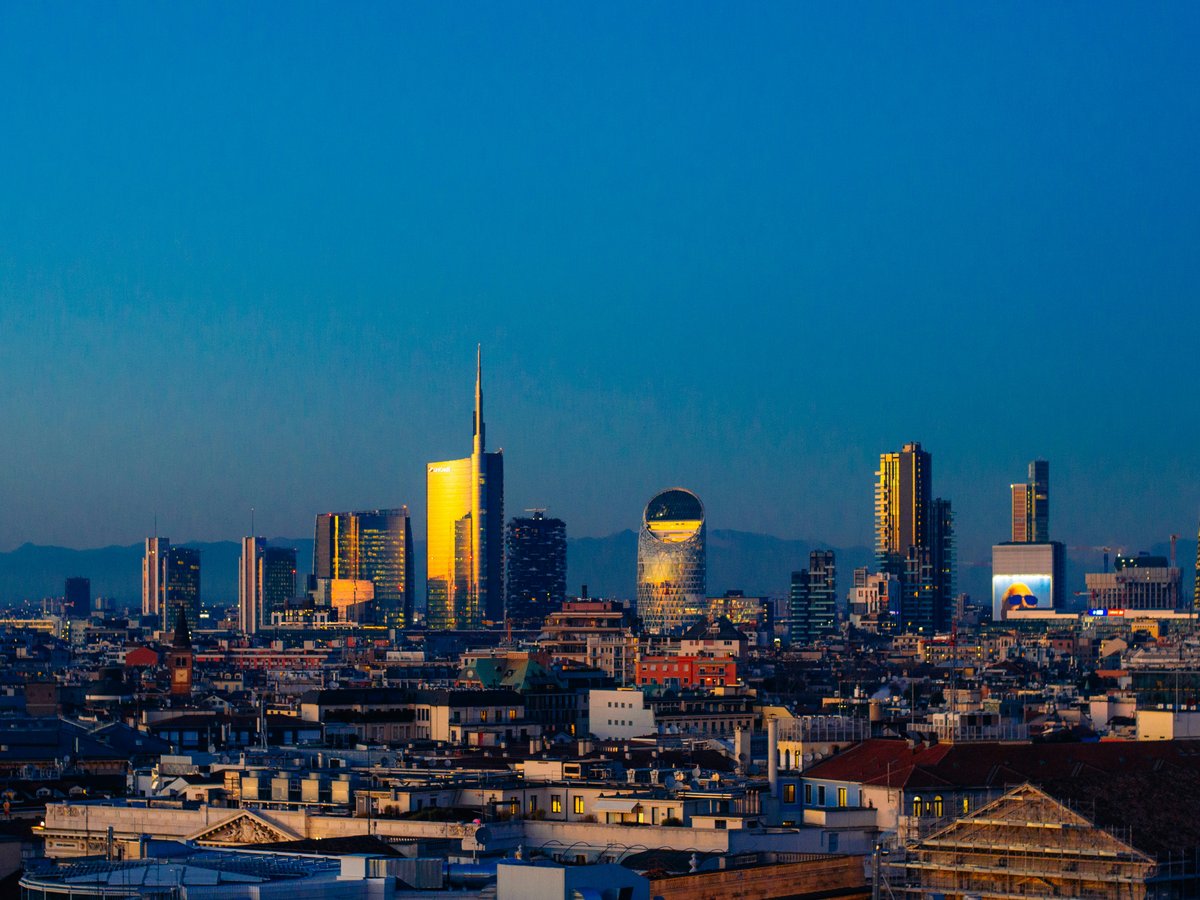
What's the must-see thing in Milan?
The Duomo di Milano. Construction began in 1386. The cathedral's Candoglia marble rooftop lets you walk among 3,400 statues and 135 spires at arm's length. The stone shifts from warm ivory to pale pink depending on the hour. Book a separate ticket for Leonardo's Last Supper at Santa Maria delle Grazie well in advance.
The Duomo sits at the south end of Piazza del Duomo. Gian Galeazzo Visconti commissioned it in the late 14th century, and the last bronze door was set on 6 January 1965. You climb 250 steps to the rooftop (or pay €16 for the lift) onto terraces of pale marble, where spires rise close enough to run your fingers along the stonework. Even in late July, the stone feels cool underfoot while the piazza below pushes past 27°C and the air carries espresso and warm sugar from the gelaterie near the Galleria Vittorio Emanuele II. Go before 9am. By 10:30 the terrace queue wraps past the Museo del Novecento. Stair tickets cost €14 from the ticket office on the cathedral's south side.
Leonardo da Vinci's Last Supper fills the north wall of the refectory at Santa Maria delle Grazie, a 10-minute walk west of Cadorna station on Metro line M1. The church dates to 1401, the painting to 1498. You get 15 minutes in the room, and that is all anyone gets. Groups of 25 enter every quarter hour through a climate-controlled airlock that keeps humidity stable around the fresco. The painting is faded, flaking in places, roughly 4.6 by 8.8 metres on the wall. The composition still pulls your eye to Christ's hands the second you step inside, and the silence in that room is something you feel physically. Tickets cost €15 and sell out 2 to 3 months ahead through the official Cenacolo Vinciano site. No walk-ups, no exceptions worth counting on.
The Pinacoteca di Brera, founded in 1776 under Maria Theresa of Austria, holds what might be Italy's strongest single-room experience for painting. Room VI has Mantegna's Dead Christ from 1480, rendered in a forced perspective so steep that the feet seem to push past the canvas. Raphael's Marriage of the Virgin hangs two rooms over. Full admission is €15, and the first Sunday of each month is free. The Brera district around the museum tends to be the part of Milan that first-time visitors like best. The streets along Via Fiori Chiari stay shaded through midday, lined with small galleries and wine bars where an Aperol spritz runs €8 to €10. You'll hear live jazz from open doorways on Thursday and Friday evenings through September.
The Duomo and Brera are 15 minutes apart on foot through Via Manzoni. Do the rooftop first thing, walk north to the Pinacoteca by late morning, and eat lunch in the Brera quarter. Santa Maria delle Grazie sits about 20 minutes west on foot from Piazza del Duomo, so fit it around whatever ticket slot you managed to book. If your Last Supper slot falls in the afternoon, the walk from Brera passes Sforza Castle, founded in 1360, where Michelangelo's unfinished Rondanini Pietà sits in a ground-floor room that takes 20 minutes to see.
The top three
Duomo di Milano
The only major European cathedral where you walk onto the roof among the spires themselves. Morning light on the marble is worth arriving before the crowds, and on clear days the view reaches the Alps.
Santa Maria delle Grazie (The Last Supper)
Leonardo's fresco survives on the refectory's north wall after five centuries of damage and restoration. The controlled-entry system keeps each visit quiet and uncrowded, but tickets disappear months before your travel dates.
Pinacoteca di Brera
Mantegna and Raphael share a building with five centuries of northern Italian painting in a neighborhood that rewards slow walking. The Brera quarter has the best ratio of galleries, wine bars, and shade to tourist density in Milan.
Reservations required for at least one of these.
Verified attractions
Sourced from Wikidata and OpenStreetMap: each entry links to its authoritative page.
-
Milan Cathedral
churchcathedral church of Milan, Italy
View on Wikidata -
La Scala
theateropera house in Milan, Italy
View on Wikidata -
Santa Maria delle Grazie
churchchurch in Milan
View on Wikidata -
Sforza Castle
castlecastle in Milan, Italy
View on Wikidata -
Pinacoteca di Brera
museumart museum in Milan, Italy
View on Wikidata -
Basilica of Sant'Ambrogio
churchRomanesque church in Milan
View on Wikidata -
Piazzale Loreto
plazasquare in Milan
View on Wikidata -
Mediolanum
archaeological siteancient Milan, an Insubrian, later Roman city
View on Wikidata -
piazza del Duomo
plazamain square of Milan, Italy
View on Wikidata -
Monza Cathedral
churchcathedral church of Monza, Italy
View on Wikidata -
Museo Poldi Pezzoli
museumart museum in Milan
View on Wikidata -
Royal Palace of Milan
museumart museum
View on Wikidata -
Stadio Brianteo
stadiumstadium in Monza, Italy
View on Wikidata -
Basilica of San Lorenzo
churchchurch building in Milan, Italy
View on Wikidata -
Museo Civico di Storia Naturale di Milano
museumMilan Natural History Museum, Italy
View on Wikidata -
Brera Astronomical Observatory
museumobservatory
View on Wikidata -
Santa Maria presso San Satiro
churchchurch in Milan, Italy
View on Wikidata -
Museo del Novecento
museummuseum of twentieth-century art in Milan, Italy
View on Wikidata -
Torre Velasca
towerskyscraper in Milan, Italy
View on Wikidata -
Gallerie d'Italia – Milano
museumart museum in Palazzo della Banca Commerciale Italiana, Milan, Italy
View on Wikidata -
monumental cemetery of Milan
cemeterycemetery in the Italian municipality of Milan
View on Wikidata -
Palazzo Brera
palacepalace in Milan
View on Wikidata -
Parco Sempione
gardenurban park in Milan
View on Wikidata -
Triennale di Milano
museumcultural organization and museum in Milan, Italy
View on Wikidata -
Alfa Romeo Museum
museumautomobile museum in Milan, Italy
View on Wikidata -
Basilica of Sant'Eustorgio
churchbasilica in Milan
View on Wikidata -
Archaeological Museum of Milan
museummuseum in Milan
View on Wikidata -
Arena Civica
stadiummulti-purpose stadium in Milan, Italy
View on Wikidata -
Basilica di Santo Stefano Maggiore
churchchurch building in Milan, Italy
View on Wikidata -
Basilica of San Simpliciano
churchminor basilica
View on Wikidata -
Chiaravalle Abbey
churchParish church and abbey in Milan, Italy
View on Wikidata -
Museo Teatrale alla Scala
museummuseum in Milan, Italy
View on Wikidata -
San Bernardino alle Ossa
churchchurch
View on Wikidata -
San Carlo al Corso
churchchurch in Milan
View on Wikidata -
San Nazaro in Brolo
churchbasilica in Milan, Lombardy, Italy
View on Wikidata -
Santa Maria della Passione Church
churchchurch in Milan
View on Wikidata -
Santa Maria presso San Celso Church
churchchurch in Milan
View on Wikidata -
Teatro dal Verme
theaterconcert venue in Milan, Italy, formerly an opera house and cinema
View on Wikidata -
Bagatti Valsecchi Museum
museumart museum
View on Wikidata -
Galleria d'arte moderna di Milano
museumModern Art Museum in Milan
View on Wikidata
Last verified by automated review (v1.7.2) on . What is automated review?