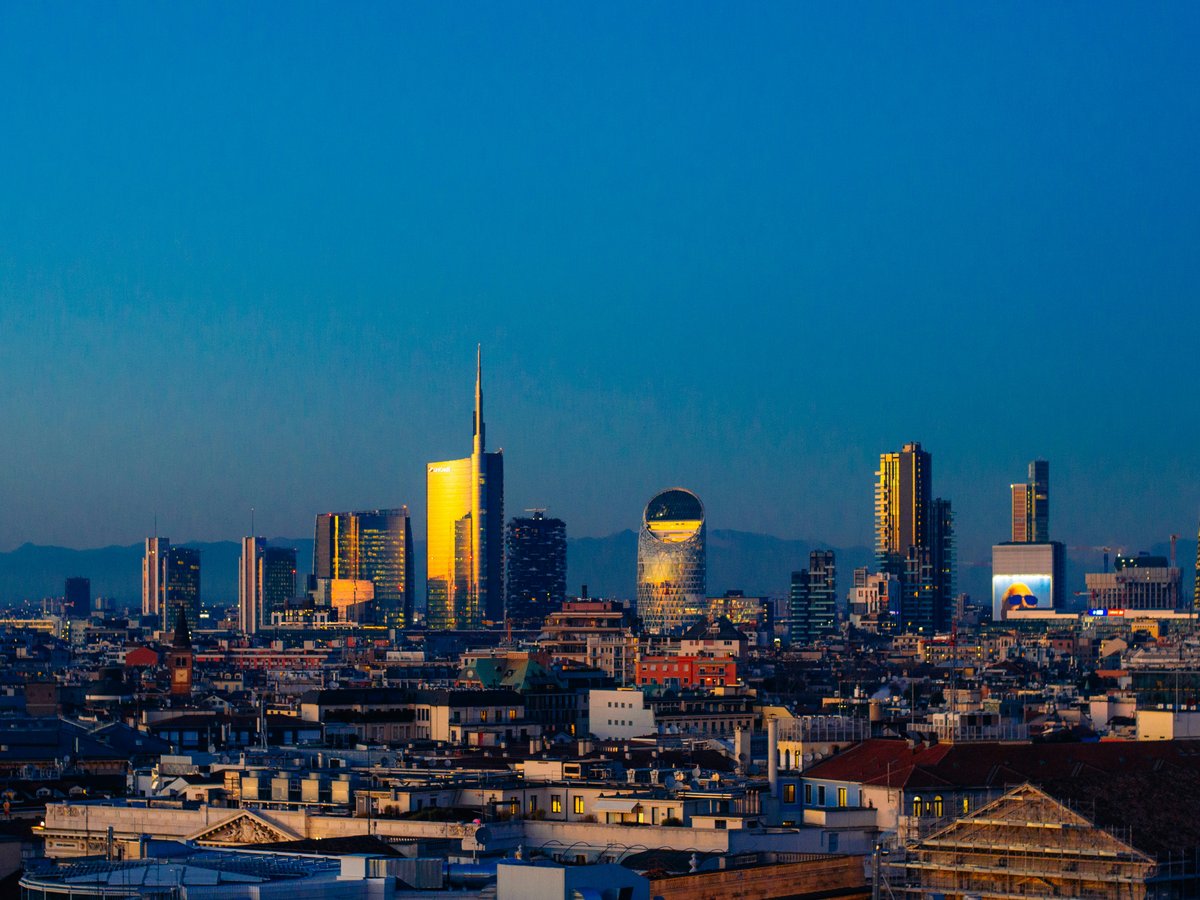
Milan tends to get written off as Italy's priciest city. An €12 Negroni at a Brera bar seems to confirm that reputation. But the Duomo di Milano, with its 3,400 marble statues and a construction history stretching back to 1386, is free to enter at ground level. Parco Sempione covers roughly 47 hectares behind Castello Sforzesco, and the Cimitero Monumentale, open since 1866, works as a free sculpture museum spread across 250,000 square meters. On the first Sunday of each month, Italy's Domenica al Museo program opens state and civic museums at no charge, which in Milan currently includes the Pinacoteca di Brera and the collections inside Castello Sforzesco. Chiesa di San Maurizio al Monastero Maggiore on Corso Magenta is covered in 16th-century frescoes by Bernardino Luini, and it costs nothing to walk in. The Navigli canal district, Isola's street art walls, and the Ca' Granda courtyard of the Università degli Studi are all free to explore on foot.
Free attractions
-
Duomo di Milano
The cathedral's nave is free to enter. Construction began in 1386, and the building wasn't formally completed until 1965. Inside, 52 pillars line the nave, each roughly 24 meters tall, and the stained glass shifts color with the time of day. Over 3,400 statues line the exterior. Worth noting that the rooftop terraces, the Duomo Museum, the baptistery of San Giovanni alle Fonti, and the archaeological area beneath the piazza all require separate tickets.
Centro Storicolandmark -
Galleria Vittorio Emanuele II
The iron-and-glass shopping arcade connecting Piazza del Duomo to Piazza della Scala was built between 1865 and 1877 by architect Giuseppe Mengoni. The central octagonal space has a glass dome 47 meters above the mosaic floor. There's a tradition of spinning your heel on the mosaic bull for good luck, and the tile beneath it is visibly worn from decades of turning feet. Free to walk through at any hour, and the ceiling details repay a long look upward.
Centro Storicolandmark -
Castello Sforzesco
The castle's courtyards are open to anyone, and the 15th-century brick fortress feels surprisingly quiet once you're past the main gate. On the first Sunday of each month, the Musei del Castello open for free. That includes the Museo d'Arte Antica, where Michelangelo's Rondanini Pietà sits in its own dedicated room. He was still working on this sculpture when he died in 1564, and the unfinished marble surface still shows his chisel marks.
Cairolicastle and museum complex -
Pinacoteca di Brera
Milan's most important painting collection opens for free on the first Sunday of the month under Italy's Domenica al Museo program. Nearly 40 rooms hold Mantegna's Dead Christ, Raphael's Marriage of the Virgin, and Caravaggio's Supper at Emmaus, among roughly 400 works on display. The building itself is a 17th-century palazzo that still houses the Accademia di Belle Arti, so you'll likely pass students with paint on their hands in the courtyard. A bronze Napoleon by Antonio Canova stands in the center of it.
Breramuseum -
Cimitero Monumentale
An open-air sculpture museum that happens to be a cemetery. Opened in 1866, designed by Carlo Maciachini, and spread across roughly 250,000 square meters. The Famedio at the entrance is a neo-Gothic hall holding the tombs of novelist Alessandro Manzoni and conductor Arturo Toscanini. Further in, you'll find work by sculptors like Adolfo Wildt and Medardo Rosso, plus a family tomb designed by Lucio Fontana himself. Entry is free. The atmosphere tends to feel more like a quiet garden than a graveyard, especially on weekday mornings.
Porta Voltacemetery and outdoor museum -
Chiesa di San Maurizio al Monastero Maggiore
This 16th-century church on Corso Magenta tends to get the 'Milan's Sistine Chapel' label. The experience is more intimate, though. Bernardino Luini and his students covered both halls from floor to ceiling in frescoes. The building was divided into a public hall and a cloistered hall for Benedictine nuns, and both sections are open to visitors now. The color saturation on the frescoes still looks vivid after 500 years. Free to enter.
Magentachurch -
Basilica di Sant'Ambrogio
One of the oldest churches in Milan, founded by Bishop Ambrose in 379 AD. The current Romanesque structure dates mostly to the 11th and 12th centuries. Inside, the 9th-century golden altar, the Paliotto d'Oro, depicts scenes from the life of Christ in gold and silver relief. The Sacello di San Vittore in Ciel d'Oro, a small chapel off to one side, has 5th-century gold-ground mosaics that predate most of the building. The church sits in a quiet courtyard that muffles street noise, and the worn stone underfoot has a satisfying coolness in summer.
Sant'Ambrogiochurch -
Colonne di San Lorenzo
Sixteen Corinthian columns standing in a row in front of the Basilica di San Lorenzo Maggiore, likely dating to the 2nd or 3rd century AD. They were probably moved here from a Roman bath or temple in the 4th century, though their exact origin is still debated among archaeologists. On summer evenings the piazza around the columns fills with people sitting on the low walls, drinking from nearby bars. It's one of the liveliest free gathering spots in Milan, particularly on warm Friday and Saturday nights.
Ticineselandmark -
Parco Sempione
This 47-hectare park stretches from the back of Castello Sforzesco to the Arco della Pace, a Napoleonic-era triumphal arch at the northwest end. Open daily from around 6:30 in the morning. There's a small lake, wide gravel paths, and open lawn areas where locals spread blankets when the weather turns warm. The Torre Branca, a 108-meter steel observation tower designed by Gio Ponti in 1933, is visible from most points in the park. Mind you, climbing the tower costs a few euros, but the ground-level park views are free.
Sempionepark -
Giardini Pubblici Indro Montanelli
Milan's oldest public park, first opened in 1784. About 17 hectares of mature plane trees, a small pond, and winding paths near Porta Venezia. The park was renamed in 2002 after journalist Indro Montanelli, whose bronze statue sits near one of the entrances. On weekday mornings it's mostly dog walkers and joggers. The Palazzo Dugnani, with its 18th-century Tiepolo fresco on the upper floor, borders the park, though the palazzo interior is only occasionally open for events.
Porta Veneziapark -
Biblioteca degli Alberi Milano (BAM)
Opened in 2018 in the Porta Nuova district, this 9-hectare botanical park sits at the foot of the Bosco Verticale residential towers and the 231-meter UniCredit Tower, Milan's tallest building. Over 100 plant species are arranged into circular groves and themed gardens. There's no fence or gate. It tends to feel more designed than Parco Sempione, with clean-edged plantings and built-in wooden seating. On summer evenings, BAM hosts free outdoor events including yoga sessions and film screenings on the lawn.
Porta Nuovapark
Free activities
-
Navigli Canal Walk
The Alzaia Naviglio Grande is the main walking path along Milan's most photogenic canal. Start from the Darsena basin near Porta Ticinese and walk southwest along the towpath for about 2.5 kilometers. The canal-side buildings are painted in faded terracotta and yellow ochre, and the reflections in the water shift constantly. On weekend evenings the bars and restaurants along the canal put tables outside, and the noise level rises in a good way. The Naviglio Pavese runs parallel a few blocks east and is quieter, with a more residential feel.
Navigliwalking route -
Window Shopping the Quadrilatero della Moda
The rectangle formed by Via Montenapoleone, Via della Spiga, Via Manzoni, and Corso Venezia holds Milan's highest concentration of luxury fashion boutiques. Walking through costs nothing, and the window displays, particularly during Fashion Week in February and September, are essentially free art installations that change on a weekly cycle. Via della Spiga is pedestrianized, which makes it the most pleasant for a stroll. The architecture along Via Manzoni includes several 18th-century palazzi with ornate facades worth looking up at.
Quadrilatero della Modawalking route -
Street Art in Isola
The Isola neighborhood, north of Stazione Garibaldi, has become one of Milan's densest areas for street art over the past decade. The walls along Via Borsieri, Via Carmagnola, and the railway underpasses carry large-scale murals that rotate every year or two. The district still has a grittier feel than the polished Porta Nuova towers visible a few hundred meters to the south. On Via Pastrengo you'll find smaller-scale paste-ups and stencil work mixed in with independent shops and bars.
Isolastreet art and walking -
Brera District Walk
Via Brera and Via Fiori Chiari form the core of Milan's gallery and antique-shop neighborhood. The narrow streets have a quieter pace than the Centro Storico, and many private galleries are free to browse during opening hours. The Accademia di Belle Arti courtyard, next to the Pinacoteca di Brera, has the Canova bronze of Napoleon and is open to walk through. Via Fiori Oscuri, running parallel, has fewer visitors and some of the neighborhood's oldest stone facades.
Brerawalking route -
Mercatone dell'Antiquariato sul Naviglio Grande
On the last Sunday of each month, roughly 400 vendors set up stalls along a 2-kilometer stretch of the Naviglio Grande towpath. You'll find vintage furniture, old prints, silverware, records, and assorted curiosities laid out on folding tables. Browsing is free, and the market has been running since 1986. It draws a mixed crowd of serious collectors and casual wanderers. Stalls typically open around 9:00 and start packing up by 18:00, though winter hours tend to be shorter.
Naviglimarket
Free events
-
Domenica al Museo
First Sunday of each monthItaly's national free-museum program opens state-run museums at no charge on the first Sunday of each month. In Milan, confirmed participants include the Pinacoteca di Brera and the Museo Archeologico on Corso Magenta. Milan's civic museums, including the Musei del Castello Sforzesco and the Museo del Novecento, have traditionally participated as well, though the Comune di Milano adjusts its schedule periodically. Lines tend to be longer on free Sundays, particularly at the Pinacoteca di Brera, so arriving before opening is advisable.
Various state and civic museums across Milan -
Piano City Milano
Late May, annually (3 days)A weekend festival of free piano concerts spread across the city, typically held in late May. Over 400 performances take place in courtyards, parks, museums, private apartments, and rooftops over 3 days. The program includes classical, jazz, and contemporary performers. Some venue-based concerts require free online registration, while outdoor performances are open to anyone who shows up. The festival has been running since 2012.
Various locations across Milan -
Milano MuseoCity
Early March, annually (3 days)A weekend event, usually in early March, where dozens of Milan's museums and cultural institutions offer free entry, guided tours, and behind-the-scenes access. Recent editions have included over 80 participating institutions across the city. Some events require registration, but many are walk-in. It's organized by the Comune di Milano and tends to include both major museums and smaller, lesser-known collections that are normally closed or paid.
Various museums and cultural institutions across Milan -
Cortili Aperti
One day in mid-May, annuallyOrganized by ADSI (Associazione Dimore Storiche Italiane), this annual event opens the private courtyards and gardens of historic Milanese palazzi normally closed to the public. Milan has hundreds of ornate inner courtyards hidden behind plain street-facing facades, and this is one of the few chances to walk through them. The event typically runs for one day in mid-May. Different neighborhoods are featured each year, and a free map is published in advance.
Historic private palazzi across Milan -
Estate Sforzesca
June through SeptemberThe summer cultural program at Castello Sforzesco runs from June through September with concerts, theater, dance, and outdoor film screenings in the castle's courtyards. A portion of the lineup is free each year, typically the smaller concerts and cinema nights. The Cortile delle Armi hosts the main stage, while the smaller Cortile della Rocchetta is used for more intimate performances. The full program is usually published on the Comune di Milano events portal each May.
Cortile delle Armi and Cortile della Rocchetta, Castello Sforzesco
Milan's Free Church Circuit
Milan's churches tend to get overlooked next to the bigger museums, but they hold some of the city's finest art, and every one of them is free to enter. Start at Chiesa di San Maurizio al Monastero Maggiore on Corso Magenta for Bernardino Luini's 16th-century frescoes, where the color on the walls still looks vivid enough to seem recent. From there, it's about a 15-minute walk south to Basilica di Sant'Ambrogio. The 9th-century Paliotto d'Oro and the 5th-century gold-ground mosaics in the Sacello di San Vittore in Ciel d'Oro are worth the visit alone, and the incense in the nave lingers even on weekday afternoons. Continue east to the Basilica di San Lorenzo Maggiore, stopping at the Colonne di San Lorenzo on the way. The church has a 4th-century floor plan and an octagonal chapel, the Cappella di Sant'Aquilino, with late Roman mosaics (that chapel currently charges around €2). The Duomo makes the natural endpoint, about 4 kilometers from where you started. By that point, the smaller churches may have left a stronger impression than the big cathedral.
Free Viewpoints and Photo Spots
Many visitors head for the Duomo's rooftop terraces, but those currently cost between €10 and €20 depending on whether you take the stairs or the lift. For a free alternative with a similar angle, the rooftop terrace of La Rinascente department store on Via Santa Radegonda sits 7 floors up and gives you an eye-level view of the cathedral spires and the Madonnina statue. The bar up there serves drinks, but you can walk onto the terrace without buying anything during store hours. At street level, the view through the Galleria Vittorio Emanuele II from Piazza del Duomo is one of the city's most-photographed perspectives. For the modern skyline, the pedestrian overpass near Stazione Garibaldi frames the Bosco Verticale towers and the 231-meter UniCredit Tower together in one shot. From the Arco della Pace end of Parco Sempione, you get a clear sightline back toward Castello Sforzesco across the full length of the park.
FAQ
Is the Duomo di Milano free to enter?
The main cathedral floor is free. You can walk in, sit in a pew, and look up at the 52 nave pillars and stained glass without paying anything. The rooftop terraces, Duomo Museum, baptistery of San Giovanni alle Fonti, and the archaeological area beneath the piazza each require separate tickets, currently ranging from about €5 to €20 depending on the combination.
When are Milan's museums free?
On the first Sunday of each month, Italy's national Domenica al Museo program opens state-run museums for free. In Milan, this currently includes the Pinacoteca di Brera. Milan's civic museums, including the collections inside Castello Sforzesco and the Museo del Novecento, have traditionally offered free entry on the first Sunday as well, though the Comune di Milano adjusts its policies from time to time. It's worth confirming on a museum's website before visiting. Expect noticeably longer queues on free Sundays, especially at the Pinacoteca di Brera.
Can I see Leonardo da Vinci's Last Supper for free?
The Cenacolo Vinciano in the refectory of Santa Maria delle Grazie requires a timed reservation and currently costs around €15 plus a €2 booking fee. Entry is limited to about 25 visitors every 15 minutes, and slots often sell out weeks in advance. That said, the church of Santa Maria delle Grazie itself is free to enter and worth visiting on its own. Donato Bramante designed the apse and dome in the 1490s, and the interior has a calm simplicity that contrasts with the tourist rush next door at the refectory entrance.
Are there free walking tours in Milan?
Several operators run tip-based walking tours from Piazza del Duomo, typically covering the Centro Storico in 2 to 3 hours. You pay what you think the tour was worth at the end, so there's no fixed price, though a tip in the €5 to €15 range is the norm. For a self-guided alternative, the Comune di Milano's YesMilano tourism portal publishes downloadable walking itineraries covering different neighborhoods. The church circuit and Navigli walk described in this guide are also straightforward to follow on your own.
Is public transport free in Milan?
No. Milan's metro, trams, and buses all require tickets. A single ride currently costs around €2.20 and is valid for 90 minutes from first validation. However, the city center is compact enough that most of the free attractions listed here are within walking distance of each other. The walk from Castello Sforzesco to the Navigli, passing the Duomo and Colonne di San Lorenzo on the way, takes about 40 minutes at a steady pace.
Last verified by automated review (v1.7.2) on . What is automated review?