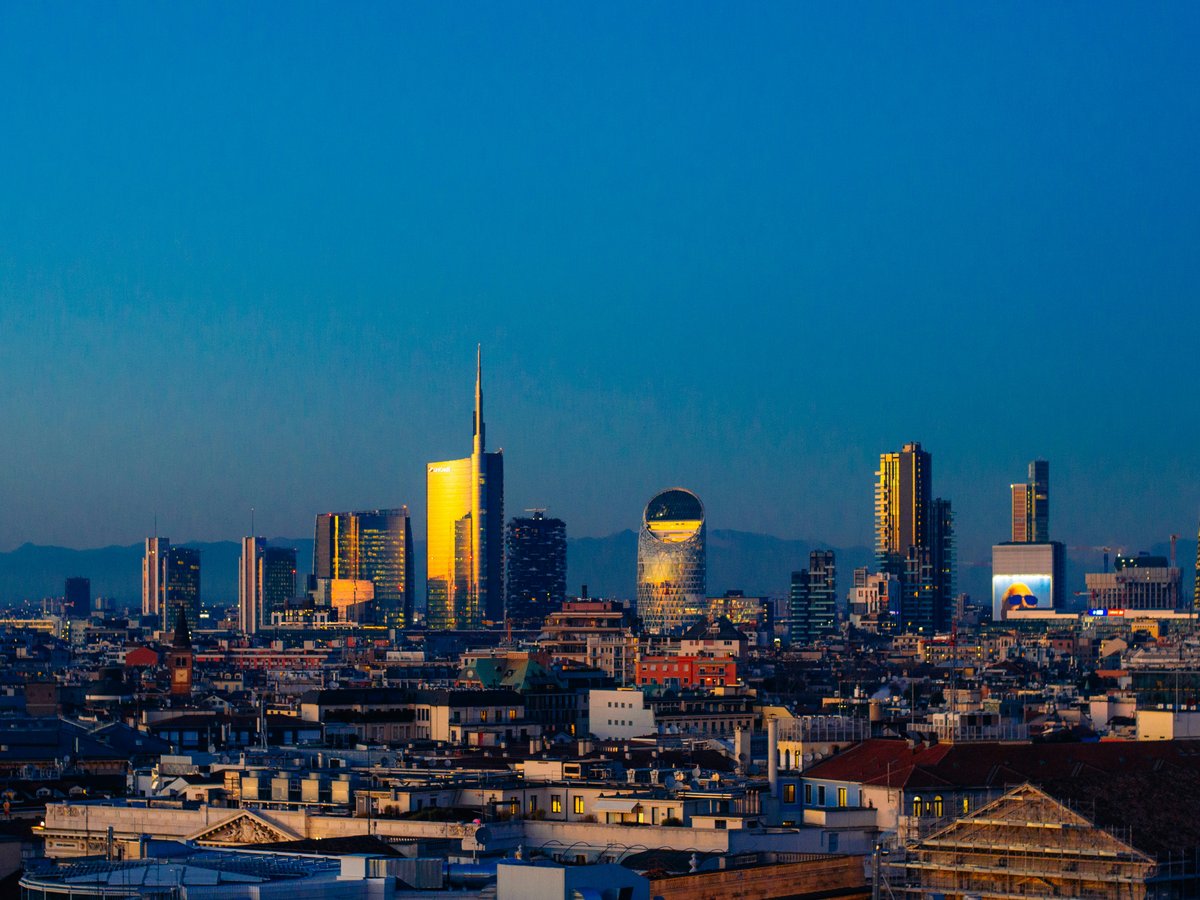
Milan is built in concentric rings, like a target. The Duomo sits at the dead center, and the city radiates outward along old canal routes and Roman roads. Three ring roads mark the boundaries. The Cerchia dei Navigli follows the path of the medieval moats, now mostly buried. The Bastioni trace the Spanish-era walls from the 1500s. And the Circonvallazione marks the outer edge of the pre-war city. Most of what visitors care about falls within the Bastioni ring, roughly a 30-minute walk from the Duomo in any direction. The Metro has 5 lines, though M4 only opened fully in late 2024. Trams are often faster for short hops, and the Number 1 line still runs vintage 1920s Peter Witt cars down Via Dogana. Worth noting, Milan's neighborhoods don't have hard borders the way London boroughs do. They bleed into each other, and locals tend to navigate by landmarks and Metro stops rather than district names. The historic center is dense and walkable. The further out you go, the more residential and spread out things get, with pockets of nightlife and restaurants clustered around specific streets rather than spread evenly.
Neighborhoods
-
Centro Storico / Duomo
This is the tourist core, and it feels like it. The Galleria Vittorio Emanuele II is packed by 10am most mornings, and the piazza in front of the Duomo fills with selfie sticks and pigeon-feed sellers. That said, the density of genuinely important buildings per square meter is hard to beat anywhere in Europe. The architecture is a collision of Gothic (the Duomo, started in 1386), Neoclassical (Teatro alla Scala, 1778), and Fascist-era rationalism along Via Dante. The side streets south of Piazza Cordusio get quieter fast, and you'll find Milanese workers grabbing espresso standing at bars that haven't changed their prices or their decor since the 1990s. The noise level is high on the main piazzas but drops sharply one block in any direction. At night the centro empties out surprisingly fast, apart from the restaurant strip along Via Fiori Chiari toward Brera.
- Best for
- First-time visitors who want to walk to the major sights. Good for short stays of 2-3 nights where convenience matters more than atmosphere.
- Key streets
- Piazza del Duomo, Galleria Vittorio Emanuele II, Via Dante toward Castello Sforzesco, Corso Vittorio Emanuele II for shopping, Via Torino heading south toward the Colonne di San Lorenzo. Piazza dei Mercanti, tucked behind the Duomo, is a medieval square most people walk past without noticing.
-
Brera
Brera feels like it belongs in a smaller city. The streets are narrow, mostly cobblestone, and lined with 18th-century palazzi painted in faded ochre and terracotta. It was Milan's bohemian quarter through the 1960s and 70s, when the Accademia di Belle Arti filled the neighborhood with art students. That era is largely over. Rents climbed through the 2000s, and now the ground floors hold galleries, antique dealers, and restaurants where a primo runs 18-22 euros. The Pinacoteca di Brera, housing Mantegna's Dead Christ and Raphael's Marriage of the Virgin, anchors the north end. The Orto Botanico behind it is a genuinely peaceful garden that most tourists skip. On Thursday evenings, some galleries on Via Fiori Chiari open for informal aperitivo events. The pace here is slow during the day, closer to a university town than a financial capital.
- Best for
- Couples and art-focused travelers. People who want to walk everywhere and eat well without hunting for restaurants. Not ideal for families with young kids, as the restaurants tend toward formal.
- Key streets
- Via Brera (the spine), Via Fiori Chiari for galleries and wine bars, Via Madonnina for quieter restaurants, Via Solferino running north toward Moscova. Piazza del Carmine has a church from 1400 and a handful of outdoor cafe tables that catch afternoon sun.
-
Navigli
The Navigli district is built along two surviving canals, the Naviglio Grande and the Naviglio Pavese, which once connected Milan to the Ticino river and Lake Maggiore. Leonardo da Vinci reportedly engineered some of the lock systems in the late 1400s, though the canals themselves date to the 12th century. The area feels rougher and louder than Brera. The buildings along the water are 3-4 stories, painted in washed-out pastels, with iron balconies and laundry hanging over the canal. The smell of the water hits you on warm days. That's honest, not a complaint. The south bank of Naviglio Grande is lined with restaurants, bars, and vintage shops. Prices are lower here than in Brera or the centro. A full aperitivo spread with a Spritz runs about 10-12 euros at most canal-side spots. Sunday mornings bring the Fiera di Sinigaglia flea market along the Alzaia Naviglio Grande, where dealers spread out vintage furniture, old prints, and 1970s clothing.
- Best for
- Budget-conscious travelers in their 20s and 30s, anyone who wants nightlife within walking distance, and people who prefer a grittier, less polished neighborhood. Families with teenagers might like it too.
- Key streets
- Alzaia Naviglio Grande (the main canal-side walk), Ripa di Porta Ticinese running parallel one block back, Via Corsico for smaller bars, the Darsena basin where the two canals meet (renovated in 2015 for Expo). The bridge at Via Valenza gives the best view down the Naviglio Grande, especially at sunset when the buildings go orange.
-
Porta Romana
Porta Romana is south-central Milan, anchored by the 16th-century gate on Corso di Porta Romana. It's historically a middle-class residential area, and it still feels that way. The streets are wider than in Brera or the Navigli, with plane trees lining the bigger avenues and Liberty-style apartment buildings (Milan's version of Art Nouveau, popular around 1900-1915) mixed with postwar reconstruction. The neighborhood has gotten more attention in recent years. The Fondazione Prada, Rem Koolhaas's 2015 conversion of a 1910 gin distillery, sits at its southern edge on Largo Isarco. You'll hear more Italian spoken on the streets here than in the centro. The food scene tends toward neighborhood restaurants where the menu changes daily, handwritten on a board. A lunch primo might cost 10-12 euros.
- Best for
- Repeat visitors to Milan who already know the centro, anyone wanting a residential feel with good restaurant density, and design-focused travelers heading to the Fondazione Prada or the MUDEC museum.
- Key streets
- Corso di Porta Romana itself, Viale Sabotino heading south, Via Crema for small shops and bakeries, Piazzale Medaglie d'Oro where the Saturday farmers' market sets up. Via Muratori, a few blocks further south, has become a quiet restaurant street with 4-5 serious kitchens within 200 meters.
-
Porta Garibaldi / Isola
Isola literally means 'island,' and the name stuck because the neighborhood was physically cut off from the rest of Milan by rail yards for most of the 20th century. It sat north of Porta Garibaldi station, isolated by tracks, and developed its own identity. Working-class families, small workshops, and local bars defined it through the 1990s. Then the Porta Nuova development happened. The Bosco Verticale towers (Stefano Boeri, completed 2014, over 900 trees planted on the balconies) and the UniCredit Tower (231 meters, Italy's tallest building) went up on the rail yards between 2009 and 2015, and Isola started changing fast. Now Via Borsieri and Via Pastrengo have natural wine bars next to old-school salumerie. The tension between old and new is visible on every block. The architecture switches from 4-story postwar apartment blocks to glass towers within a single intersection at Piazza Gae Aulenti.
- Best for
- Design and architecture fans, young professionals, anyone who wants walkable nightlife without the tourist density of the Navigli. The Porta Garibaldi station connects to Malpensa Airport via the Malpensa Express (about 50 minutes), which makes the area practical for early flights.
- Key streets
- Via Borsieri (bars, restaurants, small shops), Via Pastrengo (the old Isola feel), Piazza Gae Aulenti (the new development's public square, good for people-watching), Via de Castillia running along the edge. The Biblioteca degli Alberi park (2018, 90,000 square meters) between Isola and Porta Nuova is still underappreciated.
-
Città Studi
Città Studi exists because of the Politecnico di Milano, the engineering university that moved here in 1927. The neighborhood grew up around it, and the student population still defines the area. The buildings are largely mid-century residential blocks, functional rather than beautiful, though some of the university structures have interesting rationalist architecture from the Fascist era. Piazza Leonardo da Vinci, the main campus square, fills with students eating panini on the steps at lunchtime. The food is cheap by Milan standards. You'll find kebab shops, pizzerias doing slices for 2-3 euros, and trattorie with a full lunch menu for 10-12 euros. The area is quieter during summer and exam periods. It's well-connected by Metro (M2 to Piola or Lambrate) but about a 25-minute ride from the Duomo. Mind you, this is not a tourist neighborhood at all.
- Best for
- Budget travelers, longer stays, anyone comfortable in a university district that doesn't cater to visitors. Families visiting students at the Politecnico.
- Key streets
- Piazza Leonardo da Vinci, Via Celoria (the campus spine), Via Pascoli for affordable restaurants, Via Ampere heading toward Lambrate. The Lambrate end has gotten more interesting since a few design studios and craft breweries opened in converted industrial spaces after 2015.
-
Porta Venezia / Corso Buenos Aires
Porta Venezia is where Milan's 19th-century expansion meets its 20th-century immigration history. The neighborhood's southern edge runs along the Giardini Pubblici Indro Montanelli, the city's oldest public park (1784, 17 hectares). Corso Buenos Aires, the main commercial artery, runs north for about 1.6 kilometers and has over 350 shops. It's loud, crowded on Saturdays, and unashamedly commercial. One block east or west, though, the streets calm down into residential blocks with some of Milan's best Liberty-architecture apartment buildings, particularly along Via Malpighi and Via Sirtori. The area has been Milan's most prominent LGBTQ+ neighborhood since at least the 1980s, with bars and community spaces concentrated around Via Lecco and Via Sammartini. The Eritrean and Ethiopian restaurant cluster on Via Melzo and Via Lazzaro Palazzi reflects a community that dates to the 1970s. A full Eritrean meal with injera runs about 12-15 euros.
- Best for
- Shoppers, anyone wanting international food options, LGBTQ+ travelers, and people who like a neighborhood with genuine social layers rather than a curated feel.
- Key streets
- Corso Buenos Aires (shopping), Via Lecco and Via Sammartini (nightlife, bars), Via Melzo (Eritrean and Ethiopian restaurants), Via Malpighi for Liberty architecture. The Giardini Pubblici are a good morning walk, and the Natural History Museum inside the park is underrated, especially the mineralogy rooms on the second floor.
-
Porta Ticinese / Colonne di San Lorenzo
Porta Ticinese links the centro to the Navigli, and the 16 Roman columns at the Colonne di San Lorenzo (2nd-3rd century AD, relocated here in the 4th century) mark the transition. The Basilica di San Lorenzo Maggiore behind them is one of Milan's oldest churches, with a 4th-century chapel that still has original mosaics. The area around the columns is where Milanese teenagers and university students congregate on warm evenings, sitting on the steps with beers from the nearby minimarkets. Corso di Porta Ticinese runs south from here, and it's lined with independent clothing shops, vintage stores, and a few record shops that have survived the streaming era. The architecture is a mix of medieval fragments near the Basilica, 18th-century residential blocks, and some postwar infill. The pace picks up after 7pm on Thursdays and weekends.
- Best for
- Young travelers, vintage shopping enthusiasts, anyone who likes street life and an unpolished atmosphere. People staying in the Navigli who want to walk to the centro.
- Key streets
- Corso di Porta Ticinese (vintage shops, clothing), Via Vetere for quieter side streets, Via Torino heading north to the Duomo, Via Edmondo de Amicis toward Sant'Ambrogio. The Parco delle Basiliche, the green strip between San Lorenzo and Sant'Eustorgio, is a 10-minute walk that passes through 1,600 years of architecture.
-
San Siro / Fiera
San Siro is far west Milan, and unless you're going to a football match or a concert, most visitors never come here. The Stadio Giuseppe Meazza (built 1926, expanded for the 1990 World Cup to about 75,000 seats) dominates the area. On match nights, the streets flood with red-and-black or blue-and-black scarves depending on whether Milan or Inter are playing. The rest of the time, San Siro is quiet and suburban, with wide streets, low-rise apartment buildings from the 1950s-70s, and not much going on. The old Fiera Milano fairgrounds near Amendola used to bring huge crowds, but most trade fairs moved to Rho Fiera in 2005. The CityLife development (Zaha Hadid, Arata Isozaki, Daniel Libeskind towers, completed between 2015-2020) has added a commercial district and park at the eastern edge, but it still feels more like a business zone than a neighborhood.
- Best for
- Football fans, concertgoers, business travelers attending events at Rho Fiera (M1 connects through). Not recommended as a base for sightseeing.
- Key streets
- Piazzale Angelo Moratti for the stadium approach, Piazza Tre Torri in the CityLife district for contemporary architecture, Via Tesio for pre-match restaurant stops. The CityLife park (170,000 square meters, opened 2017) is genuinely pleasant and underused on weekday mornings.
FAQ
Which Milan neighborhood is best for a first-time visitor staying 2-3 nights?
Brera or the Centro Storico, depending on your budget. Brera puts you within 10 minutes' walk of the Duomo, La Scala, and the Pinacoteca, and the neighborhood itself is pleasant to wander at night. The Centro Storico is more convenient but less atmospheric after dark. Hotels in Brera average 150-250 euros per night for a 3-star, while the Centro runs 180-300 euros. Both are on or near the M1 and M3 Metro lines.
Is the Navigli district safe at night?
The canal-side streets stay busy and well-lit until about 1am on weekends, and the area is generally safe by European city standards. The streets east of Naviglio Pavese get quieter and less lit after midnight. Normal city precautions apply. Pickpocketing happens in crowded bars, not on the streets. Taxis and the 3 night bus line (NM3) run through the area until about 5:30am.
How do I get from Malpensa Airport to my Milan hotel?
The Malpensa Express train runs every 30 minutes to Milano Centrale (50 minutes, about 13 euros) and Milano Cadorna (43 minutes, same price). Cadorna is more central but Centrale has more Metro connections. A taxi costs a flat 100 euros to anywhere within the city limits, which is regulated and non-negotiable. Shared shuttle buses (Terravision, Autostradale) run to Centrale for about 8-10 euros but take 60-75 minutes depending on traffic. Linate Airport is much closer, about 25 minutes by the M4 Metro line.
When is the best time to visit Milan if I want to avoid crowds?
Late January through mid-March tends to be quieter, though Milan Fashion Week (typically late February) fills hotels and raises prices for about 10 days. August is traditionally the month when Milanese leave the city, and many neighborhood restaurants close for 2-3 weeks. The weather is hot and humid, often above 33 degrees. April brings Design Week (Salone del Mobile) and the city fills completely. October and November are good shoulder months with cooler temperatures around 12-18 degrees and fewer tourists at the major sights.
Do I need a car to get around Milan's neighborhoods?
No. A car is actively unhelpful in central Milan. The Area C congestion charge applies to the entire centro storico on weekdays (7:30am-7:30pm, 7.50 euros per entry), parking is scarce and expensive at about 3-4 euros per hour on the street, and the one-way system is confusing even for locals. The Metro (5 lines), trams (17 lines), and buses cover the city well. A single ATM ticket costs 2.20 euros and is valid for 90 minutes across all public transport. A 24-hour pass costs 7.60 euros. You can also rent BikeMi bikes (the city bike-share) from about 300 stations for 3 euros per day.
Which neighborhood has the best food scene in Milan?
It depends on what you're after. Porta Romana has the highest concentration of serious, locally-focused restaurants where chefs work with seasonal Lombard ingredients, risotto alla milanese and cotoletta done properly. The Navigli has more variety and lower prices but more tourist traps. Porta Venezia has the best international food, particularly Eritrean and Middle Eastern. Brera is reliable but you'll pay 20-30% more for similar quality. Isola has the most interesting newer openings, with several restaurants that opened since 2020 getting strong local reviews. For street food, the panzerotti at Luini on Via Santa Radegonda near the Duomo have been a 3-euro lunch since 1888.
Last verified by automated review (v1.7.2) on . What is automated review?