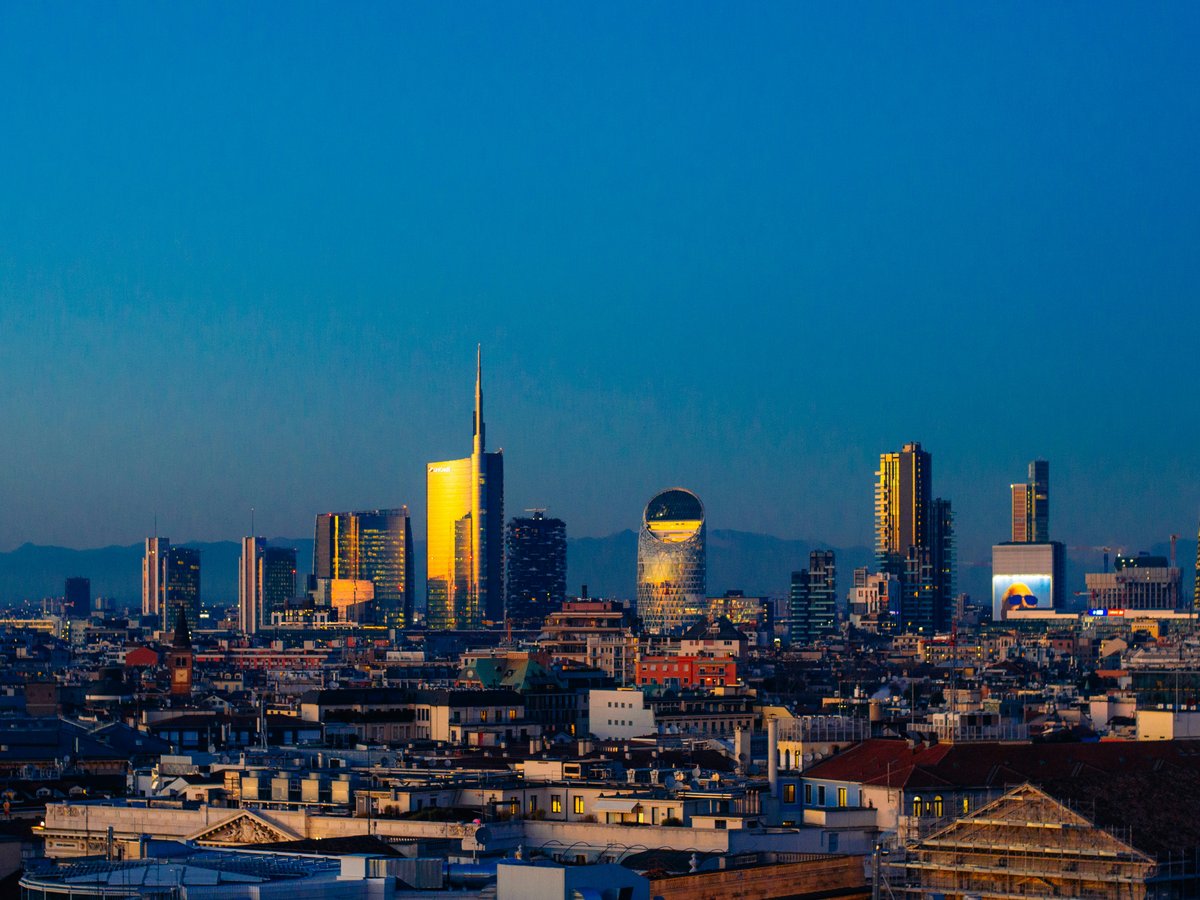
When's the best time to visit Milan in 2026?
April through mid-June and September through October. Temperatures range from 18°C to 25°C, crowds at the Duomo are manageable on weekdays, and restaurant patios along the Navigli canals operate on full schedules. Avoid late July and August entirely. The Po Valley traps punishing heat, and Ferragosto closures empty entire neighborhoods.
Mid-April through mid-June is when Milan works best for a first visit. Daytime temperatures sit between 18°C and 27°C. On clear mornings the Alps appear from the cathedral's rooftop terraces, an effect the summer haze erases by July. The Salone del Mobile takes over Fiera Milano in April's third week. It is the world's largest furniture fair, and design installations spill into Brera's courtyards and the 5Vie district. Hotel rates in Porta Nuova climb 40-60% that week. If design is not your reason for coming, aim for the first two weeks of May instead. The wisteria along Sant'Ambrogio's Romanesque cloister hangs heavy and sweet, the gelato at Pavé on Via Felice Casati tastes the way gelato is supposed to taste, and a Campari spritz at the bars lining Naviglio Grande costs €8-10 (roughly $9-11 at the current rate of €1 to $1.14). Book tickets for Leonardo's Last Supper at Santa Maria delle Grazie (the church dates to 1401) at least a week ahead through cenacolovinciano.org. In this window, slots often appear 5-7 days out.
September is Milan's second sweet spot, and for first-time visitors it might be the better choice. Fashion Week arrives in the third week, which makes restaurants near Via Montenapoleone hard to book, but the rest of the city carries on normally. Late September temperatures hover around 20-22°C. The afternoon light turns golden over the walls of Sforza Castle (founded 1360), and risotto alla milanese at Ratanà near Porta Garibaldi station tastes richer when you are not fighting the summer heat. October brings the first real fog. Milan's nebbia rolls off the canal banks at dawn, and the city takes on a quiet, grey-toned quality that photographs better than any sunny postcard. The Pinacoteca di Brera (founded 1776) is nearly empty on weekday mornings. You can stand in front of Mantegna's Dead Christ without another visitor in the room. By late October, expect 12-15°C days and 80-90mm of rainfall spread across 8-10 wet days.
Do not visit Milan in late July or August. This is not hedging. The Po Valley traps heat like a bowl, and afternoon temperatures reach 35-38°C with humidity above 70%. The air sits thick and still. The main piazza smells like warm stone and sunscreen. Ferragosto, the national holiday on August 15, shuts the city down more completely than Christmas does. Restaurants across the canal district tape paper over their windows and leave for Liguria or Sardinia. The trattoria where you planned to eat ossobuco is closed until September 3. Whole blocks of Porta Romana go dark. The trade-off is price. Accommodation drops 25-30%, and the Museo Poldi Pezzoli (founded 1881) becomes a cool, quiet refuge at €14 entry. But you will spend those savings on bottled water and taxi rides to any space with working air conditioning. When the locals have left, you are visiting a city running at a fraction of its normal capacity.
Winter in Milan is cold, grey, and damp. January temperatures average 1-5°C, and the nebbia can sit for days. On foggy mornings the upper spires of the cathedral (construction began in 1386) dissolve into white above Piazza del Duomo. That said, La Scala's opera season (the house was founded in 1778) opens every year on December 7, the feast of Sant'Ambrogio, Milan's patron saint. Opening night tickets sell out months ahead and cost upward of €2,500, but standing-room gallery spots go on sale that morning for around €15 if you queue by 7am. The Christmas markets along Corso Buenos Aires run late November through early January. The smell of vin brulé and roasted chestnuts cuts through the cold air. Hotel rates drop 20-30% in January and February outside Fashion Week (which falls in February's third week), and a weekday morning slot at the Cenacolo Vinciano might have only a dozen visitors in the room. The damp cold at 3°C feels sharper than the number on the thermometer suggests.
Month-by-month outlook
- Jan
- Feb
- Mar Shoulder
- Apr Ideal
- May Ideal
- Jun Ideal
- Jul Avoid
- Aug Avoid
- Sep Ideal
- Oct Ideal
- Nov Shoulder
- Dec
Year-round climate
Averages from the last 5 years.
| Month | Avg high (°C) | Avg low (°C) | Rainfall (mm) |
|---|---|---|---|
| Jan | 8 | 0 | 71 |
| Feb | 12 | 3 | 80 |
| Mar | 15 | 5 | 73 |
| Apr | 18 | 8 | 102 |
| May | 22 | 13 | 181 |
| Jun | 29 | 19 | 83 |
| Jul | 30 | 20 | 120 |
| Aug | 30 | 20 | 128 |
| Sep | 25 | 16 | 164 |
| Oct | 20 | 12 | 136 |
| Nov | 12 | 5 | 101 |
| Dec | 8 | 2 | 56 |
Continental Po Valley basin. Summers hit 35°C with 70%+ humidity. Winters average 1-5°C under persistent fog. Spring and autumn range 15-25°C with moderate rainfall, roughly 70mm per month.
Go deeper into Milan
Last verified by automated review (v1.7.2) on . What is automated review?