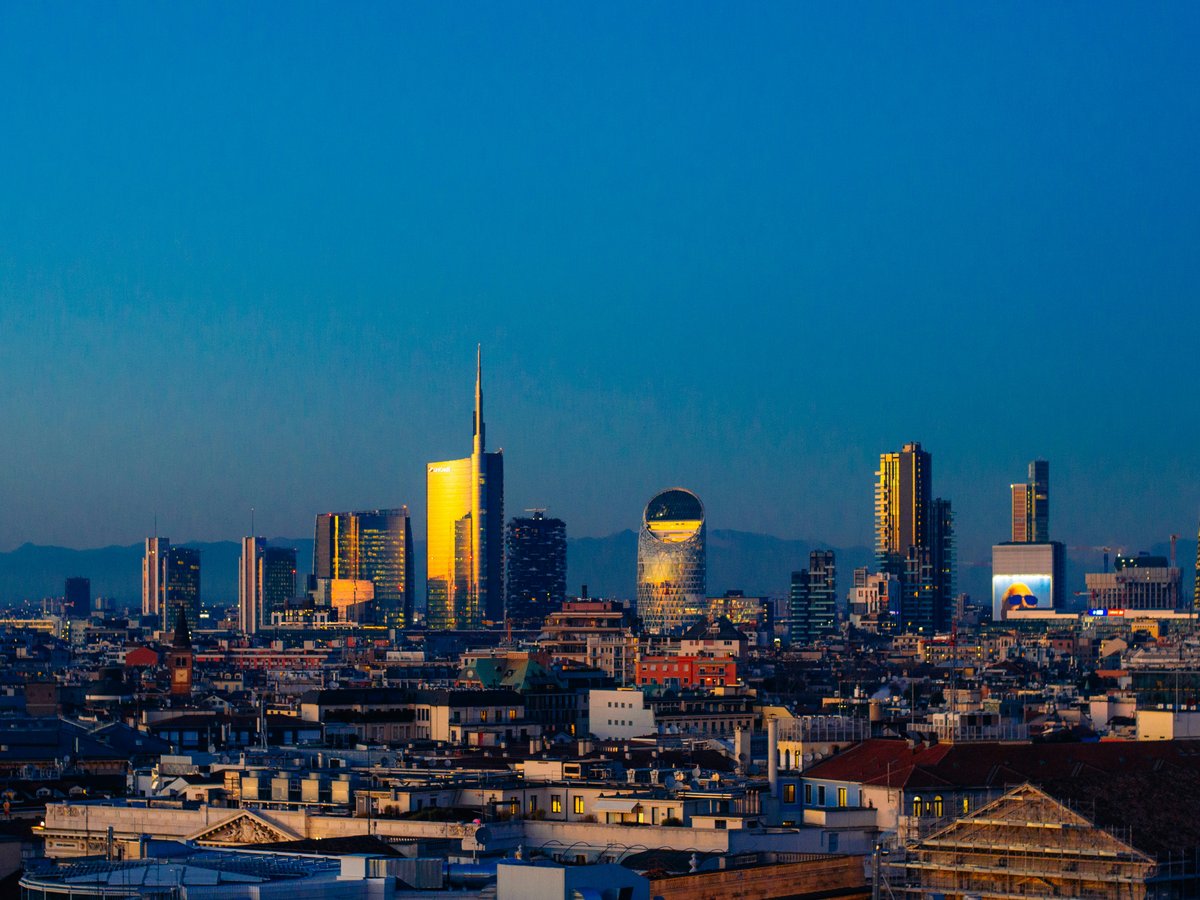
Milan sits in the middle of the Po Plain, which means the city itself is flat as a kitchen table. About 120 meters above sea level, ringed by rice paddies and irrigation canals to the south, the Alps rising sharply to the north. On a clear winter morning you can see Monte Rosa from the Duomo's rooftop terraces, its 4,634-meter peak floating above the haze line. That geography is the whole story of outdoor Milan. The city proper is a cycling and running town, all canal paths and big urban parks. But a 45-minute train ride north drops you at the foot of serious mountains, and 3 of Italy's great lakes sit within 80 kilometers. Most visitors never leave the centro storico. That's a missed opportunity. The Navigli towpaths, the Ticino river corridor, the pre-Alpine ridges above Lecco. Milan currently functions as a basecamp with good espresso, and the outdoor access has been getting better since the city expanded its bike-share network to over 300 stations in 2023.
Outdoor activities
-
Road cycling on the Naviglio Grande towpath
The towpath along the Naviglio Grande runs roughly 50 kilometers from the Darsena basin in central Milan out to Abbiategrasso, passing through flat agricultural land and small towns like Gaggiano and Robecco sul Naviglio. The surface is mostly packed gravel with some paved sections. You'll ride past 18th-century villa gates, working locks, and rice fields where herons stand in the shallows. The smell of cut hay in June is strong enough to taste. Weekday mornings the path is nearly empty.
- Difficulty
- Easy. Flat terrain, no technical sections.
- Duration
- 3 to 5 hours round trip depending on pace and stops
- Best season
- April through October. Summer gets hot on the exposed stretches, so start early.
-
Running the Parco Nord Milano loop
Parco Nord covers about 640 hectares on Milan's northern edge, reachable by M5 metro to Bignami. The main perimeter loop runs roughly 10 kilometers on mixed surfaces, dirt paths through oak and birch groves, some paved connectors. The park has gentle elevation changes, nothing steep, with open meadows where you can hear woodpeckers working in the older growth sections. Drinking fountains are spaced along the main paths. Saturday mornings draw a steady crowd of runners, but the eastern trails stay quieter.
- Difficulty
- Easy to moderate depending on distance
- Duration
- 1 to 2 hours for a full loop at jogging pace
- Best season
- Year-round, though winter fog can reduce visibility to 50 meters.
-
Mountain biking in Parco delle Groane
About 25 kilometers north of Milan's center, Parco delle Groane is a regional park of heathland and pine forest on sandy, well-drained soil. The trail network connects Solaro, Lentate sul Seveso, and Ceriano Laghetto through roughly 3,400 hectares. Singletrack weaves between Scots pine and heather. The ground is soft and loamy after rain, grippy when dry. You might catch the resinous scent of warm pine needles on a July afternoon. Train to Saronno on the S3 line, then a short ride to the park boundary.
- Difficulty
- Easy to moderate. Some rooty sections and short climbs.
- Duration
- 2 to 4 hours depending on route
- Best season
- March through November. Avoid after heavy rain when the sandy trails turn to mud.
-
Rock climbing at Lecco's Grigne group
The limestone walls above Lecco, roughly 60 kilometers northeast of Milan, have been a training ground for Lombard alpinists since the early 1900s. The Corna di Medale offers sport routes from 5a to 7c on solid grey limestone, with the lake glinting below. Multi-pitch routes on the Grigne peaks go up to 400 meters. The rock tends to be sharp on the fingers, pocketed and featured. Lecco is under an hour by train from Milano Centrale on the Lecco line. The climbing community there is tight-knit. Several guide services operate out of town.
- Difficulty
- Moderate to advanced depending on chosen routes
- Duration
- Full day trip from Milan
- Best season
- April through October. South-facing crags can be climbed on dry winter days.
-
Inline skating along the Idroscalo loop
The Idroscalo is an artificial lake built in 1930 east of Linate airport, originally as a seaplane base. A paved path circles the 1.6-kilometer-long lake, smooth asphalt, mostly flat, popular with skaters, cyclists, and families on weekends. The loop is roughly 5 kilometers. In summer the surrounding lawns fill with picnickers and the air smells like sunscreen and grilled sausage from the concession stands. Metro M4 to Repetti, then a short walk east.
- Difficulty
- Easy. Flat paved surface.
- Duration
- 30 minutes to 1 hour for the loop
- Best season
- April through September. Winter weekdays the path is nearly deserted.
Day hikes
-
Corni di Canzo from Canzo village
Three limestone peaks above the town of Canzo, about 50 kilometers north of Milan. The trailhead is a 15-minute walk from Canzo-Asso station on the Trenord line from Milano Cadorna, roughly 1 hour 10 minutes. The trail climbs through chestnut forest, then opens onto exposed rocky ridgeline with views over the Triangolo Lariano and Lake Como's Lecco branch. The final approach to the main summit involves some easy scrambling on solid rock, hands needed in a few spots. You'll feel the temperature drop as you climb above the treeline. The summit sits at about 1,370 meters.
- Difficulty
- Moderate. About 900 meters of elevation gain with some scrambling near the top.
- Duration
- 4 to 5 hours round trip from Canzo village
- Best season
- May through October. Snow lingers on the north-facing sections into April some years.
-
Monte Barro from Galbiate
Monte Barro is a regional park near Lecco, reachable by train to Lecco then bus to Galbiate, or by train to Galbiate station. The peak sits at 922 meters and the hike from the Eremo di Monte Barro starts through mixed deciduous forest. The mountain is known for its botanical richness, over 1,000 plant species catalogued in the park. Views from the summit ridge take in both branches of Lake Como and the Brianza hills. The trails are well-marked and maintained. A rifugio near the top serves polenta and stews on weekends.
- Difficulty
- Easy to moderate. About 500 meters of elevation gain on good paths.
- Duration
- 3 to 4 hours round trip
- Best season
- March through November. Spring wildflowers peak in May.
-
Sentiero del Viandante, Lierna to Varenna section
This historic trail follows the eastern shore of Lake Como, and the Lierna to Varenna section is the most popular day-hike segment. Both towns have train stations on the Milano Centrale to Lecco to Tirano line, making a one-way hike simple. The trail runs along old mule paths through olive groves and chestnut forest, climbing to about 400 meters above the lake before descending into Varenna. The surface alternates between stone-paved mule track and dirt path. You'll catch the smell of wild rosemary on the sunnier stretches. Varenna's waterfront bars make a good finish point.
- Difficulty
- Moderate. Some steep sections with uneven stone steps.
- Duration
- 3 to 4 hours one way
- Best season
- April through June and September through October. Mid-summer gets very hot on the south-facing sections.
-
Monte Resegone from Fuipiano via the Ferrata
Resegone's serrated ridge at 1,875 meters is the most recognizable silhouette from Milan's northern skyline. The standard route from the Piani d'Erna cable car (above Lecco) follows marked trails to the summit. Mind you, Resegone has a via ferrata section on the south ridge that requires a harness, helmet, and via ferrata set. The non-ferrata routes are still serious mountain hikes with sections of exposed trail. The limestone is grey and textured, good grip in dry conditions. Train to Lecco from Milano Centrale takes about 40 minutes on the fast service.
- Difficulty
- Difficult. Via ferrata sections require equipment and experience. Non-ferrata routes still involve 1,200+ meters of gain.
- Duration
- 6 to 8 hours round trip depending on route
- Best season
- June through September. The ferrata should only be attempted in stable, dry weather.
-
Montevecchia and the Curone Valley
Montevecchia sits on a hill about 30 kilometers east of Milan, the center of the Parco di Montevecchia e della Valle del Curone. The terrain is gentle, rolling hills with vineyards, hay meadows, and small woodlands. Trails connect the hilltop village to surrounding hamlets through farmland. The walking is easy, more pastoral than alpine, with views south across the plain. You might hear cowbells. The Santuario della Beata Vergine del Carmelo at the summit has been a pilgrimage site since the 1600s. Getting there without a car means bus from Cernusco-Merate station, which is workable but adds time.
- Difficulty
- Easy. Gentle hills, well-maintained farm tracks.
- Duration
- 2 to 3 hours for a loop from Montevecchia village
- Best season
- Year-round, though spring and autumn are most pleasant. Summer afternoons get humid in the valley.
Water activities
-
Kayaking on Lake Como from Bellagio
Several rental outfits in Bellagio and Varenna hire sit-on-top and touring kayaks by the hour or half-day. Paddling the central lake near the Punta Spartivento headland gives you the classic three-armed view of Como. The water is cold even in summer, typically around 22 to 24 degrees Celsius at the surface in July. Morning sessions tend to have calmer water before the afternoon thermal winds pick up. A fast train from Milano Centrale to Varenna takes about an hour. To be fair, this is a full day trip by the time you factor in travel and paddle time.
- Difficulty
- Easy to moderate depending on wind conditions. Basic swimming ability required.
- Duration
- Half-day trip on the water, full day from Milan
- Best season
- June through September. July and August are warmest for swimming.
-
Swimming at the Idroscalo
The Idroscalo has designated swimming areas with lifeguards operating from June through early September. The south shore beach area charges a small entry fee, currently around 5 euros on weekdays. The water is spring-fed and cleaner than you might expect for an urban lake, regularly tested by the municipality. It feels cool on entry even in August. Families spread out on the lawns with coolers and umbrellas. It gets crowded on hot weekends, particularly the 35-degree days in July when the whole city seems to empty southward toward air-conditioned malls or eastward toward the Idroscalo.
- Difficulty
- Easy. Designated swimming areas with lifeguard supervision.
- Duration
- Half day
- Best season
- June through early September. Peak heat in July and August makes the water most appealing.
-
Canoeing the Ticino River through Parco del Ticino
The Ticino flows south from Lake Maggiore through a protected river park, the Parco Lombardo della Valle del Ticino. Canoe and kayak rentals operate out of several access points between Tornavento and Bereguardo, roughly 30 to 45 kilometers west of Milan. The river is wide and gentle through this stretch, moving through forested banks with gravel bars for stopping. The water runs clear enough to see the bottom in the shallower sections. Herons stand in the shallows. You might spot kingfishers. A few organized outfitters run guided descents of 10 to 15 kilometers that take about 3 hours on the water.
- Difficulty
- Easy on guided sections. Moderate for independent paddling due to current reading.
- Duration
- 3 to 5 hours on the water
- Best season
- May through September. Spring runoff in April can raise the water level and speed.
-
Sailing on Lake Garda from Desenzano
Lake Garda's southern shore at Desenzano del Garda is about 1 hour 20 minutes from Milano Centrale by fast train. The Ora wind typically arrives around midday from the south, providing consistent sailing conditions through the afternoon. Several sailing schools and charter companies operate from Desenzano's marina. The lake is large enough, 52 kilometers long, to feel genuinely open. Water temperature reaches about 24 degrees Celsius in August. Desenzano itself has a pleasant old town for post-sailing dinners. Worth noting, the northern end of the lake near Riva del Garda tends to have stronger, more reliable winds.
- Difficulty
- Moderate. Requires basic sailing knowledge or instruction through a school.
- Duration
- Full day from Milan
- Best season
- April through October. The Ora wind is most consistent from May through September.
-
Stand-up paddleboarding on the Naviglio Grande
A few operators currently offer SUP sessions on the Naviglio Grande canal, launching from points near the Darsena or further out toward Corsico. The canal water is calm, essentially flat, which makes it forgiving for beginners. The width is about 20 meters in most sections, so you're paddling between old warehouse walls and under stone bridges. It's a strange and interesting perspective on the city. The water quality has improved since the canal restoration projects, though you still would not want to swim in it. Sessions typically run 1.5 to 2 hours.
- Difficulty
- Easy. Calm, flat water suitable for first-timers.
- Duration
- 1.5 to 2 hours
- Best season
- April through October. Summer evenings are particularly atmospheric as the canal-side restaurants light up.
Parks & gardens
-
Parco Sempione
FreeMilan's most central large park, 47 hectares behind the Castello Sforzesco. Laid out in the 1890s by Emilio Alemagna as an English-style landscape garden. Mature plane trees and horse chestnuts throw heavy shade in summer, and the grass stays green into July most years. The Arco della Pace anchors the northwest end, and you'll likely hear someone practicing saxophone near the small lake on weekend afternoons. The ground gets muddy in the low spots after autumn rains.
Highlights: Torre Branca (108-meter steel observation tower, designed by Gio Ponti in 1933), the Biblioteca del Parco for outdoor reading, and the small pond where turtles sun on half-submerged logs
-
Giardini Pubblici Indro Montanelli
FreeMilan's oldest public park, opened in 1784 under Austrian rule. About 17 hectares between Porta Venezia and Via Palestro. The layout is formal near the Museo di Storia Naturale, looser and wilder toward the back. Tall London plane trees form a canopy dense enough to keep August temperatures noticeably cooler inside the park than on the surrounding streets. Pigeons and parakeets compete for crumbs near the playground.
Highlights: The Palazzo Dugnani facade visible through the trees, a small carousel operating since the 1950s, and the Natural History Museum's garden entrance
-
Bosco in Città
FreeA 110-hectare urban forest in the western Trenno district, managed partly as a working farm. This is not a manicured park. Unpaved trails wind through poplar and alder groves, past vegetable plots and a small educational farm with goats and chickens. The air smells different here, damp earth and leaf mold even in summer. It's the closest thing to countryside walking you'll find inside the city limits. Fewer tourists, more dog walkers and birdwatchers.
Highlights: The cascina (farmstead) with community gardens, birdwatching hides near the small wetland areas, and seasonal wildflower meadows in April and May
-
Parco delle Cave
FreeA 135-hectare park in the Baggio neighborhood, built on former sand and gravel quarries. The old quarry pits filled with groundwater and now form 4 small lakes surrounded by willows and reeds. Paths loop around and between the lakes on packed earth. In early morning the water is still enough to mirror the surrounding trees. Herons and coots nest here. The park opened in 2002 and still feels slightly wild at its edges, scrubby and unfinished in a good way.
Highlights: The 4 quarry lakes (Lago delle Cave being the largest), a 5-kilometer jogging loop, and fishing spots popular with locals on weekend mornings
-
BAM, Biblioteca degli Alberi Milano
FreeA 9-hectare botanical park in the Porta Nuova district, opened in 2018 at the foot of the Bosco Verticale towers. The design by Petra Blaisse is geometric, with circular groves of single species. 100,000 plants and 450 trees arranged in themed clusters. It feels very curated, very new, very different from Sempione's aged romanticism. The smooth paths are stroller-friendly. Summer evenings the park hosts free yoga sessions and outdoor film screenings. Worth noting, the surrounding architecture is as much the view as the plantings.
Highlights: The circular forest groves (each planted with a single species like birch or oak), seasonal programming of free fitness classes, and views of Stefano Boeri's Bosco Verticale from ground level
-
Giardini della Guastalla
FreeA pocket garden of about 1.2 hectares near the Università Statale, dating to 1555. It's one of Milan's oldest gardens. A baroque fishpond sits at the center, lined with stone balustrades gone slightly green with moss. The space is intimate, shaded by tall cedars and magnolias. Students from the nearby university read on the benches at lunch. It fills up fast in good weather but rarely feels hectic.
Highlights: The 17th-century baroque fishpond, a neoclassical temple folly, and the dense magnolia canopy that keeps the garden cool even in July
Practical tips
- Sun protection
- Milan sits at 45 degrees north latitude. Summer UV is strong, and the Po Plain humidity makes sunburn feel less obvious until it's too late. Apply SPF 50 before heading out, reapply every 2 hours, and carry a hat with a brim. On mountain day hikes above the treeline, UV intensity increases roughly 10 percent per 1,000 meters of altitude. The reflected light off Lake Como's surface doubles your exposure on the water.
- Water and hydration
- Carry at least 1.5 liters per person for any hike over 2 hours. Milan's tap water is safe and good, drawn from deep aquifers. Fill up before you leave. Mountain rifugi sell bottled water but prices reach 3 to 4 euros for a half-liter. Fontanelle (public drinking fountains) are common in Milan proper but scarce once you're on trails. In summer humidity, you'll lose more water to sweat than you expect on even moderate efforts.
- Footwear and gear
- City parks and canal towpaths are fine in trail running shoes or even sturdy sneakers. For anything in the pre-Alps (Corni di Canzo, Resegone, the Grigne), proper hiking boots with ankle support are worth the weight. The limestone up there is slippery when wet. Trekking poles help on the steeper descents. If you're doing the Resegone ferrata, rent the via ferrata set (harness, lanyard, helmet) from a Lecco shop rather than hauling your own.
- Trail conditions and markings
- CAI (Club Alpino Italiano) maintains most trails in the pre-Alpine areas. Look for red and white paint blazes on rocks and trees. Trail numbering follows the CAI system. Conditions after rain can deteriorate quickly, particularly on the steeper limestone paths where water channels down the trail. Check local weather before heading out. The Trenord train app shows real-time departures for return trips, which matters when the last train back from Canzo or Lecco leaves before 22:00 on weekdays.
- Seasonal planning
- April through June and September through October are the best windows for most outdoor activities around Milan. July and August bring temperatures above 34 degrees Celsius in the city, with humidity that makes exertion unpleasant below 800 meters. Winter fog (the nebbia) can be thick from November through February, reducing visibility in the plains to under 100 meters some mornings. That said, clear winter days offer the sharpest mountain views from the city.
- Getting to trailheads by public transport
- Trenord regional trains from Milano Cadorna and Milano Centrale connect to Lecco, Como, Varese, and the smaller stations along the pre-Alpine foothills. A single ride to Canzo-Asso costs about 5.50 euros as of 2025. Buy tickets before boarding at the station machines or through the Trenord app. Trains fill up on sunny weekend mornings, particularly the 7:30 and 8:30 departures to Lecco. Consider catching the 6:50 for a seat and an early start on the trail.
FAQ
Can you do serious hiking as a day trip from Milan?
Yes. Lecco is under an hour by train from Milano Centrale, and it sits at the base of peaks reaching 1,800 meters and higher. The Corni di Canzo, Monte Barro, and Resegone are all realistic day trips by public transport. You'll want to catch an early train and plan for the last return service, but the access is genuinely good.
Is it safe to swim in the lakes near Milan?
Lake Como and Lake Garda both have designated swimming areas with tested water quality. The Idroscalo in Milan has lifeguarded beaches open from June through early September. The Navigli canals are not suitable for swimming. Lake water temperatures reach 22 to 24 degrees Celsius in peak summer. Be aware of boat traffic on the larger lakes and stick to marked swimming zones.
What outdoor activities work in Milan during winter?
Running and cycling in the city parks continue year-round, though fog can be dense from November through February. The pre-Alpine hills are accessible on clear days. If you want snow, the Valtellina ski resorts like Bormio and Livigno are about 2 to 3 hours by car or train-plus-bus from Milan. The city's indoor climbing gyms, including Urban Wall near Porta Romana, stay busy through the colder months.
Do I need to book anything in advance for outdoor activities near Milan?
Most hiking is free and requires no booking. Kayak and SUP rentals on Lake Como should be reserved at least a few days ahead in July and August. Sailing charters on Lake Garda typically need advance booking. Via ferrata gear rental from Lecco shops is first-come, but calling ahead on summer weekends is sensible. Guided canyon descents in the pre-Alps fill up weeks ahead during peak season.
How hot does Milan get in summer for outdoor activities?
Milan regularly hits 34 to 37 degrees Celsius in July and August, with humidity that can push the perceived temperature higher. The Po Plain traps heat. Start any strenuous activity before 8:00 in summer. Above 1,000 meters in the mountains, temperatures drop noticeably, often 8 to 10 degrees cooler than the city, which makes higher-altitude hikes a genuine relief on hot days.
Are Milan's parks suitable for trail running?
Parco Nord Milano offers roughly 10 kilometers of mixed-surface paths with gentle terrain, suitable for trail running. Bosco in Citta has unpaved paths through woodland in the western part of the city. Parco delle Cave has a 5-kilometer loop around its quarry lakes. For more technical running, Parco delle Groane north of the city has singletrack through pine forest. All are free and open from dawn to dusk.
Outdoor experiences in Milan
 Free cancellation
 Como, Lugano & Bellagio: Exclusive Cruise–Two Countries in a Day
Outdoor experience: 11 hours, free cancellation.
via Viator Free cancellation
 Milans Hidden Gems Unique Bike Tour
Outdoor experience: 3 hours, free cancellation.
via Viator Free cancellation
 Best of Lake Como Experience from Milan, Cruise and Landscapes
Outdoor experience: 10 hours, free cancellation.
via Viator Free cancellation
 St Moritz & Swiss Alps Day Trip with Bernina Red Train from Milan
Outdoor experience: free cancellation.
via Viator Free cancellation
 The Milan you don't expect, bike tour with picnic on the lake
Outdoor experience: free cancellation.
via ViatorLast verified by automated review (v1.7.2) on . What is automated review?