Stay in Medellin in March
64 hotels in the Trip.com pool for Medellin, from US$11 a night.
Opens Trip.com on Fri 5 Mar to Sun 7 Mar 2027; change the dates there.
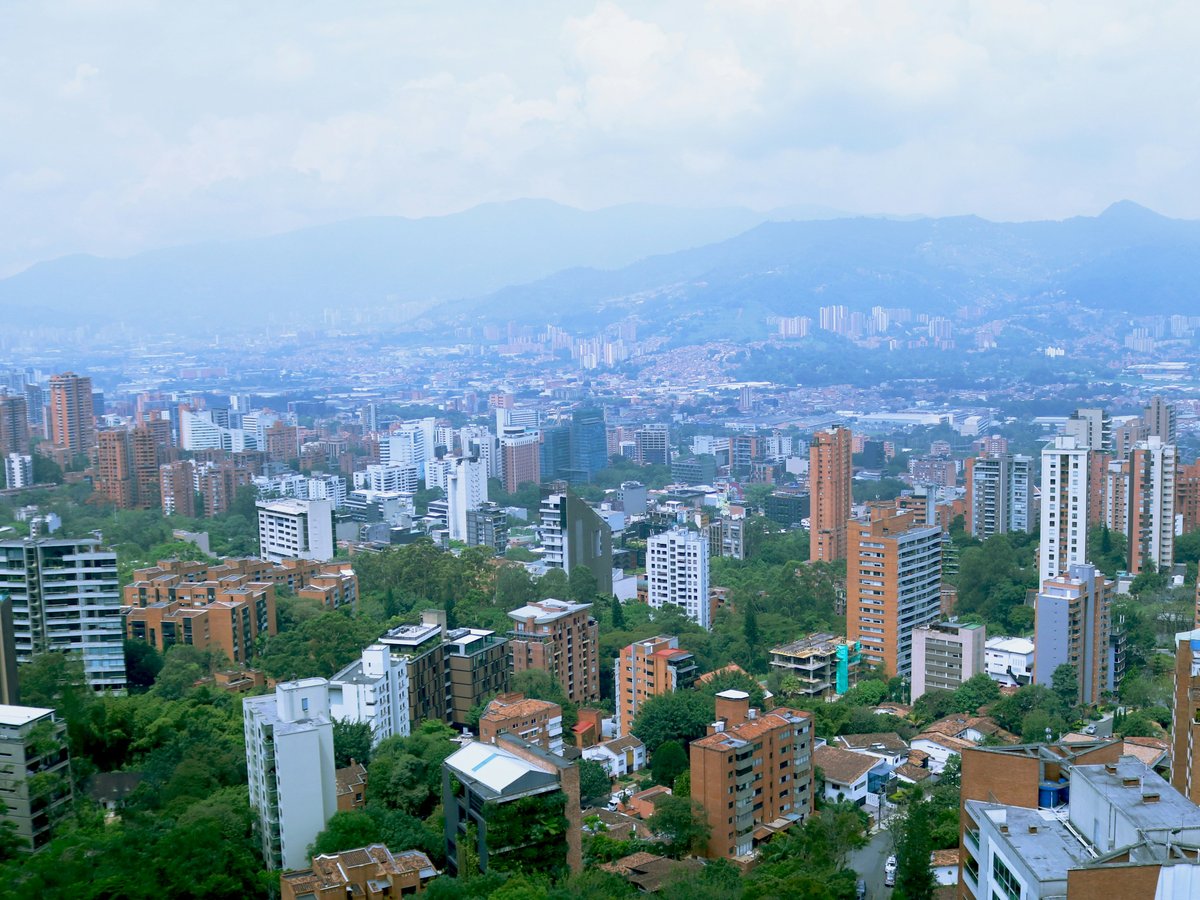
March in Medellin means rain. After the relatively dry January (93mm) and transitional February (144mm), rainfall nearly doubles to 211mm spread across 27 days. You'll likely see some rain on almost every day of the month. Temperatures hold at a comfortable 26°C (79°F) during the day and 16°C (61°F) at night, and the altitude at 1,495 meters (4,905 feet) above sea level keeps the humidity from feeling as heavy as it would down in Cartagena. But 86% humidity is 86% humidity, and you'll feel it. The saving grace is the pattern. Mornings across El Poblado, Laureles, and Centro tend to be warm and clear, with clouds building over the Aburrá Valley after noon. By 2pm or 3pm, the showers roll in, sometimes a quick 20-minute burst, sometimes a steady 2-hour downpour that turns the steep streets of La Candelaria into temporary streams. Evenings often clear up, and the air fills with the smell of wet pavement and coffee blossoms drifting down from the hillsides above Envigado.
March sits in a transitional zone between the easier conditions of January-February and the heavier rains of April (270mm) and May (260mm). It's not the worst month, but it's objectively one of the wetter ones, ranking roughly 7th out of 12 for visiting. If rain genuinely bothers you, January or July would serve you better.
There's a calendar wildcard worth noting. Semana Santa (Holy Week) lands in late March some years. In 2026, Palm Sunday falls on March 29, and the city shifts into holiday mode for the final days of the month. Many Paisas head to the coast, restaurants in residential neighborhoods like Belén and Buenos Aires go quiet, and Ley Seca restrictions can temporarily close bars and liquor stores. Tourist-facing spots in El Poblado generally stay open, but the rhythm of the city changes noticeably.
Why visit in March
- Temperatures hold at 26°C (79°F), and Medellin's 1,495-meter elevation keeps the air from feeling truly oppressive despite 86% humidity. The overnight low of 16°C means comfortable sleeping without air conditioning.
- Hotel rates in El Poblado and Laureles drop 15-25% from December-January peak pricing, and availability opens up at places that were fully booked during Feria de la Luz and the holiday season.
- Rain turns the hillsides above the Aburrá Valley intensely green, and waterfalls near Parque Arví and in San Cristóbal run at their strongest volume of the first half of the year.
- Fewer international tourists mean shorter waits at Museo de Antioquia, smaller group sizes on Comuna 13 graffiti tours, and less crowding on the Metrocable.
Worth knowing
- 211mm of rainfall across 27 days means you'll encounter rain on almost every afternoon. Outdoor plans need morning scheduling and a backup option.
- Humidity at 86% makes clothes feel damp, and items left in a suitcase can start smelling musty within a couple of days. Quick-dry fabrics are not optional.
- Trails in Parque Arví and along the eastern hills get muddy and slippery after sustained rain, limiting some hiking options and requiring proper footwear.
Best for
Think twice if
March sits at the start of Medellin's first rainy season. Rainfall roughly doubles from February's 144mm to 211mm, spread across 27 rainy days. Mornings are typically sunny and warm across neighborhoods like El Poblado and Laureles, but cloud cover builds over the Aburrá Valley through early afternoon, and showers tend to arrive between 2pm and 5pm. The rain can be heavy, a proper tropical downpour, but it usually clears within an hour or two. Evenings often open up to clear skies. Humidity sits at 86%, most noticeable in the midday hours before the rain cools things down. Overnight temperatures drop to around 16°C, and the post-rain air at altitude can feel genuinely cool.
Seasonal caution
- Afternoon thunderstorms can produce localized flash flooding in lower-lying areas along the Río Medellín. Avoid walking through flooded streets near Centro and La Candelaria after heavy downpours.
- UV index remains high at 1,495 meters elevation despite cloud cover. Sunburn is possible even on overcast mornings, especially between 10am and 2pm. Apply SPF 50+ before heading out.
Year-round climate
Averages from the last 5 years.
| Month | Avg high (°C) | Avg low (°C) | Rainfall (mm) |
|---|---|---|---|
| Jan | 26 | 16 | 93 |
| Feb | 26 | 16 | 144 |
| Mar | 26 | 16 | 211 |
| Apr | 26 | 17 | 270 |
| May | 26 | 17 | 260 |
| Jun | 26 | 16 | 224 |
| Jul | 27 | 16 | 110 |
| Aug | 27 | 16 | 177 |
| Sep | 27 | 16 | 179 |
| Oct | 26 | 16 | 259 |
| Nov | 25 | 16 | 219 |
| Dec | 26 | 16 | 114 |
Holidays and festivals in March
Public holidays
- Saint Joseph's Day(Día de San José)22 March 2027
- Maundy Thursday(Jueves Santo)25 March 2027
- Good Friday(Viernes Santo)26 March 2027
Best things to do in March
Morning walking tour of Comuna 13
cultureThe graffiti-covered escalators and murals of Comuna 13 (San Javier) are Medellin's most-visited attraction. Tours run 2-3 hours and cover the neighborhood's transformation from one of the most dangerous areas in the Western Hemisphere to an open-air gallery. Local guides share personal stories alongside the street art.
March crowds are 30-40% thinner than December-January, meaning smaller group sizes and less congestion on the escalators. Morning departures (9am-10am) finish before the afternoon rain arrives.Booking tipBook morning slots 3-4 days ahead for weekends. Weekday tours often have availability same-day.
Waterfall hike in San Cristóbal
natureThe corregimiento of San Cristóbal, about 40 minutes west of Centro by bus, has several waterfalls fed by mountain streams. The Salto del Ángel cascade drops roughly 15 meters through thick cloud forest. The trail is 45 minutes each way and moderately steep.
March's 211mm of rainfall fills the cascades to their strongest flow of the first half of the year. February's 144mm is enough to get them running, but March brings the real volume.Booking tipWear waterproof hiking shoes with ankle support. The trail gets muddy after rain. No booking needed, but go before noon.
Museo de Antioquia and Plaza Botero afternoon circuit
cultureThe Museo de Antioquia houses the largest collection of Fernando Botero's paintings and sculptures, with 108 works across multiple galleries. Plaza Botero outside holds 23 of his bronze sculptures. Together they fill 2-3 hours comfortably.
March's predictable afternoon rain makes this the ideal month to dedicate rainy afternoons to Medellin's indoor cultural spaces without feeling like you're missing good weather outside. Tuesday and Wednesday afternoons in March see noticeably fewer visitors than the same days in January.Booking tipEntry costs around 18,000 COP for adults. No advance booking needed. The museum closes on Tuesdays in some periods, so check before going.
Paragliding over the Aburrá Valley from San Félix
adventureTandem paragliding flights launch from the hills above San Félix, about 45 minutes south of El Poblado. The 15-20 minute flight descends over coffee farms and the southern edge of the Aburrá Valley, with views stretching to the mountains beyond Envigado and Sabaneta.
Morning thermals remain strong in March, and the cloud buildup after noon creates a dramatic backdrop for photos. Flights launch between 9am and noon, well before the afternoon rain window.Booking tipBook 2-3 days ahead for weekend morning slots. Flights cost roughly 180,000-250,000 COP per person for a tandem. Operators cancel if wind or rain arrives early.
Cooking class with seasonal tropical fruit
foodSeveral cooking schools in El Poblado and Laureles run half-day classes covering traditional Paisa cuisine. March classes often incorporate peak-season mango, chontaduro, and other tropical fruits into the menu alongside staples like arepa, empanadas, and bandeja paisa.
Peak mango and chontaduro season means ingredients that aren't available or aren't at their best for much of the year. March classes build menus around these seasonal fruits in ways that a December class cannot.Booking tipBook at least a week ahead for weekend classes. Weekday sessions are easier to get.
Metrocable ride from Acevedo to Santo Domingo and Parque Arví
sightseeingThe Metrocable gondola system climbs from the valley floor at Estación Acevedo up through the hillside comunas to Santo Domingo, then continues via a second line to the Parque Arví ecological reserve. The full ride takes about 30 minutes each way and passes over neighborhoods built into steep green hillsides.
March rain greens the hillside comunas, and the aerial views from the gondolas are more dramatic with valley fog lifting through the morning. The cloud forest in Parque Arví drips with moisture, and the streams inside the reserve run at full volume.Booking tipRide up before 10am. The Metrocable can pause service during afternoon thunderstorms, and being stranded at the top for an hour is a real possibility in March.
Day trip to Guatapé and Piedra del Peñol
day tripThe town of Guatapé sits 2 hours east of Medellin by bus from Terminal del Norte. The 740-step climb to the top of Piedra del Peñol, a 220-meter granite monolith, gives panoramic views over the reservoir and surrounding green hills. The town itself has colorful zócalo panels decorating the lower walls of nearly every building.
The reservoir is near full capacity from the rains, making the views from the top of the Piedra more dramatic than in drier months. The green of the surrounding hills is intense. Go on a weekday to avoid weekend crowds from Medellin.Booking tipTake the earliest bus from Terminal del Norte (around 6:30am) and aim to climb the Piedra by 9am. Start heading back by 1pm to avoid afternoon storms on the mountain road.
What to eat in March
In season: fruit
Mango
Peak mango season in Antioquia runs from roughly March through May. Street vendors around Parque de Bolívar and Plaza Minorista sell bags of sliced Tommy and Farchild mangoes with salt and lime for around 3,000-5,000 COP per kilo. The fruit is noticeably sweeter and less fibrous than what you'd find in December or January.
Chontaduro
This starchy, orange-fleshed palm fruit appears on street carts around Estación San Antonio and Parque Berrío from February through May. The texture is dense and closer to a boiled potato than a tropical fruit, typically served with salt and honey. It's an acquired taste, but worth trying at least once.
On menus now
Cazuela de mariscos
This creamy seafood stew appears on more menus during Lent, when many Colombians eat fish on Fridays. Restaurants in El Poblado and Ciudad del Río serve versions with shrimp, squid, and white fish in a coconut milk base. It's a coastal dish adopted by highland Medellin during the Lenten weeks.
Street food peaks
Empanadas de pescado
During Cuaresma (Lent), which runs through most of March, fish-filled empanadas replace the usual beef and chicken versions at fritangas and street stalls across Belén and Envigado. The dough is the same crispy corn shell, but the fish filling has a lighter, brinier flavor.
What to drink
Salpicón de frutas
A chunky fruit cocktail made with peak-season mango, papaya, watermelon, and banana in a sweet soda or fruit juice base. Vendors along Paseo del Río and in the food courts of El Tesoro and Santafé malls serve tall glasses for 5,000-8,000 COP. The March version benefits from the ripe, sweet mangoes that define the season.
Regular events in March
Día de San JoséFree
National public holiday honoring Saint Joseph. Under Colombia's Ley Emiliani, the holiday moves to the nearest Monday (March 23 in 2026). Banks, government offices, and some shops close. The Metro and Metrocable run on holiday schedules with reduced frequency.
March 19 (observed on nearest Monday)Día Internacional de la MujerFree
International Women's Day on March 8 brings marches and cultural events across Centro and El Poblado. The Parque de los Deseos and Jardín Botánico often host free concerts, panels, and art installations. Some restaurants offer promotional menus for the day.
March 8Semana Santa processionsFree
When Easter falls in April (as in 2026), Palm Sunday and the first days of Holy Week land in the final days of March. Processions move through La Candelaria and Centro, and the Catedral Metropolitana hosts special Masses. Medellin's celebrations are more subdued than those in Popayán or Cartagena, but the city's rhythm noticeably shifts as many families leave for vacation.
Late March (varies by year, depends on Easter date)Best places this March
Jardín Botánico de Medellín
parkThe 14-hectare botanical garden in the north of the city reaches peak lushness in March after weeks of rain. The Orquideorama, a wooden lattice canopy designed by Plan B Arquitectos, shelters tropical plants and orchid displays. Morning visits before 11am let you explore in dry, comfortable weather before the afternoon clouds roll in. Entry is free.
Zona NorteParque Arví
nature reserveThis 16,000-hectare ecological reserve sits in the mountains east of the city, accessible by Metrocable from Estación Acevedo. March rains fill the cloud forest streams and create a thick, misty canopy. The Sendero de la Biodiversidad trail (2.5km loop) is manageable even when trails are damp. Go on a weekday morning for near-empty paths.
Santa ElenaMuseo de Antioquia
museumHome to 108 Botero works and rotating contemporary exhibitions. March's afternoon rain makes this the natural afternoon destination. The building itself, a former city hall from 1937, sits directly on Plaza Botero with its 23 outdoor bronze sculptures. Rainy-season weekdays see fewer visitors than peak months.
La CandelariaCerro Nutibara and Pueblito Paisa
viewpointThe 30-minute walk to the top of this 80-meter hill in Belén gives 360-degree views of the Aburrá Valley. After a morning rain shower clears, the air is washed clean and the surrounding mountains appear sharply defined against the sky. Pueblito Paisa, a replica of a traditional Antioqueño village, sits at the summit. Free entry.
BelénMercado del Río
marketThis covered food hall in Ciudad del Río stays dry regardless of weather, which matters more in March than in January. Over 40 food stalls serve everything from Paisa comfort food to sushi. March brings peak-season mango and chontaduro to the fruit stalls, and Lenten fish specials appear at several stands.
Ciudad del RíoCasa de la Memoria
museumThis free museum in Buenos Aires documents Colombia's armed conflict through interactive exhibits, personal testimonies, and multimedia installations. It's an indoor space that pairs well with rainy afternoons, and March's lower tourist numbers mean you can spend time with the exhibits without feeling rushed. Allow 2 hours.
Buenos Aires
Your packing checklist
Tick items off as you pack. Your progress saves in this browser.
All packed — have a great trip.
Insider tips
The cheapest mangoes in March are at Plaza Minorista in Centro, not from the tourist-area fruit carts in El Poblado. Vendors at Minorista sell a kilo of ripe Tommy mangoes for around 3,000-5,000 COP, roughly half the price near Parque Lleras.
If Semana Santa falls in late March, book domestic flights early. Colombians travel heavily during the holiday, and Bogotá-to-Medellín fares on Avianca can double during the final week of the month. International flights are less affected.
The Metrocable to Parque Arví pauses service when thunderstorms hit in the afternoon. Ride up before 10am, spend 3-4 hours exploring, and start descending by 1pm. Getting stuck at the top for an hour is a real possibility in March, and there's limited shelter at the upper station.
Skip the rain ponchos sold near Parque Lleras for 15,000-20,000 COP. They tear within an hour. A proper rain jacket from a Decathlon (there's one in El Tesoro mall) costs 60,000-90,000 COP and lasts the entire trip.
Avoid these mistakes
- Planning a full day at Guatapé without checking the afternoon forecast. The 2-hour bus ride from Terminal del Norte means you're stranded at Piedra del Peñol if rain arrives at 2pm. Start early, climb by 9am, and aim to leave by 1pm.
- Packing only shorts and tank tops for a trip in the tropics. March evenings in Medellin dip to 16°C (61°F), and the post-rain air at 1,495 meters feels cooler than you'd expect in Colombia. A light jacket for dinner in Laureles saves you from shivering at an outdoor table.
- Assuming a clear morning sky means a dry afternoon. In March, blue sky at 9am tells you nothing about conditions at 3pm. The afternoon rain arrives on roughly 27 of 31 days, and it's heavy enough to cancel paragliding flights, close Metrocable lines, and turn unpaved trails into mud.
Practical tips for March
Book outdoor activities for morning slots. Tour operators in El Poblado and Laureles typically run 8am and 9am departures, and these fill first in March because regulars adjust to the afternoon rain pattern. Reserve paragliding and Comuna 13 tours at least 3 days ahead for weekend mornings. If Semana Santa falls in late March, expect Ley Seca (alcohol sale restrictions) from Holy Thursday evening through Saturday morning. Stock up beforehand if that matters to your plans. Dress in layers for the temperature swing between 26°C midday and 16°C post-rain evenings. Restaurants with open-air seating in Provenza and along Carrera 35 in Laureles feel cool by 8pm. The Metro and Metrocable run on reduced schedules during public holidays, including the Día de San José holiday (observed on the Monday nearest March 19). Check Metro de Medellín's website the day before for adjusted departure times. Uber and InDriver work across the city and are typically cheaper than yellow taxis, though taxi availability is more reliable during peak rain hours when app-based demand spikes and surge pricing kicks in.
FAQ
Is March a good time to visit Medellin?
March is a fair time to visit, not the best. Temperatures are comfortable at 26°C (79°F), but 211mm of rainfall across 27 days makes it one of the wetter months. It ranks roughly 7th out of 12 for visiting. January (93mm rain) and July (110mm) are drier, more predictable choices. That said, hotel rates drop 15-25% from December-January peaks, crowds at places like Museo de Antioquia and Comuna 13 thin out, and the rain follows a predictable afternoon pattern that leaves most mornings free for outdoor activities.
What is the weather like in Medellin in March?
Warm and wet. Average highs reach 26°C (79°F) and lows sit around 16°C (61°F). Humidity hovers at 86%. Rain falls on roughly 27 of 31 days, totaling about 211mm for the month. The pattern is fairly predictable. Mornings tend to be clear and warm, with showers arriving between 2pm and 5pm most days. They can be heavy but rarely last more than a couple of hours. Evenings usually clear up. The altitude at 1,495 meters keeps the humidity more tolerable than coastal cities like Cartagena or Santa Marta.
Is Medellin crowded in March?
Not particularly. March falls between the busy December-January international tourist peak and the mid-year low season. You'll find shorter waits at Museo de Antioquia and smaller group sizes on Comuna 13 tours. The exception is the final days of March if Semana Santa begins then. Domestic travelers book hotels for the holiday weekend, though many Paisas leave Medellin for the coast, so the net effect on crowding is mixed.
Does it rain every day in Medellin in March?
Nearly. Historical averages show rain on about 27 of 31 days. But the daily total matters less than the timing. Most days follow the same pattern of clear mornings, cloudy midday, and afternoon showers lasting 30 minutes to 2 hours. Full-day rain is uncommon. If you plan outdoor activities before noon and keep museums and restaurants for the afternoon, you can still have productive, enjoyable days.
What should I pack for Medellin in March?
A compact rain jacket is the single most important item. Afternoon downpours hit almost daily, and Medellin's steep hills make umbrellas impractical. Pack quick-dry synthetic clothing instead of cotton, which stays damp in 86% humidity. Waterproof shoes with decent grip prevent slipping on wet sidewalks. Bring SPF 50+ sunscreen for the strong UV at 1,495 meters, and a light sweater for evenings when post-rain temperatures drop to 16°C (61°F).
Things to Do in Medellin in March
 Free cancellation
 Comuna 13 Graffiti Tour with Local snacks
City tour: 3 hours, free cancellation.
via Viator Free cancellation
 Guatapé Tour: Piedra del Peñol with Boat Tour, Breakfast, Lunch
Day trip: free cancellation.
via Viator Free cancellation
 Explore Guatapé and El Peñol from Medellín
Day trip: free cancellation.
via Viator Free cancellation
 Tour to Guatape, Piedra del Peñol, lunch, snacks boat trip
Day trip: free cancellation.
via Viator Free cancellation
 Guided Tour of Comuna 13 Medellín with Snacks Included
City tour: 3 hours, free cancellation.
via Viator Free cancellation
 Half-Day Coffee Tour: From the Seed to the Cup, Farm & roastery
Day trip: free cancellation.
via ViatorFind a flight to Medellin
Live fares to Medellin appear here once cookies are accepted.
Last verified by automated review (v1.7.2) on . What is automated review?