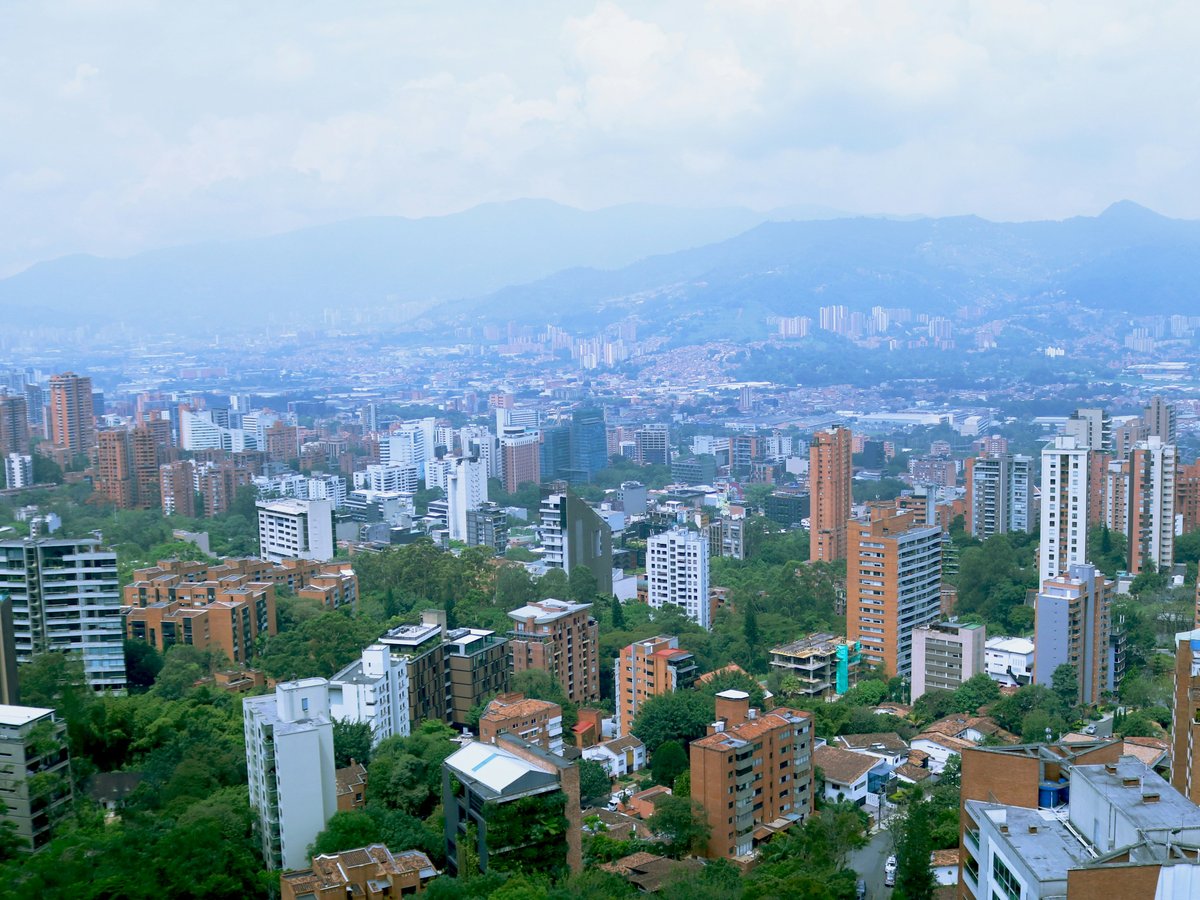
Medellin sits at roughly 1,495 meters above sea level in the Aburrá Valley, hemmed in on both sides by the western and central cordilleras of the Andes. The city's average temperature hovers around 22°C year-round, which makes outdoor plans reliable in a way that few tropical cities can match. That said, afternoon rain is common from April through May and again from September through November, so mornings tend to be the window for anything ambitious. The valley floor is dense and urban, but the surrounding mountains rise steeply to over 2,500 meters within a 30-minute drive. You'll find paragliders launching from ridgelines above El Poblado, trail runners grinding up Cerro El Volador before 7 a.m., and cyclists climbing the Alto de las Palmas on any given Sunday. The Metrocable system, originally built for commuters, doubles as a lift to trailheads in Parque Arví at 2,600 meters. Medellin is not a beach city or a flat city. It is a valley carved by the Río Medellín, ringed by green slopes that start at the edge of the sidewalk.
Outdoor activities
-
Paragliding from San Félix
The launch point at San Félix sits about 25 minutes north of Medellin's city center, above the town of Bello at roughly 2,200 meters elevation. Tandem flights with a certified pilot typically last 15 to 25 minutes, depending on thermals. You'll fly over the northern Aburrá Valley with views down to the Río Medellín. Operators like Paragliding Medellín and Zona de Vuelo run daily flights, weather permitting, for around 200,000 to 280,000 COP per person. Morning slots before 11 a.m. tend to have calmer air. Afternoon thermals are stronger but can also mean a bumpier ride. No experience needed for tandem.
- Difficulty
- Beginner (tandem)
- Duration
- 15-25 minutes airtime, 2-3 hours total with transport
- Best season
- December through March, when winds are steadiest and rain less likely
-
Road cycling to Alto de las Palmas
The climb from El Poblado to Alto de las Palmas covers about 18 kilometers with roughly 900 meters of elevation gain. The road is paved and well-maintained, though traffic can be heavy on weekdays. Sunday mornings are the prime window, when Medellin closes certain roads to cars for the Ciclovía program. The gradient averages around 5%, with steeper pitches near the top. At the summit, you're above 2,400 meters and the temperature drops noticeably. Rental road bikes are available from shops in El Poblado like Bicicletas Medellín for around 80,000 to 120,000 COP per day. Mind you, the descent is fast and the road surface gets slick after rain.
- Difficulty
- Moderate to hard
- Duration
- 3-5 hours round trip
- Best season
- Year-round, with drier conditions December through February
-
Mountain biking in Parque Arví
Parque Arví covers over 1,700 hectares of cloud forest and planted pine above the eastern ridge of the valley. You can reach the park entrance via the Metrocable from Santo Domingo station, though bringing a bike on the cable car requires coordination and sometimes an extra fee. Several single-track trails wind through the forest at elevations between 2,400 and 2,600 meters. The soil is clay-heavy, so trails get muddy fast after rain. Local outfitters near the Metrocable station rent basic mountain bikes for around 30,000 to 50,000 COP per half day. The trails are not technical by international standards, but the altitude and mud add challenge. Worth noting, Medellin's mountain biking scene has grown steadily since 2018.
- Difficulty
- Easy to moderate
- Duration
- 2-4 hours
- Best season
- December through March for drier trails
-
Rock climbing at La Mojarra
La Mojarra is a climbing area about 45 minutes south of Medellin near the town of La Estrella, with bolted sport routes on a volcanic rock face. The crag has around 30 routes ranging from 5.7 to 5.12a in the Yosemite Decimal System. The rock tends to be sharp and textured, good for friction but rough on skin. A few Medellin climbing gyms, including Vertical Rock and Búlder, organize weekend trips and can connect you with local guides. Bring your own gear or arrange rental through the gym. The wall faces east, so afternoon shade makes it more tolerable from about 1 p.m. onward.
- Difficulty
- Varies, 5.7 to 5.12a
- Duration
- Half day to full day
- Best season
- December through February for the driest rock
-
Trail running on Cerro El Volador
Cerro El Volador is a 120-hectare hill rising to about 1,630 meters in the middle of Medellin, between the Universidad Nacional campus and the Estadio Atanasio Girardot. The main loop trail from the base to the summit and back covers roughly 3.5 kilometers with about 150 meters of elevation gain. The trail is packed dirt and gravel, manageable in running shoes. Early mornings before 7 a.m. are cooler and less crowded. The summit has a flat clearing with 360-degree views of the valley. Local running groups meet here on Saturdays around 6 a.m. for group workouts.
- Difficulty
- Easy to moderate
- Duration
- 30-60 minutes
- Best season
- Year-round
Day hikes
-
Parque Arví loop trails
The Metrocable L line from Santo Domingo station to Parque Arví takes about 15 minutes and drops you at 2,600 meters in cloud forest. From the arrival platform, the Sendero de la Caminera loop covers roughly 5 kilometers through eucalyptus and native oak, mostly flat with a few short climbs. The air is noticeably cooler up here, often 14 to 16°C, and the forest smells like wet pine and damp soil. Longer routes connect to the Laguna de Guarne trail, which adds another 4 kilometers each way. Bring a rain jacket regardless of the forecast. You might see hummingbirds in the flowering bushes near the first kilometer marker. The cable car costs about 7,300 COP round trip for residents, with a separate rate for tourists.
- Difficulty
- Easy to moderate
- Duration
- 3-5 hours including Metrocable transit
- Best season
- December through March for drier trails, though the forest is green year-round
-
Cerro Pan de Azúcar
Pan de Azúcar rises to about 2,137 meters on the western edge of Medellin, above the barrio of Robledo. The trail starts from the neighborhood and climbs roughly 500 meters over about 4 kilometers of packed dirt switchbacks. The path is steep in places, and the footing can be loose on dry days. From the summit you get an unobstructed view east across the entire Aburrá Valley, from Bello in the north to Envigado in the south. Early starts around 6 a.m. beat the midday heat. The trail is popular with local fitness groups, so you'll likely have company on weekend mornings. There is no entrance fee and no formal infrastructure at the top.
- Difficulty
- Moderate to hard
- Duration
- 3-4 hours round trip
- Best season
- Year-round, with clearer views in December through February
-
Boquerón to Palmitas trail
This route follows an old mule path from the Boquerón pass on the western ridge down toward the village of San Sebastián de Palmitas, about 30 kilometers west of Medellin's center. The trail descends from around 2,400 meters through mixed farmland and remnant cloud forest. The full one-way hike covers about 12 kilometers with roughly 800 meters of descent. You'll pass coffee fincas, banana groves, and a few small streams. The warmer air hits you as you drop below 2,000 meters. Transport back to the city from Palmitas runs on local buses along the old road for about 5,000 COP. To be fair, this trail is not well-marked, so going with someone who knows the route is a good idea.
- Difficulty
- Moderate
- Duration
- 5-7 hours one way
- Best season
- December through March for drier trail conditions
-
La Cuchilla del Romeral
Romeral sits at about 3,100 meters, roughly 90 minutes south of Medellin by car near the town of La Ceja. The hike from the trailhead covers about 6 kilometers through páramo grassland, a landscape of frailejón plants and low scrub that feels nothing like the valley below. Temperatures at the top can drop to 8°C even at midday. The trail is exposed, with little shade above the tree line. On clear mornings you can see as far as the Río Cauca valley to the west. This is a proper day trip, not a quick outing. Most hikers leave Medellin by 5 a.m. to reach the trailhead before the clouds roll in around noon.
- Difficulty
- Hard
- Duration
- Full day, 8-10 hours including transport
- Best season
- December through February for the clearest skies
Water activities
-
Swimming at Río Claro
Río Claro runs through a marble canyon about 3 hours east of Medellin, near the town of San Luis. The water is clear enough to see the bottom at 3 to 4 meters deep, and the canyon walls rise about 100 meters on either side. Natural swimming holes form at several points along the river. The Reserva Natural Cañón del Río Claro charges an entry fee of around 18,000 COP per person. You can wade into the shallows or swim in the deeper pools below the cave openings. The water temperature sits around 24°C year-round. A few operators run tubing trips along a 2-kilometer stretch for about 35,000 COP. The canyon stays cool even in the middle of the day because the walls block direct sun after about 2 p.m.
- Difficulty
- Easy
- Duration
- Full day trip from Medellin
- Best season
- December through March, when water levels are lower and the river is calmer
-
Kayaking at Represa Guatapé
The Guatapé reservoir, about 2 hours east of Medellin, covers roughly 64 square kilometers at an elevation of 1,887 meters. Several operators along the waterfront in the town of Guatapé rent sit-on-top kayaks for around 25,000 to 40,000 COP per hour. The water is calm, with minimal current since it is a reservoir. You can paddle along the flooded hillsides, where the tops of old hills form small islands. Mornings before 11 a.m. tend to be glassier before the afternoon wind picks up. The reservoir is also where Medellin gets a significant portion of its hydroelectric power, which is why the water levels can fluctuate between wet and dry seasons.
- Difficulty
- Easy to moderate
- Duration
- Full day trip from Medellin, 2-3 hours on the water
- Best season
- Year-round, with calmer water December through February
-
Rafting on the Río Verde
The Río Verde flows about 90 minutes north of Medellin near the town of San Jerónimo, through a valley of cattle ranches and fruit orchards. The rapids are Class II to III, manageable for beginners with a guide. Several Medellin-based outfitters, including Colombia Rafting, run half-day trips that include transport and gear for around 120,000 to 180,000 COP per person. The run covers roughly 10 kilometers and takes about 2 hours on the water. Between rapids, the river slows through stretches where mango trees overhang the banks. Water levels peak in the rainy months of October and November, which also brings the strongest rapids.
- Difficulty
- Beginner to intermediate (Class II-III)
- Duration
- Half day, 2 hours on the water plus transport
- Best season
- October through November for the strongest rapids, December through March for calmer conditions
Parks & gardens
-
Jardín Botánico de Medellín
FreeThe Jardín Botánico sits on 14 hectares in the north of the city, across from Parque Explora and the Parque de los Deseos. It holds over 1,000 plant species, including a dense collection of native orchids and bromeliads. The Orquideorama, a wooden lattice structure designed by Plan B Arquitectura, covers part of the garden and hosts rotating botanical exhibitions. The grounds are flat, shaded, and well-maintained. Iguanas sun themselves along the paths near the central lake. Entry is free, which means weekends get busy after 10 a.m. The herb garden near the south entrance smells like lemongrass and cilantro, and a small cafe inside serves tinto for about 3,000 COP.
Highlights: Orquideorama structure, orchid collection with over 300 species, central lake with turtles, free entry
-
Parque de los Pies Descalzos
FreeThis park near the EPM headquarters in Medellin's city center was designed specifically for bare-foot walking. It has a bamboo forest, a sand pit modeled on a Zen garden, and a shallow wading pool. The ground surfaces alternate between smooth stone, grass, wet sand, and river pebbles. The whole thing takes maybe 20 minutes to walk through, but the sensation of cool wet sand on a warm afternoon is worth the stop. Water jets along the main path spray a fine mist that kids run through. The park opened in 1999 and remains one of the few urban parks anywhere explicitly designed around the feeling of bare feet on different textures.
Highlights: Bamboo forest walk, Zen sand garden, sensory texture paths, wading fountain, free entry
-
Cerro Nutibara and Pueblito Paisa
FreeCerro Nutibara is a small hill in the south-central part of Medellin, rising about 80 meters above the valley floor. The top holds Pueblito Paisa, a replica of a traditional Antioqueño village with a church, a barbershop, and a small plaza. The replica itself is touristy. But the hillside path up is lined with tropical trees and offers clear views of the downtown skyline and the Río Medellín below. The walk from the base to the top takes about 10 minutes at a casual pace. There is a sculpture park on the lower slopes with about 20 works by Colombian artists.
Highlights: Pueblito Paisa replica village, city skyline views, sculpture park, 10-minute walk to summit
-
Parque Lleras and Parque El Poblado
FreeThese two small parks in El Poblado sit about 4 blocks apart and serve different moods entirely. Parque Lleras is the nightlife epicenter, ringed by restaurants and bars, loud on weekend evenings but pleasant enough on a Tuesday morning when the jacaranda shade and the coffee vendors have the space to themselves. Parque El Poblado is quieter, with older ceiba trees and benches where retirees read El Colombiano. Neither is large. Together they might cover 2 hectares. But they anchor the daily rhythm of the neighborhood.
Highlights: Jacaranda-shaded plazas, cafe culture, neighborhood gathering points, walkable from most El Poblado hotels
Practical tips
- Sun protection at altitude
- Medellin's 1,495-meter elevation means UV exposure is stronger than it feels. The temperature stays comfortable around 22°C, so you might not feel the burn coming. Apply SPF 50 sunscreen before heading to exposed trails like Cerro El Volador or the Alto de las Palmas climb. A hat with a brim helps on the treeless upper sections.
- Hydration and altitude adjustment
- If you're arriving from sea level, the 1,500-meter altitude likely won't cause altitude sickness, but you might notice heavier breathing on steep climbs for the first 2 to 3 days. Carry at least 1.5 liters of water for any hike over 2 hours. For day trips to higher elevations like La Cuchilla del Romeral at 3,100 meters, drink extra water the day before and start slowly.
- Rain gear and timing
- Medellin's bimodal rainy season peaks in April to May and September to November. Afternoon showers arrive like clockwork, usually between 2 and 4 p.m. Start outdoor activities early, ideally before 8 a.m. A lightweight packable rain jacket weighs almost nothing and saves a miserable descent. Trails in Parque Arví and Cerro Pan de Azúcar get slippery fast on clay soil after rain.
- Getting to trailheads
- The Metrocable handles Parque Arví directly. For other spots like La Mojarra climbing area or the Boquerón trail, you'll need a taxi or rideshare. Uber and InDriver both operate in Medellin. Budget 20,000 to 40,000 COP each way for destinations within 45 minutes of the city center. For full day trips like Río Claro or Guatapé, organized tours with transport run 80,000 to 150,000 COP per person.
- Trail etiquette and safety
- Most trails around Medellin are safe during daylight hours, especially popular ones like Cerro El Volador and Parque Arví. Stick to established trails, let someone know your plan, and carry a charged phone. Cell service is generally reliable on the more popular routes. For less-trafficked hikes like Boquerón to Palmitas, going with a local guide or group is a sensible precaution.
FAQ
What is the best time of year for outdoor activities in Medellin?
December through March tends to be the driest stretch, with fewer afternoon showers and clearer skies. That said, Medellin's temperature stays around 22°C year-round, so outdoor activities are viable in any month. The wettest periods, April to May and September to November, still have dry mornings most days. Early starts before 8 a.m. are the most reliable strategy regardless of season.
Do I need special gear for hiking near Medellin?
For most trails like Cerro El Volador and the Parque Arví loops, trail running shoes or sturdy sneakers are sufficient. The terrain is packed dirt, gravel, and clay. Bring a rain jacket year-round, sunscreen rated SPF 50, and at least 1.5 liters of water. For higher-altitude hikes above 2,500 meters, a warm layer is worth packing since temperatures can drop to 10°C or lower. Technical gear is only needed for rock climbing at spots like La Mojarra.
Is it safe to do outdoor activities around Medellin?
Popular trails like Cerro El Volador, Parque Arví, and Cerro Nutibara are well-trafficked and generally safe during daylight hours. Local running and hiking groups are active on weekends and can be a good way to explore with company. For more remote routes like Boquerón to Palmitas, hiring a local guide or joining an organized group adds a practical layer of security and navigation help. Standard precautions apply. Don't carry valuables on trails, and let someone know your route.
Can I reach outdoor spots in Medellin without a car?
Several key spots are accessible by public transit. The Metrocable L line runs directly from the Metro system to Parque Arví for about 7,300 COP round trip. Cerro El Volador and the Jardín Botánico are both within walking distance of Metro stations. For trailheads further out, Uber and InDriver are widely available and affordable, typically 20,000 to 40,000 COP for destinations within 45 minutes. Day trips to Guatapé and Río Claro usually require organized transport or a hired car.
Are outdoor tours available in English in Medellin?
Several operators in El Poblado and Laureles run English-language tours for paragliding, hiking, and day trips to Guatapé. Paragliding Medellín and Zona de Vuelo both have English-speaking pilots for tandem flights from San Félix. For hiking, smaller outfits and local guides found through hostels or co-working spaces in El Poblado often speak English. Climbing gyms like Búlder can sometimes arrange English-speaking guides for trips to La Mojarra. Expect to pay a slight premium, roughly 10 to 20%, for English-language guiding on organized tours.
Outdoor experiences in Medellin
 Free cancellation
 PARAGLIDING over giant waterfalls private tour (optional Guatape) from Medellin
Outdoor experience: free cancellation.
via Viator Free cancellation
 Full-Day Guatape
Outdoor experience: free cancellation.
via Viator Free cancellation
 Medellin's Most Powerful Waterfall | Sky Hammocks, Zipline & More
Outdoor experience: free cancellation.
via Viator Free cancellation
 “Exclusive Mountain Escape : ATV Tour from Medellin with lunch
Outdoor experience: 5 hours, free cancellation.
via Viator Free cancellation
 Private Half-Day Pablo Escobar Godfather Tour in Medellin
Outdoor experience: free cancellation.
via Viator Free cancellation
 Special Guatapé Experience
Outdoor experience: 10 hours, free cancellation.
via Viator Free cancellation
 Medellin Coffee Tour & Spa
Outdoor experience: free cancellation.
via Viator Free cancellation
 ATV Adventure: Mountains and Forest Tour
Outdoor experience: 4.5 hours, free cancellation.
via Viator Free cancellation
 The best private tour to Guatapé and Helicopter ride + Guatapé's rock +Boat ride
Outdoor experience: free cancellation.
via Viator Free cancellation
 ATV Tours from Medellin
Outdoor experience: 3 hours, free cancellation.
via Viator Free cancellation
 Medellin : Horseback Riding and Coffee Tour with Interactive Experience
Outdoor experience: free cancellation.
via Viator Free cancellation
 Private Guatape & Paragliding Tour: Epic Views & Thrills
Outdoor experience: 9 hours, free cancellation.
via ViatorLast verified by automated review (v1.7.2) on . What is automated review?