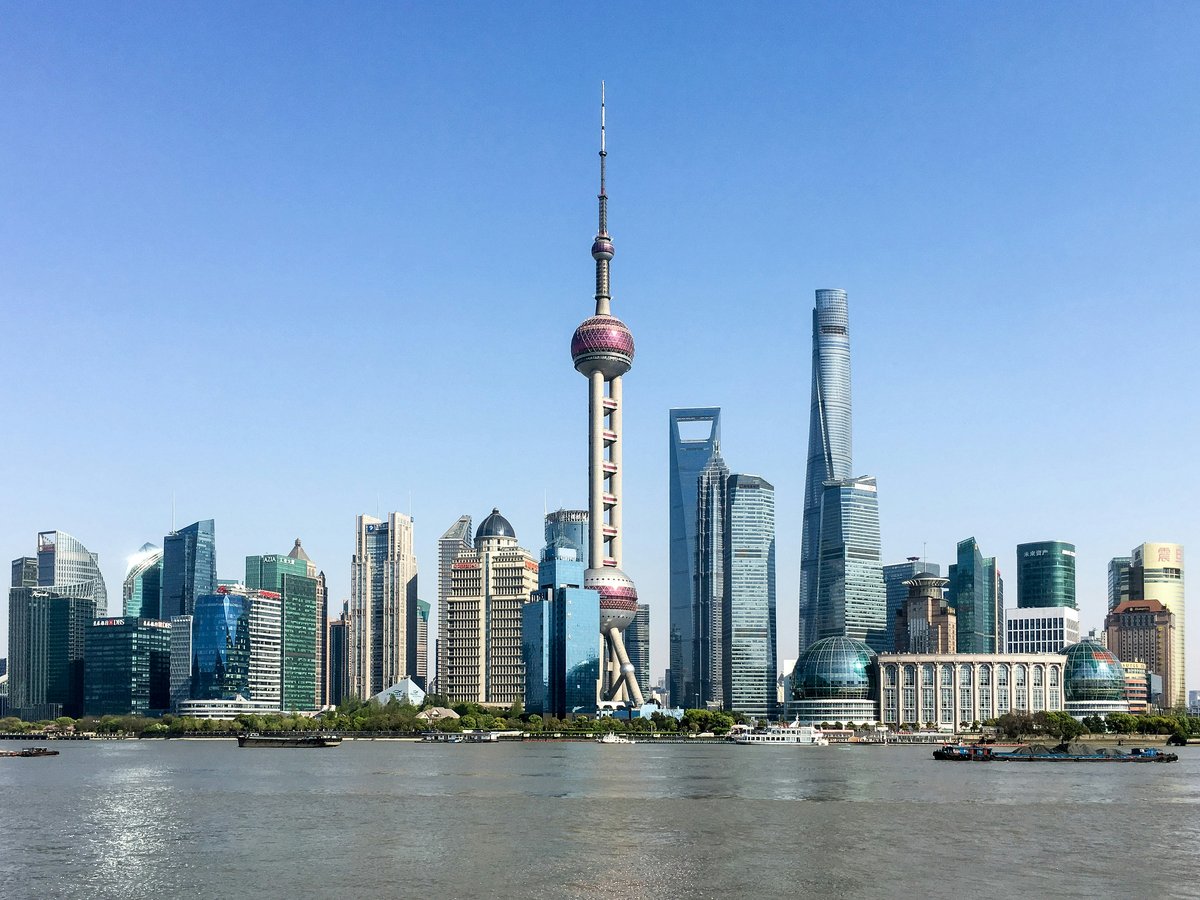
Shanghai's must-see list covers more ground than its skyline suggests. The towers are here, a TV tower from 1998 and a skyscraper from 2008, but the sights that tell you most about the city are its temples, a cathedral, a mosque, and a museum. The cathedral dates from 1910, the mosque from 1917, and the Jade Buddha Temple from 1928. Three of the Buddhist temples here are listed among the National Key Buddhist Temples in Han Chinese Area. Two bridges are on the list too, because in this city the river crossings are part of the view. We put this together for a visitor with two or three days who wants more than a single viewpoint: mix the vertical with the devotional and the historical, but plan the hours. Several of these places keep tight opening times, and arriving at the wrong one costs you half a day. Every address below is written as it appears on the ground, so you can show it to a driver.
-
1 Shanghai World Financial Center
世纪大道, 上海市A 2008 skyscraper on 世纪大道
The Shanghai World Financial Center on 世纪大道 dates from 2008. We'd resist the habit of treating the skyline as one blurred postcard: this is a single building, and it deserves to be judged on its own terms, from the pavement up. Walk the avenue first and see how its outline reads against the sky at street level, then decide how much of your evening to give it. For visiting details, go to the building's own website, swfc-shanghai.com, rather than a reseller's page, where you get the current word from the source. Give it a clear day if you can. A tower like this rewards patience more than a box ticked on the way somewhere else.
Dates from 2008
-
2 Oriental Pearl Tower
1 世纪大道, 上海市A TV tower dating from 1998, open 08:00-21:30
The Oriental Pearl Tower at 1 世纪大道 is open from 08:00 to 21:30. It dates from 1998, from an era when a broadcast mast could also be a city's calling card. Avoid the middle of the day, when tour groups fill the place. The better move is arriving near opening, or late enough that you still have room before 21:30. Seeing it from a distance counts for as much as standing beneath it, so look at it from the street before you commit an hour inside. Check the official site, orientalpearltower.com, before you go, since hours are the kind of detail worth confirming on the day.
Dates from 1998
Hours: 08:00-21:30
-
3 Shanghai Grand Theatre
300 上海市人民大道, 上海市, 200003An opera house and concert hall under one roof
The Shanghai Grand Theatre at 300 人民大道, in the 200003 postal area, dates from 1998. It serves as both an opera house and a concert hall, which means it earns its place on this list by what you hear inside, not the façade alone. Don't waste an afternoon on a walk-past and a photograph. Book a seat instead, and see the building doing the work it was built for. An evening here reveals a side of Shanghai that the towers never will: people dressed up, a hush before the downbeat, a crowd that came to listen. Check the programme on the theatre's own website, dajuyuansh.com.cn, and book well before you arrive.
Dates from 1998
-
4 City God Temple of Shanghai
249 方浜中路A temple listed as a Shanghai Cultural Relics Protection Unit
At 249 方浜中路, the City God Temple of Shanghai carries the city's own designation as a Shanghai Cultural Relics Protection Unit. Resist the souvenir-shopping reflex that turns so many temple visits into a quick browse. Give the building your full attention, moving through one courtyard and one doorway at a time. A city god is a local guardian, and this one belongs to Shanghai alone, which is the reason to come. Go early, dress plainly, and watch how people move through the space before you move through it yourself. Check the temple's own website, shchm.org, for current visiting details before you set out.
Shanghai Cultural Relics Protection Unit
-
5 Jade Buddha Temple
170 安远路, 上海A 1928 temple among the National Key Buddhist Temples in Han Chinese Area
Dating from 1928, the Jade Buddha Temple stands at 170 安远路. Listed among the National Key Buddhist Temples in Han Chinese Area, it sits in national company, not just local. Skip the hurried in-and-out that coach itineraries favour; a temple of this standing repays an unhurried hour far more than a rushed ten minutes. Walk the halls in order, keep your voice low, and step aside for anyone who has come to pray rather than to look. Bring small change and patience, and leave the selfie stick in your bag. The hour you give it will stay with you longer than most of the skyline.
Dates from 1928 · National Key Buddhist Temples in Han Chinese Area
-
6 Saint Ignatius Cathedral
158 蒲西路A 1910 cathedral protected at the national level
Saint Ignatius Cathedral on 蒲西路 opens at 06:15 on weekdays and closes again at 07:00. Saturdays run 16:30 to 18:00, and Sundays stretch from 06:00 to 18:00. The building dates from 1910 and is designated a Major Historical and Cultural Site Protected at the National Level. Don't bother arriving on a weekday afternoon expecting to get in. Sunday is the generous day, and that is when to plan your visit; a cathedral with hours this tight rewards those who read the timetable, and it will leave you outside if you don't. Arrive quietly and sit for a while before you take a single photograph.
Dates from 1910 · Major Historical and Cultural Site Protected at the National Level
Hours: Mo-Fr 06:15-07:00; Sa 16:30-18:00; Su 06:00-18:00
-
7 Jing'an Temple
1686 南京西路, 上海A National Key Buddhist Temple in Han Chinese Area on 南京西路
Traffic hums along 南京西路 outside number 1686, where Jing'an Temple holds its ground, listed among the National Key Buddhist Temples in Han Chinese Area. The contrast is the point: a place of that standing on an address this busy. It is not worth rushing between photographs here. Step inside, let the street noise fall away behind you, and give the halls the same attention you would give a museum. A weekday morning, if your plans allow, will give you more room to stand still. Respect anyone who is there to worship, and keep to the edges while they do.
National Key Buddhist Temples in Han Chinese Area
-
8 Shanghai Jewish Refugees Museum
62 长阳路, 上海市A museum on 长阳路 open 09:00-16:30
Dating from 2007, the Shanghai Jewish Refugees Museum sits on 长阳路. It opens from 09:00 to 16:30, so this is a daytime visit; plan it before the light goes rather than after dinner. Set aside one morning from the skyline itinerary. A museum devoted to refugees tells you this city has a human history that its towers do not show, and that history deserves a full, slow visit, with time to read the panels rather than stop at the headlines. Arrive before 16:30 with time to spare, because the last hour always runs short. Check the museum's own website, shhkjrm.com, for current details before you go.
Dates from 2007
Hours: 09:00-16:30
-
9 Xiaotaoyuan Mosque
52 小桃园街A 1917 mosque in Huangpu, a Shanghai Cultural Relics Protection Unit
The address is 52 小桃园街 in Huangpu, and the mosque you will find there, Xiaotaoyuan Mosque, has been standing since 1917 and carries the designation of Shanghai Cultural Relics Protection Unit, placing it firmly in the city's own protected record. Don't treat it as a quick photo stop. It is a place of worship first, and you are a guest, so dress modestly, keep your voice down, and ask before raising a camera. Arrive outside prayer times if you want to look around properly. The reward is a side of Shanghai's religious life that most first-time itineraries never find room for.
Dates from 1917 · Shanghai Cultural Relics Protection Unit
-
10 Lupu Bridge
A through arch bridge dating from 2003
A through arch bridge, Lupu Bridge dates from 2003, and crossing it in the back of a taxi with your eyes on your phone is exactly the wrong way to see it. An arch this size is meant to be read in full, which requires distance, not a lane in the middle of it. Give it a few minutes of attention as engineering, the way you would give a cathedral a few minutes as architecture. Bridges are part of the city's must-see list for a reason: they shape the view as much as any tower does. Bring a decent camera and pick a clear day.
Dates from 2003
-
11 Longhua Temple
2853 龙华路, 上海市徐汇区A Buddhist temple among the National Key Buddhist Temples in Han Chinese Area
Longhua Temple at 2853 龙华路 in 上海市徐汇区 is a Buddhist temple worth the journey out, holding a place among the National Key Buddhist Temples in Han Chinese Area and the same national standing as the city's better-known temples. Don't assume every temple worth seeing is in the busiest part of town: the trip is part of the experience, and it thins the crowds. Allow a full morning so you are not checking the time in the courtyard, walk slowly, keep to the side when people are praying, and leave room in your day to linger.
National Key Buddhist Temples in Han Chinese Area
-
12 Yangpu Bridge
A cable-stayed bridge with inverted-Y shaped pylons, completed 1993
Yangpu Bridge crosses the Huangpu River as a cable-stayed structure with inverted-Y shaped pylons, completed in 1993, and those pylons are the reason to go. Once you know the shape, you'll pick it out from a long way off, but don't try to judge it from the middle of the deck in traffic. Find a vantage point on either bank and let the whole span come into frame, cables and all. Dusk is the best time: the river and sky give the pylons their sharpest outline. It makes a fitting last stop, the city's engineering seen as its own kind of monument.
Dates from 1993
Last verified by automated review (v1.7.2_fame1017d-1015-1345-20261017055045) on . What is automated review?