Best Time to Visit Guangzhou, by Season
Guangzhou's average highs range from January's 19.9°C to July's 32.7°C, a 12.8-degree swing that splits the year into 5 months of comfortable weather and 7 months of subtropical heat. The right booking window depends on whether you prize mild air, lower prices, or the narrow weeks when both align.
Published
1 The Year Splits at 25°C, and That Line Decides Everything
Step off the train at Guangzhou South in January, and the air on the platform bites against your neck. January's average high holds at 19.9°C, the low at 11.0°C. Return in July, and thick, wet air wraps around you the moment the doors open. July's average high reaches 32.7°C, with lows that barely cool to 26.2°C. The difference between those two arrivals shapes every practical decision about what to pack, when to walk, and how long you can stay outdoors before seeking refuge in air conditioning.
That 12.8-degree gap between January's 19.9°C high and July's 32.7°C high is the frame for every booking decision in this guide. Guangzhou's year divides at roughly 25°C. Five months keep average highs at or below that line. November posts 24.8°C. December falls to 20.1°C. January sits at 19.9°C. February ticks up to 20.8°C. March returns to 24.6°C. The remaining seven months push above 25°C, from April's 27.6°C through July's 32.7°C peak.
Guangzhou's thermometer alone misses a crucial layer. The city sits at roughly 23°N on the Pearl River Delta, in Guangdong Province. The subtropical latitude means March at 24.6°C feels heavier on your skin than November at 24.8°C, because March carries the leading edge of the wet season while November is bone dry. Two months with nearly identical highs deliver markedly different experiences for anyone exploring on foot. Humidity is the variable that the headline temperature obscures, and in Guangzhou it swings harder than the thermometer does.
The crowd calendar follows temperature loosely but breaks from it around Chinese national holidays. Golden Week fills the first week of October. Lunar New Year lands between late January and mid-February. The May Day holiday weekend falls in early May. The Canton Fair, held twice yearly in the Pazhou Complex, floods the city with international trade buyers in mid-April and mid-October. These surges push hotel rates far above what the weather alone would predict, and they reshape the practical experience of navigating restaurants, metro lines, and tourist sites across the entire city.
So the best month is not simply the coolest month. It is the month where temperature, rainfall, crowd density, and hotel pricing intersect most favorably for your specific priorities. The sections that follow walk through each season with the measured numbers attached, month by month, so you can weigh the tradeoffs against your own tolerance for heat, rain, and the packed metro cars that major holidays bring to a city of fifteen million permanent residents.
2 November Through February: The Dry Window and Its Tradeoffs
November opens the dry season with an average of 36.6 mm of rainfall, a sharp drop from October's 78.9 mm. December dries further to 30.9 mm. January records 42.3 mm. February posts 58.2 mm as the moisture begins its slow return. Across these four months, you walk through Guangzhou's driest and coolest stretch, and the combination makes this window the foundation of most travel recommendations for the city.
November's average high of 24.8°C is the warmest month in this window. December and January drop below 21°C at their highs, and lows reach 10.5°C in December and 11.0°C in January. You will want a light jacket for morning walks along the Pearl River or through Yuexiu Park before the sun warms the stone paths. By February, the thermometer begins its climb back toward 20.8°C, and the city sheds its brief cool-season character.
Hotel pricing in this window varies dramatically around one event: Lunar New Year. The holiday shifts each year between late January and mid-February. During the holiday itself, domestic travel surges, and Guangzhou, as a major transport hub for southern China, fills with travelers heading home to Guangdong's smaller cities or passing through Baiyun International Airport. Room rates spike to near-peak annual levels. The week before and the week after the holiday, rates often drop below the monthly average as the city empties of its working population and migrant labor force.
Outside the Lunar New Year window, November through February offers the lowest sustained hotel prices of the year. The Canton Fair's autumn session ends by early November, releasing the large block of trade-booked rooms near the Pazhou convention district. December attracts few international tourists compared to Southeast Asian beach destinations that compete for the same winter-escape travelers. January and February, aside from the holiday period, draw mostly domestic business travelers on short stays who keep demand moderate.
The tradeoff is visual. December and January are Guangzhou's least photogenic months. The sky tends toward a flat, persistent grey. The lush green canopy that defines the city's boulevards thins noticeably. Baiyun Mountain's trails are quieter but muted in color compared to the greens of the wet season months. If your trip centers on outdoor photography or extended garden visits, the limited palette may disappoint. If your trip centers on food, and in Guangzhou it probably should, the season changes nothing at the table. Dim sum tastes the same under grey sky as under blue, and the morning tea houses fill with the same regulars regardless of the month printed on the calendar.
3 March Through May: The Wet Season Builds
March begins the transition with a sharpness that catches visitors off guard. Average rainfall climbs to 82.3 mm, more than double January's total. April escalates to 188.3 mm. May delivers 214.6 mm, the second-wettest month of the year. The air thickens progressively. Humidity rises week by week. Afternoons bring sudden downpours that can flood low-lying streets near the Pearl River within an hour and leave the pavement steaming once the sun reappears twenty minutes later.
March's average high of 24.6°C reads pleasantly on paper, but the rising humidity adds a sticky quality to the air that November's nearly identical temperature lacks entirely. By April, the average high reaches 27.6°C, and outdoor walking becomes a matter of strategic timing. Mornings before ten and evenings after five remain manageable. The midday hours push you indoors to shopping malls, neighborhood museums, or the air-conditioned dining rooms where Cantonese lunch service runs long and without rush.
The Canton Fair's spring session, typically running from mid-April into early May, transforms the Pazhou district and radiates outward across the city. Hotels within metro reach of the fairgrounds double or triple their standard rates. Taxis grow scarce as trade visitors compete for rides across the city center. The metro lines nearest the convention center crowd with badge-wearing international buyers hauling sample bags. If you have no business at the fair, avoid these two weeks entirely. The city's transportation infrastructure strains under the additional visitor load, and nothing about the weather during those specific weeks compensates for the inconvenience.
May Day, falling around May 1, brings a three-to-five-day domestic holiday that adds another demand spike on top of the fair's tail end. Guangzhou's parks, temples, and signature restaurants fill with local families taking advantage of the break. Lines at Chen Clan Ancestral Hall stretch around the block. The Sacred Heart Cathedral draws tourist crowds that thin its usual calm atmosphere. Room rates rise 30 to 50 percent above the monthly baseline during the holiday window.
For the traveler who genuinely tolerates heat and rain, April outside the Canton Fair window offers one concrete advantage worth weighing. Guangzhou's parks and green spaces reach their peak bloom during this month. Lotus ponds fill across the city's public gardens. The greenery along Shamian Island grows dense and lush. South China Botanical Garden displays its fullest tropical canopy of the year. You will pay for these sights in sweat and sudden shelter-seeking when the afternoon storms roll through, but the visual reward is real and distinct from any other season in the city.
4 June Through September: The Subtropical Peak
June is Guangzhou's wettest month, delivering an average of 265.7 mm of rainfall across roughly 16 rain days. July and August ease slightly to 228.9 mm and 221.9 mm respectively. September remains heavy at 172.2 mm. Typhoon season runs from June through October, and while direct hits on Guangzhou proper are uncommon given that the city sits roughly 120 kilometers inland from the South China Sea coast, peripheral effects from nearby landfalls bring heavy rain bands, flight cancellations at Baiyun International, and occasional metro service disruptions that can strand travelers far from their hotels for hours at a time.
Average highs in June, July, and August hover between 32.4°C and 32.7°C, with July claiming the narrow peak. Overnight lows stay above 25°C through all three months, meaning the night offers little respite from the daytime heat. The heat index, factoring in Guangzhou's subtropical humidity, regularly pushes the apparent temperature above 38°C during afternoon hours. Walking the historic Liwan District's narrow lanes or climbing Baiyun Mountain in midday sun during these months is not merely uncomfortable. It carries genuine heat exhaustion risk for visitors unaccustomed to sustained subtropical exposure. The city's outdoor vendors and tour operators adjust their own schedules accordingly, with many morning markets wrapping up operations by eleven.
Hotel pricing in summer sits in the middle range of Guangzhou's annual cycle. The Canton Fair trade crowd has departed. The major national holidays sit months away in either direction. But domestic summer holiday travel brings families from across China to Guangzhou's entertainment complexes. Chimelong Safari Park, Chimelong Water Park, and Guangzhou Tower's observation deck draw heavy foot traffic from late June through the end of August. If your itinerary avoids these major commercial attractions, the crowds thin considerably at the city's Buddhist temples, neighborhood heritage museums, and traditional restaurant streets in the older districts.
September begins a slow retreat from the extremes. Average highs drop to 31.6°C as the month progresses, and total rainfall decreases toward 172 mm. The tail of typhoon season still threatens travel plans, as a single storm tracking through the South China Sea can ground flights at Baiyun for 12 to 24 hours with limited advance notice. Late September, after the autumn equinox, occasionally delivers brief previews of the drier air that October will bring, but these stretches rarely hold for more than three or four days before the humidity reasserts itself over the Pearl River Delta. The honest assessment for planning purposes: June through September is a poor window for first-time visitors who intend to explore the city primarily on foot.
5 October: Golden Week Eats the Best Weather Week
October is Guangzhou's cruelest scheduling trick. The month's weather is genuinely appealing by every measure. Average highs settle at 28.7°C, warm enough for light clothing but cool enough that sustained walking does not feel punishing. Rainfall drops sharply to 78.9 mm, roughly one-third of September's total. The oppressive humidity of the summer months finally begins to ease and release its grip. The air starts to feel breathable again after four consecutive months of subtropical saturation. On every weather metric alone, early October is the year's most comfortable warm-weather window for outdoor exploration.
Golden Week destroys that window's practical value. China's National Day holiday, running from October 1 through 7, is one of the country's two longest public breaks alongside Lunar New Year. Hundreds of millions of domestic travelers move simultaneously across China's rail and air networks during this single week. Guangzhou, as a Tier 1 city with extensive international airport connections and high-speed rail links to Hong Kong, Shenzhen, and the broader Pearl River Delta, absorbs a massive share of that national movement. The city's population swells visibly in every public space.
Hotel rates during Golden Week often reach the year's absolute peak, surpassing even Canton Fair pricing in the most popular tourist and business districts. Restaurants that normally seat walk-ins add wait times of an hour or more. The Pearl River night cruise books out days in advance. Yuexiu Park and Baiyun Mountain see weekend-level crowds on every single day of the holiday week, regardless of whether it falls on a Tuesday or a Saturday.
The strategy for October is straightforward: arrive on October 8 or later. By mid-October, the Golden Week crowds have fully dispersed from the city. The Canton Fair's autumn session, typically beginning around October 15, brings trade visitors back to the Pazhou convention area, but its impact on leisure travelers is geographically localized to that single district and the hotels immediately surrounding it. Accommodation outside the fair zone returns to reasonable rates quickly. The weather holds beautifully through the second half of the month, with late October delivering some of the year's most pleasant individual days: highs near 27°C, moderate humidity, and clear subtropical skies that stretch the golden-hour light into long, warm evenings along the Pearl River promenade and the Haizhu district waterfront.
If you can accept that narrow scheduling constraint of avoiding the opening week, the window from roughly October 10 through October 31 ranks as one of the two strongest booking periods of the entire calendar year, alongside the opening weeks of November that follow directly after.
6 What the Numbers Name as the Best Window
For the general-purpose visitor who wants to walk Guangzhou's neighborhoods, eat well, and photograph the Pearl River skyline, the data converges on one window. October 10 through November 30. November's average high of 24.8°C permits 8 to 10 hours of comfortable outdoor walking. Rainfall totals 36.6 mm for the month, the second-driest reading after December's 30.9 mm. No major national holidays fall in November, keeping domestic visitor counts at baseline. The Canton Fair's autumn session wraps up before November begins, releasing convention-district rooms back to the leisure market. You might find 4-star rooms near Zhujiang New Town at 40 to 50 percent below Golden Week rates during this stretch.
Late October, from roughly the 10th onward, shares these qualities at a slightly warmer 27°C and marginally higher humidity. Together the two periods form a 7-week booking window that ranks strongest across comfort, cost, and crowd density.
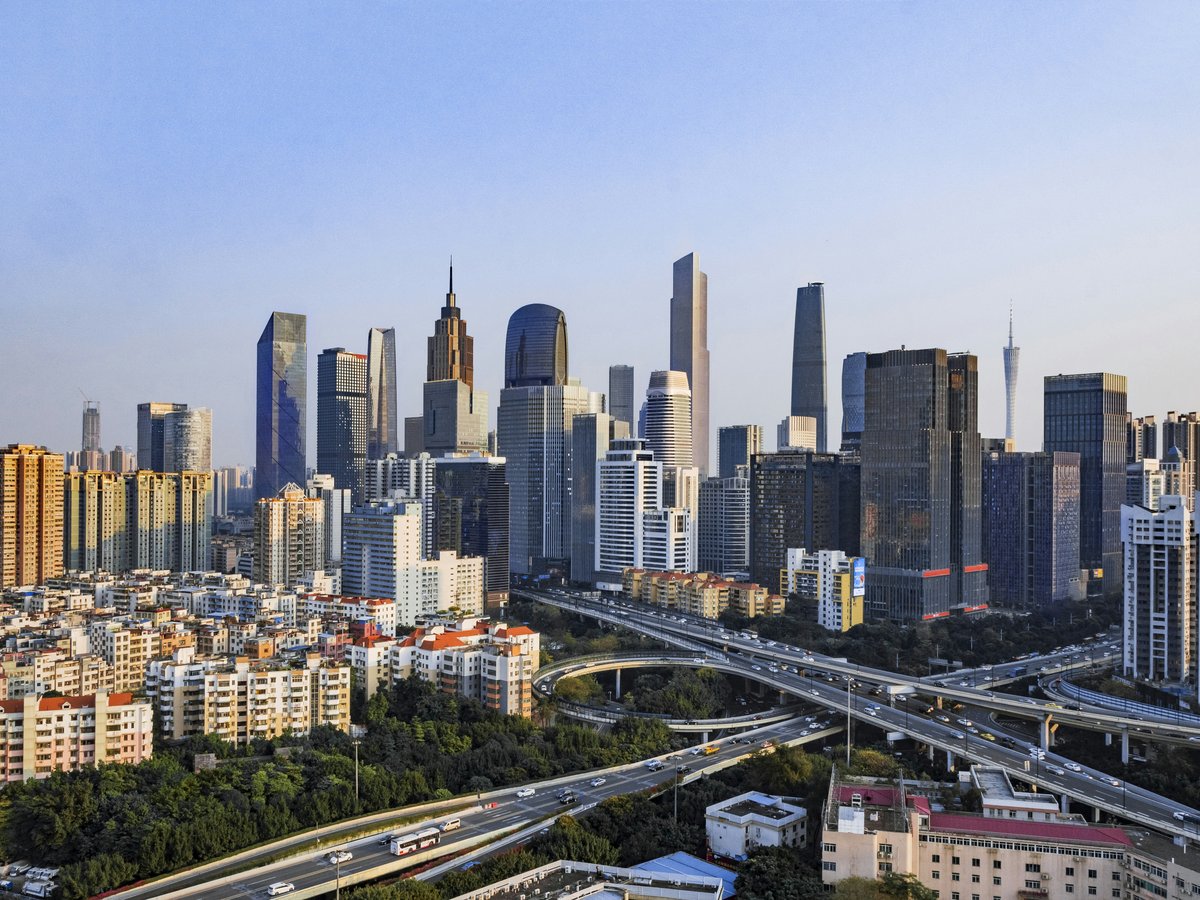
That said, even in this prime window, skip the Pearl River night cruise. The 60-minute loop passes the same LED-lit towers visible for free from the Ersha Island promenade, minus the diesel smell and tinny onboard speakers. Locals tend to walk the Ersha Island waterfront after dinner, where Guangzhou Tower's nightly light show fills 600 meters of sky without a ticket. Guangzhou Tower's observation deck poses a similar problem. Baiyun Mountain's Moxing Ridge summit sits at 382 meters and offers a wider panorama of the entire Pearl River Delta, with none of the 90-minute queues the tower generates on Saturday afternoons. The mountain's trails are quieter, the air smells of pine rather than concrete, and the city noise fades by the time you pass the 200-meter mark.
December and January trade the green subtropical canopy for thermal comfort and the year's lowest prices. Highs hover near 20°C under flat grey skies. For budget travelers, the first three weeks of January, after Western New Year crowds thin and before Lunar New Year preparations begin inflating rates around the 20th, deliver the cheapest sustained booking window of the year.
Pair that cold-weather slot with a focused dim sum crawl through Liwan and Yuexiu, where the steam rising off bamboo baskets and the clatter of porcelain spoons matter more than any view through the restaurant window. Guangzhou's restaurant kitchens operate at consistent quality across all 12 months. The live seafood tanks along the Pearl River refill daily regardless of season. For food-focused travelers, seasonality barely registers at the table. February risks collision with Lunar New Year's pricing surge and packed metro lines. March introduces sticky humidity well before the rain arrives, a deceptively uncomfortable shoulder that reads milder on paper than it feels against your skin at the 24.6°C average. April through September involves real compromises in heat, rainfall, or both that limit comfortable outdoor hours to mornings before 10:00 and evenings after 17:00.
Last verified by automated review (v1.7.2_onboard-guangzhou-flagship-2026-09-18) on . What is automated review?