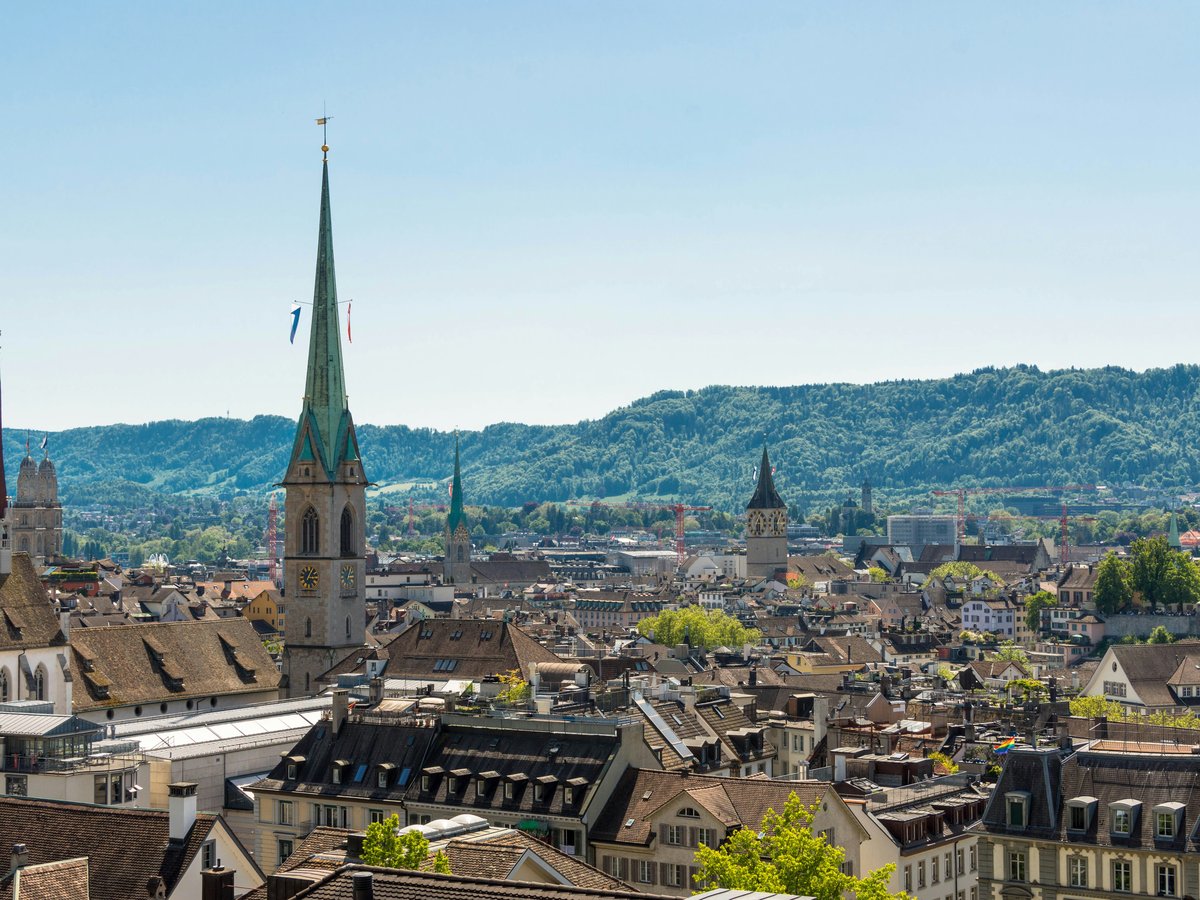
Zurich sits at the northern tip of its namesake lake, between the Uetliberg ridge to the west and the Zürichberg hills to the east. With 1 USD currently buying about 0.80 CHF, it ranks among Europe's priciest cities for food, accommodation, and transit. That cost profile makes the free layer all the more worth mapping out. The Altstadt opens its Romanesque churches without a ticket. Helmhaus rotates contemporary art exhibitions at no charge. Lake Zurich and the Limmat river offer free swimming from May through September. The city earns a 9.2/10 for family friendliness (see the TTDI Family-Friendliness Index), and much of what drives that score costs nothing at all. You can fill 3 to 4 full days here without paying admission anywhere, and the quality of what is accessible runs from medieval church naves to 21st-century gallery floors.
Free attractions
-
Grossmünster
The twin-towered Grossmünster has anchored the Limmat's east bank since 1201. Entry to the main church is free. Inside, the Romanesque crypt holds worn medieval capitals, and Sigmar Polke's stained-glass windows, installed in 2009, fill the upper nave with fractured color when afternoon light hits. The stone walls keep the interior cool in summer, a welcome contrast to the Limmat quays outside. The Karlsturm tower climb has a small fee, but the ground-level church costs nothing.
Altstadtlandmark -
Kirche St. Peter
St. Peter's Church holds the largest church clock face in Europe at 8.7 meters across. You'll spot it from Lindenhof or the Limmat bridges before you even look for the entrance. Entry is free. The current Baroque interior dates to a 1705 renovation, though the site has hosted a church since at least the 9th century. It tends to be quieter than its Romanesque neighbor across the river, which makes it a better place to sit and absorb the space.
Altstadtlandmark -
Lindenhof
A raised square on the Altstadt's west side, shaded by lime trees and set on the foundations of a Roman-era customs post. The views north over the Limmat to the university quarter and the Grossmünster towers are likely the most photographed in the city. Free and open at any hour. On warm evenings, locals play oversized chess on the permanent boards here. The hilltop sits roughly 25 meters above river level, and the climb from Rennweg takes about 3 minutes.
Altstadtpark and viewpoint -
Helmhaus
The city-run Helmhaus sits on Limmatquai beside the Wasserkirche and hosts changing contemporary art exhibitions that are free to enter. Shows rotate roughly every 2 to 3 months. The building is a former textile market hall from the 1790s, and its gallery floor overlooks the river weir. The sound of rushing water carries inside on still afternoons. Worth visiting for whatever the current Helmhaus show is, even if the artist is unfamiliar.
Altstadtmuseum -
Kunsthaus Zürich
Founded in 1819, the Kunsthaus holds one of Switzerland's deepest art collections, from medieval altarpieces through Giacometti bronzes to the E.G. Bührle Collection wing that opened in 2021. The permanent collection has been free on Wednesdays, making it one of the strongest zero-cost museum visits in the country. Temporary exhibitions carry a separate charge regardless of the day. Check the current Wednesday policy before planning around it, as admission terms can shift between seasons.
Altstadtmuseum -
Zürichhorn
A long lakeside park on Lake Zurich's eastern shore, stretching from Seefeld toward Tiefenbrunnen. The lawns slope to the water and fill with swimmers, picnickers, and joggers on any dry day. Le Corbusier's final design, the Pavillon Le Corbusier, stands at the park's northern edge. Jean Tinguely's kinetic sculpture Heureka clicks and turns near the waterline. The park itself is free and open at all hours.
Seefeldpark -
Rieterpark
An English-landscape park draped across a hillside in Enge, surrounding the villas that house Museum Rietberg. The museum, founded in 1952 and focused on non-European art, charges admission, but the park grounds are free and open. Mature trees, sloping lawns, and views south toward the Alps on clear days make it one of the city's quieter green spaces. Paths connect downhill to Belvoirpark and the lakeshore.
Engepark -
Platzspitzpark
A triangular green space at the confluence of the Limmat and the Sihl, directly behind the Landesmuseum. The park was redesigned in the early 2000s and is now a quiet, well-maintained spot with old-growth trees and river views on two sides. The National Museum's castle-style building, designed by Gustav Gull and opened in 1898, forms a sandstone backdrop along the park's northern edge. Free and open daily.
Industriequartierpark
Free activities
-
Altstadt walking route, Niederdorf to Schipfe
The medieval core stretches along both banks of the Limmat from Bellevue to Central. On the east bank, Niederdorf's narrow lanes are lined with guild houses and small shops. Cross the Rathausbrücke to the west bank for Schipfe, a quieter stretch of artisan workshops tucked along the water. The whole loop is roughly 3 km and takes about 90 minutes at a browsing pace. The smell of fresh bread from Kleinbäckereien drifts through the lanes year-round.
Altstadtwalking route -
Flussbad Oberer Letten
A free river swimming spot on the Limmat in Kreis 5, popular with a younger crowd. Water temperature reaches about 20 to 22°C in peak summer. Concrete platforms line the riverbank, and the current is gentle enough for a casual float downstream. No entry fee. Open roughly mid-May through mid-September depending on conditions. Bring your own towel. The adjacent bar and food stalls are not free, mind you, but the water is.
Industriequartierbeach and swimming -
Lake Zurich promenade
The paved lakeside path runs from Bürkliplatz south along the western shore past Enge and Wollishofen, with views across to Zürichhorn on the opposite bank. The full stretch to Wollishofen is about 4 km one way. On clear days, the Glarner Alps appear at the lake's far end. Free at all hours. Benches and grass strips line most of the route, and the water shifts from grey-green to deep blue depending on the sky.
Engewalking route -
Bahnhofstrasse
The 1.4 km stretch from Zürich HB to Bürkliplatz is one of Europe's most expensive retail streets. You can walk its full length without spending a centime. Paradeplatz, the midpoint, marks the banking quarter's center. The southern end opens onto the lake, making Bahnhofstrasse a natural connector between the train station and the waterfront. Tram tracks run the full distance, so you'll hear the rattle of Cobra trams at regular intervals.
City centerwalking route -
Bürkliplatz flea market
On Saturdays from roughly May through October, Bürkliplatz at the foot of the lake fills with second-hand stalls. Browsing is free. Expect vintage watches, old prints, ceramics, and occasional vinyl records. The market runs from early morning until about 16:00. It sits beside the Bürkliplatz boat terminal, so the lakefront is right there if you want to combine stops.
City centermarket -
Public art walk in Zurich West
The former industrial district around Viadukt and Schiffbau has accumulated outdoor murals, installations, and repurposed industrial structures over the past two decades. Im Viadukt, the railway arches converted into shops and a market hall, is free to walk through. The area around Turbinenplatz and the Schiffbau theater holds several permanent outdoor sculptures. A 2 km wander from Hardbrücke station south to Langstrasse covers the densest stretch of Kreis 5.
Kreis 5public art -
Uetliberg summit hike
The 871-meter Uetliberg overlooks Zurich from the west. The hike from Triemli tram stop to the summit takes roughly 60 to 75 minutes on marked trails through mixed forest. The summit viewpoint is free and gives a full panorama from the Jura range to the Bernese Alps on clear days. The S10 train goes to the top if you prefer, but that costs a fare. The trail stays open year-round, though it can be icy from November through March.
Uetliberghiking
Free events
-
Street Parade
Second Saturday of AugustZurich's annual techno and electronic music parade along the lakefront, one of the largest in Europe. Around 20 to 30 Love Mobiles, decorated trucks carrying DJs, roll along the quays from Utoquai to Enge. Free to attend and watch from anywhere along the route. Peak-year crowds have reached roughly 900,000 people. The bass reverberates off the lake surface and the Altstadt facades simultaneously.
Lake Zurich shoreline -
Sechseläuten
Third Monday of AprilZurich's spring guild festival. The afternoon guild parade through the Altstadt is free to watch from the sidewalks. At 18:00, the Böögg, a cotton-stuffed snowman figure, is set alight on Sechseläutenplatz. Tradition holds that the faster the Böögg's head explodes, the better the coming summer will be. The heat of the bonfire is palpable from 30 meters back, and the crack of the explosion carries across the Opernhaus square.
Sechseläutenplatz and Altstadt -
Knabenschiessen
Second weekend of SeptemberA target-shooting competition for Zurich teenagers dating to the 1600s, paired with one of the city's largest funfairs. The fairground at Albisgüetli is free to enter, though individual rides and food stalls charge separately. The smell of Magenbrot, a spiced gingerbread confection, and grilled Cervelat fills the grounds. A deeply local tradition that most visitors never hear about.
Albisgüetli, Kreis 2 -
Zürcher Theater Spektakel
Mid-August to early September, roughly 3 weeksAn international performing arts festival at the Landiwiese on the lake's western shore. The festival grounds are free to enter, with outdoor performances, food stalls from around the world, and lakeside seating at no charge. Some tent and indoor stage shows require tickets, but the open-air program costs nothing. The festival has run since 1980 and typically draws performers from 30 or more countries.
Landiwiese, Wollishofen
Seasonal timing for free Zurich
Summer opens the most free options, roughly June through August. The river swimming spots and lakeside Badis operate during these months. Outdoor festivals cluster between late June and mid-September, with both Street Parade and Theater Spektakel falling in August. That said, winter carries its own free draws. The Bahnhofstrasse Christmas lights run from late November into early January and cost nothing to walk through. Altstadt Christmas markets at Niederdorf and the main station are free to browse, though you'll likely spend on Glühwein. April brings Sechseläuten, the city's most distinctive free spectacle. Autumn is quieter for events but the Uetliberg ridge trails reach their best with fall color in October. Lake Zurich water temperatures drop to around 10°C by late October, so the swimming season has a hard end. One practical note on summer visits. Mid-August temperatures have been sitting around 24 to 25°C with moderate humidity, which is comfortable for walking but can make midday uphill hikes warm.
What looks free but is not
Fraumünster tends to catch visitors off guard. The church, founded in 853, houses Marc Chagall's stained-glass windows from 1970. It has charged an admission fee for several years now. Budget around 5 CHF per adult. The windows are worth the money, but this is not a free attraction. The Polybahn funicular from Central up to ETH Zurich looks like it might be a free novelty ride. It is regular ZVV public transit and requires a valid ticket. The Zürich Card, sometimes described as a free pass, currently costs around 27 CHF for 24 hours. It covers transit and some museum entries but is itself a purchase, not a freebie. Lake cruise boats, visible from Bürkliplatz, charge standard fares. Zurich's solo-traveler safety score of 8.8/10 (see the TTDI Solo-Safety Index) means you can walk freely at most hours, but that free mobility does not extend to the boat docks or the tram network.
FAQ
Is Zurich safe enough to explore on foot all day?
Zurich is one of Europe's safest cities for walking. LGBTQ+ friendliness sits at 8.5/10 (sourced from TTDI's editorial rubric), and the compact Altstadt core means most free attractions fall within 15 to 20 minutes of each other on foot. Late-night areas around Langstrasse in Kreis 4 are busier but generally safe. For more detail, see the Wikivoyage safety overview at https://en.wikivoyage.org/wiki/Zurich#Stay_safe.
How do I get around Zurich without paying for transit?
Walking covers almost everything in the city center. The Altstadt, the lake, Lindenhof, and the main churches all sit within a 2 km radius. ZVV trams and buses require a ticket, and enforcement is frequent. Some hotels provide a complimentary transit pass for the duration of your stay, so it is worth asking at check-in. Cycling paths line both sides of the lake, and Zurich has operated seasonal bike-lending programs at locations near the waterfront and the main station. For route and ticket-zone details, the Wikivoyage guide at https://en.wikivoyage.org/wiki/Zurich#Get_around covers options.
Which Zurich museums can I visit for free?
Helmhaus, the city-run contemporary gallery on Limmatquai, is free year-round with rotating exhibitions. Kunsthaus Zürich offers free permanent-collection entry one day a week, though temporary shows carry a separate charge. Museum Rietberg and the Landesmuseum require tickets for their indoor galleries, though both sit in free-access parkland worth visiting on its own. Children under 16 enter several institutions free. Admission policies can shift, so check individual museum websites before visiting. The Wikivoyage overview at https://en.wikivoyage.org/wiki/Zurich#See lists the major institutions and their hours.
Can I swim in Lake Zurich or the Limmat for free?
Yes. Flussbad Oberer Letten and Flussbad Unterer Letten on the Limmat in Kreis 5 are both free to use. Several informal lakeside spots along the eastern shore near Zürichhorn allow free swimming as well. The more established Strandbad facilities like Mythenquai and Tiefenbrunnen charge a few francs for entry. Free river swimming runs roughly mid-May to mid-September, conditions depending. Water quality in both the lake and the Limmat is monitored by the city and has been consistently high.
Is Zurich practical for remote workers on a tight budget?
Zurich scores 4.8/10 for digital-nomad suitability (sourced from TTDI's editorial rubric), largely because the cost of living is steep and coworking spaces charge accordingly. That said, public libraries including the Zentralbibliothek near Predigerplatz offer free Wi-Fi and seating. Several cafes in Kreis 4 and Kreis 5 tolerate long laptop sessions. For budget-conscious arrival options, the Wikivoyage overview at https://en.wikivoyage.org/wiki/Zurich#Get_in covers train and bus connections from neighboring cities.
When should I visit Zurich for the most free events?
August concentrates the most free activity, with both Street Parade and Theater Spektakel falling in that month. April brings Sechseläuten, and September has Knabenschiessen. Winter offers free Christmas-market browsing from late November onward. For currency, language tips, and other practical details, the Wikivoyage guide at https://en.wikivoyage.org/wiki/Zurich#Cope covers the essentials.
Last verified by automated review (v1.7.2) on . What is automated review?