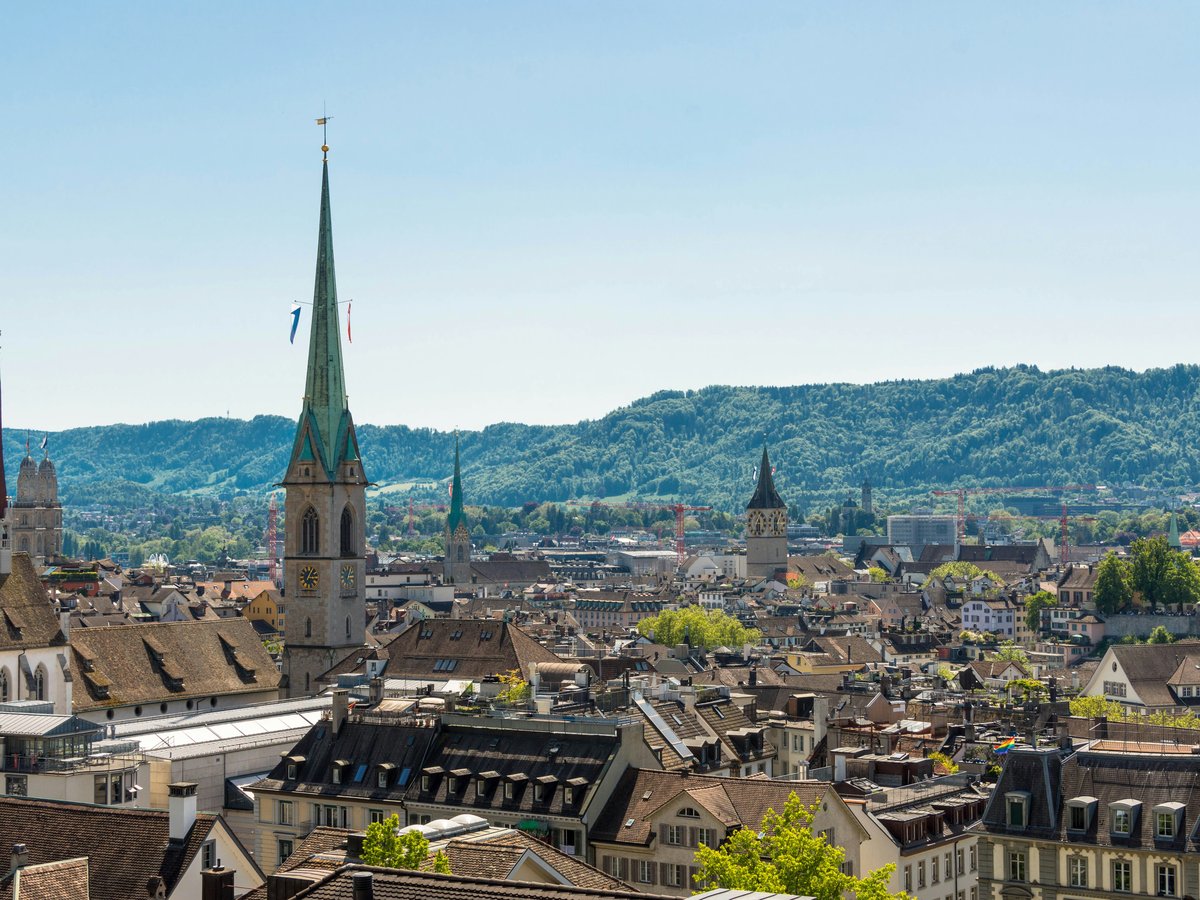
Zurich's free layer is mostly outdoors and mostly civic: a handful of squares laid over the medieval street grid, a river bank that widens into a lake, and a scatter of parks and gardens that the city treats as extensions of its living room. What follows is twelve of them, ranked for how much of the city they explain: a hilltop where the Roman fort became a public square, a botanical garden the university outgrew, the park where the two rivers meet, and the platz whose name every Zurich banker still uses as shorthand. None of them charge admission, most of them reward an unhurried hour, and together they map the city better than any single museum ticket would. Bring a coffee, a tram pass, and comfortable shoes; the whole list fits inside a long afternoon if you want it to, or a slow week if you don't.
-
1 Lindenhof
PfalzgasseThe hilltop square that reads the city better than any viewpoint you'd pay for
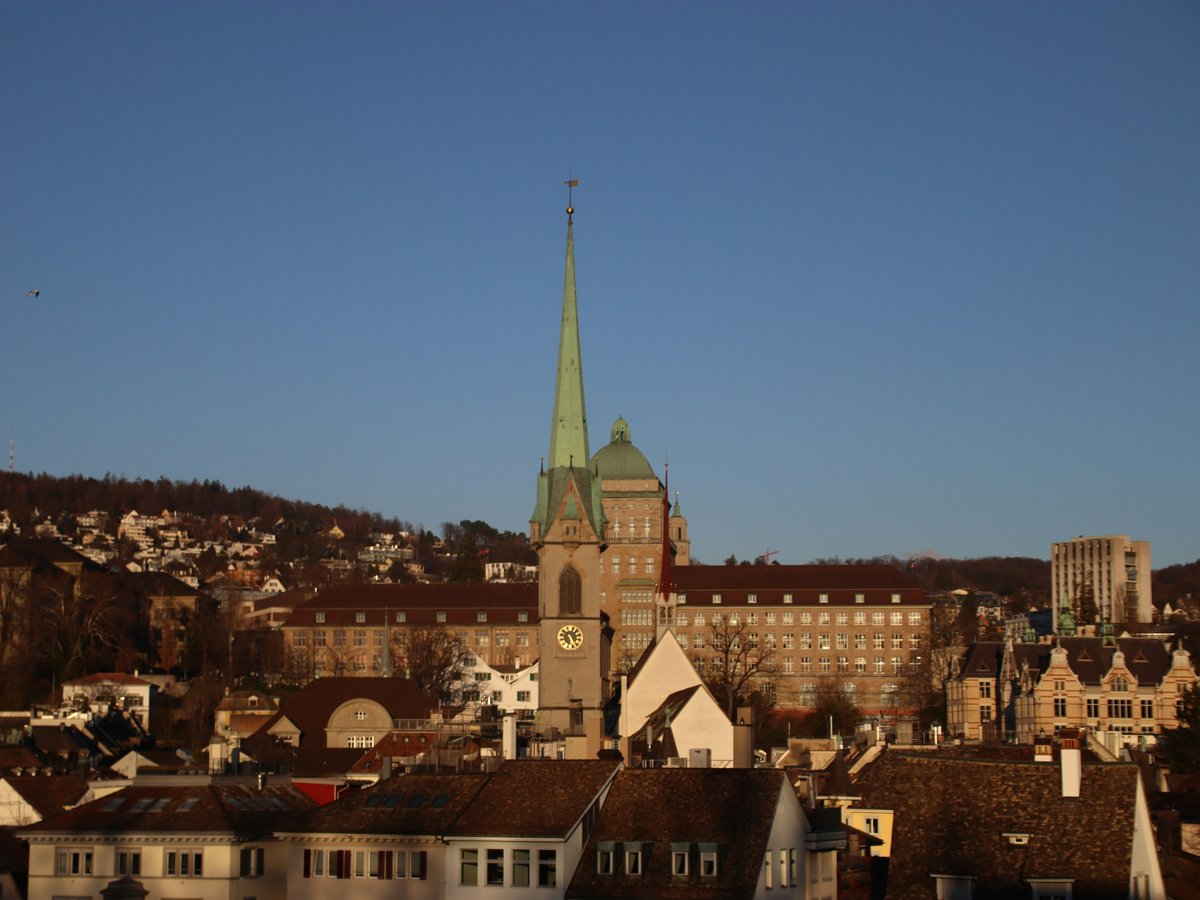
Climb Pfalzgasse and Lindenhof opens as a flat, shaded terrace above the old town: a public square in the middle of Zurich that has been reused for two millennia and now belongs, deliberately, to whoever shows up. Skip the paid rooftop bars across the river; the view here is free, the lindens are older than the tour groups, and the chessboards painted into the paving get played on by locals who did not come to be photographed. At latitude 47.3731, longitude 8.5408 the hill sits directly opposite the Grossmünster towers, which means an unhurried half hour here explains more of Zurich's shape than any museum wall text. Come at dusk when the light drifts across the Limmat and the square goes quiet; it is the one place on this list I would send a first-time visitor before anything else.
Class A Swiss cultural property of national significance
-
2 Old Botanical Garden, Zurich
Pelikanstrasse 40, 8001 ZürichA pocket botanical garden the university left behind, now a quiet lunch spot in the 8001
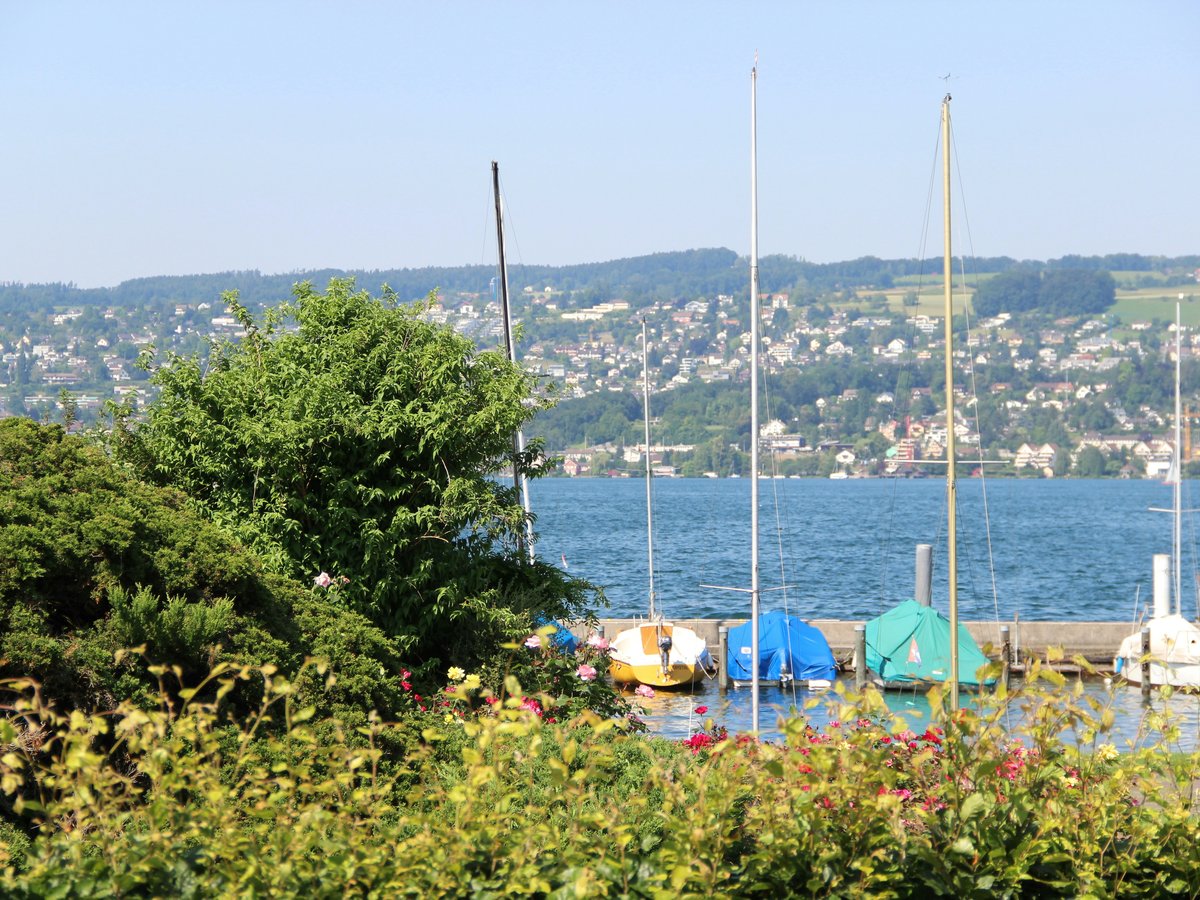
At Pelikanstrasse 40, 8001 Zürich the Old Botanical Garden fills a small block with the specimen trees and greenhouse geometry of a working botanical garden that was never dismantled when the university outgrew it. The locals eat their sandwiches here on weekdays rather than in Bürkliplatz, and they are right to: the benches are shaded, the paths are gravel, and the palm house glows through its glass on grey afternoons. Don't bother with a plan: a slow lap of the pond, a look inside the tropical house, and you have seen it. Coordinates 47.3711, 8.5336 put it a five-minute walk from the main station, which is why it works as a decompression stop between trains rather than a destination in itself. It is not a spectacle. That is the point.
Dates from 1837 · Class A Swiss cultural property of national significance
-
3 Platzspitz park
Platzpromenade 5The wedge of parkland where the Sihl meets the Limmat
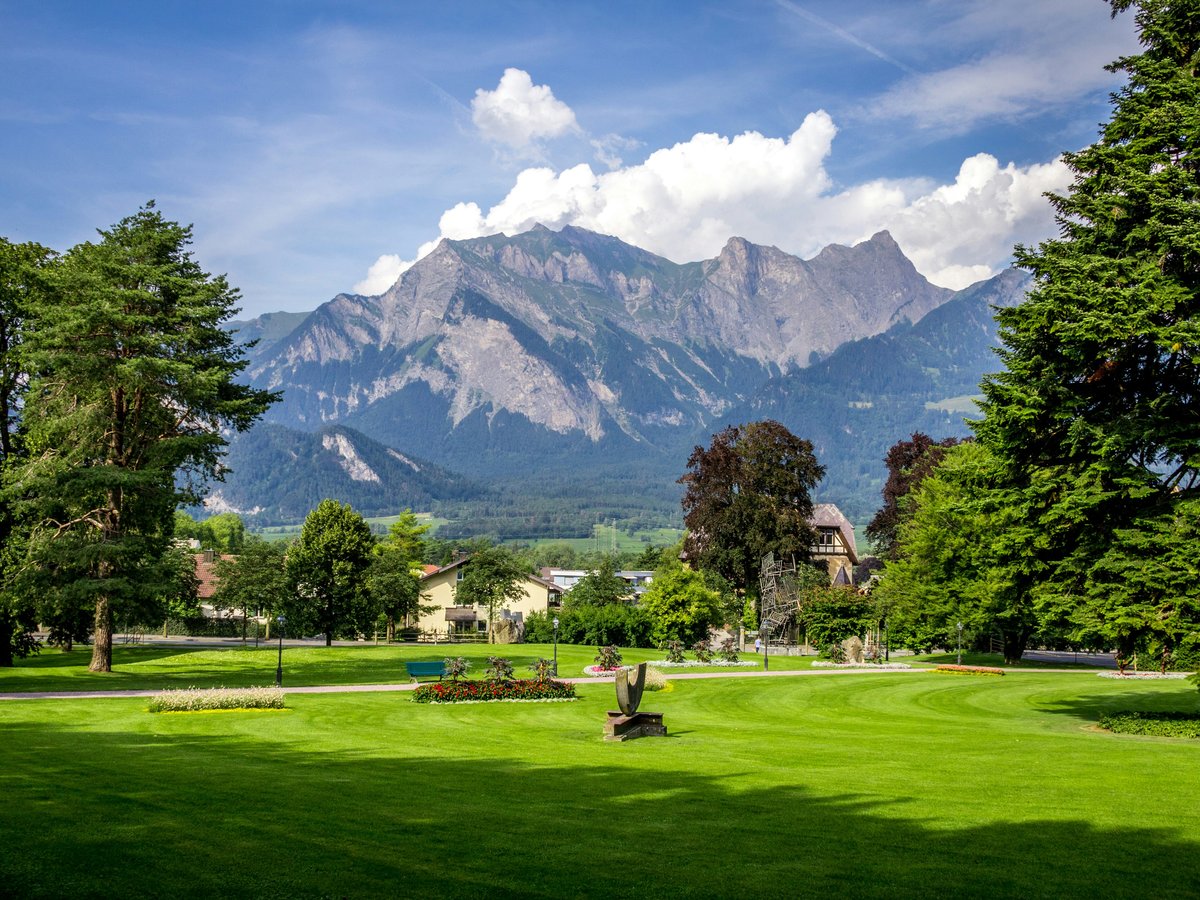
Follow Platzpromenade 5 to its natural end and Platzspitz resolves into a narrow green wedge, a park in Zurich pinned between the two rivers that made the city possible. Avoid the postcard riverside paths on the opposite bank; the water reads better from this side, where the currents visibly braid together at the tip. The park had a rough late-20th-century reputation that the city has quietly rewritten, and today at 47.3803, 8.5400 it is a working lunch park for the museum staff next door: shaded benches, a bandshell, families on the lawn. Walk to the point, watch the Sihl slide under the Limmat, and leave. It takes twenty minutes and it is one of the few places in Zurich where the geography of the city explains itself without a map.
Class A Swiss cultural property of national significance
Hours: 24/7
-
4 Arboretum Zürich
General-Guisan-QuaiA lakeside garden of specimen trees along the western quay
Walk south along General-Guisan-Quai and the promenade widens into the Arboretum, a garden in Switzerland planted with specimen trees along the west bank of the lake. The locals jog this stretch at first light and picnic on it at dusk; the tourist crowd stays clumped around Bürkliplatz to the north, which is their loss. At 47.3627, 8.5365 you get the Alps on a clear day, the Zürichhorn park at the far end of the sightline, and (most usefully) grass you can sit on without a reservation. Do not treat it as a stroll to somewhere else; treat it as the destination. An hour with a book here is what half the paid lake cruises are trying, and failing, to sell you.
Dates from 1887 · Class A Swiss cultural property of national significance
-
5 Gustav-Ammann-Park
LangwiesstrasseA modernist landscape-designed park in the northern residential belt
Take a tram out to Langwiesstrasse and Gustav-Ammann-Park opens as a small, deliberately sculpted urban park that feels closer to a landscape architect's private sketchbook than a public green. The locals in this quieter northern belt of the city use it the way a village uses its square: for dog walks, for prams, for the ten minutes between errands. At 47.4113, 8.5346 you are well outside the tourist core, which is exactly why coming out here is worth the tram ride: the planting is intricate, the paths curve for reasons that reveal themselves slowly, and nobody is trying to sell you a ticket to anything. Better than another lap of the old town when you have already done one. Bring a coffee and a book and stay for the light.
Class A Swiss cultural property of national significance
-
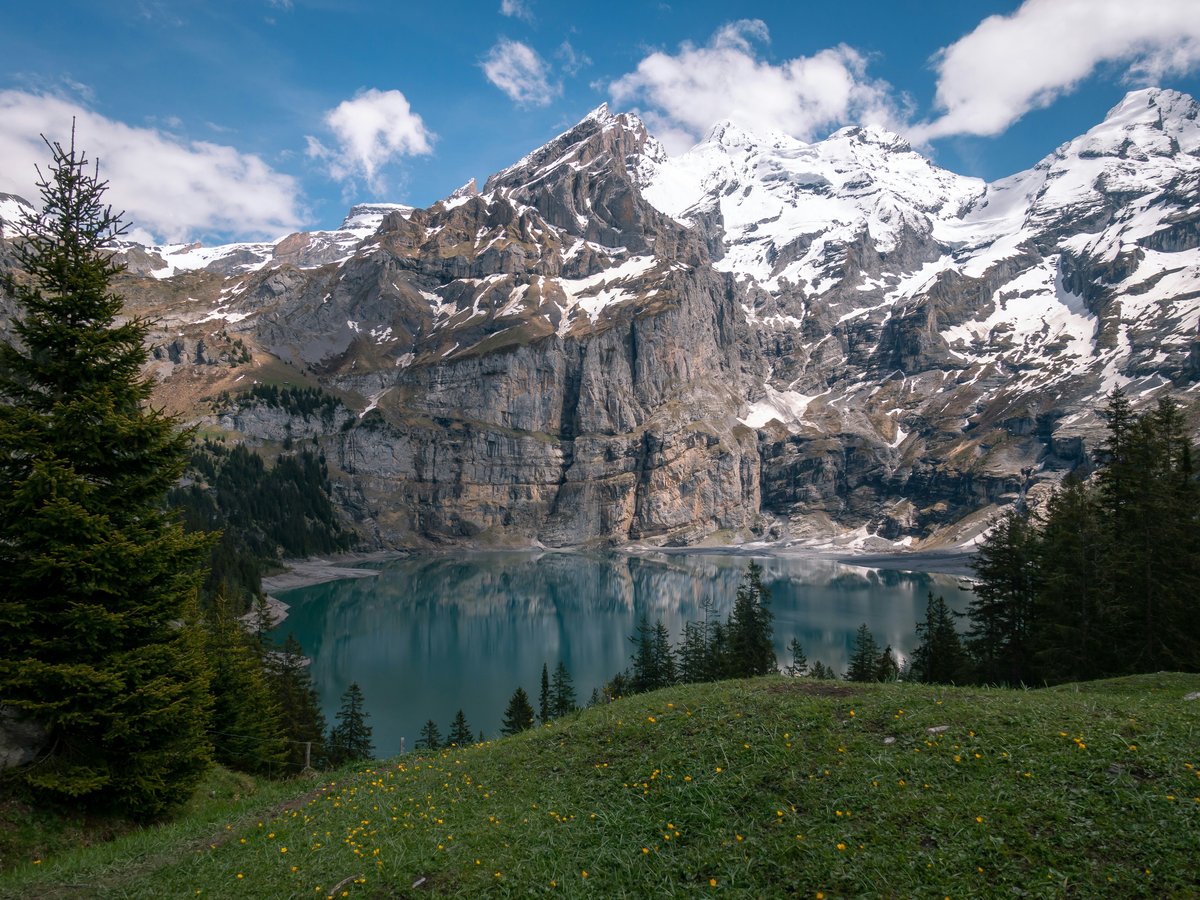
6 Park im Grüene
A lakeside park south of the city, in Rüschlikon, with formal gardens and lawns
Ride the S-Bahn south to Rüschlikon and Park im Grüene resolves into a broad, lawn-and-flower-bed park tipped down toward the western shore of the lake at 47.3003, 8.5514. Skip the crowded promenades in the city centre for an afternoon; the locals bring a blanket, a bottle, and their children here, and the park's own website (parkimgruene.ch) is the only planning you need. There is no admission, the lawns are for lying on rather than photographing, and the whole thing feels like a private garden that someone forgot to lock. Come with time you don't need back: a train out, a long afternoon in the grass, a train back with the sun behind you. It is not a sight. It is a Sunday.
Dates from 1947
Hours: Mo-Su 08:00-18:00
-
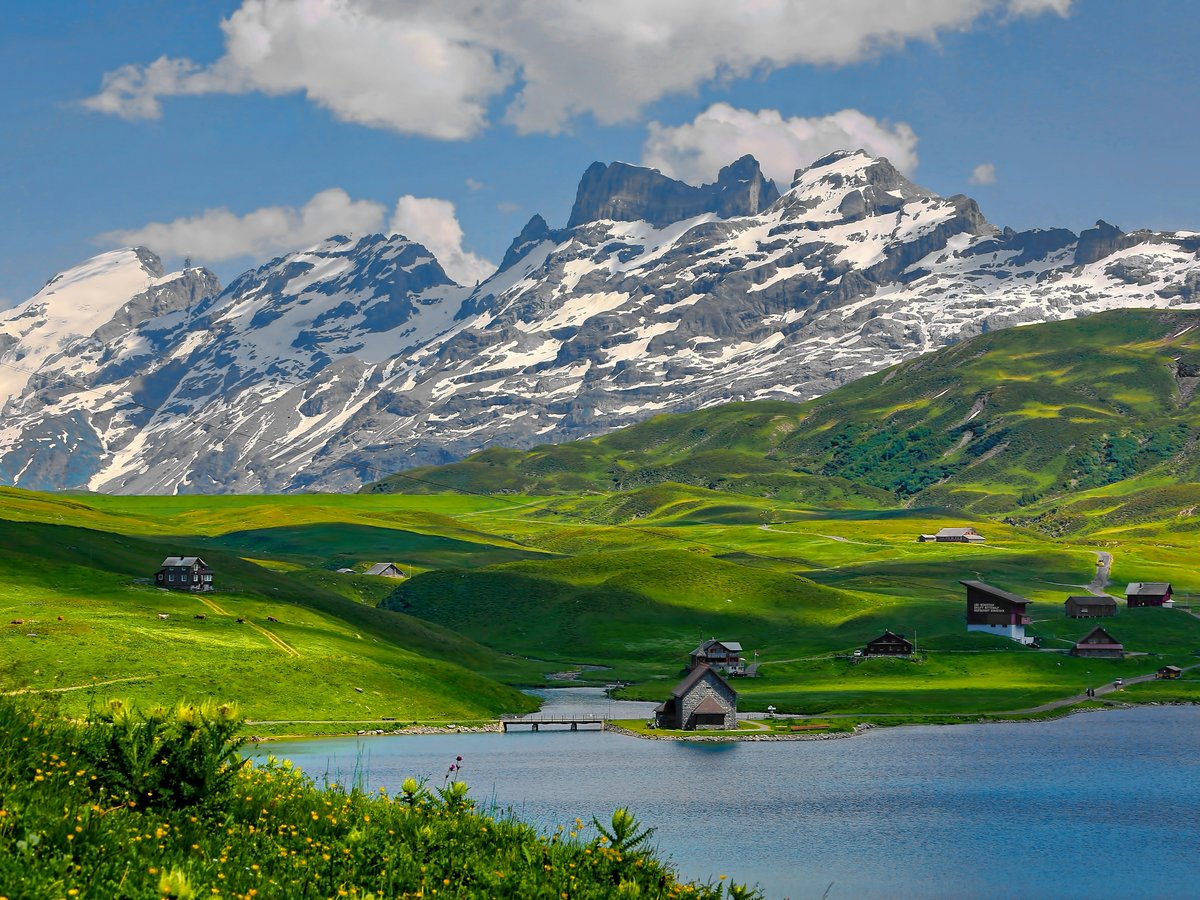
7 Paradeplatz
Bahnhofstrasse, Zürich, 8001The banking square whose name is Swiss shorthand for money
Step off the tram at 47.3697, 8.5389 and Paradeplatz reveals itself as a small, hard-edged public square in Zurich that punches far above its footprint: the banking heart of the country, unglamorous by design. Don't bother with the paid guided finance tours; ten minutes on the pavement here, watching the trams cross and the suited crowd move between the big private-bank facades, tells you what you need to know. The square itself is not pretty. It is not trying to be. What it offers is context: every Swiss news report on the franc, on gold, on the banks, is filed with this address in mind. Stand in the middle for a coffee's length, walk a slow circuit of the perimeter, and move on. It is a five-minute stop that pays for itself in what the rest of the city stops meaning without it.
-
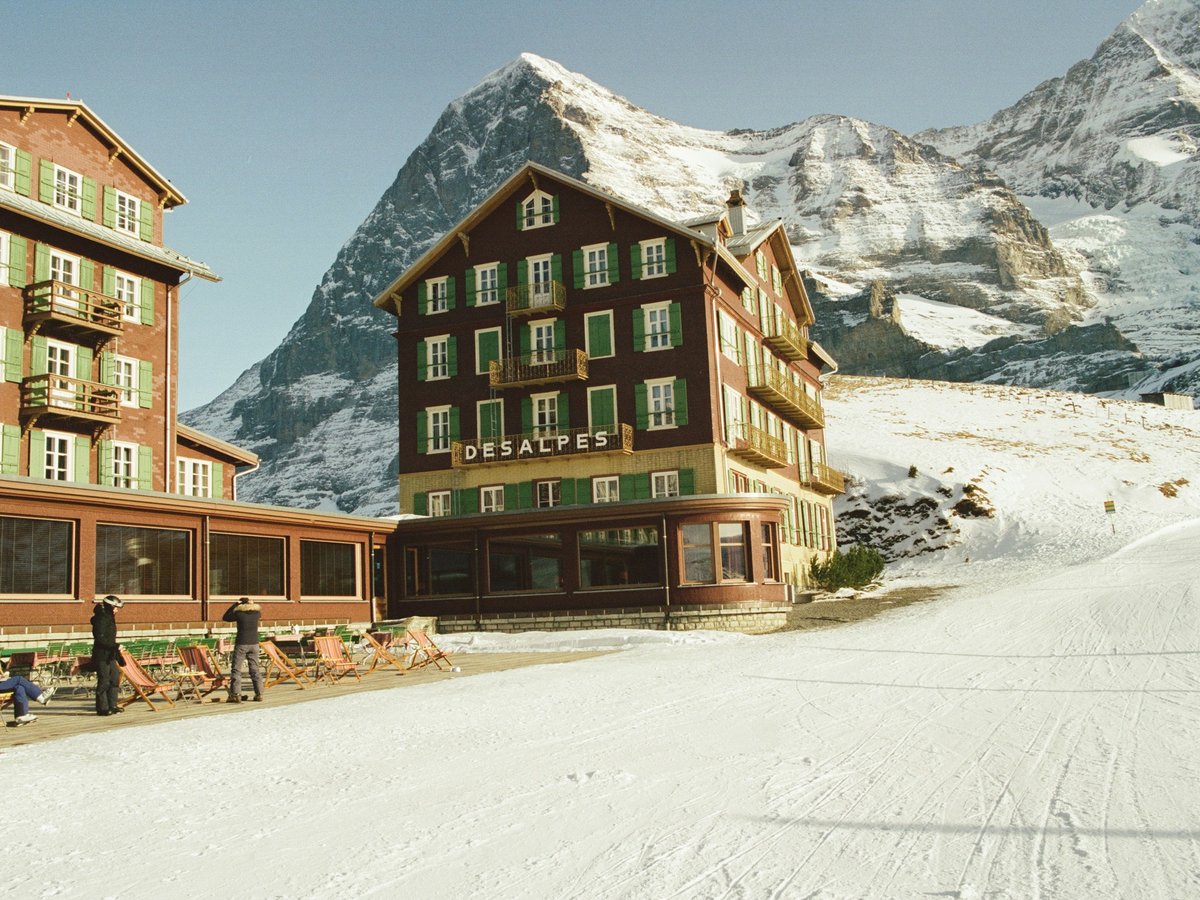
8 Bellevue
Bellevueplatz, Zürich, 8001The tram hub where the lake, the river and the nightlife converge
By 08:00 the trams at Bellevue are already circling, and by dusk this public square in Zurich is the city's living-room hinge: where the lake, the Limmat and the going-out districts meet. At 47.3669, 8.5450 you are one bridge from the old town and one promenade from the Opera; skip the sit-down cafés on the square itself, which charge for the address, and use Bellevue the way locals do: as a place to arrive, meet, and move on from. Watch the tram choreography for ten minutes at rush hour; it is a small masterpiece of scheduling that no museum will explain. Then walk east along the lake or north along the river, depending on the weather. Bellevue is not a destination. It is the pivot the rest of your day turns on.
-
9 Weinplatz
Weinplatz, Zürich, 8001A tiny riverside square on the Limmat, easy to miss and worth finding
Tucked at 47.3714, 8.5417, Weinplatz is the small public square in Zurich that most walking tours pass through without stopping, which is the argument for stopping. The locals cross it on the way to somewhere else; you should treat it as somewhere else. Stand at the river wall for five minutes and you get one of the tidiest cross-sections of the old town: the Limmat below, the Rathaus on the far bank, and the roofline stepping up toward Lindenhof behind you. Don't bother with the guided river walks that trundle past on both sides; the view from this railing is free and unbroken. It is not a big square. It is a well-placed one, and in a city this dense with squares that is the higher compliment.
-
10 Münsterhof
Münsterhof, Zürich, 8001A cleared medieval town square in the shadow of the Fraumünster
At 47.3700, 8.5411 the Münsterhof opens as a broad, deliberately empty town square, the kind of civic space European cities used to build for markets and now protect as breathing room. Avoid the tourist-priced cafés that line the perimeter: the point of this square is the emptiness, not the espresso. The locals cross it on foot, cyclists dismount, and the paving is left to do its own work under the church towers. Stand in the middle for a moment and notice what the city chose not to build here: no fountain feature, no monument at the centre, no retail island. That restraint is the argument. Come in the early morning before the guided groups arrive, or late in the evening after the shops have closed, and you get the square as its designers intended: a room the whole neighbourhood shares.
-
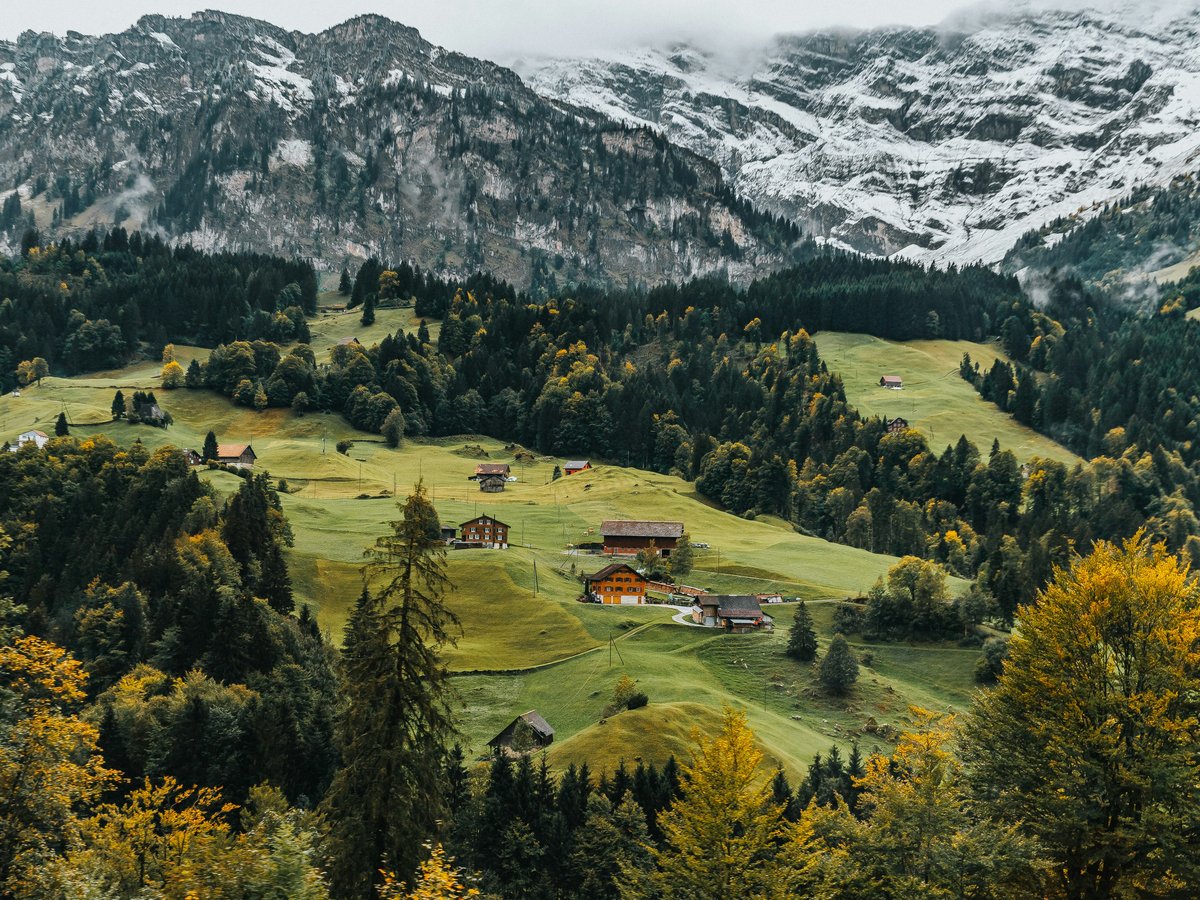
11 Bürkliplatz
1 BürkliplatzThe lakefront square where the city meets the water
At 47.3669, 8.5408 Bürkliplatz is the public square in Zurich that hands the city over to the lake: the point where the paved civic grid loosens into promenade, boat landings, and open water. Skip the postcard boat cruises that leave from the piers here; the same view is free from the lakeside benches, and the locals treat the weekly market on the square as the actual reason to come. Arrive on a Tuesday or Friday morning and the paving fills with produce stalls; arrive on a Saturday and it is flea-market chaos. On any other day it is simply a square you cross on the way to the water, which is also a fine use of it. Fifteen minutes here explains why Zurich is a lake city, not a river city, in a way that no aerial photograph will.
Dates from 1887
-
12 Central
CentralThe tram-crossing locality that anchors the north end of the old town
At 47.3768, 8.5437 Central is less a square than a locality in Zurich: a tram-and-bus junction pinched between the river, the main station's back door, and the funicular that climbs to the Polyterrasse above. The locals use it as a waypoint rather than a destination, and you should too: skip the fast-food frontages on the perimeter and treat Central as the hinge that links the old town to the university hill. Ride the small funicular up for a wider view of the roofline, walk back down through the medieval lanes, and you have used the junction for what it is good at. Ten minutes standing at the tram island watching four lines converge is its own quiet spectacle. Central is not pretty. It is useful, and in a city built on utility that is not a small compliment.
Last verified by automated review (v1.7.2_onboard-zurich-attractions-free-2026-08-21) on . What is automated review?