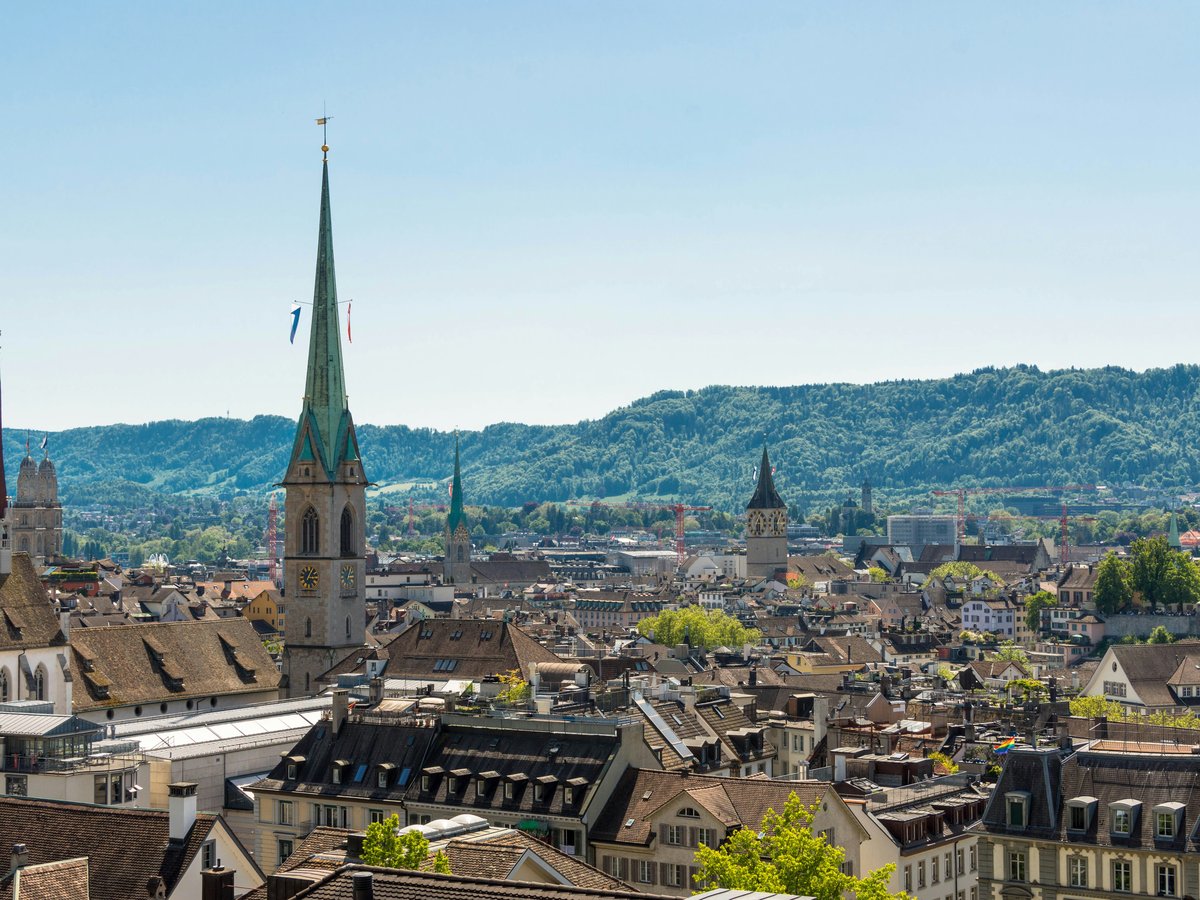
Zurich tends to surprise people after dark. The city that runs on Swiss precision by day loosens up once the sun sets behind the Uetliberg. This nightlife scene was shaped by the 1980 Zürich youth riots, when thousands of young people demanded autonomous cultural spaces and, remarkably, got them. Those squatted factories and warehouses in Kreis 5 became the foundation of a clubbing culture that hasn't faded in over 4 decades. The Street Parade, held along the lakefront each August, now draws close to a million people for one of the world's largest techno gatherings. Most locals don't head out for dinner before 8 PM, and the serious clubbing crowd rarely shows up before midnight. Mind you, a night in Zurich costs more than almost anywhere else in Switzerland. But the Swiss approach to going out carries a certain democratic quality, and you'll find bankers and art students sharing the same Langstrasse sidewalk at 2 AM, ordering from the same kebab stand.
The Bar Scene
Zurich's bar terrain splits along a clear geographic line. The Niederdorf side of the Limmat tends toward tourist-friendly drinking, while Langstrasse in Kreis 4 draws the locals and stays open later. Cocktail culture has grown here over the last 10 years, with Swiss bartenders competing internationally and bringing back techniques that show up in carefully built drinks. Expect to pay around 20 to 24 CHF for a well-made cocktail in the city center. Wine bars have become a quiet force in Seefeld and the Altstadt. Switzerland produces roughly 100 million liters of wine annually, and most of it never leaves the country. You'll find Chasselas from Lavaux and Pinot Noir from the Bündner Herrschaft on lists that rarely appear outside Swiss borders. A glass of local wine runs somewhere around 9 to 15 CHF depending on the label and the neighborhood. Dive bars are harder to find in a city this polished, but Langstrasse still holds a few. The after-work crowd fills the terraces there around 6 PM on Thursday and Friday evenings. Smoke curling out of open doorways, cheap lager, and loud conversation in Swiss German spilling onto the sidewalk. Rooftop bars are rare in Zurich's low-rise cityscape, but lakeside and riverside options more than compensate. From roughly May through September, the Badi bars open alongside Zurich's public bathing spots. These seasonal setups along Lake Zurich and the Limmat fill up fast on warm evenings. By 7 PM on a Friday in July, finding a seat at Barfussbar near Stadthausquai becomes unlikely. A Feldschlösschen beer runs about 7 CHF here, roughly half what the cocktail spots in Kreis 8 charge.
Clubbing in Zurich
The electronic music scene is Zurich's strongest suit after dark. Techno and house dominate the club circuit, a legacy of the free-space movements that shaped the city's cultural identity from the 1980s onward. Kaufleuten has operated in the city center since the 1990s and still draws a well-dressed crowd for hip-hop, R&B, and mainstream electronic sets on weekends. Hive, near Langstrasse, tends to book harder techno and house DJs. The crowd there skews younger and the dress code is minimal. Rote Fabrik in Wollishofen hosts club nights that lean toward experimental electronic and indie, with a lakeside terrace between sets that's hard to beat. Dress codes vary more than you might expect. The general Swiss approach is smart-casual. Sneakers work almost everywhere except the more upscale spots, where you'll want closed shoes and a collared shirt. Techno venues have adopted the functional-dark aesthetic common across Europe. All black works. Door policies can be selective, especially at the more mainstream venues near Bellevue. Groups of men without women sometimes have a harder time on peak nights. That said, the door culture here is less confrontational than in Berlin or London. A polite approach in English usually works fine. Swiss German helps. Peak hours follow a predictable pattern in Zurich. Bars fill between 9 and 11 PM. Clubs don't really get going until midnight. The strongest sets tend to hit between 1 and 3 AM. On Saturday nights, some venues keep the music running until 5 or 6 AM. Sunday morning afters are a scene in their own right. Zurich scores 8.5/10 for LGBTQ+ friendliness (sourced from TTDI's editorial rubric), and the club scene reflects that openness. Several venues host dedicated queer nights at least twice a month.
Live Music After Dark
Moods, tucked inside the Schiffbau complex in Zürich West, has been the city's primary jazz venue for years. It hosts international and Swiss acts in a room seating around 500 people, with sound quality that draws musicians specifically to play there. Thursday and Saturday nights tend to land the strongest bookings. Tonhalle Zürich handles the classical end with one of Europe's well-regarded orchestras. For larger touring acts, Hallenstadion in Oerlikon (built in 1939 as one of the continent's first multipurpose arenas) and Letzigrund (rebuilt in 2007 as a modern open-air stadium) serve the arena-scale shows. Between those two venues, Zurich can host most international tours that come through Central Europe. Smaller live music pops up in less expected places around the city. Dynamo, a youth culture center along the Limmat, books punk, indie, and experimental acts several nights a week. Rote Fabrik (noted in the clubbing section) also programs live bands on its outdoor stage during warmer months. Wednesday and Thursday nights tend to be the best for catching local Swiss acts. The scene here leans toward jazz, electronic-tinged indie, and a surprisingly deep hip-hop community that performs primarily in Swiss German.
Nightlife neighborhoods
-
Langstrasse (Kreis 4 and 5)
Zurich's main nightlife artery, slightly rough around the edges by Swiss standards. Neon-lit storefronts, late-night food spots serving Thai, Turkish, and Ethiopian dishes, and a density of bars per block that rivals anywhere in the city. The red-light district overlaps with the bar scene here, which gives it a grittier feel than the rest of Zurich. Sounds after midnight are a mix of bass from open club doors, laughter from packed terraces, and trams still running through it all.
- Best for
- The 20-to-35 crowd looking for variety, late-night bar hopping, food from a dozen cuisines at 2 AM
- Standouts
- Hive for techno, numerous independent bars along the main strip
-
Zürich West (Kreis 5)
Former industrial zone turned nightlife and arts center. The Schiffbau (a converted shipbuilding hall) and the Im Viadukt railway arches define the area's look. Exposed brick, steel beams, and high ceilings. It feels more polished than Langstrasse, less raw. The crowd tends to be creative professionals and an older subset of the nightlife scene.
- Best for
- Jazz fans heading to Moods, cocktail enthusiasts, weeknight dinners that turn into drinks, couples
- Standouts
- Moods jazz club in Schiffbau, bars and restaurants under the Viadukt arches
-
Niederdorf (Altstadt, Kreis 1)
The old town's eastern bank, cobblestoned and narrow. Tourist-heavy, which means the bars lean toward accessible and well-lit. The Grossmünster towers (standing since 1201) are visible from most corners, floodlit against the dark. Locals tend to start here and move on, but the early-evening terrace scene along Niederdorfstrasse has its own appeal. Smells of raclette and Bratwurst drift from the food stalls.
- Best for
- Visitors exploring Zurich for the first time, early evening drinks before heading to Kreis 4 or 5
- Standouts
- Mascotte near Bellevue for a mix of live acts and DJ sets
-
Seefeld (Kreis 8)
Zurich's upscale lakeside quarter. The bars here are quieter, the wine lists longer, and the crowd a bit older. You'll notice more Swiss French and Italian spoken here than along Langstrasse. On summer evenings, the stretch between Bellevue and Tiefenbrunnen fills with people walking along the lake. The temperature drops a degree or two near the water.
- Best for
- Wine bar regulars, date nights, anyone over 35 who wants a good drink without the volume
-
Rote Fabrik and Wollishofen
The autonomous cultural center sits right on Lake Zurich's western shore, about 15 minutes by tram from the city center. The space grew out of the youth protest movement and still carries that energy. Concerts, film screenings, and club nights share a campus that smells of lake water and old concrete. The outdoor terrace overlooks the water directly, and on a clear night you can see the lights of Seefeld across the lake.
- Best for
- Alternative and experimental music fans, anyone who wants a night out that doesn't feel commercial
- Standouts
- Rote Fabrik itself hosts club nights, live bands, and cultural events across all seasons
Safety after dark
Zurich scores 8.8/10 for solo-traveler safety (see the TTDI Solo-Safety Index), and the city's nightlife reflects that reliability. Violent crime is rare by any standard. The Langstrasse area sees occasional pickpocketing, and you might encounter drug dealers along the strip, but confrontations are unusual if you keep walking. Drink spiking, while not common, happens in any European city. Keep your glass in your hand at crowded venues. Taxis are regulated and metered, so the risk of being overcharged on a ride home is low. Late-night trams and S-Bahn trains run extended service on Friday and Saturday nights until well after 2 AM, which covers most club departures. Uber operates in Zurich and tends to be a reliable alternative. The one thing visitors underestimate is the cold. Even in August, temperatures around the Langstrasse strip can drop below 14°C by 2 AM.
Practical tips
- Currency and cost
- The Swiss franc (CHF) is strong. At the current rate of roughly 1 USD to 0.80 CHF, a night out in Zurich costs more than most European cities. Budget around 60 to 100 CHF for a moderate evening of 3 to 4 drinks. Card payments are accepted nearly everywhere, and Twint (the Swiss mobile payment app) is common at bars.
- Tipping
- Service is included in Swiss prices by law, so tipping is not obligatory. Most locals round up the bill or leave 5 to 10 percent for good service. At bars, rounding up to the nearest franc or two is standard. Nobody will chase you for not tipping.
- Cover charges
- Many bars have no cover at all. Club entry on bigger nights might run 15 to 30 CHF depending on the lineup. Some venues offer free entry before midnight on quieter evenings. The door price sometimes includes a drink ticket, so ask before ordering.
- Language at the bar
- Zurich's local language is Swiss German, which is distinct enough from standard German that even German speakers sometimes struggle with it. English works well in nearly all nightlife venues. Staff in bars and clubs typically speak at least conversational English, and menus are often bilingual.
- Noise regulations and closing times
- Switzerland takes noise rules seriously. Most neighborhood bars close by midnight or 1 AM on weekdays. Licensed clubs with proper soundproofing stay open until 4 to 6 AM on weekends. The transition from bar to club usually happens around midnight, so plan the arc of your evening accordingly.
- Getting home late
- The ZVV Nachtnetz (night network) runs additional S-Bahn and bus lines on Friday and Saturday nights into the early morning hours. A single night-network surcharge applies on top of the regular fare. Taxis from the city center to outer neighborhoods typically run 25 to 40 CHF.
FAQ
What is the best night of the week to go out in Zurich?
Saturday is the biggest night for clubs, with most venues running their headline bookings and keeping doors open latest. Thursday has a strong bar scene, especially along Langstrasse, where the after-work crowd blends into the late-night regulars. Friday is solid across the board. Wednesday tends to be quiet outside of a few weekly residencies.
How late does Zurich's nightlife run?
Bars in residential areas tend to close by midnight or 1 AM on weeknights under local noise regulations. On weekends, licensed clubs go until 4 to 6 AM. The ZVV night network covers transport on Friday and Saturday nights, so getting home after the last set is straightforward.
Is Zurich safe for solo travelers at night?
The city's solo-safety record, noted in the safety section above, extends comfortably to after-dark hours. Violent incidents are rare in nightlife areas, public transport runs late on weekends, and most neighborhoods see foot traffic well past midnight. Standard precautions apply, particularly around Langstrasse, but Zurich remains one of Europe's safer cities for going out alone.
What do locals in Zurich drink when they go out?
Beer is popular, with domestic brands and local craft breweries appearing on most bar menus. Swiss wine, especially Chasselas and Pinot Noir from domestic vineyards, is more common on local lists than most visitors expect. The cocktail scene has grown in recent years, though prices reflect Zurich's cost of living.
Do I need to book or get on a guest list for Zurich clubs?
For most weeknight events, walking up works fine. On Saturday nights at popular venues like Kaufleuten, a guest list or early arrival helps. Some clubs sell tickets online for special events, and buying in advance guarantees entry. For regular nights, showing up before midnight usually avoids a wait at the door.
When is the Street Parade held?
The Street Parade takes place on a Saturday in August each year, typically around the second week of the month. The route runs along the lakefront from Bellevue toward Enge. Hotels and short-term rentals fill up weeks in advance, so book early if your trip coincides with it. The parade itself is free to attend.
Last verified by automated review (v1.7.2) on . What is automated review?