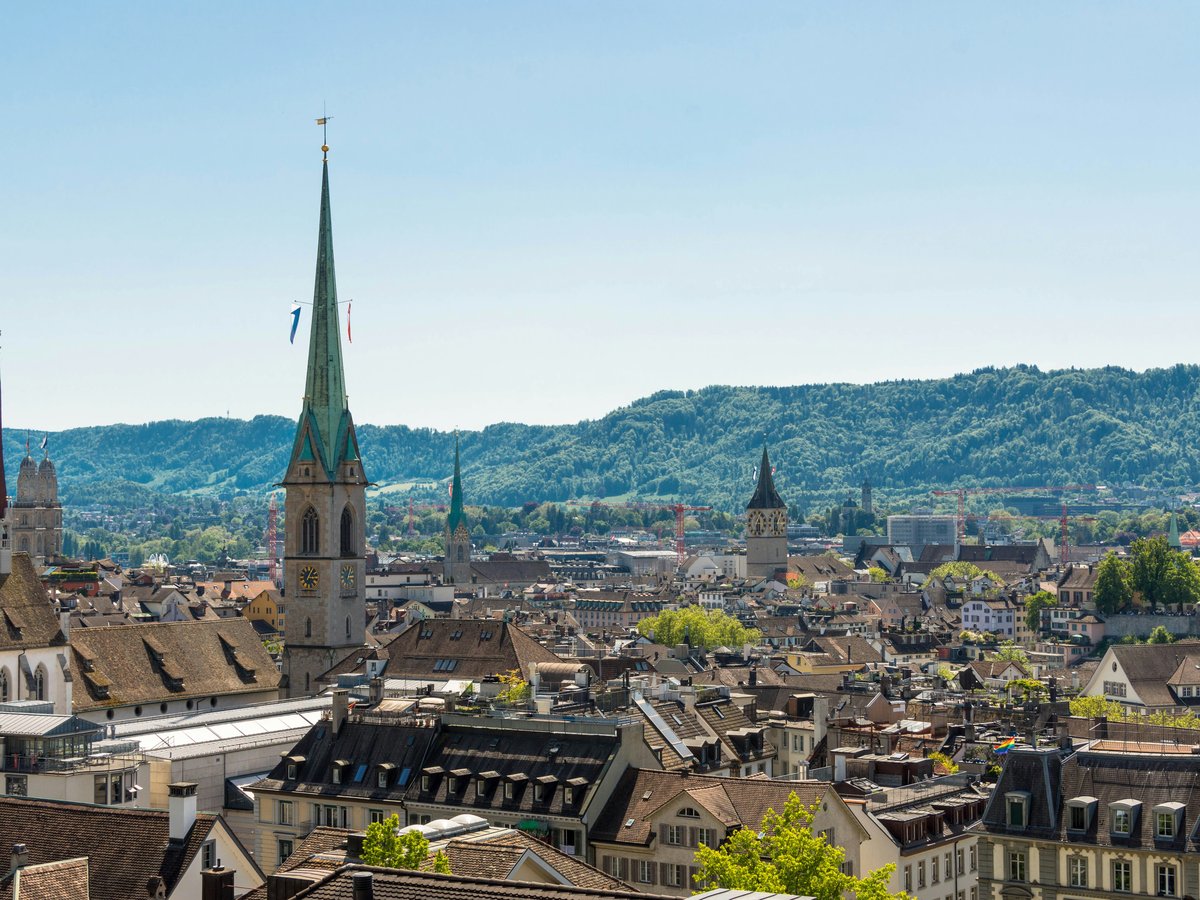
What should I pack for Zurich?
Pack a Swiss Type J adapter (Euro plugs do not fit all Swiss outlets), broken-in walking shoes for Niederdorf's cobblestones, and a packable rain shell. Zurich summers reach 33°C but afternoon thunderstorms arrive without warning. Bring toiletries and sunscreen from home. Swiss pharmacy prices run 2-3 times higher than North American retail. Swimwear earns its luggage space June through September for Zurich's badi culture.
Shop the packing list (16 items)Walking shoes with actual grip, not fashion sneakers. Niederdorf's lanes are uneven cobblestone, the steps up to Lindenhof are worn smooth and slick when wet, and a full day between Kunsthaus Zürich and Fraumünster covers 8-12 km without trying. Soles with no tread will betray you on damp stone. A packable rain shell belongs in your daypack every day, even in August. Zurich averages about 12 rainy days per month in summer, and storms tend to build fast over Lake Zurich. You'll feel the humidity thicken about 20 minutes before the sky opens. The air goes cool and metallic. At noon it might be 33°C, by evening 19°C, so one mid-weight merino pullover handles the swing. Worth noting, restaurants on Bahnhofstrasse and around Seefeld expect smart-casual at dinner. Kronenhalle on Rämistrasse won't turn you away in trail shoes, but you'll feel conspicuous next to the original Chagall and Miró on the walls.
The Swiss Type J plug has three round pins in a triangle. A standard Euro 2-pin fits many Swiss outlets but not all of them, and you won't know which type you're facing until you're standing in the hotel room at midnight with a dead phone. A dedicated Swiss adapter costs $5-8 on Amazon. A universal adapter covers it too. Check before you fly. Bring a portable charger rated at least 10,000 mAh. The SBB Mobile app for trains, the ZVV app for trams, and Google Maps all compete for battery, and they will drain it by 3 PM on a full sightseeing day between Grossmünster and Museum Rietberg. A dead phone at the Zürich HB ticket gates during rush hour is a $20 problem to prevent.
If you visit June through September, pack swimwear. This is non-negotiable. Zurich's badi culture is a daily local ritual, not a tourist activity. Seebad Enge on the western lakeshore charges 8 CHF (about $10) entry, and Frauenbadi on Stadthausquai is women-only during the day but opens as a co-ed bar after 20:00. The lake water holds around 20-22°C in July and August. You'll smell sunscreen and grilled Cervelat from the wooden decks before you even reach the ticket window. Winter visitors need proper insulation. December and January average -1 to 4°C, and the wind off Lake Zurich cuts through cotton layers fast. A down jacket, thermal base layer, and waterproof boots handle the Christmas markets at Zürich HB and any Uetliberg day trip. Wool gloves, not synthetic. The Felsenegg cable car departs from Adliswil, one S-Bahn stop south of the main station.
Bring your own toiletries, medications, and sunscreen. A bottle of Neutrogena sunscreen at a Zurich Amavita pharmacy costs about 25 CHF ($31), roughly triple what you'd pay at a US Target. Paracetamol runs 8-12 CHF for a small box. This is not a city where buying locally saves money on personal care. That said, skip packing an umbrella. Any Coop City or Manor department store sells compact ones for 15-20 CHF, and your hotel likely has a loaner at the front desk. A reusable water bottle is the one item that pays for itself on day one. Zurich has over 1,200 public fountains, all drinkable unless marked 'kein Trinkwasser' (not drinking water). Fill up at the Helmhaus fountain on Limmatquai between museum visits.
Essentials
- Walking shoes with rubber-treaded soles for Niederdorf cobblestones and Lindenhof steps Shop
- Packable rain shell (Zurich averages about 12 rainy days per month even in summer) Shop
- Swiss Type J plug adapter (the standard Euro 2-pin does not fit all Swiss outlets) Shop
- Portable charger, 10,000+ mAh (SBB Mobile and ZVV transit apps drain batteries by mid-afternoon) Shop
- Mid-weight merino pullover for 10-15°C evening temperature drops Shop
- Swimwear for June through September badi lake swimming Shop
- Reusable water bottle (1,200+ free public drinking fountains across the city) Shop
- One smart-casual outfit for dinner at Bahnhofstrasse and Seefeld restaurants Shop
- Sunscreen packed from home (25 CHF per bottle at Zurich pharmacies, about $31) Shop
- Daypack that fits rain shell, charger, water bottle, and a pullover Shop
Seasonal extras
- Down jacket for December through February (average -1 to 4°C) Shop
- Thermal base layer for sub-zero mornings near Uetliberg Shop
- Waterproof boots for Christmas markets and snowy hillside paths Shop
- Wool gloves and a warm hat (lake wind intensifies the cold) Shop
- Sunglasses with UV protection for summer glare off Lake Zurich Shop
- Light cotton layers for spring and autumn (8-18°C daily swings in April and October) Shop
Buy on arrival
- Compact umbrella at Coop City or Manor (15-20 CHF)
- SBB Mobile and ZVV transit apps (free, download before arrival)
- Swiss chocolate from Sprüngli on Bahnhofstrasse (better selection and prices than airport duty-free)
- Cervelat and bread from Migros or Coop for lake picnics (under 5 CHF total)
Last verified by automated review (v1.7.2) on . What is automated review?