When's the best time to visit Zurich in 2026?
May through mid-June and September are Zurich's sweet spot for first-timers. Temperatures sit between 15°C and 25°C, lake swimming opens by late May, and hotel rates in Kreis 1 have not yet hit summer highs. Avoid November through February, when thick valley fog can block the sun for days.
May and the first half of June are when Zurich feels most worth its price tag. Daytime temperatures hover around 18-24°C, and the Limmat river through Altstadt catches enough sun by mid-afternoon that you'll see locals wading in at Oberer Letten, Zurich's concrete river bath that opens each May. The linden trees along Bahnhofstrasse are in full leaf, the trams ring their bells at each stop, and you can smell fresh-cut grass drifting off the Arboretum on the south shore of Zürichsee. Hotel rates in Kreis 1 tend to sit around CHF 180-250 per night for a mid-range double, roughly 20-30% below the July-August ceiling. At 1 USD to 0.81 CHF, those numbers sting less than they look. Worth noting, the Kunsthaus Zürich, which has operated since 1819, often opens its summer exhibitions in late May, and the queues at that point are still manageable. Evenings cool to about 12°C, enough for a light jacket at Lindenhof hill but not cold enough to push you indoors.
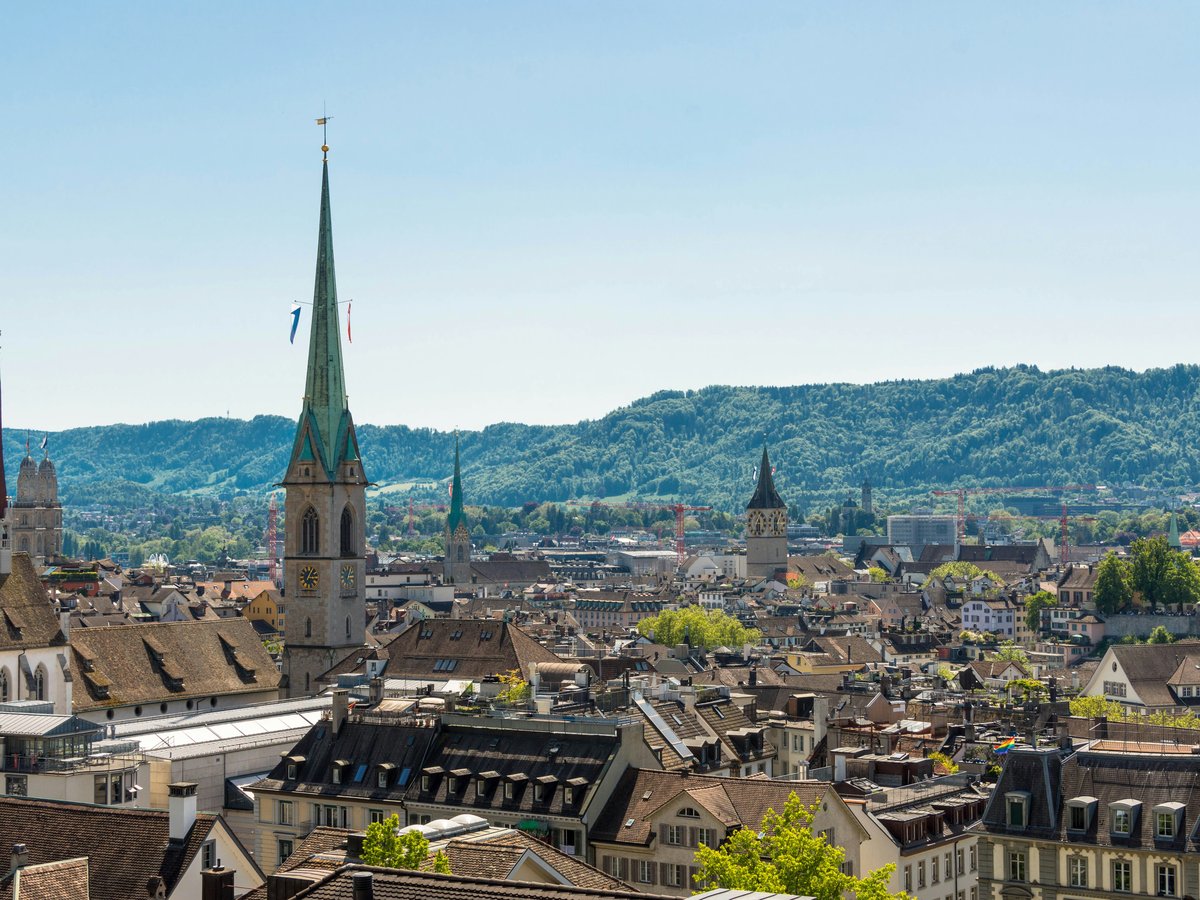
September might be the smartest timing call for a first visit. The summer crowds thin after the Street Parade in mid-August, lake water at Tiefenbrunnen Strandbad still holds around 20-22°C through mid-September, and the afternoon light turns golden on the Grossmünster's twin towers. The church has stood since 1201. Morning fog sometimes settles on Zürichsee before 8am, then burns off to reveal the Glarner Alps to the southeast. You'll smell roasting chestnuts from Marktgasse vendors by the last week of the month. The Knabenschiessen, Zurich's oldest folk festival, runs a weekend in mid-September and fills Albisgütli with carnival rides, the crack of target rifles, and the smoke of bratwurst on open grills. Flights from major European hubs drop 15-25% compared to August. The trade-off is rain. September averages about 100mm of precipitation across 10-12 days, so pack a proper rain jacket.
July and August deliver Zurich's warmest weather, with temperatures regularly reaching 28-32°C. Today, August 19, the city hit 33.2°C at 26% humidity, which is dry by local standards. The Badi culture peaks in these months. Zurich has over 30 public bathing spots, and the wooden Frauenbadi on the Limmat, a women-only bath during the day since 1888, converts to the Barfussbar at night, where you drink wine on the river deck with bare feet on warm planks. Sounds good. But the reality for a first-timer is that half the city leaves on vacation, many smaller restaurants in Niederdorf close for 2-3 weeks, and hotel rates in Kreis 4 and Kreis 5 climb past CHF 300 per night. Lake cruises run at full weekend capacity, meaning 45-minute waits at the Bürkliplatz pier. If this window is your only option, visit the Fraumünster, founded in 853 and home to Chagall's five stained-glass windows since 1970, on a weekday morning before 10am.
November through March is when Zurich tests your patience. The Hochnebel, a thick fog layer that parks over the Swiss Plateau from roughly November to February, can block the sun for a week or more at a stretch. The city feels grey and damp, with temperatures between -2°C and 5°C and daylight fading by 4:30pm in December. This wet chill seeps through layers in a way that dry Scandinavian cold does not. That said, December has a real draw. The Christkindlimarkt at Bellevue and the Wienachtsdorf at Sechseläutenplatz run from late November through December 24, and a cup of Glühwein at CHF 8 warms your hands as much as your throat. The National Museum Zurich, opened in 1898 in its castle-shaped building beside the Hauptbahnhof, is better suited to these short cold days than to a sunny June afternoon. January and February are the cheapest months, with mid-range doubles dropping below CHF 150, but cold, dark, and fog together make walking the city feel like a slog.
Month-by-month outlook
- Jan Avoid
- Feb Avoid
- Mar Avoid
- Apr Shoulder
- May Ideal
- Jun Ideal
- Jul Shoulder
- Aug Shoulder
- Sep Ideal
- Oct Shoulder
- Nov Avoid
- Dec Shoulder
Year-round climate
Averages from the last 5 years.
| Month | Avg high (°C) | Avg low (°C) | Rainfall (mm) |
|---|---|---|---|
| Jan | 5 | -1 | 99 |
| Feb | 8 | 0 | 54 |
| Mar | 11 | 2 | 76 |
| Apr | 14 | 4 | 100 |
| May | 18 | 9 | 151 |
| Jun | 25 | 14 | 121 |
| Jul | 25 | 15 | 168 |
| Aug | 25 | 15 | 118 |
| Sep | 20 | 12 | 117 |
| Oct | 16 | 8 | 95 |
| Nov | 8 | 3 | 122 |
| Dec | 5 | 0 | 113 |
Summers average 22-28°C with spikes into the low 30s; winters drop to freezing under persistent low cloud. Annual rainfall around 1,100mm, spread fairly evenly, with June and September the wettest months.
Go deeper into Zurich
Last verified by automated review (v1.7.2) on . What is automated review?