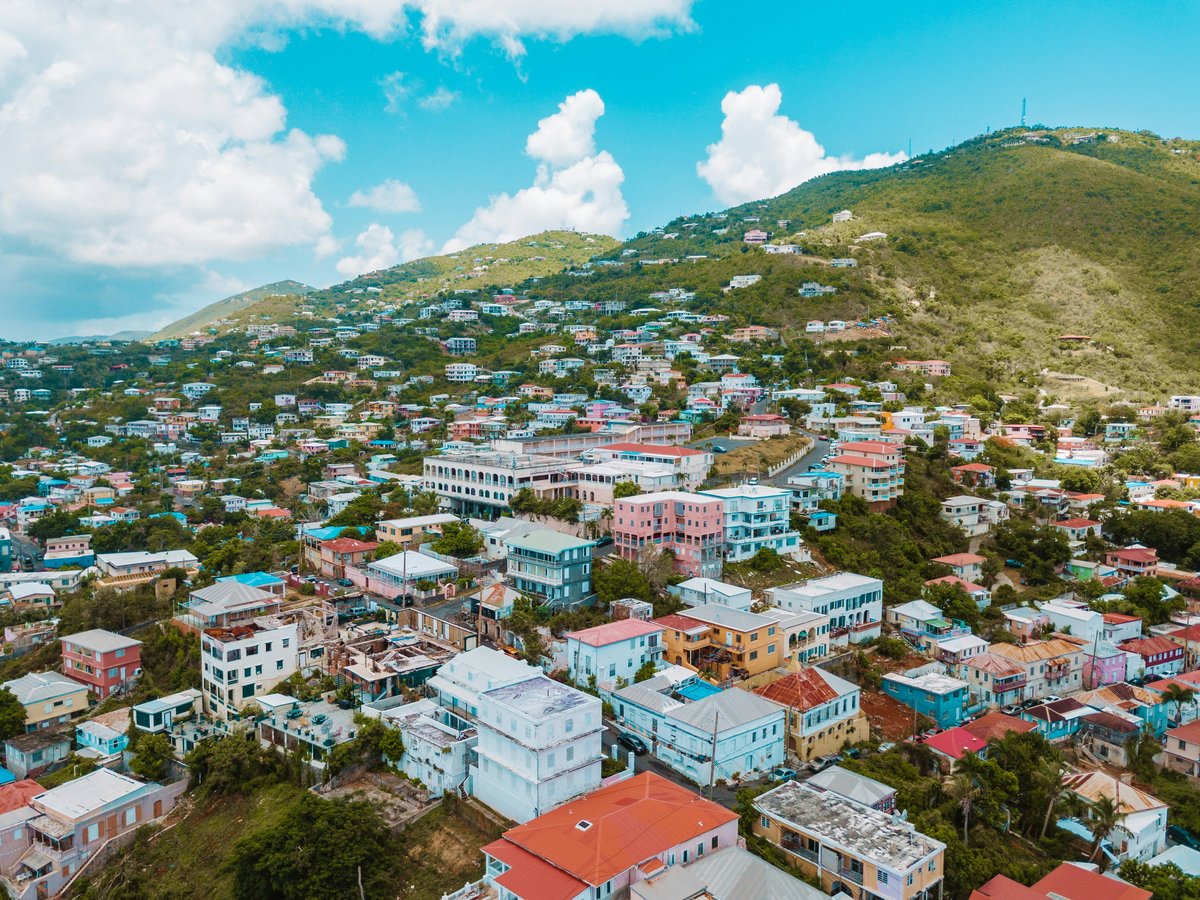
February in St. Thomas sits at the center of high season, and the single most important thing to know is that cruise ships set the island's daily rhythm. On heavy port days, 3 to 4 ships dock at Havensight and Crown Bay, each carrying thousands of day-trippers into Charlotte Amalie. The historic waterfront downtown, roughly 6 blocks of Danish colonial storefronts and stone warehouses, fills by mid-morning and empties by 4 p.m. Plan around that window. If you're staying on-island, aim for the 99 Steps and Fort Christian before 9 a.m. or after the last tenders depart.
The weather, to be fair, is about as comfortable as the Caribbean gets. Daytime highs hover near 26°C (78°F), lows sit around 24°C (75°F), and the northeast trade winds hold humidity to roughly 74%. February does collect more rain than January or March, mostly as brief afternoon showers that pass within 20 minutes. They rarely cancel a beach day. Ocean temperature runs near 26°C (79°F), warm enough for extended snorkel sessions without a wetsuit.
This is peak pricing territory. Hotel rates from the resorts along Bolongo Bay to the guesthouses above Red Hook climb well above the yearly average, and Presidents' Day week in mid-February adds another wave of mainland visitors. That said, February also brings humpback whales through the Virgin Passage on their winter breeding migration, and the underwater visibility reaches its annual peak. If you can absorb the premium, the water conditions make a strong case for this month over any other.
Why visit in February
- Warm, consistent weather through the month, with steady northeast trade winds that prevent the sticky, stagnant heat common from July through October.
- Calmest seas of the year, with excellent underwater visibility at snorkel and dive sites along the south and east shores.
- Humpback whales migrate through the waters between St. Thomas and St. Croix from January through March, with February at the peak of sighting frequency.
- No passport required for U.S. citizens. St. Thomas is a U.S. territory with direct flights from East Coast airports taking 3 to 4 hours.
Worth knowing
- Peak-season pricing means accommodation and rental rates are the highest of the calendar year. Food, car rental, and excursion costs run higher than on the mainland year-round, and February demand lifts them further.
- Charlotte Amalie absorbs thousands of cruise passengers on multi-ship days. The waterfront district fills to capacity between 10 a.m. and 3 p.m., making shops and streets difficult to navigate.
- February is the wettest month within the dry season, with more frequent afternoon showers than January or March. Most clear quickly, but one or two half-day downpours per week can shift outdoor plans.
Best for
Think twice if
February falls within St. Thomas's dry season but sits between two notably drier months. January and March each average about 33mm of rainfall, while February records 72mm spread across roughly 14 rainy days. Most of the moisture arrives as quick trade-wind showers in the early-to-mid afternoon. Mornings typically dawn clear, and the rain rarely lingers past 4 p.m. The steady northeast trades keep east-facing beaches like Sapphire and Coki slightly choppier than south-shore spots like Bolongo Bay and Brewers Bay. Underwater visibility frequently reaches 20 meters or better along the south coast, the best readings of the calendar year. Sea conditions overall are the calmest of any month, with swells rarely exceeding half a meter.
Year-round climate
Averages from the last 5 years.
| Month | Avg high (°C) | Avg low (°C) | Rainfall (mm) |
|---|---|---|---|
| Jan | 26 | 25 | 33 |
| Feb | 26 | 24 | 72 |
| Mar | 26 | 24 | 32 |
| Apr | 26 | 25 | 65 |
| May | 27 | 26 | 78 |
| Jun | 28 | 26 | 73 |
| Jul | 28 | 26 | 88 |
| Aug | 29 | 27 | 133 |
| Sep | 29 | 27 | 117 |
| Oct | 29 | 27 | 145 |
| Nov | 28 | 26 | 116 |
| Dec | 27 | 25 | 50 |
Holidays and festivals in February
Public holidays
- Presidents Day(President's Day)15 February 2027
Best things to do in February
Snorkeling at Coki Beach
water sportsCoki Beach on the northeast shore sits beside Coral World Ocean Park and offers one of the island's most accessible reef entries. The coral starts a few meters from the sand, and sergeant majors, blue tangs, and parrotfish feed along the reef wall in clear water.
February's calm winter seas produce the year's best visibility at south and east shore reef sites. Summer swells stir sediment and cut clarity significantly.Booking tipArrive before 10 a.m. to beat the cruise-excursion buses that start dropping passengers by late morning.
Humpback whale watching
wildlifeHumpback whales pass through the deep channel between St. Thomas and St. Croix during their winter breeding migration from the North Atlantic. Sightings range from distant spouts visible from the eastern shoreline to close encounters on dedicated boat trips departing from Charlotte Amalie harbor.
The breeding migration peaks in February and early March. This 6-week window offers the highest probability of sightings from both shore and vessel.Booking tipBook whale-watching boat trips at least a week ahead. Operators run limited trips, and February seats fill quickly.
Sailing day trip
sailingHalf-day and full-day sailing excursions leave from Red Hook and Charlotte Amalie, covering routes along the south shore, out to Buck Island, or across to the British Virgin Islands (passport required for BVI stops). Catamarans and monohulls are both common.
Steady northeast trade winds of 15 to 20 knots and swells under half a meter make February one of the best sailing months. Summer and fall bring less predictable wind and higher seas.Booking tipFull-day BVI trips sell out 2 weeks ahead during Presidents' Day week. Book early for that stretch.
Hiking Crown Mountain trails
hikingThe trails around Crown Mountain and the ridge above Magens Bay wind through secondary tropical forest, with viewpoints that open out over the north shore and the British Virgin Islands on clear days. Drake's Seat, the most accessible viewpoint, is a short walk from the road.
February highs near 26°C are far more comfortable for uphill hiking than the 29°C readings common in August. Drier trail conditions also reduce slipping on the steeper grades.Walking tour of historic Charlotte Amalie
culturalA self-guided walk through Charlotte Amalie threads past the 99 Steps (a Danish-era stone staircase up Government Hill), Blackbeard's Castle, the Cathedral of Saints Peter and Paul, the Cathedral Church of All Saints (founded 1848), and the old waterfront warehouses.
Comfortable walking temperatures and moderate humidity compared to summer months. The early-morning window before cruise passengers arrive gives the historic district an unhurried feel.Booking tipStart by 8 a.m. to have the 99 Steps and Blackbeard's Castle largely to yourself. Cruise passengers typically reach Government Hill by 10:30 a.m.
Day trip to St. John via Red Hook ferry
day tripThe Red Hook to Cruz Bay ferry crosses in about 20 minutes and lands you at the edge of Virgin Islands National Park, which covers more than half of St. John. The Reef Bay Trail descends through 18th-century sugar plantation ruins to a south-shore beach. Gibney Beach on the north shore offers calm, clear snorkeling.
Dry February conditions make the Reef Bay Trail's steep rocky sections safer and less slippery than during the wet months from August through November. The park's beaches also see calmer surf.Booking tipTake the first ferry at 6 a.m. if you plan to hike Reef Bay. The trail takes 3 to 4 hours round trip, and starting early avoids the midday heat.
Kayaking the mangrove lagoons
water sportsGuided kayak tours launch from several south-shore and east-end sites, paddling through red mangrove channels where juvenile fish, small rays, and the occasional sea turtle shelter in the root systems.
Winter's calmer waters and lighter currents make the mangrove channels more navigable, especially for first-time kayakers. Summer storms push debris into the narrower passages.Booking tipMorning tours offer better wildlife sightings. The mangrove lagoons heat up by afternoon, and many creatures retreat to deeper water.
What to eat in February
In season: fruit
Passion fruit (water lemon)
Known locally as water lemon, this tart fruit bears through the winter months on St. Thomas. Roadside vendors along the north-shore roads sell them from coolers, and juice stands blend them into fruit punches.
On menus now
Caribbean spiny lobster
Season runs through March 31 in the USVI, with February at peak harvest. Restaurants across Red Hook and Frenchtown feature lobster specials through the winter months.
Fungi and stewed fish
A cornmeal side dish (pronounced foon-gee locally), similar to polenta, served with stewed or fried fish from island catches. February's calmer seas mean steadier landings at the Frenchtown fishing dock, and the dish appears on more restaurant menus during peak season.
Street food peaks
Pate
Deep-fried turnovers stuffed with saltfish, chicken, or seasoned beef. More roadside vendors set up shop during high season, and the turnovers come out of the oil faster during the midday lunch rush near Charlotte Amalie's waterfront.
What to drink
Guavaberry liqueur
Made from rum and local guavaberries harvested in late fall from hillside trees across the territory. Winter stocks tend to be the freshest. Charlotte Amalie shops carry small-batch bottles year-round, but the selection is widest from December through February.
Regular events in February
Presidents' DayFree
Federal holiday observed across the U.S. Virgin Islands. Government offices and some local shops close, but tourist sites, beaches, and most restaurants stay open. The long weekend brings additional mainland visitors to the territory.
Third Monday of FebruaryUSVI Agriculture and Food Fair (Agrifest)
The territory's largest agricultural exhibition, held annually on St. Croix. St. Thomas residents fly or take the seaplane over for the day. Local food vendors, livestock competitions, produce displays, and cooking demonstrations draw territory-wide attendance.
Presidents' Day weekend, mid-FebruaryValentine's Day celebrations at island restaurants and beach bars
Beach bars and restaurants across St. Thomas run special dinner events on and around February 14. The waterfront spots in Frenchtown and Red Hook tend to book at least 2 weeks ahead for the evening.
February 14 and surrounding weekendBest places this February
Magens Bay Beach
beachThe north shore's signature crescent, about 1.6 km of calm, shallow water protected by the bay's natural curve. Arrive before 10 a.m. to claim shade under the sea grape trees along the west end. February's calmer winter surf makes the swimming safer for children than the choppier fall months.
North SideBlackbeard's Castle
historic landmarkA National Historic Landmark on Government Hill above Charlotte Amalie. The stone watchtower and hillside terraces give a clear sightline over the cruise ship harbor and the waterfront district below. Morning visits beat both the midday heat and the cruise-day foot traffic.
Charlotte AmalieDrake's Seat
viewpointA mountain viewpoint on the north side overlooking Magens Bay. On clear February mornings, the British Virgin Islands are visible across the Sir Francis Drake Channel. The spot is named for the tradition that Drake surveyed these waters from this ridge.
Crown MountainFrenchtown waterfront
neighborhoodThe old French Quarter, settled by descendants of families from St. Barthélemy, sits about 2 km west of Charlotte Amalie. St. Anne Chapel, founded in 1921, anchors the neighborhood. The waterfront still functions as a fishing dock, and the seafood restaurants here draw more locals than tourists year-round.
FrenchtownRed Hook village
villageThe east-end village centered around the St. John ferry terminal. A cluster of locally owned restaurants and bars lines the waterfront, and the pace is noticeably slower than Charlotte Amalie even during peak cruise-ship season. Worth noting as a dinner base if you're staying on the east end.
Red HookSapphire Beach
beachAn east-end beach with a reef close to shore along the northern rock outcropping. Less visited than Magens Bay or Coki Beach, it offers good snorkeling without the high-season crowds that gather at the more famous spots. The reef sits in about 2 to 3 meters of water, accessible for beginners.
East EndCathedral of Saints Peter and Paul
historic siteCharlotte Amalie's oldest Catholic church, founded in 1806 in the heart of the historic district. The thick stone walls keep the interior noticeably cooler than the street outside, and it's worth a 10-minute stop between other sites along the waterfront walk.
Charlotte AmalieVirgin Islands Coral Reef National Monument
marine reserveEstablished in 2001, this national monument protects reef ecosystems in the waters off both St. Thomas and St. John. The south-shore reefs accessible by boat from Red Hook and Charlotte Amalie harbor include some of the territory's healthiest coral formations.
Offshore
Your packing checklist
Tick items off as you pack. Your progress saves in this browser.
All packed — have a great trip.
Insider tips
Frenchtown, roughly 2 km west of Charlotte Amalie, serves better seafood at lower relative cost than the cruise-port-facing restaurants downtown. The neighborhood sits along a working waterfront where fishing boats still tie up in the mornings, and the catch moves directly to kitchen prep.
For snorkeling at Magens Bay, walk past the main sandy stretch to the rocks at the east end of the beach. The coral formations there hold more reef fish, and the deeper water beyond the rocks is where green sea turtles feed on the grass beds.
St. Thomas scores 7.5/10 for LGBTQ+ friendliness (sourced from TTDI's editorial rubric). The high-season crowd brings a more cosmopolitan atmosphere to the island, and the bar scene around Red Hook tends to be open and welcoming through the winter months.
The Red Hook ferry to Cruz Bay on St. John departs every hour from 6 a.m. to midnight. For Friday and Saturday evening returns, buy your ticket early in the day. The last 2 or 3 runs fill with day-trippers heading back to their St. Thomas hotels.
Avoid these mistakes
- Heading into Charlotte Amalie without checking the cruise ship port schedule. On a day with 4 ships in port, the downtown swells with over 10,000 day-trippers. On no-ship days, you can walk the 99 Steps and browse the old warehouses with room to breathe.
- Underestimating the sun because the air temperature feels mild. At 18°N latitude, the UV index hits 8 to 10 even in February, and the water reflection on boat excursions amplifies exposure. Reapply sunscreen every 90 minutes, especially on snorkel trips.
- Waiting until arrival to rent a car. February demand exceeds the island's limited rental fleet, and agencies regularly sell out 2 to 3 weeks before Presidents' Day week. Walking is difficult outside Charlotte Amalie, and taxi fares add up quickly over a week-long stay.
Practical tips for February
February is peak season on St. Thomas, and anything with limited inventory needs advance booking. Reserve rental vehicles at least 3 weeks ahead, since the island's fleet is small and cruise-excursion companies hold a large share. The island drives on the left (a remnant of Danish colonial rule, though most cars have left-hand-drive steering), so first-time drivers should take the roads slowly, especially the steep grades near Crown Mountain. Charlotte Amalie shops that serve the cruise trade typically close by 5 p.m., while restaurants in Red Hook and Frenchtown seat dinner through about 9 p.m. but fill by 7 p.m. on weekends without a reservation. A valid government-issued photo ID is sufficient for U.S. citizens, since the USVI is a U.S. territory and no passport is required. Non-U.S. citizens should check standard U.S. visa entry requirements, which apply to the territory.
FAQ
Is February a good time to visit St. Thomas?
February offers genuinely pleasant weather and the calmest seas of the year, making it a strong month for beach and water activities. The trade-off is that this is the most expensive month, with the heaviest cruise ship traffic. If ocean conditions are your priority and cost is secondary, February delivers on the water side of the equation.
What is the weather like in St. Thomas in February?
Temperatures hold steady in the upper 20s Celsius (upper 70s Fahrenheit), with northeast trade winds keeping the air comfortable. Expect about 14 days with some rain, but the showers are typically short afternoon bursts that clear within 20 minutes. Mornings are almost always clear, and the overall feel is warm and dry compared to the hurricane-season months from August through November.
Is St. Thomas crowded in February?
Charlotte Amalie gets genuinely crowded on heavy cruise ship days when multiple vessels dock simultaneously. Outside the downtown core, beaches like Magens Bay and Sapphire Beach can feel busy but manageable, especially if you arrive early in the morning. Red Hook and Frenchtown stay calmer throughout the month.
Do I need a passport to visit St. Thomas in February?
No, if you are a U.S. citizen. The U.S. Virgin Islands are a U.S. territory, so domestic travel rules apply. You will need a valid government-issued photo ID for boarding flights. Non-U.S. citizens should check entry requirements for U.S. territories, which generally follow mainland U.S. visa rules.
Is it safe to travel solo in St. Thomas in February?
St. Thomas scores 6.2/10 for solo-traveler safety (see the TTDI Solo-Safety Index). Standard precautions apply. Stick to well-traveled areas after dark, avoid isolated roads at night, and keep valuables locked in your accommodation rather than in a rental car. The tourist zones around Charlotte Amalie, Red Hook, and the resort corridors are generally well-patrolled during high season.
Last verified by automated review (v1.7.2) on . What is automated review?