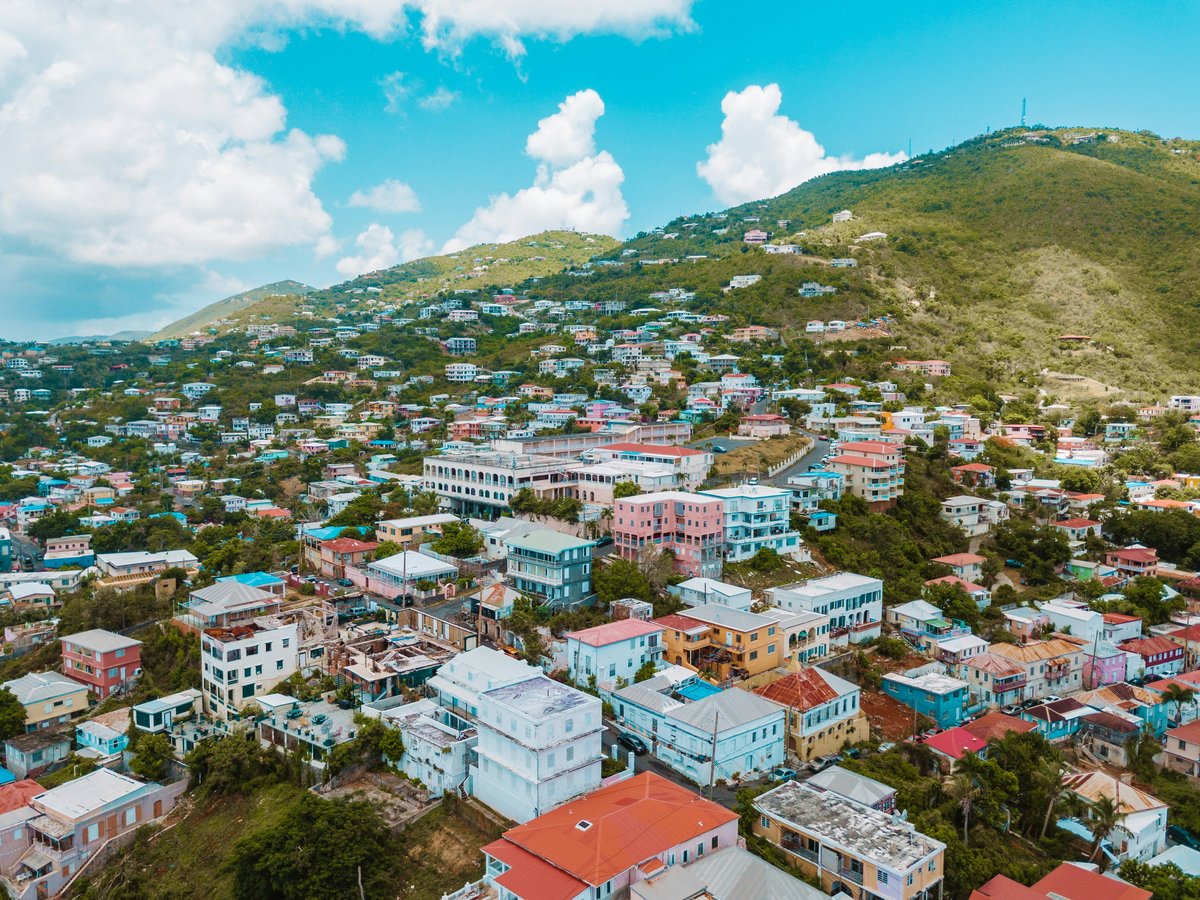
January is peak cruise-ship season on St. Thomas, and you feel the difference before you even clear the airport parking lot. Charlotte Amalie's waterfront can see 4 to 6 ships at the Havensight and Crown Bay terminals on a single day, their white hulls lined up against the green hillside like a second skyline. By mid-morning, Main Street and the narrow alleys branching off it smell of bay rum cologne and leather from the duty-free shops, the sidewalks so thick with day-trippers that locals on errands give up and loop through Back Street instead. Temperatures hold steady around 26°C (79°F) during the day and rarely dip below 24.5°C (76°F) at night. The northeast trade winds keep the 74% humidity from clinging to your skin the way it does in the summer months.
The payoff for tolerating those crowds is real. This is the heart of the dry season, and it shows. Some January weeks pass without a single drop of rain. When a shower does arrive, it tends to be a 15-minute curtain that sweeps across the harbor and leaves the pavement steaming before the puddles have time to settle. Water visibility at the island's reef sites tends to exceed 30 meters (100 feet), the kind of clarity where you can float above a brain coral head at Coki Beach and count individual parrotfish picking at its surface from 5 meters up. The seas on the south shore stay flat enough for paddleboarding most afternoons. Three Kings Day on January 6 brings a territorial holiday with cultural programming in Charlotte Amalie, and the Martin Luther King Jr. Day parade later in the month pulls school marching bands and community groups through the downtown streets.
For families with young children, the combination of calm water and predictable dry days means fewer rained-out beach mornings and more hours in the shallows at Magens Bay's sheltered cove. That reliability comes at a price, though. January is the most expensive window of the year on St. Thomas, and the island's limited inventory of rental cars and mid-range guesthouses starts thinning out 6 weeks before arrival. If you are the type who books on a whim, this is not the month for it.
Why visit in January
- January and March are the two driest months on St. Thomas by a wide margin, with most precipitation arriving as brief afternoon showers.
- Peak underwater clarity at the island's reef sites, with the best snorkeling and diving conditions of the year thanks to minimal runoff.
- The northeast trade winds hold at 15 to 25 km/h (9 to 15 mph) most days, keeping temperatures comfortable and creating prime sailing conditions out of Red Hook.
- No hurricane risk. The Atlantic season runs June through November, placing January firmly outside that window.
- Three Kings Day and the MLK Day parade offer cultural programming that adds a local dimension beyond the pure beach-resort calendar.
Worth knowing
- Peak cruise-ship traffic. Charlotte Amalie's Main Street becomes shoulder-to-shoulder on heavy port days, with multiple ships docked simultaneously.
- Highest accommodation rates of the year, with very limited last-minute availability for mid-range properties.
- Rental cars book out weeks in advance. Without early reservations, you may be left relying on safari buses or taxis, which can feel limiting on an island where public transit coverage is sparse.
- Many popular restaurants in Frenchtown and Red Hook fill their tables by 18:30 on weekend evenings during January. Walk-in dining at locally preferred spots requires flexibility or arriving before the dinner rush.
Best for
Think twice if
January sits in the heart of the dry season, with the northeast trade winds blowing steadily off the Atlantic. Cloud cover tends to be minimal most mornings, giving way to intense tropical sunshine by midday. Rain, when it arrives, is typically a passing afternoon shower that clears within 20 minutes, and some January weeks pass entirely dry. The seas on the south and east shores are at their calmest, rarely producing swells above 0.5 meters (1.5 feet). Night temperatures stay warm enough for open-air dining without an extra layer.
Seasonal caution
- The UV index in the Caribbean in January typically ranges from 8 to 10, classified as very high by the WHO. Unprotected fair skin can burn in under 20 minutes even on partly cloudy days. This catches northern-hemisphere winter visitors off guard because the air temperature feels moderate.
Year-round climate
Averages from the last 5 years.
| Month | Avg high (°C) | Avg low (°C) | Rainfall (mm) |
|---|---|---|---|
| Jan | 26 | 25 | 33 |
| Feb | 26 | 24 | 72 |
| Mar | 26 | 24 | 32 |
| Apr | 26 | 25 | 65 |
| May | 27 | 26 | 78 |
| Jun | 28 | 26 | 73 |
| Jul | 28 | 26 | 88 |
| Aug | 29 | 27 | 133 |
| Sep | 29 | 27 | 117 |
| Oct | 29 | 27 | 145 |
| Nov | 28 | 26 | 116 |
| Dec | 27 | 25 | 50 |
Holidays and festivals in January
Public holidays
- New Year's Day(New Year's Day)1 January 2027
- Epiphany(Three Kings Day)6 January 2027
- Martin Luther King, Jr. Day(Martin Luther King, Jr. Day)18 January 2027
Best things to do in January
Snorkeling at Coki Beach and the Coral Reef National Monument
water sportsCoki Beach sits on the northeast shore near Coral World Ocean Park and offers shallow reef access within 10 meters (30 feet) of the shoreline. The Virgin Islands Coral Reef National Monument, established in 2001, protects deeper reef systems accessible by boat from the island's south side.
Dry-season conditions minimize runoff and sediment, producing the kind of water clarity that makes reef structures visible from the surface.Booking tipArrive at Coki Beach before 10:00 to claim a spot ahead of the cruise-ship excursion groups that begin arriving mid-morning.
Sailing and catamaran tours from Red Hook
water sportsThe east end of St. Thomas hosts charter operators that run day sails to nearby cays, St. John's north shore, and the British Virgin Islands. Steady northeast trades through January provide consistent wind.
Trade winds without the heavy swells of hurricane season create the most reliable and comfortable sailing conditions of the year.Booking tipBook full-day sails at least a week ahead. Half-day sunset cruises tend to have more same-week availability.
Hiking to Drake's Seat overlook
sightseeingDrake's Seat sits along Route 40 on the island's north ridge and offers a panoramic view over Magens Bay and the British Virgin Islands. The viewpoint is accessible by car or a short uphill walk from the road.
Low humidity and clear skies give the sharpest visibility for island panoramas. During the wetter months, haze often obscures the outer islands.Booking tipGo before 09:00 or after 16:00 to avoid tour buses that stop here mid-morning.
Walking the 99 Steps in Charlotte Amalie
history and cultureThis 18th-century staircase of Danish-era brick leads uphill from the Government Hill area toward Blackbeard's Castle. The 99 Steps (which may count to 103, depending on how you tally the worn treads) connect to a network of historic walkways through Estate Thomas.
Drier, cooler mornings make the steep climb far more pleasant than in the humid summer months, when the stone radiates stored heat.Day trip to St. John via the Red Hook ferry
excursionThe passenger ferry from Red Hook to Cruz Bay on St. John runs multiple times daily, crossing in about 20 minutes. Most of St. John is protected Virgin Islands National Park land, with trails like the Reef Bay Trail and beaches including Trunk Bay.
Calm seas make the ferry crossing smooth, and the national park's trails are at their most walkable before summer heat and rainfall make them slippery.Booking tipCatch the first ferry on Saturday mornings to beat the crowds at Trunk Bay. Book ahead for weekend crossings during peak season.
Kayaking in the Mangrove Lagoon
natureThe Mangrove Lagoon on St. Thomas's southeast shore is part of the St. Thomas East End Reserve, with red mangrove channels, sea turtle habitat, and shallow reef flats. Guided kayak tours typically run 2 to 3 hours.
Dry season minimizes freshwater runoff into the lagoon, improving water clarity through the mangrove channels and reef areas.Booking tipMorning tours tend to see more wildlife. Book 3 to 4 days ahead for weekend departures.
Visiting Fort Christian in Charlotte Amalie
history and cultureFort Christian is the oldest standing structure on St. Thomas, built between 1672 and 1680 during the Danish colonial period. It houses a small museum covering the island's Danish, African, and Taino heritage.
Comfortable January temperatures make exploring the fort's outdoor ramparts and interior galleries more pleasant than in the sticky summer months.Booking tipCheck opening hours in advance. The fort sometimes adjusts its schedule around cruise-ship port days.
What to eat in January
In season: fruit
Soursop
This spiny green fruit comes into season during the drier winter months in the Caribbean. Juice bars blend it into tart, creamy smoothies that cut the afternoon heat.
Passion fruit
Available from local growers during the winter dry season. The tart pulp goes into juices, desserts, and rum cocktails across the island's bars and restaurants.
On menus now
Kallaloo
A thick, okra-based stew with leafy greens, crab, and salt pork. It features prominently at New Year and holiday tables through early January, served alongside fungi (a cornmeal side dish).
Street food peaks
Pate
Pronounced 'pah-TAY,' these fried dough pockets filled with saltfish, chicken, or seasoned beef peak around January's holiday gatherings. Vendors set up near the Three Kings Day events in Charlotte Amalie.
What to drink
Guavaberry liqueur
Brewed from local guavaberries (Myrciaria floribunda) harvested in the fall. January is the tail end of the season, when bars and home producers still have fresh batches flowing.
In markets
Conch
January falls within the USVI's open conch harvest season, which runs October through May. The meat appears in fritters, chowders, and salads at waterfront spots around Red Hook and Frenchtown.
Regular events in January
Three Kings Day (Día de los Reyes)Free
A territorial holiday in the U.S. Virgin Islands. Charlotte Amalie holds parades and cultural festivities, and many businesses close for the day. The celebration marks the close of the extended Caribbean Christmas season.
January 6Martin Luther King Jr. Day ParadeFree
A public parade through Charlotte Amalie's downtown streets, with school marching bands, community groups, and local leaders. The route typically runs along Veterans Drive.
Third Monday of JanuaryNew Year's DayFree
A territorial holiday following fireworks over Charlotte Amalie harbor on New Year's Eve. January 1 itself is quiet, with most businesses closed and residents recovering from the night before.
January 1Best places this January
Magens Bay Beach
beachA sheltered cove on St. Thomas's north shore, shaped like a horseshoe with nearly a mile of white sand. The beach has changing facilities and a small food stand. January's calm north-shore conditions keep the water flat and inviting.
Blackbeard's Castle
historic landmarkA National Historic Landmark on Government Hill above Charlotte Amalie, with a 17th-century watchtower and views over the harbor. The grounds include historical exhibits on piracy and the island's colonial past.
Charlotte AmalieFrenchtown waterfront
neighborhoodOriginally settled by French Huguenots from St. Barthélemy, this small community west of Charlotte Amalie has a concentration of locally-owned restaurants along the waterfront. The menus tend to be more Caribbean-focused than the tourist-oriented options on Main Street.
FrenchtownCathedral of Saints Peter and Paul
historic siteBuilt in 1806, this Catholic cathedral on Kronprindsens Gade features a painted ceiling and ornate Gothic Revival interior. It remains an active parish and sits within easy walking distance of the waterfront.
Charlotte AmalieSt. Anne Chapel
historic siteFounded in 1921, this small chapel serves the Frenchtown community and reflects the neighborhood's distinct cultural identity within St. Thomas. Worth a stop if you are already exploring the Frenchtown waterfront.
FrenchtownRed Hook waterfront and ferry terminal
waterfrontThe east-end hub for ferries to St. John and the British Virgin Islands. Red Hook has a cluster of restaurants, dive shops, and provision stores. The area feels noticeably less cruise-dominated than Charlotte Amalie.
Red HookSapphire Beach
beachA public beach on the east end near Smith Bay, with reef snorkeling accessible directly from shore. The beach sits on a narrower strip of sand than Magens Bay but typically draws fewer visitors, even in peak season.
Smith BayCathedral Church of All Saints
historic siteThis Anglican cathedral in Charlotte Amalie dates to 1848 and features a distinctive red-roofed tower visible from the harbor. It sits within walking distance of both Fort Christian and the 99 Steps.
Charlotte Amalie
Your packing checklist
Tick items off as you pack. Your progress saves in this browser.
All packed — have a great trip.
Insider tips
Check the cruise-ship schedule for Charlotte Amalie before planning your downtown day. On mornings when 4 or more ships are in port, skip Main Street entirely and head to Red Hook or Frenchtown instead.
The safari buses (open-air bench trucks) run fixed routes between Charlotte Amalie, Red Hook, and the east end. They are the cheapest ground transport on the island, though routes and schedules are informal. Flag one down on the road and ask the driver if they pass your destination.
Frenchtown's restaurants tend to be where island residents eat, especially on weeknights. The menus are more Caribbean-focused and the prices lower than what you will find on Main Street or at Havensight.
Driving is on the left side of the road, a holdover from the Danish colonial period, but most rental cars are left-hand-drive American models. The combination takes a few hours to feel natural, especially on the narrow hillside roads above Charlotte Amalie.
Island tap water comes from rooftop cisterns that collect rainwater, and each property treats its own supply. The water is generally safe, but locals and long-stay visitors overwhelmingly default to bottled water for drinking.
Avoid these mistakes
- Scheduling a Charlotte Amalie walking tour without checking the online cruise-ship calendar first. The difference between a 2-ship day and a full-port day is dramatic, and the worst foot traffic on Main Street typically runs from 10:00 to 14:00.
- Underestimating the sun because the air temperature feels mild. Visitors from northern latitudes are especially vulnerable in January since they arrive without any base tan and may not associate winter travel with severe sun exposure.
- Renting a car on arrival day without a reservation. Peak-season demand exhausts rental inventory quickly, and walk-up availability is close to zero in January. Reserve at least 3 to 4 weeks before your trip.
- Assuming you can island-hop to the British Virgin Islands on a whim. BVI entry requires a passport, and U.S. citizens need a valid passport book or passport card for the crossing. Paperwork aside, ferry schedules to Tortola and Virgin Gorda fill up fast in peak season.
Practical tips for January
January is the busiest month for cruise tourism on St. Thomas, so book rental cars and popular restaurants well in advance. The Red Hook to Cruz Bay ferry runs from roughly 06:30 to 23:15, with more frequent service on weekends, but Saturday morning crossings can sell out in peak season. Most Charlotte Amalie businesses keep shorter Sunday hours or close entirely. St. Thomas runs on Atlantic Standard Time (AST, UTC-4) year-round with no daylight saving adjustment, which puts the island 1 hour ahead of Eastern Standard Time in January. As a U.S. territory, there are no currency exchange or cell roaming complications for American visitors. Solo travelers should note the island scores 6.2 out of 10 on solo-traveler safety (see the TTDI Solo-Safety Index), so exercise standard precautions after dark in less-trafficked areas outside the main tourist corridors.
FAQ
Is January a good time to visit St. Thomas?
January is one of the two strongest months for a St. Thomas visit, slightly behind March on the overall balance of weather and crowd levels. The trade-off is straightforward. You get the driest conditions and best water clarity of the year, but you pay peak-season rates and share Charlotte Amalie with cruise-ship crowds. If weather and ocean conditions are your priority, January delivers.
What is the weather like in St. Thomas in January?
Warm and dry, with comfortable trade winds. Daytime temperatures sit in the upper 20s Celsius (low 80s Fahrenheit) with barely any drop at night. This is the driest stretch of the year, and showers, when they arrive, pass quickly. The air feels tropical but not oppressive thanks to the steady northeast wind.
Is St. Thomas crowded in January?
Yes. January is the peak of cruise-ship season. Charlotte Amalie's downtown fills up on heavy port days, sometimes with multiple ships docked at once. The east end of the island, particularly Red Hook and the surrounding beaches, sees noticeably less cruise-driven foot traffic. Magens Bay gets busy but stays manageable if you arrive before mid-morning.
Can I visit St. John from St. Thomas in January?
The Red Hook ferry to Cruz Bay runs throughout the day, and January's calm seas make the short crossing comfortable. Roughly two-thirds of St. John is national parkland, and dry conditions keep trails walkable and beaches at their best. Weekend morning departures fill up fast during peak season, so book ahead for Saturdays.
Is the water warm enough for swimming in St. Thomas in January?
The Caribbean Sea around St. Thomas stays warm year-round. January water temperatures typically range from 26 to 27°C (79 to 81°F), comfortable enough for extended snorkeling and swimming without a wetsuit. The calmer winter seas mean less chop at exposed beaches, making conditions more inviting for less confident swimmers.
Last verified by automated review (v1.7.2) on . What is automated review?